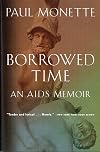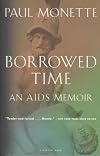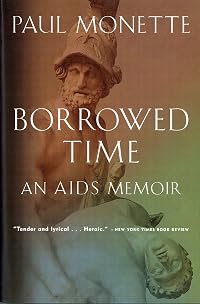
Borrowed Time: An AIDS Memoir
by Paul Monette
On This Page
Description
"An eloquent testimonial to the power of love and the devastation of loss" from the National Book Award-winning author of Becoming a Man (Publishers Weekly). In 1974, Paul Monette met Roger Horwitz, the man with whom he would share more than a decade of his life. In 1986, Roger died of complications from AIDS. Borrowed Time traces this love story from start to tragic finish. At a time when the medical community was just beginning to understand this mysterious and virulent disease, Monette show more and others like him were coming to terms with unfathomable loss. This personal account of the early days of the AIDS crisis tells the story of love in the face of death. A finalist for the National Book Critics Circle Award, Borrowed Time was one of the first memoirs to deal candidly with AIDS and is as moving and relevant now as it was more than twenty-five years ago. Written with fierce honesty and heartwarming tenderness, this book is part love story, part testimony, and part requiem. This ebook features an illustrated biography of Paul Monette including rare images and never-before-seen documents from the Paul Monette papers of the UCLA Library Special Collections. show lessTags
Recommendations

































Member Reviews
“What am I going to do without him?”…
“Write about him Paul… That’s what you have to do.”
In a world before triple-drug therapy (HAART) was enacted and allowed individuals to live a normal lifespan with HIV, Monette and his lover Roger Horwitz contracted HIV, which ineluctably progressed into AIDS. Professionally, Horwitz was a lawyer and a lover of literature; Monette was a writer. Both were educated at Ivy League schools. This work is the first personal memoir of someone with AIDS.
The secret is that this book is not a story of a disease. Instead, it is a love story as passionate and profound as any written down in human language. In today’s world of marriage equality, works like this demonstrate the deep value of show more homosexual relationships. Monette beautifully voices his love using floral, expressive language that is expected among articulate heterosexuals… only Monette did so in an America and in a world that did not accept his humanity as fully as they do now. That defiant decency is the brilliance of this work.
Managing HIV/AIDS took over this couple’s lives. They went from vacationing in Greece to making regular stays at the hospital over 19 months. Horwitz dies at the end of this work, and Monette lived until 1995 – both dying of AIDS-related complications. Their love did not falter while being confronted with an evil enemy. It sustained until the bitter end. Thus, this book combines themes of love with those of a noble death.
Dare I say that heterosexuals need to read this book more than the gay and lesbian community? It speaks of the dignity of love in any context. It does not debauch into sensationalism, nor does it cower without decency. It puts to death many stereotypes of gay folk (even more common in the 1980s than in the 2020s). Evocative words draw readers from whatever background into Monette and Horwitz’s relationship and dare them to find something wrong with it. That message of love’s triumph still needs to be heard in 2021 as much as it did in 1988.
Obviously, gay men, who remain disproportionately and cruelly plagued with incurable HIV, and their allies will sympathize with Monette’s plight. They will find themselves and their own stories in the characters of this narrative. This is the natural audience. Nonetheless, Monette’s vivid words, so common to lovers yet glistening in the setting of AIDS in the 1980s, shine brightly for readers of varied backgrounds. They teach humanity inasmuch as they inspire humanity. Perhaps especially those who continue to belittle gay men as second-rate should listen and stand corrected. show less
“Write about him Paul… That’s what you have to do.”
In a world before triple-drug therapy (HAART) was enacted and allowed individuals to live a normal lifespan with HIV, Monette and his lover Roger Horwitz contracted HIV, which ineluctably progressed into AIDS. Professionally, Horwitz was a lawyer and a lover of literature; Monette was a writer. Both were educated at Ivy League schools. This work is the first personal memoir of someone with AIDS.
The secret is that this book is not a story of a disease. Instead, it is a love story as passionate and profound as any written down in human language. In today’s world of marriage equality, works like this demonstrate the deep value of show more homosexual relationships. Monette beautifully voices his love using floral, expressive language that is expected among articulate heterosexuals… only Monette did so in an America and in a world that did not accept his humanity as fully as they do now. That defiant decency is the brilliance of this work.
Managing HIV/AIDS took over this couple’s lives. They went from vacationing in Greece to making regular stays at the hospital over 19 months. Horwitz dies at the end of this work, and Monette lived until 1995 – both dying of AIDS-related complications. Their love did not falter while being confronted with an evil enemy. It sustained until the bitter end. Thus, this book combines themes of love with those of a noble death.
Dare I say that heterosexuals need to read this book more than the gay and lesbian community? It speaks of the dignity of love in any context. It does not debauch into sensationalism, nor does it cower without decency. It puts to death many stereotypes of gay folk (even more common in the 1980s than in the 2020s). Evocative words draw readers from whatever background into Monette and Horwitz’s relationship and dare them to find something wrong with it. That message of love’s triumph still needs to be heard in 2021 as much as it did in 1988.
Obviously, gay men, who remain disproportionately and cruelly plagued with incurable HIV, and their allies will sympathize with Monette’s plight. They will find themselves and their own stories in the characters of this narrative. This is the natural audience. Nonetheless, Monette’s vivid words, so common to lovers yet glistening in the setting of AIDS in the 1980s, shine brightly for readers of varied backgrounds. They teach humanity inasmuch as they inspire humanity. Perhaps especially those who continue to belittle gay men as second-rate should listen and stand corrected. show less
"Grief is a sword, or it is nothing."
A furious, sharp and heartbreaking memoir of the early days of the U.S. AIDS epidemic, and Monette's partner's diagnosis, illness and death. Fiercely sorrowful, unsparingly angry. This book has substantial gaps in its political insight; it is primarily a story of the ravages AIDS wreaked on white rich gay men's community in Los Angeles in the mid-80s. But it is still one of the best political memoirs I've ever read, for its sheer determination and clarity of vision. Love and rage, Monette's got it down. Beautifully written.
Be careful with this one, especially if you have major ghosts to mourn. It will break that grief open; it will rage through you and may break you apart.
A furious, sharp and heartbreaking memoir of the early days of the U.S. AIDS epidemic, and Monette's partner's diagnosis, illness and death. Fiercely sorrowful, unsparingly angry. This book has substantial gaps in its political insight; it is primarily a story of the ravages AIDS wreaked on white rich gay men's community in Los Angeles in the mid-80s. But it is still one of the best political memoirs I've ever read, for its sheer determination and clarity of vision. Love and rage, Monette's got it down. Beautifully written.
Be careful with this one, especially if you have major ghosts to mourn. It will break that grief open; it will rage through you and may break you apart.
I bought Borrowed Time: An AIDS Memoir by Monette because it was recommended by a class on AIDS I was taking as research for a book I'm writing. I thought the book might help me better understand the AIDS patient and even AIDS itself. Monette tells a story that is a heartbreaking mix of love, family, and loss. Not just the loss of his life partner but loss of a way of being in the world. He demonstrates eloquently the devastation fear wreaks when knowledge is minimal while showing the immense power of love to hold people together. At times, Monette's self-deprecation felt a bit too much, but it showed a glimpse into how insecurities can push us to both our best and our worst. He talked with graphic detail about the physical havoc AIDS show more brought not only to the bodies of those who suffer with it but to the lives and the communities where AIDS became such an accepted part of life that people talked about when instead of if. Monette talks about his and the gay community's resentment of people's ignorance and particularly their determination to remain ignorant. His love for his life partner, Roger Horwitz, is palpable throughout the book. I felt almost like an interloper in their lives in some of the more intimate portions of the book. Monette writes in a way that had me wishing for Roger to be saved even though I knew before I even began the book that was impossible. Near the end, I also found myself longing for Roger's suffering to end even though the end of that suffering meant death. Monette's description of full-blown AIDS and the suffering of not only Roger but their friends broke my heart and made me determined to support death with dignity laws. Monette downplays his own diagnosis of AIDS throughout the book. Roger is his focus because Roger is the one who is in crisis. I felt Monette's grief throughout the pages. I felt the secrecy in place to try to protect those who could offer support. I felt the love these two men shared. I felt the openness of love and compassion coupled with the anger and despair at a system not moving quickly enough to make a difference in lives. Borrowed Time is a reminder that no matter who we are, how we live our lives, or who we love, the time we have is only borrowed and it will be taken away at some point... show less
Devastating firsthand account of living - and dying - with AIDS. Author and activist Paul Monette, who died from complications related to the disease in 1995, writes about the tragic loss of his lover Roger Horwitz ten years earlier with unflinching detail and brutal honesty. At first, Paul's attitude of 'What about me?' bugged me, especially in the face of his partner's display of dignity and bravery, but after reading the whole book, I now respect the author for being so open about his own feelings.
'The party was going to have to stop', Paul begins; 'a lot of us were already ticking and didn't even know'. I think personal stories like this are often more educational than all the weighty non-fiction texts on the subject, because the show more lesson is made real by the human lives involved and a lot of uneducated misunderstandings can be dispelled. For instance, as Paul makes clear, 'the disease wasn't drawn to obsessive sex or meaningless sex. Sex itself, pure and simple, was the medium'. Paul and Roger were in a loving, committed relationship, but he still had to watch his partner of ten years - and many other close friends - die a terrible, painful death.
The greatest tragedy, of course, is that Roger - and later Paul - died primarily of ignorance. Not theirs, but the medical, political and social ignorance facing the early patients of the 'gay cancer'. Paul talks about not recognising the early symptoms, or fearing that every ailment might mean the worst. Mistaking a bruise for Kaposi's sarcoma, for instance, or a cough for the first signs of pneumocystis (PCP). The first treatments were equally vague, initially ineffective and often acquired illegally, like Suramin and AZT. AIDS patients and activists had to go 'underground' to fight for drugs, lobbying the FDA to test and release potentially life-saving medicine.
The real breakthrough - which is also the term for the onset of fullblown AIDS - came in 1995, too late for Roger, Paul and thousands of others. But their story is still important, and always heartbreaking to read. show less
'The party was going to have to stop', Paul begins; 'a lot of us were already ticking and didn't even know'. I think personal stories like this are often more educational than all the weighty non-fiction texts on the subject, because the show more lesson is made real by the human lives involved and a lot of uneducated misunderstandings can be dispelled. For instance, as Paul makes clear, 'the disease wasn't drawn to obsessive sex or meaningless sex. Sex itself, pure and simple, was the medium'. Paul and Roger were in a loving, committed relationship, but he still had to watch his partner of ten years - and many other close friends - die a terrible, painful death.
The greatest tragedy, of course, is that Roger - and later Paul - died primarily of ignorance. Not theirs, but the medical, political and social ignorance facing the early patients of the 'gay cancer'. Paul talks about not recognising the early symptoms, or fearing that every ailment might mean the worst. Mistaking a bruise for Kaposi's sarcoma, for instance, or a cough for the first signs of pneumocystis (PCP). The first treatments were equally vague, initially ineffective and often acquired illegally, like Suramin and AZT. AIDS patients and activists had to go 'underground' to fight for drugs, lobbying the FDA to test and release potentially life-saving medicine.
The real breakthrough - which is also the term for the onset of fullblown AIDS - came in 1995, too late for Roger, Paul and thousands of others. But their story is still important, and always heartbreaking to read. show less
This heartbreaking book is the true story of author Paul Monette’s final two years with his partner Roger Horwitz, who died of AIDS in 1986. Monette chronicles their discovery of the disease and the subsequent downward spiral which Roger’s health took, in a time where ignorance about AIDS was rife, and many people just didn’t want to know about it, thinking that it was a problem only for the gay community.
Roger’s symptoms and health problems are described fairly explicitly and the anguish of the author comes through on every page, as he describes seeing his soul mate struck down by a cruel and vicious illness. His anger at the lack of government interest in the disease is also palpable – and understandable.
But through it all, show more through every symptom, every ray of hope, every crushing disappointment, is the love. Paul and Roger were a couple so obviously, so completely in love, so together that Roger says, “…we’re the same person!” Yet there is no shying away from the problems they have been through – the brief affair which Paul had earlier in their relationship, and which he feels guilty about because he believes that that was the cause of Roger getting the HIV virus.
Monette talks about seeing friends struck down with “the plague” and describes the situation as a war. And it does feel like they were fighting a war – against AIDS, against ignorance, against indifference. He is aware that he himself has the HIV virus (Monette died of complications from AIDS in 1995).
The first line of the book says, “I don’t know if I will live to finish this.” I’m glad that he did. It’s honest and passionate, and a beautiful read. Keep a handkerchief handy if you are planning on reading it – you will cry, but it’s worth it.
Highly, highly recommended. show less
Roger’s symptoms and health problems are described fairly explicitly and the anguish of the author comes through on every page, as he describes seeing his soul mate struck down by a cruel and vicious illness. His anger at the lack of government interest in the disease is also palpable – and understandable.
But through it all, show more through every symptom, every ray of hope, every crushing disappointment, is the love. Paul and Roger were a couple so obviously, so completely in love, so together that Roger says, “…we’re the same person!” Yet there is no shying away from the problems they have been through – the brief affair which Paul had earlier in their relationship, and which he feels guilty about because he believes that that was the cause of Roger getting the HIV virus.
Monette talks about seeing friends struck down with “the plague” and describes the situation as a war. And it does feel like they were fighting a war – against AIDS, against ignorance, against indifference. He is aware that he himself has the HIV virus (Monette died of complications from AIDS in 1995).
The first line of the book says, “I don’t know if I will live to finish this.” I’m glad that he did. It’s honest and passionate, and a beautiful read. Keep a handkerchief handy if you are planning on reading it – you will cry, but it’s worth it.
Highly, highly recommended. show less
Borrowed Time: An AIDS Memoir by Paul Monette; (4*)
It was really difficult to pull my head out of this memoir. I took my time reading it and found myself very caught up in the lives of Monette and the people he wrote about. I also found myself much more sympathetic with Paul's lover, Roger, than with Paul himself.
These are Paul's memories of the days of HIV, Aids and those who lived with it before it was even admitted that there was such a disease. In those years, the 80s, contracting this disease was a death sentence. Paul's lover died in 1986 and when Paul began this beautiful memoir, he had no assurance that he, himself, would live long enough to complete it. (He passed away in 1995.) I am thankful that he did for this memoir is his show more very beautiful legacy.
Now before you think that I found this book to be perfect, I did not. I found Paul to be a bit full of himself and to be self important. He was also quite the name dropper of those of the Hollywood and L.A. scene in those days. But the book IS wonderfully written and so much of it is heart rending.
I took the extended families of these men and also their friends quite to heart and found myself loving the character of many of them. I remember thinking as I read this that I would so have appreciated knowing a great many of the people who fill this memoir.
All in all, a lovely memoir and tribute to the thousands of gay men who fought this dread disease and sadly lost. show less
It was really difficult to pull my head out of this memoir. I took my time reading it and found myself very caught up in the lives of Monette and the people he wrote about. I also found myself much more sympathetic with Paul's lover, Roger, than with Paul himself.
These are Paul's memories of the days of HIV, Aids and those who lived with it before it was even admitted that there was such a disease. In those years, the 80s, contracting this disease was a death sentence. Paul's lover died in 1986 and when Paul began this beautiful memoir, he had no assurance that he, himself, would live long enough to complete it. (He passed away in 1995.) I am thankful that he did for this memoir is his show more very beautiful legacy.
Now before you think that I found this book to be perfect, I did not. I found Paul to be a bit full of himself and to be self important. He was also quite the name dropper of those of the Hollywood and L.A. scene in those days. But the book IS wonderfully written and so much of it is heart rending.
I took the extended families of these men and also their friends quite to heart and found myself loving the character of many of them. I remember thinking as I read this that I would so have appreciated knowing a great many of the people who fill this memoir.
All in all, a lovely memoir and tribute to the thousands of gay men who fought this dread disease and sadly lost. show less
An unflinchingly honest, eloquently written memoir about love and watching your beloved die of AIDS in the 1980s. Tragic and important reading all at once.
Members
- Recently Added By
Lists

I am sick, I must die . . . .
24 works; 5 members

100 New Classics
101 works; 13 members

501 Must-Read Books
529 works; 72 members

The Best LGBTQ Nonfiction
210 works; 69 members
Author Information

28+ Works 4,474 Members
Paul Monette was born on October 16, 1945 in Lawrence, Mass., and has published numerous poetry collections, novels, novelizations, memoirs, and nonfiction works. A distinguished author of both poetry and prose, Monette's writings often explored issues relating to homosexuality and AIDS. After receiving critical acclaim in 1975 for a poetry show more collection The Carpenter at the Asylum, he veered away from his mainstay theme and produced an unlikely pair of books that demonstrated his poet's way with words. The books were No Witnesses, a collection of poems featuring imaginary adventures of famous figures, written in 1981, and The Long Shot, a mystery in which an avid shopper and a forger team to solve a murder. However, his following mystery, Lightfall, written in 1982, was not well-received by the critics. Monette next wrote Becoming a Man: Half a Life Story, which won the National Book Award for nonfiction in 1992. His last work, Last Watch of the Night: Essays Too Personal and Otherwise, was a collection of 10 moving and uncompromising essays dealing with topics such as his beloved dog Puck and the 1993 Gay and Lesbian March on Washington, D.C. Paul Monette died as a result of complications from AIDS on February 18, 1995. (Bowker Author Biography) show less
Awards and Honors
Awards
Work Relationships
Is contained in
Common Knowledge
- Canonical title
- Borrowed Time: An AIDS Memoir
- Original publication date
- 1988
Classifications
- Genres
- Biography & Memoir, LGBTQ+, Nonfiction, General Nonfiction, Sexuality and Gender Studies
- DDC/MDS
- 362.1 — Society, government, & culture Social problems and social services Social Welfare People with physical illnesses
- LCC
- RC607 .A26 .M66 — Medicine Internal medicine Internal medicine Specialties of internal medicine Immunologic diseases. Allergy
- BISAC
Statistics
- Members
- 833
- Popularity
- 32,933
- Reviews
- 14
- Rating
- (4.46)
- Languages
- Dutch, English, German
- Media
- Paper, Audiobook, Ebook
- ISBNs
- 13
- ASINs
- 6