On This Page
Description
"Danielle Trussoni's bestselling first novel, Angelology, wove biblical lore, the Orpheus myth, and Milton's Rebel Angels into a present-day world tinged with the divine supernatural. The novel plunged two endearing loners--art historian V. A. Verlaine and Evangeline, a beautiful young nun--into an ancient battle between a secret society and mankind's most insidious enemies: angel-human hybrids known as the Nephilim. Now a decade has passed since Verlaine saw Evangeline alight from the show more Brooklyn Bridge, the sight of her wings a betrayal that haunts him still. The Nephilim are again on the rise, scheming to construct their own paradise--the Angelopolis-- and ruthlessly pursued by Verlaine in his new calling as an angel hunter. But when Evangeline materializes, Verlaine is besieged by doubts that will only grow as forces more powerful than even the Nephilim draw them from Paris to Saint Petersburg and deep into the provinces of Siberia and the Black Sea coast. A high-octane tale of abduction and liberation, treasure seeking and divine warfare, Angelopolis plumbs Russia's imperial past, modern genetics, and the archangel Gabriel's famous visitations to conceive a fresh tableau of history and myth that will, once again, enthrall readers the world over"-- show lessTags
Recommendations








Member Reviews
Note: There are some very small spoilers for both books in this series, the first one being Angelology.
Angelology begins in Milton, NY at St. Rose Convent. Sister Evangeline is 23; she has been living there since she was 12, and took her vows at age 18. She works in the library, handling the correspondence. Her days have been fairly routine until now, but on the day the book opens, December 23, 1999, she receives a letter from a V.A. Verlaine, inquiring about a possible connection between a prior abbess of the convent and Abigail Aldrich Rockefeller, the famous (real-life) philanthropist of the arts.
We quickly get enmeshed in a Dan Brown-sort of thriller, featuring theological mysteries that are derived from angelology, the study of show more angels and their presence on earth throughout history. We are reminded that the presence on earth of “Nephilim,” or half-angels, half-humans, was described at the beginning of the Bible, in Genesis 6:
"The sons of God saw the daughters of men that they were fair; and they took them wives of all which they chose,” and when “they bare children to them, the same became mighty men which were of old, men of renown.”
As the story progresses we learn how the history of the Nephilim became interwoven with the myth of Orpheus, among other myths; all of these stories are purported in the book to have had a basis in fact.
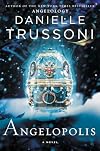
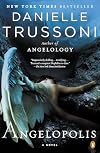
Since the publishers tell you on the blurbs and by virtue of the cover picture itself that the Nephilim exist, it won’t be spoilery to reveal that Evangeline and Vervaine get involved in a life-or-death struggle with these creatures, who are not interested in having their secrets uncovered. In fact, it is the Nephilim, so the angelologists contend, who promulgated atheism, so that people will not suspect the extent to which humans are not, in fact, free of the nefarious intervention of Nephilim into their affairs.
This trope works well enough for most of the book, since there is enough similarity to the real world to make the story seem clever and entertaining. Toward the end though, a few sharks get jumped, in part, one supposes, to spur the reader on to read the next installment.
The second book, Angelopolis, picks up ten years after the first has finished. Book Two takes us to Siberia, in Russia, to a secret installation where many different types of angels are in residence, willingly or no. Once again, there is a life-and-death race to recover artistic artifacts that have a bearing on the survival of the Nephilim versus human beings.
Discussion: I like how the author interweaves history, art, myth, and music into her stories. How can you not be fascinated by the history of Faberge Eggs?
Trussoni even throws in some Velikovsky-like scientific theories, including the quite recent studies by Ryan and Pittman, that have argued for geological evidence substantiating the events in the Bible.
It was also interesting to see how Trussoni based the plot on an extremely literal and anthropomorphic interpretation of the Bible. Of course, there are probably more competing interpretations of the Bible than there are actual people in the world. Nevertheless, when you opt for the Vengeful God and Evil Angels version of the Bible, it seems to me that you need to have your characters also account for divergence from metaphysical doctrines such as omnipotence (clearly not a Divine attribute in this series), forgiveness, redemption, and maybe the whole Sermon on the Mount. (Jesus and associated ethics of love and morality generally do not play a role in these two books. The author supplements mostly Old Testament passages with some from the Apocrypha and other non-canonical works, such as the Book of Enoch.)
I do think Trussoni does a nice job with the theological arguments she does tackle, and the thriller aspect of the book is well-done.
I have some small quibbles with the books, however. The ending of the first, meant to be an irresistible spur to read the second, contains a sort of “diabolus ex machina” (i.e., the opposite of a “deus ex machina”) that didn’t seem entirely consistent with what we had been told previously.
In the second book, the author has major “As You Know Bob” problems. [This is a popular name for a poor execution of the trope by which a writer uses exposition to fill in background for the readers, also known as an "infodump". In this case, the author is trying to let us know what happened in Book One. The “As You Know Bob” fallacy takes the form of one character explaining to another something that they both already know, but the readers don’t. Since they do both already know it, long explanations about it can seem ridiculous, if not insulting to the character on the receiving end of the monologue.]
Also, the very end of the Second Book, like the end of the first, was just not consistent with everything else we had been led to believe. Once again, it seemed more like a bomb dropping out of nowhere to keep us eager for the next book, rather than like something we might expect from the action preceding it. Writing a good cliff-hanger ending is an art, to be sure, but undermining the premises preceding it does not usually go down well with readers.
Finally, I think in the second book the author got a little too “cute” with her revelations of all the historical figures who were actually Nephilim.
Evaluation: These small quibbles that I had should not deter you from enjoying these fast-paced, intellectually-stimulating thrillers. Seven publishing houses vied for the rights to the first book, and two motion picture companies bid for the film rights. show less
Angelology begins in Milton, NY at St. Rose Convent. Sister Evangeline is 23; she has been living there since she was 12, and took her vows at age 18. She works in the library, handling the correspondence. Her days have been fairly routine until now, but on the day the book opens, December 23, 1999, she receives a letter from a V.A. Verlaine, inquiring about a possible connection between a prior abbess of the convent and Abigail Aldrich Rockefeller, the famous (real-life) philanthropist of the arts.
We quickly get enmeshed in a Dan Brown-sort of thriller, featuring theological mysteries that are derived from angelology, the study of show more angels and their presence on earth throughout history. We are reminded that the presence on earth of “Nephilim,” or half-angels, half-humans, was described at the beginning of the Bible, in Genesis 6:
"The sons of God saw the daughters of men that they were fair; and they took them wives of all which they chose,” and when “they bare children to them, the same became mighty men which were of old, men of renown.”
As the story progresses we learn how the history of the Nephilim became interwoven with the myth of Orpheus, among other myths; all of these stories are purported in the book to have had a basis in fact.
Since the publishers tell you on the blurbs and by virtue of the cover picture itself that the Nephilim exist, it won’t be spoilery to reveal that Evangeline and Vervaine get involved in a life-or-death struggle with these creatures, who are not interested in having their secrets uncovered. In fact, it is the Nephilim, so the angelologists contend, who promulgated atheism, so that people will not suspect the extent to which humans are not, in fact, free of the nefarious intervention of Nephilim into their affairs.
This trope works well enough for most of the book, since there is enough similarity to the real world to make the story seem clever and entertaining. Toward the end though, a few sharks get jumped, in part, one supposes, to spur the reader on to read the next installment.
The second book, Angelopolis, picks up ten years after the first has finished. Book Two takes us to Siberia, in Russia, to a secret installation where many different types of angels are in residence, willingly or no. Once again, there is a life-and-death race to recover artistic artifacts that have a bearing on the survival of the Nephilim versus human beings.
Discussion: I like how the author interweaves history, art, myth, and music into her stories. How can you not be fascinated by the history of Faberge Eggs?
Trussoni even throws in some Velikovsky-like scientific theories, including the quite recent studies by Ryan and Pittman, that have argued for geological evidence substantiating the events in the Bible.
It was also interesting to see how Trussoni based the plot on an extremely literal and anthropomorphic interpretation of the Bible. Of course, there are probably more competing interpretations of the Bible than there are actual people in the world. Nevertheless, when you opt for the Vengeful God and Evil Angels version of the Bible, it seems to me that you need to have your characters also account for divergence from metaphysical doctrines such as omnipotence (clearly not a Divine attribute in this series), forgiveness, redemption, and maybe the whole Sermon on the Mount. (Jesus and associated ethics of love and morality generally do not play a role in these two books. The author supplements mostly Old Testament passages with some from the Apocrypha and other non-canonical works, such as the Book of Enoch.)
I do think Trussoni does a nice job with the theological arguments she does tackle, and the thriller aspect of the book is well-done.
I have some small quibbles with the books, however. The ending of the first, meant to be an irresistible spur to read the second, contains a sort of “diabolus ex machina” (i.e., the opposite of a “deus ex machina”) that didn’t seem entirely consistent with what we had been told previously.
In the second book, the author has major “As You Know Bob” problems. [This is a popular name for a poor execution of the trope by which a writer uses exposition to fill in background for the readers, also known as an "infodump". In this case, the author is trying to let us know what happened in Book One. The “As You Know Bob” fallacy takes the form of one character explaining to another something that they both already know, but the readers don’t. Since they do both already know it, long explanations about it can seem ridiculous, if not insulting to the character on the receiving end of the monologue.]
Also, the very end of the Second Book, like the end of the first, was just not consistent with everything else we had been led to believe. Once again, it seemed more like a bomb dropping out of nowhere to keep us eager for the next book, rather than like something we might expect from the action preceding it. Writing a good cliff-hanger ending is an art, to be sure, but undermining the premises preceding it does not usually go down well with readers.
Finally, I think in the second book the author got a little too “cute” with her revelations of all the historical figures who were actually Nephilim.
Evaluation: These small quibbles that I had should not deter you from enjoying these fast-paced, intellectually-stimulating thrillers. Seven publishing houses vied for the rights to the first book, and two motion picture companies bid for the film rights. show less
Angelopolis is the second in a trilogy, and like many books so situated it suffers a bit: there's the need to fill in relevant details from the first book and get people up to speed again on the details of what's going on, plus the basic function of the volume to set up the major climax in the third book. These things are often a bit hard to pull off, and they're not done entirely perfectly here (there's a bit too much "remember what happened before?" exposition, and much in the way of just moving things along to prepare for the big events coming up.
As with Angelology though, I like what Trussoni's trying to do here, and the world she's created is quite a fascinating place and bizarre place, to say the least. The theological show more explorations and some of the new revelations here about the, well, not-entirely-human nature of certain royal families are intriguing, and given how things work out at the end, I certainly will be looking forward to seeing where Trussoni leads us next time around. show less
As with Angelology though, I like what Trussoni's trying to do here, and the world she's created is quite a fascinating place and bizarre place, to say the least. The theological show more explorations and some of the new revelations here about the, well, not-entirely-human nature of certain royal families are intriguing, and given how things work out at the end, I certainly will be looking forward to seeing where Trussoni leads us next time around. show less
I thought Angelology by Danielle Trussoni was wonderful! The minute I reached the last page, I was impatient for the next book. I can tell you that it was well worth the long wait for book II in the series, Angelopolis . According to her own tweets, the author went to a convent to do some research on writing about a nun as a character. She left there instead, with the idea of writing a book about angels. I can tell you that I am glad she did. This series is rare in its sophisticated and well researched subject matter.
The first book, Angelology introduced us to Evangeline, who is the fascinating main character of that we we meet again, ten years later when Angelopolis opens. We last saw her spreading her wings and leaping...into the show more future. A future that begins in The First Circle. Near to the Eiffel Tower we find a broken body of an angel, lying in a puddle of blue blood,and two gifted Angelologists. Bruno and Verlaine have been searching for years for Evangeline. Verlaine carries within him the secret love he feels for her. While looking down on the body before him, he realizes that he is surrounded not only by humans but many of the various types of angels. The Mara, the Gusian, Rahab, Anakin, and more. So many, and all standing in the open. He looks at the identification his partner is showing him with the face of Evangeline. The angel he seeks, the woman he loves. This Identification had been taken from the dead angel.
This second book re-tells the story of the tortured Romanov family, with twists we have never imagined. Rasputin, could he be more than we ever imagined him to be? And the question of the Faberge eggs, and their possible connection to angels is brought up and investigated. We are taken from the heights of beauty, perfection and love to the very depths of humankind and the earth itself. We are introduced to miracles and moments of inconceivable evil. We meet members of Evangeline's family, and find friends and enemies that she was unaware of. And this book, like the first has a dramatic ending. As with book one, we are left hanging. As with all good books, we are left wanting more. The ending leaves us breathless and feeling the not just the loss of a story finished, but the anticipation of what is to come. Trussoni has a gift for leaving us with a good ending. I strongly recommend this book to anyone who loves a good thriller, a mystery, a bit of religious spice and controversy and most of all to anyone who enjoys a good compelling read! show less
The first book, Angelology introduced us to Evangeline, who is the fascinating main character of that we we meet again, ten years later when Angelopolis opens. We last saw her spreading her wings and leaping...into the show more future. A future that begins in The First Circle. Near to the Eiffel Tower we find a broken body of an angel, lying in a puddle of blue blood,and two gifted Angelologists. Bruno and Verlaine have been searching for years for Evangeline. Verlaine carries within him the secret love he feels for her. While looking down on the body before him, he realizes that he is surrounded not only by humans but many of the various types of angels. The Mara, the Gusian, Rahab, Anakin, and more. So many, and all standing in the open. He looks at the identification his partner is showing him with the face of Evangeline. The angel he seeks, the woman he loves. This Identification had been taken from the dead angel.
This second book re-tells the story of the tortured Romanov family, with twists we have never imagined. Rasputin, could he be more than we ever imagined him to be? And the question of the Faberge eggs, and their possible connection to angels is brought up and investigated. We are taken from the heights of beauty, perfection and love to the very depths of humankind and the earth itself. We are introduced to miracles and moments of inconceivable evil. We meet members of Evangeline's family, and find friends and enemies that she was unaware of. And this book, like the first has a dramatic ending. As with book one, we are left hanging. As with all good books, we are left wanting more. The ending leaves us breathless and feeling the not just the loss of a story finished, but the anticipation of what is to come. Trussoni has a gift for leaving us with a good ending. I strongly recommend this book to anyone who loves a good thriller, a mystery, a bit of religious spice and controversy and most of all to anyone who enjoys a good compelling read! show less
If this reviewer starts a trilogy, this reviewer must read each of the three novels to the, sometimes, bitter end. This, the second installment of Danielle Trussoni's angel trilogy, was, sadly, quite a slog, but one that fills in some gaps left by the first Trussoni installment and opens more doors to be shut, hopefully, in the last installment (which Trussoni claims is forthcoming).
The same weakness that haunts Trussoni's first novel - that of telling the reader, rather than showing the reader - haunts this second novel in the series. Unfortunately, there are fewer revelations in the telling than in the first novel, which caused a certain amount of impatient annoyance in this reader.
Still, we have a better explanation of the many show more varieties of angels that the good lord created; we have the intersection of the sons of Noah in the telling of the tale as well as of the Russian Tsar and Tsarina; we have scientists who are Frankinstonian in their pursuit of the ultimate angelic weapon; and, wait for it, we have how the most pure of all angels are born of eggs (there are very few of these, apparently).
If you needed a certain amount of suspended disbelief while reading Trussoni's first installment of her trilogy, you're certainly going to need it while reading this installment. Good luck with that. show less
The same weakness that haunts Trussoni's first novel - that of telling the reader, rather than showing the reader - haunts this second novel in the series. Unfortunately, there are fewer revelations in the telling than in the first novel, which caused a certain amount of impatient annoyance in this reader.
Still, we have a better explanation of the many show more varieties of angels that the good lord created; we have the intersection of the sons of Noah in the telling of the tale as well as of the Russian Tsar and Tsarina; we have scientists who are Frankinstonian in their pursuit of the ultimate angelic weapon; and, wait for it, we have how the most pure of all angels are born of eggs (there are very few of these, apparently).
If you needed a certain amount of suspended disbelief while reading Trussoni's first installment of her trilogy, you're certainly going to need it while reading this installment. Good luck with that. show less
3.5 stars
Verlaine continues the hunt
This is #2 in a series & the first thing I'll say is don't even think about reading this as a stand alone. Even if you've read "Angelology", because of the large gap between publications, it will be a challenge to remember all the details needed to follow this sequel.
It opens 10 years after the events chronicled in the first book. V.A. Verlaine, angel hunter extraordinaire, hasn't seen Evangeline Cacciatore since he saw her spread her new wings above NYC after the catastrophe at St. Rose Convent. He's now in Paris, working with his friend & mentor Bruno, another angelologist. They are called to the scene of the brutal murder of an angel. The ID suggests it's Evie & Verlaine is heartbroken. However, as show more he leaves the are he spies her on the street & catches up for a chat.
She's now a full fledged angel & beautiful to behold. He never told his colleagues about her metamorphosis & now that the secret is out, he should capture & turn her in. But he still loves her & listens to her tale.
The most elite of the angels, the Grigori, want her dead & have hired Eno for the job. Eno is a beautiful & lethal Emin angel the hunters have been after since the 1880's. Bruno almost had her a couple of times & has the scars to prove it. He catches up to Verlaine & they watch helplessly as Eno attacks Evie again.
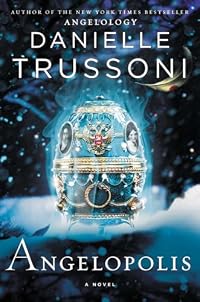
Before she is captured & flown away, Evie manages to slip Verlaine a jewelled egg she believes holds the answers to her ancestry & why the Grigori want her dead.
Soon, Verlaine & Bruno are on their way to St. Petersburg to meet up with Vera, a researcher at the Hermitage & specialist in the Romanovs, Faberge eggs & the role of angels in Russian history.
The scope of the plot is huge and the author spends much time on histories of ancient lands, peoples & cultures. Woven into present day events are the stories of the Tsar & Tsarina, Rasputin, Noah and the flood, biblical interpretations, Peter the Great & the "real" purpose of the fabled Faberge eggs. We also learn the truth behind Evie's existence, her genealogy, who her real father is & why she was conceived.. Verlaine & Co. will travel from NYC to Paris, St. Petersburg, Siberia & back. The sections of the book are named for Dante's circles of hell & chapters are told from the viewpoint of various characters as the story lines progress on several fronts simultaneously.
At the heart of the book is the relationship between Evie & Verlaine but she appears fleetingly. It's more Verlaine's story as he struggles to understand what she is & reconcile his feelings with his duty as a hunter. There are many interesting characters here but his is the only one to undergo any appreciable development as the author spends more time on historical figures.
There are many gory battle scenes throughout & the finale is almost apocalyptic in nature, setting the stage for the next instalment. It's less character driven than the first book, instead more of a massive background & history lesson for the reader to prepare them for book #3. Don't get me wrong. I found the author's impressive research & alternate explanations for historical characters & events to be fascinating (Noah was an angel hunter? Queen Victoria had wings? Huh...who'da thunk it). But if you were waiting for a continuation of the romantic angle, you'll be disappointed.
Resolutions are few & the ending leaves the world in the precarious position of full out war between angels & humans as the angels strive to create Angelopolis, a society where civilization as we know it will cease to exist. If you make it this far, no doubt you'll pick up book #3 just to see how it all pans out. show less
Verlaine continues the hunt
This is #2 in a series & the first thing I'll say is don't even think about reading this as a stand alone. Even if you've read "Angelology", because of the large gap between publications, it will be a challenge to remember all the details needed to follow this sequel.
It opens 10 years after the events chronicled in the first book. V.A. Verlaine, angel hunter extraordinaire, hasn't seen Evangeline Cacciatore since he saw her spread her new wings above NYC after the catastrophe at St. Rose Convent. He's now in Paris, working with his friend & mentor Bruno, another angelologist. They are called to the scene of the brutal murder of an angel. The ID suggests it's Evie & Verlaine is heartbroken. However, as show more he leaves the are he spies her on the street & catches up for a chat.
She's now a full fledged angel & beautiful to behold. He never told his colleagues about her metamorphosis & now that the secret is out, he should capture & turn her in. But he still loves her & listens to her tale.
The most elite of the angels, the Grigori, want her dead & have hired Eno for the job. Eno is a beautiful & lethal Emin angel the hunters have been after since the 1880's. Bruno almost had her a couple of times & has the scars to prove it. He catches up to Verlaine & they watch helplessly as Eno attacks Evie again.
Before she is captured & flown away, Evie manages to slip Verlaine a jewelled egg she believes holds the answers to her ancestry & why the Grigori want her dead.
Soon, Verlaine & Bruno are on their way to St. Petersburg to meet up with Vera, a researcher at the Hermitage & specialist in the Romanovs, Faberge eggs & the role of angels in Russian history.
The scope of the plot is huge and the author spends much time on histories of ancient lands, peoples & cultures. Woven into present day events are the stories of the Tsar & Tsarina, Rasputin, Noah and the flood, biblical interpretations, Peter the Great & the "real" purpose of the fabled Faberge eggs. We also learn the truth behind Evie's existence, her genealogy, who her real father is & why she was conceived.. Verlaine & Co. will travel from NYC to Paris, St. Petersburg, Siberia & back. The sections of the book are named for Dante's circles of hell & chapters are told from the viewpoint of various characters as the story lines progress on several fronts simultaneously.
At the heart of the book is the relationship between Evie & Verlaine but she appears fleetingly. It's more Verlaine's story as he struggles to understand what she is & reconcile his feelings with his duty as a hunter. There are many interesting characters here but his is the only one to undergo any appreciable development as the author spends more time on historical figures.
There are many gory battle scenes throughout & the finale is almost apocalyptic in nature, setting the stage for the next instalment. It's less character driven than the first book, instead more of a massive background & history lesson for the reader to prepare them for book #3. Don't get me wrong. I found the author's impressive research & alternate explanations for historical characters & events to be fascinating (Noah was an angel hunter? Queen Victoria had wings? Huh...who'da thunk it). But if you were waiting for a continuation of the romantic angle, you'll be disappointed.
Resolutions are few & the ending leaves the world in the precarious position of full out war between angels & humans as the angels strive to create Angelopolis, a society where civilization as we know it will cease to exist. If you make it this far, no doubt you'll pick up book #3 just to see how it all pans out. show less
Angelopolis Similar to Angelolgy, there was a lot that I liked about Angelopolis despite any qualms I may have had. In fact, I'm here to say that I actually enjoyed this book much better than the first. Perhaps it's because of the ample amounts of action, or maybe because of the discoveries that are slowly unearthed, but Danielle Trussoni managed to capture my imagination, and I eagerly paged through this book.
Evangeline doesn't play as big of a role in Angelopolis, instead giving way to more information about Verlaine and his posse of angelologists. As Nephilim become more of a threat, Verlaine must work even harder to keep humanity safe. It was so fun to follow him on the hunts, and be introduced to new characters. I'm a huge fan of show more the tough female characters that make an appearance here. Being an angelologist definitely isn't an easy job. Add in a mystery involving the Romanov family, and you have quite a story.
My one gripe, and this is the same one I had before, is that there is a large amount of descriptive writing that slowly bogs down the action. There are pages upon pages of historical information and angelic races. Although interesting in its own right, it does manage to pull the reader out of the overall mystery that surrounds the angels themselves. I'll admit that I skimmed more than a few pages, and yet I still managed to follow the story just fine. Still, this was done much better than the first novel so kudos on that!
As I said though, despite anything else I did actually enjoy the story in its entirety. The ending is a huge cliffhanger and so I know that there will be more to come. I'm in for the long haul now. Bring on more angels, more holy wars, and more action. I'll be here waiting for it. show less
Evangeline doesn't play as big of a role in Angelopolis, instead giving way to more information about Verlaine and his posse of angelologists. As Nephilim become more of a threat, Verlaine must work even harder to keep humanity safe. It was so fun to follow him on the hunts, and be introduced to new characters. I'm a huge fan of show more the tough female characters that make an appearance here. Being an angelologist definitely isn't an easy job. Add in a mystery involving the Romanov family, and you have quite a story.
My one gripe, and this is the same one I had before, is that there is a large amount of descriptive writing that slowly bogs down the action. There are pages upon pages of historical information and angelic races. Although interesting in its own right, it does manage to pull the reader out of the overall mystery that surrounds the angels themselves. I'll admit that I skimmed more than a few pages, and yet I still managed to follow the story just fine. Still, this was done much better than the first novel so kudos on that!
As I said though, despite anything else I did actually enjoy the story in its entirety. The ending is a huge cliffhanger and so I know that there will be more to come. I'm in for the long haul now. Bring on more angels, more holy wars, and more action. I'll be here waiting for it. show less
Honestly I loved ANGELOPOLIS. As a fan of Deborah Harkness, I was intrigued by this series by Danielle Trussoni. The genre is not in my normal comfort zone. However, after reading the novels of Harkness and Trussoni, I am now a huge fan of this category of historical fantasy and mythological magic. This shouldn't surprise me, after all I was brought up on fairy tales and Greek Mythology. Who doesn't love fairies and angels? Danielle Trussoni
will ensnare you in her richly imagined suspenseful world of fallen angels. Her writing style is absorbing, rich with imagery and realism. Enchanting, enveloping and exotic.
ANGELOPOLIS, is the second novel in this series, but easily stands alone. For those readers who like this reviewer have not show more read Angelologist, a New York Times bestseller it is not too late to back track. I guarantee after reading book two, you will crave the next book in the series and should definitely pick up ANGELOLOGIST in the mean time.
Highly recommended...plot was full of enough twists and turns. Characters were memorable, often chilling and some otherwise endearing. Verlaine is now an elite angel hunter and works for the Society of Angelology in Paris. It is now ten years since his appearance in ANGELOLOGIST when he first saw the illuminating Evangeline descend from the Brooklyn Bridge. Verlaine soon learns that Evangeline is still alive, and the discovery leads him to risk all to pursue her. Who knew there were bad angels among the good? The angel hunters pursue evil, the fallen angels comprise an army of various species with distinct characteristics.
Historical reference to Rasputin and the the Romanov's, along with a plot that includes the famous Faberge Easter eggs,made for Tsar Alexander III, add authenticity and mystery to the plot. Trussoni takes the reader from Paris, to St. Petersberg and finally Siberia-where underneath an off-line nuclear reactor the final showdown takes place.
Don't miss ANGELOPOLIS...an enticingly tense and ethereal adventure among angels and angelologists where the line between good and evil is a fine line to cross.
Disclosure: Angelopolis was given to me by the publisher in exchange for an honest review.
Thank you to : Jane Shim, Publicity Assistant
© [Wisteria Leigh] and [Bookworm's Dinner], [2008-2013]. show less
will ensnare you in her richly imagined suspenseful world of fallen angels. Her writing style is absorbing, rich with imagery and realism. Enchanting, enveloping and exotic.
ANGELOPOLIS, is the second novel in this series, but easily stands alone. For those readers who like this reviewer have not show more read Angelologist, a New York Times bestseller it is not too late to back track. I guarantee after reading book two, you will crave the next book in the series and should definitely pick up ANGELOLOGIST in the mean time.
Highly recommended...plot was full of enough twists and turns. Characters were memorable, often chilling and some otherwise endearing. Verlaine is now an elite angel hunter and works for the Society of Angelology in Paris. It is now ten years since his appearance in ANGELOLOGIST when he first saw the illuminating Evangeline descend from the Brooklyn Bridge. Verlaine soon learns that Evangeline is still alive, and the discovery leads him to risk all to pursue her. Who knew there were bad angels among the good? The angel hunters pursue evil, the fallen angels comprise an army of various species with distinct characteristics.
Historical reference to Rasputin and the the Romanov's, along with a plot that includes the famous Faberge Easter eggs,made for Tsar Alexander III, add authenticity and mystery to the plot. Trussoni takes the reader from Paris, to St. Petersberg and finally Siberia-where underneath an off-line nuclear reactor the final showdown takes place.
Don't miss ANGELOPOLIS...an enticingly tense and ethereal adventure among angels and angelologists where the line between good and evil is a fine line to cross.
Disclosure: Angelopolis was given to me by the publisher in exchange for an honest review.
Thank you to : Jane Shim, Publicity Assistant
© [Wisteria Leigh] and [Bookworm's Dinner], [2008-2013]. show less
Members
- Recently Added By
Author Information

15+ Works 3,675 Members
Series

Common Knowledge
- Canonical title
- Angelopolis
- Original publication date
- 2013-03-26
- People/Characters
- Sister Evangeline; V. A. Verlaine
- Important places
- Paris, France; St. Petersburg, Russia; Siberia, Russia; Black Sea
- Epigraph
- And she began to speak to me - so gently and softly - with angelic voice.
- Dante, Inferno - Dedication
- For Angela
- First words
- The scientist examined the girl, his fingers pressing into her skin.
- Last words
- (Click to show. Warning: May contain spoilers.)And when he did, he would look into her pale green eyes and he would kill her.
- Blurbers
- Ciabattari, Jane; Child, Lincoln
Classifications
Statistics
- Members
- 385
- Popularity
- 80,763
- Reviews
- 19
- Rating
- (3.22)
- Languages
- 9 — Danish, Dutch, English, Finnish, French, Italian, Russian, Spanish, Turkish
- Media
- Paper, Audiobook, Ebook
- ISBNs
- 21
- ASINs
- 7