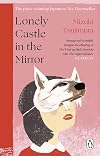
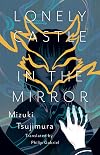
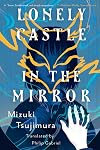
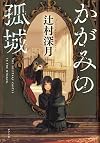
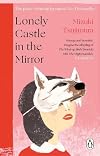
Lonely Castle in the Mirror
by Mizuki Tsujimura
On This Page
Description
Seven students find unusual common ground in this warm, puzzle-like Japanese bestseller laced with gentle fantasy and compassionate insight. Bullied to the point of dropping out of school, Kokoro's days blur together as she hides in her bedroom, unable to face her family or friends. As she spirals into despair, her mirror begins to shine; with a touch, Kokoro is pulled from her lonely life into a resplendent, bizarre fairytale castle guarded by a strange girl in a wolf mask. Six other show more students have been brought to the castle, and soon this marvelous refuge becomes their playground. The castle has a hidden room that can grant a single wish, but there are rules to be followed, and breaking them will have dire consequences. As Kokoro and her new acquaintances spend more time in their new sanctuary, they begin to unlock the castle's secrets and, tentatively, each other's. Lonely Castle in the Mirror is a mesmerizing, heart-warming novel about the unexpected rewards of embracing human connection. show lessTags
Recommendations








Member Reviews
Rating: 4.5* of five
The Publisher Says: In a tranquil neighborhood of Tokyo seven students are avoiding going to school—hiding in their darkened bedrooms, unable to face their family and friends—until the moment they find the mirrors in their bedrooms are shining.
At a single touch, they are pulled from their lonely lives into to a wondrous castle straight out of a Grimm’s fairy tale. This whimsical place, oddly lacking in food and running water but full of electrical sockets, is home to a petulant girl in a mask, named Wolf Queen and becomes their playground and refuge during school hours. Hidden within the walls they’re told is a key that will grant one wish, and a set of clues with which to find it. But there's a catch: the show more key must be found by the end of the school year and they must leave the premises by five o'clock each day or else suffer a fatal end.
As time passes, a devastating truth emerges: only those brave enough to share their stories will be saved. And so they begin to unlock each other's stories: how a boy is showered with more gadgets than love; how another suffers a painful and unexplained rejection and how a girl lives in fear of her predatory stepfather. As they struggle to abide by the rules of the game, a moving story unfolds, of seven characters trapped in a cycle of misunderstanding and loneliness, who are ultimately set free by the power of friendship, empathy, and sacrifice.
Exploring vivid human stories with a twisty and puzzle-like plot, this heart-warming novel is full of joy and hope for anyone touched by sadness and vulnerability. At the heart of this tender, playful tale is a powerful message about the importance of reaching out which shows how with one kind act you can change your life for the better, and more importantly, you can change the lives of others.
I RECEIVED A DRC FROM THE PUBLISHER VIA EDELWEISS+. THANK YOU.
My Review: A story about coming out, though not the kind that phrase currently evokes. These socially maladroit and thus ostracized middle-schoolers are magically transported away from the bullying horrors of that age...the characterization of reincarnation as an endless round of middle-school lifetimes makes me so very glad I'm not A Believer...but, of course, there's a price to pay for this act of rescue. The seven of them must open up, honestly share their experiences, and only then will they be truly safe.
Well. That sounds like something I'd be sharpening my flensing knife with a ghoulish grin on my face, doesn't it? More adolescent exceptionalism! And with an added splodge of fantasy goo! "Oh he's gonna go to town on this one!"
Not this time.
Any story in which adolescent readers are encouraged, without bludgeoning, to share, and to respect the gift of sharing from another, gets my vote. Then to put it in a fantasy world that protects the wounded ones? Bonus points! To go on with the worldbuilding in a way that connects their safe escape spot back to the world they're rescued from, yet without the toxicity they need rescuing from flooding in after them? Rare and delicate flower, let me inhale you! The most usual problems are here, the bullying and the losses of safety and love. Each person's also shown to be made aware from the response to the issue that led the sufferer to this magical safe space of how much different the same stimulus can feel to different people.
Literally the point of this entire book is to learn the art of perspective in dealings with others.
I would like to experience no surprise, no extra frisson of happiness at this. The world would be a better place if I didn't. But I did, and I encourage all y'all with grands, niblings, kids of twelve or more, to grab this story up thence to present it ever-so-casually to them. It's a message, one of kindness and the presumption of goodwill on the part of all who are not genuinely rotten-souled, that I'd strongly urge getting into their heads.
Their dads and uncles, older brothers, and so on, as well. show less
The Publisher Says: In a tranquil neighborhood of Tokyo seven students are avoiding going to school—hiding in their darkened bedrooms, unable to face their family and friends—until the moment they find the mirrors in their bedrooms are shining.
At a single touch, they are pulled from their lonely lives into to a wondrous castle straight out of a Grimm’s fairy tale. This whimsical place, oddly lacking in food and running water but full of electrical sockets, is home to a petulant girl in a mask, named Wolf Queen and becomes their playground and refuge during school hours. Hidden within the walls they’re told is a key that will grant one wish, and a set of clues with which to find it. But there's a catch: the show more key must be found by the end of the school year and they must leave the premises by five o'clock each day or else suffer a fatal end.
As time passes, a devastating truth emerges: only those brave enough to share their stories will be saved. And so they begin to unlock each other's stories: how a boy is showered with more gadgets than love; how another suffers a painful and unexplained rejection and how a girl lives in fear of her predatory stepfather. As they struggle to abide by the rules of the game, a moving story unfolds, of seven characters trapped in a cycle of misunderstanding and loneliness, who are ultimately set free by the power of friendship, empathy, and sacrifice.
Exploring vivid human stories with a twisty and puzzle-like plot, this heart-warming novel is full of joy and hope for anyone touched by sadness and vulnerability. At the heart of this tender, playful tale is a powerful message about the importance of reaching out which shows how with one kind act you can change your life for the better, and more importantly, you can change the lives of others.
I RECEIVED A DRC FROM THE PUBLISHER VIA EDELWEISS+. THANK YOU.
My Review: A story about coming out, though not the kind that phrase currently evokes. These socially maladroit and thus ostracized middle-schoolers are magically transported away from the bullying horrors of that age...the characterization of reincarnation as an endless round of middle-school lifetimes makes me so very glad I'm not A Believer...but, of course, there's a price to pay for this act of rescue. The seven of them must open up, honestly share their experiences, and only then will they be truly safe.
Well. That sounds like something I'd be sharpening my flensing knife with a ghoulish grin on my face, doesn't it? More adolescent exceptionalism! And with an added splodge of fantasy goo! "Oh he's gonna go to town on this one!"
Not this time.
Any story in which adolescent readers are encouraged, without bludgeoning, to share, and to respect the gift of sharing from another, gets my vote. Then to put it in a fantasy world that protects the wounded ones? Bonus points! To go on with the worldbuilding in a way that connects their safe escape spot back to the world they're rescued from, yet without the toxicity they need rescuing from flooding in after them? Rare and delicate flower, let me inhale you! The most usual problems are here, the bullying and the losses of safety and love. Each person's also shown to be made aware from the response to the issue that led the sufferer to this magical safe space of how much different the same stimulus can feel to different people.
Literally the point of this entire book is to learn the art of perspective in dealings with others.
I would like to experience no surprise, no extra frisson of happiness at this. The world would be a better place if I didn't. But I did, and I encourage all y'all with grands, niblings, kids of twelve or more, to grab this story up thence to present it ever-so-casually to them. It's a message, one of kindness and the presumption of goodwill on the part of all who are not genuinely rotten-souled, that I'd strongly urge getting into their heads.
Their dads and uncles, older brothers, and so on, as well. show less
Trigger Warnings: Bullying, attempted sexual assault, mental health
After an incident involving a group of kids from her school, Kokoro hasn’t been going to school and spends most days in her room. One day, the mirror in her room begins to glow and sparkle. When she goes to touch it, she’s pulled into the mirror and into a castle with six other children around her age. A girl calling herself the Wolf Queen greets them and delivers a message: They have until March 30 of the following year to find a key that will unlock the wishing room. Whoever gets the key gets one wish granted. But once the key is found and used, access and memories to the castle will be wiped for everyone. As the children hang out more and more, their desire to show more find the wishing key dims as their friendships blossoms.
Lonely Castle in the Mirror is, at some points, slow, but I never found it unnecessarily pace. We definitely get a slow burn the first half/three fourths of the book, but I found it to be that way so you get to know the characters a lot more and to care about them. It always takes me a little bit longer to get into translated Japanese books than it does books first written in English - but as soon as I do, I can’t put it down. And, I wouldn’t change anything about it.
Now, it did feel like it took awhile for the children to even start trying to look for the key, and then when they did, it wasn’t rushed. Which, I totally get - they found a perfect place to be themselves and not feel the pressures of everyday, normal life. Also, I would sometimes forget how old the kids were and when I would hear what their wish would be, it would sometimes make me giggle, because they would be such kid wishes.
This book really dives into mental illness and the psychological wellbeing of children in Japan, despite living in relatively prosperous economic circumstances. Each of the children have different experiences with bullying and mental health and I felt like Mizuki Tsujimura did a wonderful job at handling each character differently. It would also get me a bit that you would see how the children were acting even around their peers they were comfortable with, and then what they were battling internally as well.
I knew one of the twists in the book, but the second one I didn’t really see coming and it made me cry so much.
Overall, this is a beautiful book that will teach you many lessons about mental health, life, and friendship. I will be highly recommending this book for many.
*Thank you Doubleday and NetGalley for a digital copy of this book in exchange for an honest review show less
After an incident involving a group of kids from her school, Kokoro hasn’t been going to school and spends most days in her room. One day, the mirror in her room begins to glow and sparkle. When she goes to touch it, she’s pulled into the mirror and into a castle with six other children around her age. A girl calling herself the Wolf Queen greets them and delivers a message: They have until March 30 of the following year to find a key that will unlock the wishing room. Whoever gets the key gets one wish granted. But once the key is found and used, access and memories to the castle will be wiped for everyone. As the children hang out more and more, their desire to show more find the wishing key dims as their friendships blossoms.
Lonely Castle in the Mirror is, at some points, slow, but I never found it unnecessarily pace. We definitely get a slow burn the first half/three fourths of the book, but I found it to be that way so you get to know the characters a lot more and to care about them. It always takes me a little bit longer to get into translated Japanese books than it does books first written in English - but as soon as I do, I can’t put it down. And, I wouldn’t change anything about it.
Now, it did feel like it took awhile for the children to even start trying to look for the key, and then when they did, it wasn’t rushed. Which, I totally get - they found a perfect place to be themselves and not feel the pressures of everyday, normal life. Also, I would sometimes forget how old the kids were and when I would hear what their wish would be, it would sometimes make me giggle, because they would be such kid wishes.
This book really dives into mental illness and the psychological wellbeing of children in Japan, despite living in relatively prosperous economic circumstances. Each of the children have different experiences with bullying and mental health and I felt like Mizuki Tsujimura did a wonderful job at handling each character differently. It would also get me a bit that you would see how the children were acting even around their peers they were comfortable with, and then what they were battling internally as well.
I knew one of the twists in the book, but the second one I didn’t really see coming and it made me cry so much.
Overall, this is a beautiful book that will teach you many lessons about mental health, life, and friendship. I will be highly recommending this book for many.
*Thank you Doubleday and NetGalley for a digital copy of this book in exchange for an honest review show less
Actual rating 4.5/5
CW:bullying, mental illness, anxiety/panic attacks, death, sexual assault
Lonely Castle in the Mirror is one of those books that left me thinking about them long after I finished them, its themes and characters still living in my mind weeks later. To be completely honest, this is one book I wasn't too sure about initially since I wasn't quite sure what to expect from it, but I'm so glad I gave it a go!
I went in knowing very little (I'd only read the blurb) and even so I found something quite different from what I'd expected. For starters, I thought the fantastical elements would be a lot more central to the story. That wasn't so, and I'm actually glad that the book developed in the way that it does. This book is its show more characters more than anything else and they are real kids facing all-too-real problems. Magic intervenes to pull them out of their daily lives and into the castle through the mirror, but from there it's all up to them.
If you've been reading my reviews for a while, you know that good characters are one of the key elements that will make or break a book for me and these characters definitely stole my heart. The book follows primarily one of the seven children, Kokoro, who stopped attending school due to bullying but cannot bring herself to open up with any of the adults around her to tell them what she went through. Kokoro's pain and struggle with anxiety in the aftermath of a serious incident were nuanced and depicted incredibly delicately and accurately. I really wanted to just hug Kokoro most of the time, as I could feel her pain and fear.
The other children were all equally fighting their own battles, struggling with mental health, bullying, death and sexual abuse, and were all equally compelling. I loved how we slowly got to see and understand more of who they really were and how they were feeling as they grew more comfortable around one another and started trusting each other. The friendships and tensions all felt extremely realistic, and I found myself getting attached to each of the characters as Kokoro did. While we got a glimpse into other characters' POVs, I would have liked to get to know them more intimately as we did Kokoro, even though it's probably best that we didn't as this kept the interactions more real, even in a fantasy world. Some of the children seemed slightly better developed than others, which was a shame, but overall they were all extremely compelling characters.
The only thing I really struggled with was the pace, which at times slowed down a bit too much for my liking. A few of the scenes in the castle, especially towards the middle of the book, felt like they dragged on a bit. This was more than compensated in the second half of the book. The pace picked up considerably with around 100 pages left to go, and I found myself completely unable to put it down! The ending was also incredibly satisfying and I completely did not see it coming, even though in hindsight all the hints were hidden in plain sight. I also got very emotional towards the end!
I don't know much about Japanese culture, so I really enjoyed learning more about it through this book. In particular, I had no idea that school abandonment and bullying were such serious issues in the country, and of the mental health crisis facing children and teenagers. This book does a wonderful job of raising awareness of these issues, which are also prevalent in Western societies, and in telling everyone who might be struggling: You are not alone.
Overall, this is a gorgeous read tackling complex and painful subjects, while at the same time acting as a reminder of the beauty to be found in genuine human connection and relationships. A tale of friendship and hope and the power of love in all its forms that I will definitely return to in the future. Highly recommended if you love character-driven stories and don't mind a slower pace.
Thanks to Doubleday and NetGalley for the e-arc review copy. This did not affect my opinion of the book in any way. show less
CW:
Lonely Castle in the Mirror is one of those books that left me thinking about them long after I finished them, its themes and characters still living in my mind weeks later. To be completely honest, this is one book I wasn't too sure about initially since I wasn't quite sure what to expect from it, but I'm so glad I gave it a go!
I went in knowing very little (I'd only read the blurb) and even so I found something quite different from what I'd expected. For starters, I thought the fantastical elements would be a lot more central to the story. That wasn't so, and I'm actually glad that the book developed in the way that it does. This book is its show more characters more than anything else and they are real kids facing all-too-real problems. Magic intervenes to pull them out of their daily lives and into the castle through the mirror, but from there it's all up to them.
If you've been reading my reviews for a while, you know that good characters are one of the key elements that will make or break a book for me and these characters definitely stole my heart. The book follows primarily one of the seven children, Kokoro, who stopped attending school due to bullying but cannot bring herself to open up with any of the adults around her to tell them what she went through. Kokoro's pain and struggle with anxiety in the aftermath of a serious incident were nuanced and depicted incredibly delicately and accurately. I really wanted to just hug Kokoro most of the time, as I could feel her pain and fear.
The other children were all equally fighting their own battles, struggling with mental health, bullying, death and sexual abuse, and were all equally compelling. I loved how we slowly got to see and understand more of who they really were and how they were feeling as they grew more comfortable around one another and started trusting each other. The friendships and tensions all felt extremely realistic, and I found myself getting attached to each of the characters as Kokoro did. While we got a glimpse into other characters' POVs, I would have liked to get to know them more intimately as we did Kokoro, even though it's probably best that we didn't as this kept the interactions more real, even in a fantasy world. Some of the children seemed slightly better developed than others, which was a shame, but overall they were all extremely compelling characters.
The only thing I really struggled with was the pace, which at times slowed down a bit too much for my liking. A few of the scenes in the castle, especially towards the middle of the book, felt like they dragged on a bit. This was more than compensated in the second half of the book. The pace picked up considerably with around 100 pages left to go, and I found myself completely unable to put it down! The ending was also incredibly satisfying and I completely did not see it coming, even though in hindsight all the hints were hidden in plain sight. I also got very emotional towards the end!
I don't know much about Japanese culture, so I really enjoyed learning more about it through this book. In particular, I had no idea that school abandonment and bullying were such serious issues in the country, and of the mental health crisis facing children and teenagers. This book does a wonderful job of raising awareness of these issues, which are also prevalent in Western societies, and in telling everyone who might be struggling: You are not alone.
Overall, this is a gorgeous read tackling complex and painful subjects, while at the same time acting as a reminder of the beauty to be found in genuine human connection and relationships. A tale of friendship and hope and the power of love in all its forms that I will definitely return to in the future. Highly recommended if you love character-driven stories and don't mind a slower pace.
Thanks to Doubleday and NetGalley for the e-arc review copy. This did not affect my opinion of the book in any way. show less
Kokoro is a seventh grader who refuses to attend school due to vicious bullying. She spends her days hiding in her bedroom and almost never ventures out of her house. Then one day she notices that the full-length mirror in her bedroom begins to shine. Kokoro puts her hand to the glass and is instantly pulled through a portal that leads her to a magnificent castle where she meets six other kids her age. They have one thing in common: they have all dropped out of school. All of them are being watched over by a cryptic, enigmatic young girl who wears a wolf face mask -the Wolf Queen-, and informs the group that they are tasked with finding a hidden key that will grant its finder one wish. At that moment, the castle will vanish, along with show more all the memories they have of this magical world. The Wolf Queen also informs them that the key must be found by March 30. The book begins in May.
For the next few months, the seven kids start to open up to each other and share their unique stories. Inevitably, they start to bond and the castle becomes a refuge for all of them. The only rule the Wolf Queen gives them is that they must leave the castle every day by 5pm or else they will be eaten by the Wolf Queen herself. Despite the strangeness of the whole situation, the group spends more time engaging with one another, though all of them do make desultory attempts to find the key.
As March 30 nears, the implications of someone finding the key takes on a greater significance. Are any of them going to find the key and ultimately remove all their memories of the sanctuary the castle has become?
This book is difficult to pigeonhole. While it has elements of fantasy and science fiction and involves parallel worlds, I would not label it as such. I think the term “magical realism” is more accurate, because most of the book is firmly rooted in reality. It is important to understand that the castle transcends the rules of time, which are fluid, not fixed.
I loved this book to pieces. The friendships that bloomed between the seven loners were poignant and tender, but never saccharine. The narrative is twisty and unpredictable, which I liked.
Highly highly recommended! show less
For the next few months, the seven kids start to open up to each other and share their unique stories. Inevitably, they start to bond and the castle becomes a refuge for all of them. The only rule the Wolf Queen gives them is that they must leave the castle every day by 5pm or else they will be eaten by the Wolf Queen herself. Despite the strangeness of the whole situation, the group spends more time engaging with one another, though all of them do make desultory attempts to find the key.
As March 30 nears, the implications of someone finding the key takes on a greater significance. Are any of them going to find the key and ultimately remove all their memories of the sanctuary the castle has become?
This book is difficult to pigeonhole. While it has elements of fantasy and science fiction and involves parallel worlds, I would not label it as such. I think the term “magical realism” is more accurate, because most of the book is firmly rooted in reality. It is important to understand that the castle transcends the rules of time, which are fluid, not fixed.
I loved this book to pieces. The friendships that bloomed between the seven loners were poignant and tender, but never saccharine. The narrative is twisty and unpredictable, which I liked.
Highly highly recommended! show less
Kokoro has stopped attending school since an unpleasant bullying incident. One day while at home in her bedroom her mirror begins to glow, and when she goes to investigate she finds herself pulled through it into the hallway of a castle. She's not alone - 6 other children around her age (13-15) have travelled there too, and they are greeted by a small imperious girl wearing a wolf mask. She explains that they will have access to the castle from 10-5 every day until 30 March the following year, and that hidden within the castle is a key which will grant one wish to the finder. As the children cautiously get to know each other it soon becomes clear that they have a lot in common, and that they would rather continue to visit the castle show more together than find the key.
The book is a slow build as the children get to know each other and start to share their stories - Kokoro is the only character whose life outside the castle we actually see. But I felt that the dynamics between them were realistic, and for them to have opened up and trusted one another more quickly would not have been convincing. There are strong fairy-tale elements threaded through the story, but no easy answers are given to the problem of bullying and children's mental health. Rather, it says "You are seen. You are believed. It's not your fault", messages that the victims of bullying are not always given. This was an unusual read, difficult to classify - is it for children or adults? Fantasy or realism? - but one that I would recommend. show less
The book is a slow build as the children get to know each other and start to share their stories - Kokoro is the only character whose life outside the castle we actually see. But I felt that the dynamics between them were realistic, and for them to have opened up and trusted one another more quickly would not have been convincing. There are strong fairy-tale elements threaded through the story, but no easy answers are given to the problem of bullying and children's mental health. Rather, it says "You are seen. You are believed. It's not your fault", messages that the victims of bullying are not always given. This was an unusual read, difficult to classify - is it for children or adults? Fantasy or realism? - but one that I would recommend. show less
The core of this novel, adolescents coping with abuse and/or neglect while forming connections with others in constructive ways, is familiar in the worlds of manga and anime but the way it all plays out will be likely potent and fresh to readers of Western fiction, especially YA fiction. Tsujimura has constructed well-paced exposition here, and the reader is allowed to get familiar with the main characters before the ride truly gains speed; as other reviewers have pointed out, the last third of "Lonely Castle in the Mirror" really takes off and rewards the reader with sweetly-done reveals. A great deal of care was put into this, unlike way too much of the revenue-generating YA market, really making this as viable for an adult audience show more as anything else.
I really appreciated that the seven main characters, in junior high and ranging from 13-15 years old, really behave and speak like kids that age; the world has too many 13-year-old heroes fighting gods, monsters, and each other with swords and boss-level magic that even grown and experienced adults can't wield. Tsujimura also allows for a range of adults here, from devoted and involved parents to brutish, and teachers ranging from engaged to squelching. This book really is about the characters and how individuals create the matrix in which others thrive or not. It was already a satisfying read before the various pieces of the denouement; very nice indeed. show less
I really appreciated that the seven main characters, in junior high and ranging from 13-15 years old, really behave and speak like kids that age; the world has too many 13-year-old heroes fighting gods, monsters, and each other with swords and boss-level magic that even grown and experienced adults can't wield. Tsujimura also allows for a range of adults here, from devoted and involved parents to brutish, and teachers ranging from engaged to squelching. This book really is about the characters and how individuals create the matrix in which others thrive or not. It was already a satisfying read before the various pieces of the denouement; very nice indeed. show less
Tojo said "it's only school, after all". That was an epiphany for Kokoro. School had been everything to her, and probably to the other six young people invited to the castle. A change in perspective gave Kokoro the courage to return to school, plus the knowledge that she has friends, albeit in a different time zone. Even if things do not work out, there are other schools to go to. She could go anywhere, it would not be easy and there would always be people she disliked. But there are alternatives, and the school is not the only place she belongs. The same for the rest of us struggling with school or work. Don't see it as the be-all and end-all.
Members
- Recently Added By
Lists

Japanese Literature
230 works; 40 members

Best of World Literature
434 works; 52 members

child hero ~ adult novel
60 works; 12 members

Best Japanese Fiction
41 works; 10 members

Books published and read in 2022
82 works; 5 members

Books Read in 2022
5,168 works; 114 members
Main Character is aged 10-19
361 works; 6 members

I Could Live There
185 works; 12 members

Global Reads: Books Set in East Asia
139 works; 12 members

Top Five Books of 2024
795 works; 264 members

Favorite Books in Translation
320 works; 133 members
Author Information

47+ Works 1,527 Members
Some Editions
Awards and Honors
Awards
Distinctions
Common Knowledge
- Original title
- かがみの孤城
- Alternate titles
- Kagami no kojou
- Original publication date
- 2017-05-11
- People/Characters
- Kokoro Anzai; Wolf Queen; Akiko Inoue; Rion Mizumori; Fuka Hasegawa; Aasu Masamune (show all 13); Subaru Nagahisa; Haruka Ureshino; Miori Sanada; Miss Kitajima; Moé Tojo; Mio Mizumori; Yuriko Samejima
- Important places
- Japan; Lonely Castle; Yukashina No. 5 Junior High, Minami, Tokyo, Japan; Kokoro no kyoshitsu, Tokyo, Japan; Tokyo, Japan; Akihabara, Tokyo, Japan
- Related movies
- Lonely Castle in the Mirror (2022 | IMDb)
- Epigraph
- Lonely Castle: (1) A castle situated off by itself. (2) A castle surrounded by enemies, with no hope of relief forces arriving.
Daijirin dictionary - First words
- I sometimes find myself dreaming.
- Last words
- (Click to show. Warning: May contain spoilers.)The light slowly, softly envelopes them both, Kokoro and Aki, as they sit there, face to face.
- Original language
- Japanese
Classifications
- Genres
- Fiction and Literature, Fantasy, General Fiction, Young Adult
- DDC/MDS
- 895.636 — Literature & rhetoric Literatures of other languages Literatures of East and Southeast Asia Japanese Japanese fiction 2000–
- LCC
- PL876 .S83 .H3513 — Language and Literature Languages and literatures of Eastern Asia, Africa, Oceania Languages of Eastern Asia, Africa, Oceania Japanese language and literature Japanese literature
- BISAC
Statistics
- Members
- 857
- Popularity
- 31,841
- Reviews
- 30
- Rating
- (3.99)
- Languages
- 5 — English, French, German, Italian, Japanese
- Media
- Paper, Audiobook, Ebook
- ISBNs
- 15
- ASINs
- 5