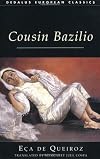
Cousin Bazilio
by Eça de Queirós
On This Page
Description
Returning from Brazil, Bazilio tells his cousin Louisa of the brave new world. His revelation leads to a evastating conclusion. "O Primo Bazilio has a far deeper tragedy than Madame Bovary" wrote Roy Campbell, "because the girl involved is . . . a most loveable character. One of the most tragic novels of the nineteenth century."Tags
Recommendations






























Member Reviews
When her husband travels for work, the charming but vapid Luiza falls into the arms of her cousin Bazilio and heads for her own destruction. Eça de Queirós is one of my favorite writers and Cousin Bazilio is another of his wonderful satires of bourgeois life in 19th-century Lisbon. It is somewhat reminiscent of Madame Bovary, but this story is peopled by a plethora of characters that are both sympathetic and amusing. There are no real villains or heroes - all characters get to take their turn at being pitied, admired, or despised. It is also quite amusing to think that this was considered quite outrageous when it was first published due to some naughty aspects, whereas by today's standards, it's borderline chaste. I particularly enjoy show more how the social realist style of Queirós' can't help but display the hypocritical rules of society, especially when it comes to female sexuality and morality. show less
Luiza sente o vazio e o tédio, no casamento e na vida. O seu amor da juventude, Basílio, retorna a Lisboa, aquando da ausência do seu marido. Um amor do passado, vivido agora na clandestinidade, é o remédio que encontra para superar o que a ociosidade a faz sentir:
Depois, Juliana (esta grande personagem de Eça) abre o caminho para a tragédia de Luiza:
Até ao fim, vai ser o caminhar para a tragédia.
Um poema de William Blake poderia fechar a leitura deste “episódio doméstico”, em que Eça de Queirós faz com mestria uma profunda crítica à burguesia lisboeta da época:
“E Luiza tinha suspirado, tinha beijado o papel devotamente! Era a primeira vez que lhe escreviam aquelas sentimentalidades, e o seu orgulho dilatava-se ao calor amoroso que saía delas, como um corpo ressequido que estira num banho tépido: sentia um acréscimo de estima por si mesma, e parecia-lhe que entrava numa existência superiormente interessante, onde cada hora tinha o seu encanto diferente, cada passo conduzia a um êxtase, e a alma se cobria de um luxoshow more
radioso de sensações!” (tantas vezes ouvi Arnaldo Antunes a dizê-lo antes de o ter lido pela primeira vez)
Depois, Juliana (esta grande personagem de Eça) abre o caminho para a tragédia de Luiza:
“- Olhe que nem todos os papéis foram prò lixo.”
Até ao fim, vai ser o caminhar para a tragédia.
Um poema de William Blake poderia fechar a leitura deste “episódio doméstico”, em que Eça de Queirós faz com mestria uma profunda crítica à burguesia lisboeta da época:
Ó rosa, estás doente:show less
O verme invisível,
Que voa de noite
No vento terrível,
Encontrou teu leito
De rubro prazer.
Amor oculto e sombrio
A vida te vai comer
(spoilers)
The plot of this book is a pretty standard 19th c. one – unhappy wife cheats, misery ensues. The book also satirizes smug bourgeois society by showing the hypocrisy and behavior of the friends and neighbors of the married couple. All this is pretty unremarkable, but the focus on the servants in the families differentiates this novel from others with the same storyline. The relationship between Luisa and her maid Juliana is well-characterized but rather horrifying.
Luisa is a happy but empty-headed wife who, in true 19th fashion, has been somewhat corrupted by novels depicting love as an exciting torment. Her own marriage to Jorge is happy and loving but rather superficial. When he leaves on a business trip for several months, show more she quickly becomes lonely and bored. Her cousin and first love Bazilio returns and proceeds to seduce her. Bazilio is clearly a selfish rake, but he talks a good game and Luisa thinks he loves her and can’t live without her. Juliana quickly discovers her affair and begins blackmailing her.
While the author depicts Luisa’s initial ennui and unhappiness once Bazilio starts taking her for granted, the best part of the fallout is the unhappy relationship between Luisa and Juliana, the maid. Juliana is bitter and cruel when she has a little power – seemingly unsympathetic. But at first the reader is inclined to feel bad for her. The author describes her background – shuffled from situation to situation, having to deal with annoying children and selfish mistresses, Juliana lives an unhappy life. Unlike the genial cook Joana, she has no one to love her, and her illness means that she’ll likely soon die in poverty since she has no value as a servant.
Though Juliana is ugly and old and labors all day and Luisa is bored and satisfied, they are oppressed by the same system. Juliana’s drudgery makes Luisa’s life possible. The closeness of their relationship is reflected in the secret they both have to keep. It also shows the true state of their relationship – normally the servant is expected to make the household run but must stay invisible. Here, Juliana has forced herself into Luisa’s life – Luisa can’t just replace her as Jorge suggests at one point. The relationship comes to seem like an abusive one – full of hatred and tension at multiple points, but neither can leave it. Both are also afraid of Luisa’s husband and their lives both revolve around men. Comeuppance happens for both when a man exposes their treachery.
As in many books that deal with adultery - hypocrisy and double standards at every level. Wives are expected to be paragons of virtue – Jorge says in a hypothetical situation that an adulterous wife deserves death, but cheats on Luisa when he’s gone. Her affair, however, would make her a pariah in society while her husband boasts of his affair to his best friend. While wives have to be monogamous, servants are expected to be sexually available to wealthy men (unless they are old and unattractive like Juliana). Some of their friends use their servants in this way while preaching morality. Even Jorge’s best friend Sebastiao – who is virtuous and helpful – has absorbed this idea. He puts Luisa on a pedestal though other women are expendable.
Luisa’s death occurs at the end of the book – lots of those 19th c. adultery books end with the heroine’s death. But it’s not suicide and it’s mostly Jorge’s fault. Luisa is not out and out immoral – she believed she was in love, and is perhaps excusable (to a 19th c audience) because she’s stereotypically silly and easily led astray (Sebastiao should have intervened). After, she feels genuinely guilty and still loves her husband – possibly even more than before. Jorge’s unhappiness at the end contrasts with his earlier rigid views.
A number of colorful side characters enliven the plot and also show bourgeois snobbery and hypocrisy. Luiza’s childhood friend Leopoldina further illustrates the double standard – she’s married, but has multiple lovers. She is not acceptable in good society, but men who do the same are. Other friends include an old spinster who is madly in love with another of their acquaintances but has to hide it, Jorge’s bitter friend and doctor, the servant-chasing counselor who is pedantic and dull but also engaged in an affair with his maid and keeps pornographic tracts in his bedside table. There are also a lot of servant characters – nice to see the different kinds of interactions between Juliana and other servants, the woman who runs the employment agency. show less
The plot of this book is a pretty standard 19th c. one – unhappy wife cheats, misery ensues. The book also satirizes smug bourgeois society by showing the hypocrisy and behavior of the friends and neighbors of the married couple. All this is pretty unremarkable, but the focus on the servants in the families differentiates this novel from others with the same storyline. The relationship between Luisa and her maid Juliana is well-characterized but rather horrifying.
Luisa is a happy but empty-headed wife who, in true 19th fashion, has been somewhat corrupted by novels depicting love as an exciting torment. Her own marriage to Jorge is happy and loving but rather superficial. When he leaves on a business trip for several months, show more she quickly becomes lonely and bored. Her cousin and first love Bazilio returns and proceeds to seduce her. Bazilio is clearly a selfish rake, but he talks a good game and Luisa thinks he loves her and can’t live without her. Juliana quickly discovers her affair and begins blackmailing her.
While the author depicts Luisa’s initial ennui and unhappiness once Bazilio starts taking her for granted, the best part of the fallout is the unhappy relationship between Luisa and Juliana, the maid. Juliana is bitter and cruel when she has a little power – seemingly unsympathetic. But at first the reader is inclined to feel bad for her. The author describes her background – shuffled from situation to situation, having to deal with annoying children and selfish mistresses, Juliana lives an unhappy life. Unlike the genial cook Joana, she has no one to love her, and her illness means that she’ll likely soon die in poverty since she has no value as a servant.
Though Juliana is ugly and old and labors all day and Luisa is bored and satisfied, they are oppressed by the same system. Juliana’s drudgery makes Luisa’s life possible. The closeness of their relationship is reflected in the secret they both have to keep. It also shows the true state of their relationship – normally the servant is expected to make the household run but must stay invisible. Here, Juliana has forced herself into Luisa’s life – Luisa can’t just replace her as Jorge suggests at one point. The relationship comes to seem like an abusive one – full of hatred and tension at multiple points, but neither can leave it. Both are also afraid of Luisa’s husband and their lives both revolve around men. Comeuppance happens for both when a man exposes their treachery.
As in many books that deal with adultery - hypocrisy and double standards at every level. Wives are expected to be paragons of virtue – Jorge says in a hypothetical situation that an adulterous wife deserves death, but cheats on Luisa when he’s gone. Her affair, however, would make her a pariah in society while her husband boasts of his affair to his best friend. While wives have to be monogamous, servants are expected to be sexually available to wealthy men (unless they are old and unattractive like Juliana). Some of their friends use their servants in this way while preaching morality. Even Jorge’s best friend Sebastiao – who is virtuous and helpful – has absorbed this idea. He puts Luisa on a pedestal though other women are expendable.
Luisa’s death occurs at the end of the book – lots of those 19th c. adultery books end with the heroine’s death. But it’s not suicide and it’s mostly Jorge’s fault. Luisa is not out and out immoral – she believed she was in love, and is perhaps excusable (to a 19th c audience) because she’s stereotypically silly and easily led astray (Sebastiao should have intervened). After, she feels genuinely guilty and still loves her husband – possibly even more than before. Jorge’s unhappiness at the end contrasts with his earlier rigid views.
A number of colorful side characters enliven the plot and also show bourgeois snobbery and hypocrisy. Luiza’s childhood friend Leopoldina further illustrates the double standard – she’s married, but has multiple lovers. She is not acceptable in good society, but men who do the same are. Other friends include an old spinster who is madly in love with another of their acquaintances but has to hide it, Jorge’s bitter friend and doctor, the servant-chasing counselor who is pedantic and dull but also engaged in an affair with his maid and keeps pornographic tracts in his bedside table. There are also a lot of servant characters – nice to see the different kinds of interactions between Juliana and other servants, the woman who runs the employment agency. show less
de Queiros sets the scene like a playwright. Here are the young couple- bored, light-minded golden haired Luisa, and her husband Jorge, off on a lengthy work-based trip. At a farewell party we meet their friends - among others Jorge's faithful friend Sebastian, charged with keeping a fatherly eye on Luisa. Oh, and a theatre director, whose latest offering - a tale of a faithless wife- has Jorge advocating the wretched woman die for her crimes. Meanwhile, Luisa's handsome cousin - and erstwhle romance- Bazilio, is due back in Lisbon from work in Brazil. And on the sidelines is an ugly and much abused servant, Juliana....
I shall say no more, but it's highly readable!
As Zola commented "(de Queiros) is far greater than my own dear master, show more Flaubert." show less
I shall say no more, but it's highly readable!
As Zola commented "(de Queiros) is far greater than my own dear master, show more Flaubert." show less
Durante uma viagem prolongada de seu marido, Luísa se deixa seduzir por Basílio, um primo seu que voltava a Portugal depois de uma temporada no Brasil. Imprudentes e indiscretos, os amantes acabam flagrados por Juliana, a empregada da casa, que passa a chantagear a patroa. Com o anúncio da iminente volta do marido, está armado o cenário para um caso exemplar de decadência do estilo de vida pequeno-burguês, com seus preconceitos e moralismos, seus tipos parasitários, suas relações amesquinhadas e seu frágil equilíbrio.
“O Primo Basílio” narra a história de amor entre o casal Jorge e Luísa, e a infidelidade da esposa com seu primo, Brasílio. A obra de Eça de Queiroz, publicada em 1878, consiste na análise da família burguesa da época e faz parte dos clássicos da literatura portuguesa.
Complicated nineteenth-century adultery novel in the same quality of Flaubert, Madame Bovary, or Alas Clarín, La Regenta.
Members
- Recently Added By
Lists

Best Literature in Portuguese
15 works; 2 members

Hidden Classics
73 works; 15 members

Favourite Books
1,819 works; 316 members

19th Century
190 works; 16 members

Philip Ward's Lifetime Reading Plan
592 works; 22 members
Author Information

All Editions
Some Editions
Awards and Honors
Series
Belongs to Publisher Series
Common Knowledge
- Canonical title
- Cousin Bazilio
- Original title
- O Primo Basílio
- Original publication date
- 1878
- People/Characters
- Luísa 'Luisinha'; Basílio; Acácio; Jorge Vicente; Juliana; Julião (show all 7); D. Felicidade
- Important places
- Lisbon, Portugal; Sintra, Portugal; Brazil
- First words
- Tinham dado onze horas no «cuco» da sala de jantar.
The cuckoo clock in the dining-room had sounded eleven o'clock. - Last words
- (Click to show. Warning: May contain spoilers.)E foram tomar xerez à Taverna Inglesa.
(Click to show. Warning: May contain spoilers.)Then they both went to have a sherry at the English Tavern. - Original language
- Portugese
Classifications
Statistics
- Members
- 766
- Popularity
- 36,610
- Reviews
- 11
- Rating
- (4.01)
- Languages
- 13 — Catalan, Chinese, Dutch, English, French, German, Italian, Portuguese (Brazil), Portuguese (Portugal), Russian, Slovenian, Spanish, Swedish
- Media
- Paper, Ebook
- ISBNs
- 93
- ASINs
- 29