
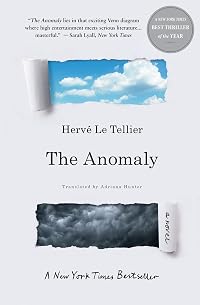
The Anomaly
by Hervé Le Tellier
On This Page
Description
Winner of the Prix Goncourt, this dizzying literary page-turner ingeniously blends crime, fantasy, sci-fi, and thriller as it plumbs the mysteries surrounding a Paris-New York flight.In June 2021, a senseless event upends the lives of hundreds of men and women, all passengers on a flight from Paris to New York. Among them: Blake, a respectable family man, though he works as a contract killer; Slimboy, a Nigerian pop star tired of living a lie; Joanna, a formidable lawyer whose flaws have show more caught up with her; and Victor Miesel, a critically acclaimed yet commercially unsuccessful writer who suddenly becomes a cult hit.
All of them believed they had double lives. None imagined just how true that was.
A virtuoso novel where logic confronts magic, The Anomaly explores the part of ourselves that eludes us. This witty variation on the doppelgänger theme, which takes us on a journey from Lagos and Mumbai to the White House, proves to be Hervé Le Tellier’s most ambitious work yet. show less
Tags
Recommendations






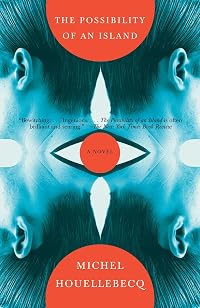

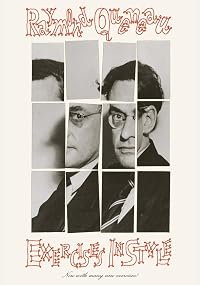
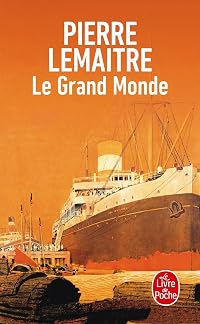




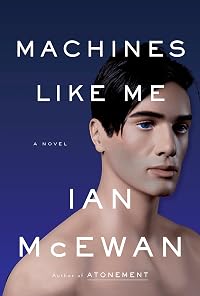










Member Reviews
What a clever, intriguing, challenging book - that is also enormously readable and entertaining.
I don't know how to do justice to the plot without somehow diminishing it, but I'll make a stab at it.
An airplane flying from Paris to NYC in June 2021 hits an unpredicted storm, but emerges to sunny skies, and very confused air traffic controllers. Because, you see, that same plane with the same pilot, crew and passengers had landed in March 2021.
And now there are two of everything, with the second set of arrivals sequestered in a NJ military base as scientists, religious leaders and politicians try to figure out what happened and what it means.
Nifty science fiction story idea, right? But Le Tellier also treats us to thoughtful descriptions show more of the backstories of a dozen of the passengers, crew, scientists and other related parties, and how the outcomes affect them. There is something uniquely French about the philosophical and religious discussions of the meaning of this event, but the scientific analysis seems more distinctly American to me.
This will easily rise to the top of my best-books-of-2022 category. It's somehow intellectually provocative and playful at the same time. I will actually probably add it to my very small shelf of books I'm likely to read again. show less
I don't know how to do justice to the plot without somehow diminishing it, but I'll make a stab at it.
An airplane flying from Paris to NYC in June 2021 hits an unpredicted storm, but emerges to sunny skies, and very confused air traffic controllers. Because, you see, that same plane with the same pilot, crew and passengers had landed in March 2021.
And now there are two of everything, with the second set of arrivals sequestered in a NJ military base as scientists, religious leaders and politicians try to figure out what happened and what it means.
Nifty science fiction story idea, right? But Le Tellier also treats us to thoughtful descriptions show more of the backstories of a dozen of the passengers, crew, scientists and other related parties, and how the outcomes affect them. There is something uniquely French about the philosophical and religious discussions of the meaning of this event, but the scientific analysis seems more distinctly American to me.
This will easily rise to the top of my best-books-of-2022 category. It's somehow intellectually provocative and playful at the same time. I will actually probably add it to my very small shelf of books I'm likely to read again. show less
I'm not sure how to talk about this in any useful way without spoilers, so this is your warning that the whole review is spoilery.
An airplane flies into a storm and calls for help. When they land, it becomes clear that this is the same plane that flew into a storm three months before and landed safely. The plane and all the people on board have been duplicated. The book explores what happens next by following the government agents tasked with dealing with this event and the pairs of people from the plane and their doppelgangers. In the hands of someone else, I suppose I might have really enjoyed this. If it had been a story that pulled the science fiction elements to the fore, I might have been really intrigued. Le Tellier offers some show more possible answers about what happened to duplicate the plane, but nothing definitive. And if the story had really made me care about the passengers as individuals, I might have been deeply invested. Le Tellier tries, but he never made me care about any of them. I wanted a book that made choices, and I think Le Tellier was interested in looking at many possibilities. (There *is* one really choice bit where he imagines a set of one of the duplicates being interviewed by Stephen Colbert--Le Tellier masterfully captures Colbert, his mannerisms, his bits of business, in that extended scene.) And the end annoyed me. A *third* version of the plane appears, the US president has it shot down, and this... ends the world? I guess? Sure, Herve. Whatever. The book was saved from being tossed hardily across the room by the fact other mammals in the house were already asleep when I finished it. Feh. show less
An airplane flies into a storm and calls for help. When they land, it becomes clear that this is the same plane that flew into a storm three months before and landed safely. The plane and all the people on board have been duplicated. The book explores what happens next by following the government agents tasked with dealing with this event and the pairs of people from the plane and their doppelgangers. In the hands of someone else, I suppose I might have really enjoyed this. If it had been a story that pulled the science fiction elements to the fore, I might have been really intrigued. Le Tellier offers some show more possible answers about what happened to duplicate the plane, but nothing definitive. And if the story had really made me care about the passengers as individuals, I might have been deeply invested. Le Tellier tries, but he never made me care about any of them. I wanted a book that made choices, and I think Le Tellier was interested in looking at many possibilities. (There *is* one really choice bit where he imagines a set of one of the duplicates being interviewed by Stephen Colbert--Le Tellier masterfully captures Colbert, his mannerisms, his bits of business, in that extended scene.) And the end annoyed me. A *third* version of the plane appears, the US president has it shot down, and this... ends the world? I guess? Sure, Herve. Whatever. The book was saved from being tossed hardily across the room by the fact other mammals in the house were already asleep when I finished it. Feh. show less
Brilliant mix of thriller and science fiction, engaging with a magic moment in which an Air France Boeing and its passengers, travelling from Paris to New York, get duplicated during a storm. The one Boeing lands in March, the duplicated one in June. The duplication raises all kinds of existential problems and questions, in particular for the passengers themselves, the security apparatus and the wider human community. This anomaly is dealt with in different ways. It is treated as a threat, a sign of God, an opportunity to mend ways, or as a sign of the end of time.
The way Le Tellier relates the story is by splitting the book in three parts. In part 1 we get to know various characters that were on the plane. In part 2, the second Air show more France plane re-appears and is guided to a Military airbase. Here the security forces and two Princeton computer geeks have to execute their own (ludicrous) protocol dealing with such eventualities. The crew and passengers are held in isolation and questioned. Meanwhile their doppelgangers are apprehended and ferried to the air base. In part 3, the various passengers and crew are allowed to engage with their alter egos and work out a new way of dealing with the aftermath of a shared identity. Those who want, can opt for a witness protection program and continue their lives as different persons.
So what struck me, raised my interest? Le Tellier has found an interesting prism, with the duplicating plane, for exploring some existential questions, neatly elaborated in personal cases. First, there is the gimmick of the hired assassin, who goes missing from the hangar (creating a fire, escaping, taking on a different identity), travels back to Paris and kills his alter ego (chopping up his body in acid, making him disappear). Problem fixed. Second, there is the response of the security apparatus (isolation of the June flight, implementation of a silly protocol dreamed up by a couple of nerd students, mobilization of Nobel Prize winners, presidential coordination with Xi Jinping and Macron), which Le Tellier uses to analyse the banality of power (both political and scientific). Third, is the response of society as a whole and religious pundits/fanatics – le Tellier shows how the security forces try to coax consensus out of all religious leaders, crafting a uniform message of harmony and peace. But that proves futile once the religious fanatics go to town on this unusual event: an opportunity to announce the end of times, or take action, such as the futile killing of a young actress and her alter ego after presenting their case in a famous late night talk show. Fourth, and probably most interesting, are the impact of dealing with 3 missing months of life, for a number of key personalities that have been introduced in part 1. What happens if your alter ego fell pregnant, changing the dynamic of a love relationship (well, the non pregnant alter ego decides to cut loose and change her identity, despite secretly hoping to regain her lover). What happens when an obscure writer produces a master piece and kills himself, only for his alter ego to return in public life and enjoy the newly gained fame (well the latter is exactly what happens, and moreover, he exhibits a totally care free view on life while attracting a new love life). What happens when a relationship that was dead in the water anyway, is viewed upon by the disappointed party three months on? (some kind of wisdom shines thru, but also a kind of infinite sadness and a knee-jerk response to warn his alter ego for what is coming and if at all possible to behave differently to save the affair). What happens when your daughter has been abused by her PTSS afflicted dad in the three months of your absence? What happens when a boy suddenly finds himself saddled with two envious moms? (well, he simply proposes a rational time-sharing system that his mom(s) could never have devised). What happens when a patient with fatal pancreatic cancer gets a second chance at saving his own life, through a new procedure? (well, this the saddest case – the man dies again and his brother, wife and kids have to undergo the same painful process twice…). It is in the individual cases that Le Tellier can table and discuss the big questions in life. Brilliant idea. show less
The way Le Tellier relates the story is by splitting the book in three parts. In part 1 we get to know various characters that were on the plane. In part 2, the second Air show more France plane re-appears and is guided to a Military airbase. Here the security forces and two Princeton computer geeks have to execute their own (ludicrous) protocol dealing with such eventualities. The crew and passengers are held in isolation and questioned. Meanwhile their doppelgangers are apprehended and ferried to the air base. In part 3, the various passengers and crew are allowed to engage with their alter egos and work out a new way of dealing with the aftermath of a shared identity. Those who want, can opt for a witness protection program and continue their lives as different persons.
So what struck me, raised my interest? Le Tellier has found an interesting prism, with the duplicating plane, for exploring some existential questions, neatly elaborated in personal cases. First, there is the gimmick of the hired assassin, who goes missing from the hangar (creating a fire, escaping, taking on a different identity), travels back to Paris and kills his alter ego (chopping up his body in acid, making him disappear). Problem fixed. Second, there is the response of the security apparatus (isolation of the June flight, implementation of a silly protocol dreamed up by a couple of nerd students, mobilization of Nobel Prize winners, presidential coordination with Xi Jinping and Macron), which Le Tellier uses to analyse the banality of power (both political and scientific). Third, is the response of society as a whole and religious pundits/fanatics – le Tellier shows how the security forces try to coax consensus out of all religious leaders, crafting a uniform message of harmony and peace. But that proves futile once the religious fanatics go to town on this unusual event: an opportunity to announce the end of times, or take action, such as the futile killing of a young actress and her alter ego after presenting their case in a famous late night talk show. Fourth, and probably most interesting, are the impact of dealing with 3 missing months of life, for a number of key personalities that have been introduced in part 1. What happens if your alter ego fell pregnant, changing the dynamic of a love relationship (well, the non pregnant alter ego decides to cut loose and change her identity, despite secretly hoping to regain her lover). What happens when an obscure writer produces a master piece and kills himself, only for his alter ego to return in public life and enjoy the newly gained fame (well the latter is exactly what happens, and moreover, he exhibits a totally care free view on life while attracting a new love life). What happens when a relationship that was dead in the water anyway, is viewed upon by the disappointed party three months on? (some kind of wisdom shines thru, but also a kind of infinite sadness and a knee-jerk response to warn his alter ego for what is coming and if at all possible to behave differently to save the affair). What happens when your daughter has been abused by her PTSS afflicted dad in the three months of your absence? What happens when a boy suddenly finds himself saddled with two envious moms? (well, he simply proposes a rational time-sharing system that his mom(s) could never have devised). What happens when a patient with fatal pancreatic cancer gets a second chance at saving his own life, through a new procedure? (well, this the saddest case – the man dies again and his brother, wife and kids have to undergo the same painful process twice…). It is in the individual cases that Le Tellier can table and discuss the big questions in life. Brilliant idea. show less
This seems to be either a philosophical novel cast as a pastiche of a science-fiction disaster thriller, or a science-fiction disaster thriller that is making fun of the French tendency to turn everything into philosophy. Or possibly both. Something strange happens to an Air France flight from Paris to New York when it passes through a storm cloud in March 2021, and there are repercussions on the individual lives of the passengers and crew, a good dozen of whom are named characters in the novel.
I found the initial exposition of the characters' back-stories quite engaging, and the working out of the consequences for them in the closing chapters a little bit less so, but I got rather fed up with the middle section, where Le Tellier show more brings in every Hollywood cliché he can think of and then tries to excuse it by making fun of himself (one "top scientist" summoned to discuss the problem can't stop giggling when she realises that she is sitting with a bunch of generals at the famous conference table from Doctor Strangelove; another character is charmed to find himself being debriefed by an FBI psychologist using the actual interview script from Close encounters of the third kind...).
It is all very French: we never find out for sure what the anomaly means or what caused it, and all is not put right at the end; similarly, many of the characters have stories that are resolved in ways that are deliberately messy and unsatisfying. We are supposed to reflect on questions of mortality and identity, the reality of the world and the irreversibility of time, not on heroes and villains. And we are quite likely to wind up asking ourselves whether it was really worth being put through all those red herrings about wormholes and quantum physics and weak jokes about Trump and Macron just for that. Maybe, just maybe, because Le Tellier is a competent and efficient storyteller even when he's trying to deny that there is a story to tell, but I'm not really convinced.
Whatever else, it's also a nice demonstration of the risks of setting a book on a well-defined date in the near future. When he was writing (in 2019?) and when the book came out in August 2020, Le Tellier obviously never thought that Covid-19 would still be the only disaster we would be talking about in early 2021, or that the idea of 240 "normal" people simply getting on a plane from Paris to New York and being allowed to disembark without endless health formalities would itself seem like science-fiction... show less
I found the initial exposition of the characters' back-stories quite engaging, and the working out of the consequences for them in the closing chapters a little bit less so, but I got rather fed up with the middle section, where Le Tellier show more brings in every Hollywood cliché he can think of and then tries to excuse it by making fun of himself (one "top scientist" summoned to discuss the problem can't stop giggling when she realises that she is sitting with a bunch of generals at the famous conference table from Doctor Strangelove; another character is charmed to find himself being debriefed by an FBI psychologist using the actual interview script from Close encounters of the third kind...).
It is all very French: we never find out for sure what the anomaly means or what caused it, and all is not put right at the end; similarly, many of the characters have stories that are resolved in ways that are deliberately messy and unsatisfying. We are supposed to reflect on questions of mortality and identity, the reality of the world and the irreversibility of time, not on heroes and villains. And we are quite likely to wind up asking ourselves whether it was really worth being put through all those red herrings about wormholes and quantum physics and weak jokes about Trump and Macron just for that. Maybe, just maybe, because Le Tellier is a competent and efficient storyteller even when he's trying to deny that there is a story to tell, but I'm not really convinced.
Whatever else, it's also a nice demonstration of the risks of setting a book on a well-defined date in the near future. When he was writing (in 2019?) and when the book came out in August 2020, Le Tellier obviously never thought that Covid-19 would still be the only disaster we would be talking about in early 2021, or that the idea of 240 "normal" people simply getting on a plane from Paris to New York and being allowed to disembark without endless health formalities would itself seem like science-fiction... show less
The beginning chapters move quickly from one character to the other over the course of months: a man starts his profession as a hitman; an author and translator writes a book, then kills himself for reasons unknown; an architect and his girlfriend break up; and more. As time slowly moves on, however, we realize that all of them have something in common. They were on the same flight, that hit turbulence, and landed in New York in March. But three months later, another plane with the same 200+ passengers emerges from the clouds.
A fascinating "what if" that explores the nature of reality, individuality and second chances. Exactly what caused the "anomaly" becomes less important than what each character decides to do with it. Some manage to show more get along with their doppelgangers, some most definitely do not. Some have to live with a similar set of circumstances all over again, while others can learn from the first person's mistakes and make other choices. And the ending... I will be pondering this one for some time, and may have to reread it to feel like I've fully comprehended it. A lot of characters and moving pieces without a lot of answers, this is a good recommendation for fans of LOST and Annihilation. show less
A fascinating "what if" that explores the nature of reality, individuality and second chances. Exactly what caused the "anomaly" becomes less important than what each character decides to do with it. Some manage to show more get along with their doppelgangers, some most definitely do not. Some have to live with a similar set of circumstances all over again, while others can learn from the first person's mistakes and make other choices. And the ending... I will be pondering this one for some time, and may have to reread it to feel like I've fully comprehended it. A lot of characters and moving pieces without a lot of answers, this is a good recommendation for fans of LOST and Annihilation. show less
This completely startling and singular novel (well, if you were into the TV show Lost, and the movie The Truman Show, maybe a bit familiar) was so remarkable that I had to reread it again as soon as I finished. I very rarely do that, and this time it wasn't for love (Lonesome Dove), it was to marvel at the unique plot and to make sure I hadn't missed anything by blowing through it so quickly! A flight from Paris to NYC in March of 2021 (no pandemic cited, whew, you couldn't have had both) powers through the most awful cloud formations and violent turbulence, with the plane nearly breaking apart, into the sudden gleam of bright sunlight and a successful landing. Then, in June 2021, three months later, a flight from Paris to NYC (no show more pandemic cited, whew, you couldn't have had both) powers through the most awful cloud formations and violent turbulence, with the plane nearly breaking apart, into the sudden gleam of bright sunlight and a successful landing. The very same plane, pilot, passengers, weather – TWICE, THREE MONTHS APART.
Eleven of the passengers, including the pilot, comprise the cast of characters, in addition to a moronic US president and a rash of scientists and government officials, each trying to cope with and decipher the uniquely challenging circumstance. I feel like I read with my mouth hanging open and with my brain struggling to comprehend how this could have possibly happened, which explanation could be correct, and how the duplicated and original passengers and their families could conceivably handle the situation. And then there's the ending...
Truly an unforgettable must-read, winner of the Goncourt Prize in France, and winner of my eternal admiration for both author and translator.
Quotes: " She wishes she could abandon her body and dissolve into everything outside."
"Love means not being able to stop your heart trampling all over your intelligence." show less
Eleven of the passengers, including the pilot, comprise the cast of characters, in addition to a moronic US president and a rash of scientists and government officials, each trying to cope with and decipher the uniquely challenging circumstance. I feel like I read with my mouth hanging open and with my brain struggling to comprehend how this could have possibly happened, which explanation could be correct, and how the duplicated and original passengers and their families could conceivably handle the situation. And then there's the ending...
Truly an unforgettable must-read, winner of the Goncourt Prize in France, and winner of my eternal admiration for both author and translator.
Quotes: " She wishes she could abandon her body and dissolve into everything outside."
"Love means not being able to stop your heart trampling all over your intelligence." show less
This was shortlisted for the Clarke Award last year, but lost to Venomous Lumpsucker by Ned Beauman (a good winner, I enjoyed it a lot and thought it well done). The Anomaly… Well, when I started it, I wasn’t so sure, but by the time I finished I thought it would also have made a good winner.
An Air France flight from Paris to New York enters a hurricane just off the coast of the US. The book briefly describes the lives of some of its passengers - including a French author who writes a book titled The Anomaly, and then commits suicide. Having a book within a book which share a title is always a hostage to fortune. But…
Three months later, the same aircraft appears in the skies off the US. It’s identical in every way - plane and show more crew and passengers completely duplicated. The US promptly hides them on a military base and invokes a first contact protocol, but no one knows what’s going on. Eggheads from assorted disciplines, including the world’s religions, are consulted. Eventually, they all settle on the “the universe is a simulation” as an explanation, and the duplicated flight is simply a glitch. The Anomaly then charts the subsequent lives of assorted passengers who get to meet their originals from the previous flight - with a range of different outcomes, from good to bad.
In parts, The Anomaly reads like something Michel Houellebecq might have written, although not as pessimistic (I’m a fan of Houellebecq's novels). It has the same level of detail and research, and it foregrounds analysis, rather than emotional interiority. Which is a definite plus for me. I’m not about the “feels”, I’m about clarity and verisimilitude. The Anomaly scores on both.
On the other hand, The Anomaly thinks it’s cleverer than it actually is. Its plot is not dissimilar to some recent popular TV shows. Which is not unusual when non-genre authors write genre - although the situation is slightly different in France. But non-genre writers’ takes on genre tropes often proves as interesting, and sometimes more so, as the best the genre has to offer. Le Tellier’s take here is neither ground-breaking nor especially startling to a genre reader, but he not only makes a good fist of the trope, he wraps it in a novel that’s well-written and interestingly structured (it’s Oulipo, apparently).
As I said earlier, it would have been a good winner of the Clarke Award. show less
An Air France flight from Paris to New York enters a hurricane just off the coast of the US. The book briefly describes the lives of some of its passengers - including a French author who writes a book titled The Anomaly, and then commits suicide. Having a book within a book which share a title is always a hostage to fortune. But…
Three months later, the same aircraft appears in the skies off the US. It’s identical in every way - plane and show more crew and passengers completely duplicated. The US promptly hides them on a military base and invokes a first contact protocol, but no one knows what’s going on. Eggheads from assorted disciplines, including the world’s religions, are consulted. Eventually, they all settle on the “the universe is a simulation” as an explanation, and the duplicated flight is simply a glitch. The Anomaly then charts the subsequent lives of assorted passengers who get to meet their originals from the previous flight - with a range of different outcomes, from good to bad.
In parts, The Anomaly reads like something Michel Houellebecq might have written, although not as pessimistic (I’m a fan of Houellebecq's novels). It has the same level of detail and research, and it foregrounds analysis, rather than emotional interiority. Which is a definite plus for me. I’m not about the “feels”, I’m about clarity and verisimilitude. The Anomaly scores on both.
On the other hand, The Anomaly thinks it’s cleverer than it actually is. Its plot is not dissimilar to some recent popular TV shows. Which is not unusual when non-genre authors write genre - although the situation is slightly different in France. But non-genre writers’ takes on genre tropes often proves as interesting, and sometimes more so, as the best the genre has to offer. Le Tellier’s take here is neither ground-breaking nor especially startling to a genre reader, but he not only makes a good fist of the trope, he wraps it in a novel that’s well-written and interestingly structured (it’s Oulipo, apparently).
As I said earlier, it would have been a good winner of the Clarke Award. show less
Members
- Recently Added By
Published Reviews
A jet flies into a wild storm and emerges shrouded in mystery, forcing its passengers and the world at large to re-examine everything they believe about the meaning and purpose of existence. As you read “The Anomaly,” by the French author Hervé Le Tellier, you might find yourself wondering what sort of book it is, exactly. Is it science fiction dressed up as philosophy? Metaphysics show more disguised as high-concept thriller?
Neither, both, all....
As you finish this provocative book, you might still find yourself wondering what it is. Speculative fiction about whether reality is actually real? A delicate paean to the human capacity for improvement? A warning about how easily we could mess it all up? Maybe it’s all those things, too. show less
Neither, both, all....
As you finish this provocative book, you might still find yourself wondering what it is. Speculative fiction about whether reality is actually real? A delicate paean to the human capacity for improvement? A warning about how easily we could mess it all up? Maybe it’s all those things, too. show less
added by Lemeritus
Make sure any carry-on expectations are placed completely under the seat in front of you. Although Americans are frustratingly xenophobic when they make reading choices, “The Anomaly,” translated by Adriana Hunter, could be the rare exception. It’s French, but not trop francais. The book’s intellectuality is neatly camouflaged by its impish humor. Indeed, with its elegant mix of show more science fiction and metaphysical mystery, Le Tellier’s thriller is comfortably settled in the middle seat between “Lost” and “Manifest.” show less
added by Lemeritus
Humorous, captivating, thoughtful—existentialism has never been so thrilling.
added by Lemeritus
Lists

Top Five Books of 2022
736 works; 272 members

EU Fiction: 1950-2022
223 works; 68 members

Books Read in 2021
5,361 works; 113 members

Books Read in 2022
5,166 works; 112 members

Dublin Literary Award 2023 Longlist
67 works; 5 members
Author Information

42+ Works 2,235 Members
Some Editions
Awards and Honors
Awards
Distinctions
Series
Belongs to Publisher Series
Common Knowledge
- Canonical title
- The Anomaly
- Original title
- L'anomalie
- Original publication date
- 2020
- People/Characters
- Victor Miesel; Blake; Samuel Tadler; Lucien Bogaert; André Vannier; Paul Markle, M.D (show all 54); Guy Favereaux; David Markle; Betty (frog); Sophia Kleffmann; Liam Kleffman; April Kleffman; Lt. Clark Kleffman, USA; Officer Heather Chapman; Sean Prior; Joanna Wasserman; Clémence Balmer; Ilena Leskov; Ugo Darchini; Hélène Charrier; Swahila Odiaka; Ahmed Kaduna aka Slimboy; Adrian Miller; Meredith Harper, Ph.D.; Luther Davis; Kathryn Bloomfield; Gen. Patrick Silveria, USA; ADM John Butler, USN; Gloria Lopez; Marcus Cox; Jamy Pudlowski; Brian Mitnick; Charles Woodworth; Lt. Damian Hepstein, USA; Joanna Sarah Woods; Lt. Francisco Caro, USA; Frédéric Kenneth White; Riccardo Bertoni; Arch Wesley; Xi Jinping (fictionalized); Tina Brewester-Wang, Ph.D.; Emmanuel Macron (fictionalized); Jacques Liéven; Julius Walker; Jonathan Wayne; Jody Markle; Abraham "Aby" Wasserman; Josephine Mikaleff; Jean Rigal; Anne Vasseur; Andrea Hilfinger; Stephen Colbert (fictionalized); Adriana Becker; Nolan Simmons
- Important places
- New York, New York, USA; Paris, Île-de-France, France; Quogue, New York, USA; Philadelphia, Pennsylvania, USA; Lagos, Nigeria; Princeton, New Jersey, USA (show all 9); Mumbai, India; Trenton, New Jersey, USA; Yport, Normandy, France
- Epigraph
- Et moi qui dis que vous rêvez,
je suis aussi en rêve.
Tchouang-Tseu
Le vrai pessimiste sait qu'il est déjà trop tard pour l'être.
L'Anomalie,
Victor Miesel
(I)
Il est une chose admirable qui
surpasse toujours la connaissance, l'intelligence, et même le
génie, c'est l'incompréhension.
L'Anomalie,
Victor Miesel
And when I say you are dreaming, I am dreaming, too. -Zhuangzi
A true pessimist knows that it is already too late to be one. -The anomaly, Victor Miesel - Dedication*
- /
- First words
- There is something admirable that always surpasses knowledge, intelligence, and even genius, and that is incomprehension. The anomaly, Victor Miesel -.I. As Black as the Sky
It's not the killing, that's not the thing. Gotta watch, monitor, think a lot, and - some the time - carve into the void. That's it. Carve into the void. Find a way the make the universe shrink till it's condensed into the ba... (show all)rrel of the fun or the point of the knife. -Blake - Quotations
- But love means not being able to stop your heart trampling all over your intelligence.
“The African Dubai, as they say,” Hélène Charrier adds. “They've even raised it by several meters in anticipation of rising sea levels. And from the top of its luxury tower blocks you'll be able to see Lagos and watch... (show all) its forty million inhabitants drown, all the way from Kuramo Beach to the open-air sewer of the Makoko slums…I'm sorry, Ugo, I think it's monstrous. And do you know the worst of it? The worst of it is this is tomorrow's world. We've thrown in the towel, and we're each trying to scramble out of this mess in our own way, but no one'll be saved. It's not Lagos that's breaking away from civilization, it's us, all of us, who are getting closer to Lagos.”
He wrote her knowing it was pointless and, more significantly, shall we say, counterproductive. But when the remote-control batteries are dead, we just keep pushing harder. It's only human.
“Well…God is likely to prove a problem. In our country, as in many others, there'll be talk of an act of God. Or of the devil. We won't be able to stop outbursts of superstition and the reckless behavior of visionaries. I... (show all)'ve taken the initiative of summoning a committee of spiritual leaders from all religions. The president's religious advisors are all evangelists, we can't be criticized for limiting ourselves to them. On board that plane there were Christians, Muslims, Buddhists…Time is against us, and religious individuals are unpredictable by nature.”
Nostalgia is a scoundrel. It allows us to believe life has some meaning.
Little Jamy grew up between two sets of grandparents who didn't have a kind word for each other, German Jews on her mother's side, Polish Catholics on her father's, and their serial disputes shaped a questioning child. From d... (show all)oubting, Jamy moved on to skeptical, before becoming downright intractable about any form of religious conviction. Still, she was baptized—in secret—by her Pudlowski grandparents, but refused to take her first communion, or to have a bat mitzvah the following year. She has hardly any strong political convictions either, though she votes Democrat anyway.
We should always favor mystery over science. Ignorance is a good traveling companion, and the truth never produces happiness. We might as well be simulated and happy.
“Journalists have two enemies: censorship and information,” Mitnick says sententiously.
No author writes the reader's book, no reader reads the author's book. At most, they may have the final period in common. —The anomaly, Victør Miesel
Sophia March and Sophia June are lying on the floor playing. At their age, the behaviorists reckoned, they're not afraid of new things: an Other isn't yet an enemy.
“Andrea Hilfinger, Frankfurter Allgemeine Zeitung. How would you define what happened in the United States yesterday evening?” “Define it? I think the United States of America is just a name now. There have always been ... (show all)two Americas, and now they don't understand each other. Seeing as I tend to identify with one of them, I don't understand the other one either.”
And at the very heart of this endless fire that has always consumed America, with this war waged by darkness over enlightenment, a war in which reason gradually backs down in the face of ignorance and the irrational, Jacob Ev... (show all)ans puts on the dark breastplate of his own primitive and uncompromising hopes. Religion is a carnivorous fish in the abyssal depths. It emits the feeblest of light and needs a vast darkness around it to attract its prey.
Given that nothing should contest His omnipotence, this Boeing appearing out of nowhere must be part of His design. Ironically, in the simulation hypothesis there's now one thing that's indisputable: Man really is the creatio... (show all)n of a higher intelligence. But who would be prepared to adore the creator of a colossal role-playing game?
Their message is obscure, but freedom of thought on the internet is all the more complete now that it's clear that people have stopped thinking.
“Do you know what a simulation is, Hillary?” the journalist asks the impersonator. “Peter,” Hillary Clinton's voice replies, “every woman in America knows what simulation is.”
We want answers for even our tiniest anxieties and a way of conceiving the world without reexamining our values, our emotions, and our actions. Take climate change. We never listen to the scientists. We spew out virtual carbo... (show all)n unchecked from fossil fuels that may or may not be virtual, heating up our atmosphere, that may or may not be virtual. And our species, which again may or may not be virtual, will be wiped out. Nothing's changed. The rich fly in the face of common sense and reckon they can save themselves, and themselves alone, and everyone else is reduced to living in hope.” - Last words
- (Click to show. Warning: May contain spoilers.)It's difficult to describe what happens, there's no word in the language to define accurately the slow vibration through the planet, the infinitesimal pulsing that is felt at the same time all over the world, just as much by the cat that was sleeping by the fire in a log cabin in Arkansas as the greylag goose flying across the skies over Bordeaux, and the Zambezi falls and the pristine snow on Annapurna, the Rialto over the Grand Canal in Venice, and the congested main road in the huge Dharavi slum, in the dirty sponge left on the edge of the sink in Montjoux and the punctured old tire on a garage forecourt in Mumbai and the red cup f c ffe wi h its I y bra d g i tor Mi el' h d a d i th b l
- Blurbers*
- 塔, 円城; 有栖, 有栖川
- Original language
- French
- Canonical DDC/MDS
- 843.914
- Canonical LCC
- PQ2672.E86
*Some information comes from Common Knowledge in other languages. Click "Edit" for more information.
Classifications
Statistics
- Members
- 1,712
- Popularity
- 12,910
- Reviews
- 90
- Rating
- (3.75)
- Languages
- 16 — Catalan, Czech, Danish, Dutch, English, Finnish, French, German, Hebrew, Italian, Japanese, Polish, Portuguese, Slovenian, Spanish, Swedish
- Media
- Paper, Audiobook, Ebook
- ISBNs
- 51
- ASINs
- 18