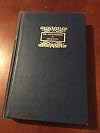
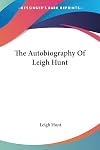
The autobiography of Leigh Hunt
by Leigh Hunt, J. E. Morpurgo (Editor)
41 Members (4.00)
On This Page
Description
The Autobiography of Leigh Hunt is a memoir written by the English essayist, poet, and critic, Leigh Hunt. This book is a comprehensive account of his life, from his childhood in Southgate, London, to his literary career in the 19th century. Hunt was a prominent figure in the Romantic movement and was known for his close relationships with other literary giants such as Lord Byron, Percy Bysshe Shelley, and John Keats. The autobiography covers Hunt's struggles with poverty, his imprisonment show more for criticizing the Prince Regent, and his numerous literary achievements. It also provides insight into the political and cultural climate of the time, including the rise of the middle class and the emergence of new literary genres. Throughout the book, Hunt's wit and humor shine through, making it a lively and entertaining read. He shares his personal experiences and reflections on life, love, and art, making this book a valuable resource for anyone interested in the Romantic period or the life of one of its most prominent figures. Overall, The Autobiography of Leigh Hunt is a fascinating and insightful account of a literary giant and his place in the history of English literature.This scarce antiquarian book is a facsimile reprint of the old original and may contain some imperfections such as library marks and notations. Because we believe this work is culturally important, we have made it available as part of our commitment for protecting, preserving, and promoting the world's literature in affordable, high quality, modern editions, that are true to their original work. show lessTags
Recommendations


















Member Reviews
Members
- Recently Added By
Lists

Trinity College Booklist (1951): Class Six, Biography
119 works; 4 members
Author Information

93+ Works 315 Members
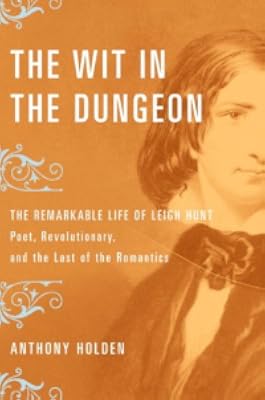
Leigh Hunt was so prolific that, if his writing were ever collected, it would exceed 100 volumes of mostly unmemorable prose. He was so eccentric and socially visible that even Dickens's caricature of Hunt as the perennially cheerful Harold Skimpole in Bleak House is immediately recognizable. But his philosophy of cheer, however eccentric among show more such doleful writers of his generation as Coleridge and Byron, appealed to middle-class public taste, which accounts for his immense following. Educated, like Coleridge and Lamb, at Christ's Hospital, Hunt became a journalist, helping his brother John edit the weekly Examiner. As a result of the paper's liberal policy, they were both fined and imprisoned for two years for writing a libelous description of the Prince Regent on his birthday. Hunt turned his prison cell into a salon and enjoyed visits from Jeremy Bentham, Byron, Keats, Lamb, and Hazlitt. After his release, Hunt settled in Hampstead, London, a political martyr and a model of domesticity. His writing includes The Feast of the Poets (1814), a satire of contemporary writers; The Story of Rimini (1816), a saccharine Italianate romance; and Hero and Leander (1819). Young poets such as Keats found the sensual surfaces easy to imitate. But mostly Hunt wrote essays and edited dozens of short-lived magazines and journals, providing an insight into the literary life of London during this period. (Bowker Author Biography) show less

Some Editions
Classifications
Statistics
- Members
- 41
- Popularity
- 717,806
- Rating
- (4.00)
- Languages
- English
- Media
- Paper
- ISBNs
- 4
- ASINs
- 7