Fighter: The True Story of the Battle of Britain
by Len Deighton
On This Page
Description
Text and captioned photographs recount the air war over Britain in 1940. Examines the personalities involved, the weaponry, and the tactics of both sides.Tags
Recommendations


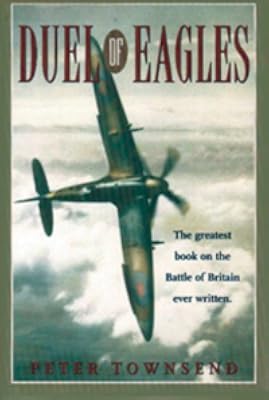


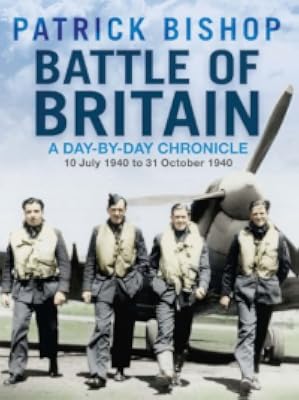


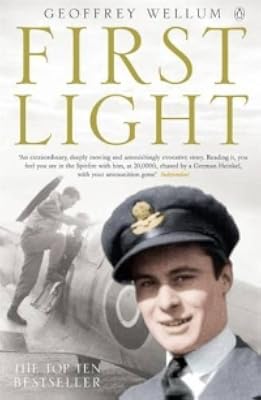

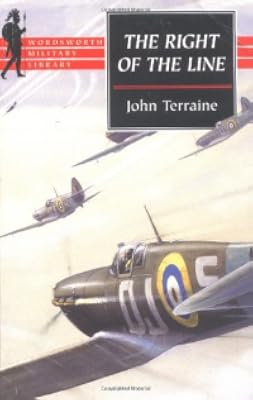














Member Recommendations

Member Reviews
Having read a few Len Deighton books as a teenager, I thought I had the measure of his work - good, though unspectacular, thrillers. Luckily, a few comments by Charles Stross have led me to revise that view, and I am now a fan of Deighton's tight, controlled prose. In some ways extolling a behaviourist view of personality, the lightness of touch with which motivations and feelings are addressed gives an impressionistic and yet surprisingly engaging view of his characters - this style suits history just as well as spy fiction.
In "Fighter", Deighton's literary style combines with meticulous, thorough and perceptive historical analysis to produce a gem of a book. Respectful and yet incisive, it paints a vivid picture of the events of the show more Battle of Britain, from both sides of the channel. For a more succinct review, I can only lend weight to the words of Clive James: "Deighton has managed to give the while event a clarity which it lacked. Above all the machines mattered, and on those he is tremendous." show less
In "Fighter", Deighton's literary style combines with meticulous, thorough and perceptive historical analysis to produce a gem of a book. Respectful and yet incisive, it paints a vivid picture of the events of the show more Battle of Britain, from both sides of the channel. For a more succinct review, I can only lend weight to the words of Clive James: "Deighton has managed to give the while event a clarity which it lacked. Above all the machines mattered, and on those he is tremendous." show less
Fighter is a serviceable account of the Battle of Britain, written by a novelist rather than a historian. Deighton devotes roughly half the book to background, and another half to a day-by-day diary of the action.
Against a rising tide of fascism in Europe, two Dowding and Goring would put the airpower theories of the interwar period to the test in a wholly new kind of defensive battle. Goring's Luftwaffe was experienced, but it's Bf-109 fighters lacked the range to escort strikes over England for more than a few minutes, and was hampered by notably inefficient and unanalytic command structures. Britain had the advantage of defense, and the sophisticated radar command-and-control network of Chain Home, but it's pilots were basically show more untested. The Luftwaffe's aims were more incoherent, ranging from creating the conditions for Operation Sea Lion, to independently bringing about British defeat via morale collapse. Whatever the details, the one objective was the neutralization of the RAF. The goal for the RAF was simply to survive until summer ended and cross-channel invasion became unfeasible.
Deighton has an eye for the scandalous. The Nazis had plenty of scandal, ranging Goring's deep-rooted mommy issues (his mother kept a Jewish lover in their house), his scheming subordinate Milch's weirder mommy issues (Milch's biological father was his uncle), or third Air Marshall Udet's better aptitude as a caricaturist than strategist, before his post-battle suicide. The British had their own issues. Air Marshall Dowding never got the support he needed from above or below, and he and Section 11 Leader Park, who's area bore the brunt of the attacks, were unceremoniously dismissed after their victory. Section 12 leader Leigh-Mallory and ace Douglas Bader (notable for losing his legs in a plane crash, and returning to service as an excellent pilot) sabotaged their commander over tactical arguments about the 'Big Wing' versus Dowding's careful Fabian commitment of fighters to the battle, which grew into personal arguments that saw Sector 12 planes refusing to cover Sector 11 airbases.
Britain's defense was perilously thin, based around the soft targets of radar stations, plotting huts, and aircraft factories. Faulty Nazi intelligence prevent them from focusing on these targets, and so the Luftwaffe never gained air dominance of the kind the Allies held after 1944. While British aircraft production was a miracle, pilot training was a mess that saw rookies with 10 hours in Spitfires who'd never fired their guns tossed into brutal dogfights with Nazi experten. Both sides consistently overclaimed kills, which is more ridiculous for the British since a daily kill count five or six times larger than airframes recovered is clearly in error. Yet, propaganda meant that records were not important.
Deighton tosses in some neat technical facts about the aircraft involved, such as the Bf-109's weak wings, or the last-minute addition of constant speed propellers to the British fighters, which brought them to parity, and has some pilot accounts. Yet the historical analysis is far behind Korda's With Wings Like Eagles, and if you wanted a novelistic flair to the reporting, this is not it.
A fine book, but definitely the least of the four book I've read recently on the Battle of Britain. show less
Against a rising tide of fascism in Europe, two Dowding and Goring would put the airpower theories of the interwar period to the test in a wholly new kind of defensive battle. Goring's Luftwaffe was experienced, but it's Bf-109 fighters lacked the range to escort strikes over England for more than a few minutes, and was hampered by notably inefficient and unanalytic command structures. Britain had the advantage of defense, and the sophisticated radar command-and-control network of Chain Home, but it's pilots were basically show more untested. The Luftwaffe's aims were more incoherent, ranging from creating the conditions for Operation Sea Lion, to independently bringing about British defeat via morale collapse. Whatever the details, the one objective was the neutralization of the RAF. The goal for the RAF was simply to survive until summer ended and cross-channel invasion became unfeasible.
Deighton has an eye for the scandalous. The Nazis had plenty of scandal, ranging Goring's deep-rooted mommy issues (his mother kept a Jewish lover in their house), his scheming subordinate Milch's weirder mommy issues (Milch's biological father was his uncle), or third Air Marshall Udet's better aptitude as a caricaturist than strategist, before his post-battle suicide. The British had their own issues. Air Marshall Dowding never got the support he needed from above or below, and he and Section 11 Leader Park, who's area bore the brunt of the attacks, were unceremoniously dismissed after their victory. Section 12 leader Leigh-Mallory and ace Douglas Bader (notable for losing his legs in a plane crash, and returning to service as an excellent pilot) sabotaged their commander over tactical arguments about the 'Big Wing' versus Dowding's careful Fabian commitment of fighters to the battle, which grew into personal arguments that saw Sector 12 planes refusing to cover Sector 11 airbases.
Britain's defense was perilously thin, based around the soft targets of radar stations, plotting huts, and aircraft factories. Faulty Nazi intelligence prevent them from focusing on these targets, and so the Luftwaffe never gained air dominance of the kind the Allies held after 1944. While British aircraft production was a miracle, pilot training was a mess that saw rookies with 10 hours in Spitfires who'd never fired their guns tossed into brutal dogfights with Nazi experten. Both sides consistently overclaimed kills, which is more ridiculous for the British since a daily kill count five or six times larger than airframes recovered is clearly in error. Yet, propaganda meant that records were not important.
Deighton tosses in some neat technical facts about the aircraft involved, such as the Bf-109's weak wings, or the last-minute addition of constant speed propellers to the British fighters, which brought them to parity, and has some pilot accounts. Yet the historical analysis is far behind Korda's With Wings Like Eagles, and if you wanted a novelistic flair to the reporting, this is not it.
A fine book, but definitely the least of the four book I've read recently on the Battle of Britain. show less
Fighter covers the traditional period of the Battle of Britain and the build-up to it, describing the war in the air as much from the German point of view as the British.
Deighton explains both the political and personal machinations and how they influenced technical decisions and affected the efforts of both countries. There are short biographies of the major "players", from the commanders down to the pilots in the field. It covers the errors made in the strategic, tactical and technical decisions made by both sides with remarkable objectivity.
Many 'myths' about the Battle addressed are punctured by Deighton, which leaves one to conclude that the RAF achieved their main aim - merely to survive as an effective fighting force - largely show more because they made fewer mistakes than did the German Luftwaffe.
Air Chief Marshal Hugh Dowding is Deighton's hero in this book, being one of the few people who perceived the situation accurately. Deighton argues that his strategy prevented a German victory. Despite winning the battle, Dowding was very badly treated by the Whitehall bureaucracy and dismissed - along with Keith Park, commander of 11 Group which had borne the brunt of the fighting - shortly after the victory. show less
Deighton explains both the political and personal machinations and how they influenced technical decisions and affected the efforts of both countries. There are short biographies of the major "players", from the commanders down to the pilots in the field. It covers the errors made in the strategic, tactical and technical decisions made by both sides with remarkable objectivity.
Many 'myths' about the Battle addressed are punctured by Deighton, which leaves one to conclude that the RAF achieved their main aim - merely to survive as an effective fighting force - largely show more because they made fewer mistakes than did the German Luftwaffe.
Air Chief Marshal Hugh Dowding is Deighton's hero in this book, being one of the few people who perceived the situation accurately. Deighton argues that his strategy prevented a German victory. Despite winning the battle, Dowding was very badly treated by the Whitehall bureaucracy and dismissed - along with Keith Park, commander of 11 Group which had borne the brunt of the fighting - shortly after the victory. show less
Len Deighton působil v letech 1939–1945 jako fotograf v britském Královském letectvu (RAF), později krátkodobě pracoval jako steward v letecké společnosti. Prosadil se jako spisovatel špionážních a válečných románů, lze připomenout jeho úspěšný román z leteckého prostředí Bomber (Bombardér). Mezi mnoha knihami o letecké bitvě o Británii se stěží najde druhá natolik důkladně projednaná a toto téma vyčerpávající. Dostatečný časový odstup od konce války umožnil autorovi získat maximální množství věrohodných údajů a faktů dříve utajovaných či zkreslovaných, ale také oprostit se od utajeného pohledu rodilého Brita, událostmi bezprostředně zasaženého. Jeho dílo je show more charakterizované množstvím nejen historických, ale zejména technických detailů, zvláště pokud se týká konstrukce letadel a technicko-taktických dat. show less
Mar 12, 2025Czech
Indeholder "Acknowledgments", "A. J. P. Taylor: Introduction", "Part one. Strategy", "Part two. Air Chief Marshal Sir Hugh Dowding, Commander in Chief Fighter Command", "Part three. Weapons: The Metal Monoplane and Radar", "Part four. Tactics", "Part five. The Results", "Selected Bibliography", "Index".
"Acknowledgments" handler om at Len Deighton gerne vil takke A. J. P. Taylor for at have foreslået ideen om denne bog til ham.
"A. J. P. Taylor: Introduction" handler om ???
"Part one. Strategy" handler om personerne. Herman Göring, Ernst Uter, Milch, der indgik i spillet om Luftwaffe og hvilke fly, man skulle satse på. Uter var flyentusiast, men uden reel teknisk ekspertise. Messerschmidt ME-410 vandt stort over den tilsvarende fra show more Heinkel, når man testede prototyperne. ???
"Part two. Air Chief Marshal Sir Hugh Dowding, Commander in Chief Fighter Command" handler om ???
"Part three. Weapons: The Metal Monoplane and Radar" handler om ???
"Part four. Tactics" handler om ???
"Part five. The Results" handler om ???
"Selected Bibliography" handler om ???
"Index" er et ret godt opslagsregister.
Len Deighton har skrevet en glimrende beretning om slaget om England og hvordan navnlig briterne slog det stort op, mens Hitler nærmest var ligeglad.
??? show less
"Acknowledgments" handler om at Len Deighton gerne vil takke A. J. P. Taylor for at have foreslået ideen om denne bog til ham.
"A. J. P. Taylor: Introduction" handler om ???
"Part one. Strategy" handler om personerne. Herman Göring, Ernst Uter, Milch, der indgik i spillet om Luftwaffe og hvilke fly, man skulle satse på. Uter var flyentusiast, men uden reel teknisk ekspertise. Messerschmidt ME-410 vandt stort over den tilsvarende fra show more Heinkel, når man testede prototyperne. ???
"Part two. Air Chief Marshal Sir Hugh Dowding, Commander in Chief Fighter Command" handler om ???
"Part three. Weapons: The Metal Monoplane and Radar" handler om ???
"Part four. Tactics" handler om ???
"Part five. The Results" handler om ???
"Selected Bibliography" handler om ???
"Index" er et ret godt opslagsregister.
Len Deighton har skrevet en glimrende beretning om slaget om England og hvordan navnlig briterne slog det stort op, mens Hitler nærmest var ligeglad.
??? show less
Jan 11, 2026Danish
Ratings
Members
- Recently Added By
Published Reviews
ThingScore 100
Eventually the British staved off defeat because they were better led and organised. The German fighter and bomber formations were well commanded at operational level but the generalship in the higher echelons was suspect and at the very top there was no firm control apart from Goering’s caprice. Deighton persuasively analyses the contending systems. He is good on the personalities but is show more well aware that the impersonal mattered at least as much. Above all, the machines mattered, and on those he is tremendous.
Each type of aircraft is traced through its full history. You are told what they were like to fly. There are diagrams to show how they compared in performance. The Messerschmitt Bf 109 could turn inside the Hurricane, which could turn inside the Spitfire. You will find out why dogfights always moved downwards. There is almost no end to what you will find out: even small boys who thought they were clued-up will be open-mouthed. Deighton can do all this because he looks upon aircraft as works of art as well as articles to serve a purpose. After the Futurist movement’s embarrassing enthusiasm it became unfashionable to take an aesthetic interest in machines, but Deighton is independent enough to respond to them with his whole soul. show less
Each type of aircraft is traced through its full history. You are told what they were like to fly. There are diagrams to show how they compared in performance. The Messerschmitt Bf 109 could turn inside the Hurricane, which could turn inside the Spitfire. You will find out why dogfights always moved downwards. There is almost no end to what you will find out: even small boys who thought they were clued-up will be open-mouthed. Deighton can do all this because he looks upon aircraft as works of art as well as articles to serve a purpose. After the Futurist movement’s embarrassing enthusiasm it became unfashionable to take an aesthetic interest in machines, but Deighton is independent enough to respond to them with his whole soul. show less
added by SnootyBaronet
Lists

THE WAR ROOM
813 works; 24 members

Reading LIst
648 works; 1 member
Author Information

79+ Works 24,260 Members
Len Deighton was born in London, England on February 18, 1929. He served in the Royal Air Force Special Investigations Branch and graduated from the Royal College of Art in 1955. Before becoming the master of the modern spy thriller, he worked as an airline steward and as an illustrator. His first novel, The Ipcress File, was published in 1962. show more His other novels include Funeral in Berlin, Berlin Game, Mexico Set, London Match, Spy Hook, Spy Line, and Spy Sinker. He also writes television plays and cookbooks. (Bowker Author Biography) show less
Some Editions
Series
Belongs to Publisher Series
Common Knowledge
- Original publication date
- 1977
- People/Characters
- Winston Churchill; Hermann Göring; Erhard Milch; Adolf Galland; Trafford Leigh-Mallory; Max Aitken, Lord Beaverbrook (show all 7); Hugh Dowding
- Important events
- World War II (1939 | 1945); Battle of Britain (1940)
- First words
- Preface to the 2014 Edition
I remember the daylight raids in the summer of 1940.
Introduction
by A. J. P. Taylor
Bismarck once asked Count Helmuth von Moltke whether he could guarantee victory in the coming war against Austria.
History is swamped by patriotic myths about the summer of 1940. - Last words
- (Click to show. Warning: May contain spoilers.)Milch took over Udet’s department, in addition to his own.
Classifications
Statistics
- Members
- 673
- Popularity
- 42,640
- Reviews
- 5
- Rating
- (3.65)
- Languages
- 10 — Czech, Danish, Dutch, English, French, German, Hungarian, Italian, Polish, Swedish
- Media
- Paper, Ebook
- ISBNs
- 33
- UPCs
- 1
- ASINs
- 13