
A. J. P. Taylor (1906–1990)
Author of The Origins of the Second World War: 1919-1939
About the Author
British historian A.J.P. Taylor studied at Oxford University and in 1938 became a fellow of Magdalen College. Interested chiefly in diplomatic and central European history, he is a prolific and masterful writer. Fritz Stern wrote of him and his The Struggle for Mastery in Europe, 1848--1918 (1954) show more in the Political Science Quarterly: "There is something Shavian about A. J. P. Taylor and his place among academic historians; he is brilliant, erudite, witty, dogmatic, heretical, irritating, insufferable, and withal inescapable. He sometimes insults and always instructs his fellow-historians, and never more so than in his present effort to reinterpret the diplomatic history of Europe from 1848 to the end of the First World War. . . . After a brilliant introduction, in which he defines the balance of power and assesses the relative and changing strength of the Great Powers, Mr. Taylor presents a chronological survey, beginning with the diplomacy of war, 1914--1918. . . . [He] writes on two levels. He narrates the history of European diplomacy and compresses it admirably into a single volume. Imposed upon the narrative is his effort to probe the historical meaning of given actions and conditions. . . . He has a peculiar sense of inevitability, growing out of what he regards the logic of a given development, as well as a delicate feeling for live options and alternatives. Mr. Taylor suggests that fear, not aggression, was the dominant impulse of pre-war diplomacy." The Origins of the Second World War (1961), again controversial and lively, starts from the premise (in Taylor's words) that "the war of 1939, far from being premeditated, was a mistake, the result on both sides of diplomatic blunders." The New Statesman said of it: "Taylor is the only English historian now writing who can bend the bow of Gibbon and Macaulay. [This is] a masterpiece: lucid, compassionate, beautifully written in a bare, sparse style, and at the same time deeply disturbing." Several of Taylor's other works also received high praise. Among these were Bismarck, the Man and the Statesman (1955), in which he exonerated Bismarck; Hapsburg Monarchy, 1809--1914, a survey of the era; and English History, 1919--1945, a volume in the Oxford History of England Series, greeted by the N.Y. Review of Books as "an astonishing tour de force." (Bowker Author Biography) show less
Series
Works by A. J. P. Taylor
The Habsburg Monarchy, 1809-1918 : A History of the Austrian Empire and Austria-Hungary (1970) 423 copies, 4 reviews
The Course of German History: A Survey of the Development of German History since 1815 (1945) 277 copies, 4 reviews
From the Boer War to the Cold War: Essays on Twentieth-Century Europe (Penguin Press History) (1995) 55 copies
Rumours of wars / A.J.P. Taylor 3 copies
How Wars Begin and End 3 copies
A Segunda Guerra Mundial 2 copies
History of the 20th Century 2 copies
Origin Of The Second World War 2 copies
Standaard geschiedenis van de 20ste eeuw. Dl. 1: 1900-1914 : de laatste jaren van de "Belle époque" 2 copies
Standaard geschiedenis van de 20ste eeuw. Dl. 4: 1935-1941 Voorspel en uitbarsting van het nieuwe wereldconflict (1971) 2 copies
From Sarajevo to Potsdam 1 copy
English History 1 copy
The balance sheet of empire 1 copy
Birthpangs of Commonwealth 1 copy
When the world held its breath - Hitler invades Russia: the greatest military operation in history 1 copy
Den første verdenskrig 1 copy
Germany's Agony 1 copy
Hitler's Europe: The French sink their own fleet - Mussolini apes the Führer - The SS climb to power 1 copy
A Második világháború okai 1 copy
sagerne til 2. Verdenskrig 1 copy
A Habsburg Monarchia 1 copy
Communist Manifesto 1 copy
Standaard geschiedenis van de 20ste eeuw. Dl. 5: 1942-1950 Einde van het drama en een moeilijk begin 1 copy
Associated Works
Fighter: The True Story of the Battle of Britain (1977) — Introduction, some editions — 675 copies, 5 reviews
White eagle, red star : the Polish-Soviet war 1919-20 and the 'miracle on the Vistula' (1972) — Foreword, some editions — 177 copies, 2 reviews
My Darling Pussy: Letters of Lloyd George and Frances Stevenson, 1913-41 (1975) — Editor — 13 copies
Tagged
Common Knowledge
- Canonical name
- Taylor, A. J. P.
- Legal name
- Taylor, Alan John Percivale
- Birthdate
- 1906-03-25
- Date of death
- 1990-09-07
- Gender
- male
- Education
- Bootham School, York
Oriel College, Oxford University (BA|1927|MA|1932) - Occupations
- historian
broadcaster
lecturer - Organizations
- Manchester University
Magdalen College, Oxford University
University College London - Awards and honors
- British Academy (fellow|1956|resigned|1980)
Hungarian Academy (honorary member|1986) - Relationships
- Burgess, Anthony (student)
Gilbert, Martin (student)
Sked, Alan (student)
Davies, Norman (student)
Kennedy, Paul (student)
Louis, William Roger (student) - Nationality
- UK
- Birthplace
- Birkdale, Lancashire, England, UK
- Places of residence
- Birkdale, Southport, Lancashire, England, UK
Oxford, Oxfordshire, England, UK
Vienna, Austria - Place of death
- London, England, UK
- Burial location
- Golders Green Crematorium, Golders Green, London, England, UK
- Map Location
- England, UK
Members
Discussions
Folio Archives 446: The Origins of the Second World War by A.J.P.Taylor 2008 in Folio Society Devotees (September 2025)
Reviews
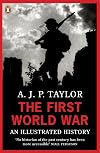
Read this during GCE History studies when in English Secondary schools Modern History allegedly stopped around 1918, although in the content of certain syllabi there was reference to the causes & events of WW2.
AJP Taylor was the doyen of Modern History studies in G.B. & this book full of erudite yet cut-to-the-chase factual interpretation of the events of World War One is the epitome of Taylor's lucid intellectual powers. The often pithy &/or witty captions to the numerous illustrations show more encapsulate Taylor's sardonic overview of what the photos were originally intended to be about.
Taylor's enlightening prose captured my interest even at age 15, & I have read this tome 3 times since over decades finding new appreciation of its depth of perception of the core ill-founded reasoning & mistaken (misadventures) purposes that so bedevilled the World of Humanity at war August 1914 to November 1918.
In spite of the years since publication Taylor's History of WW1 is still thoroughly recommended. show less
AJP Taylor was the doyen of Modern History studies in G.B. & this book full of erudite yet cut-to-the-chase factual interpretation of the events of World War One is the epitome of Taylor's lucid intellectual powers. The often pithy &/or witty captions to the numerous illustrations show more encapsulate Taylor's sardonic overview of what the photos were originally intended to be about.
Taylor's enlightening prose captured my interest even at age 15, & I have read this tome 3 times since over decades finding new appreciation of its depth of perception of the core ill-founded reasoning & mistaken (misadventures) purposes that so bedevilled the World of Humanity at war August 1914 to November 1918.
In spite of the years since publication Taylor's History of WW1 is still thoroughly recommended. show less

A történelmi önéletrajzok valahogy számomra a szépirodalom és a történelem határmezsgyéjén kóvályognak, és - akár egyes eltévelyedett lelkeket - se ide, se oda nem bocsátják be őket. Merthogy ugye tele vannak történelmi adatokkal, de ezeket fenntartással kell kezelnünk, hisz nem lehetünk tökéletesen biztosak az önéletíró tévedhetetlenségében vagy pártatlanságában. Hatványozottan igaz ez az olyan megosztó személyiségekre, mint Károlyi* (vagy épp show more Horthy) – én például személyesen ismerek olyanokat, akik akkor se hinnék el egyetlen szavát se, ha maga Gábriel arkangyal állna mögötte bólogatva.
Én alapvetően bízom Károlyiban. Úgy érzem, törekszik az őszinteségre, saját hibáinak feltárására, ráadásul akit két ennyire ellentétes rezsim is emigrációba kényszerített, az nem lehet akárki. A korszak másik jellegzetes politikusával, Tisza Istvánnal összevetve: Tisza az „úri Magyarország” minden hájjal megkent hivatásos politikusa volt, mindenható miniszterelnöke a dualista államnak, aki tökélyre vitte a kormányzati machinációkat, különösen ami a korrupció és a protekció művészetét illeti. Ezzel szemben Károlyi a talán ügyetlen, de határozott erkölcsi elveket követő politikus, aki hajlandó volt egész létbiztonságát is feláldozni az ügyért, amiben hitt. Tisza védelmében fel szokták hozni, hogy legalább értett a politikához – nos, figyelembe véve a Trianonhoz vezető magyar utat, ebből azért nem igazán profitált az ország.
Persze mindez nem jelenti azt, hogy mindenben egyet is értek Károlyival. Bár szociális érzékenységét nagyra becsülöm (különösen ha figyelembe veszem, hogy ő volt az ország egyik leggazdagabb embere), ahogy bátor pacifizmusát is, és azt is megértem, miért köti valaki magát ezer szállal a marxizmushoz, ha egyszer a saját osztálya nem hajlandó szóba állni vele. Ugyanakkor elég riasztónak tartom azt az ötletét, hogy mivel nem vagyunk még érettek a demokráciára, ezért átmenetileg valami diktatúrafélét el tudna képzelni. (Ezzel a gondolattal később ellentmondásba is keveredik.) Másrészt az én ízlésemhez képest túl megbocsátónak mutatkozott Sztálin belpolitikájával szemben – mentségére szolgál, hogy Churchill és Roosevelt sem tett másként, ha a helyzet megkívánta. Mindenesetre Károlyi olyasvalakinek látszik, akit a hatalom nem rontott meg végzetesen (naná, nem is volt rá ideje…), és talán le se lövetne, ha mindezt szemére hánynám.
Az is nagyon tetszett, hogy feleségéről a korszak önéletrajzaihoz képest milyen tisztelettel és melegséggel beszél – mondjuk az is igaz, hogy e könyvet jó részt maga Károlyi Mihályné szül. Andrássy Katalin írta/szerkesztette, úgyhogy ebbe talán nem is bölcs dolog belemenni. De amúgy meg ritka jól megírt, érthető, helyenként szórakoztató szöveg. Hiába, Károlyi jól fogalmaz. Vagy Károlyiné. Ki tudja.
* Én egy olyan utcában lakom, amit 2006-ban Károlyi Mihály utcáról nemes egyszerűséggel Károli Gáspár utcára neveztek át, egy „y” különbség, szerintem a szomszédaink fele észre sem vette. Ráadásul ezzel párhuzamosan a település főterét Templom térről Tisza István térre változtatták, ami annyiból jogos, hogy szerencsétlen ex-miniszterelnöknek birtokai voltak errefelé. Ugyanakkor sikerült megfejelni az ügyletet egy emléktáblával, miszerint Tisza a „háború ellenzője és a világháború mártyrja”. A mártír az még rendben is van, de a mondat első fele minimum kifejtést igényelne. De úgy egyáltalán: ennek az átnevezősdinek mi értelme van, azon túl, hogy az utcanévtábla-gyárosok meggazdagodnak rajta? Hány ember tudja, hogy az utca, ahol lakik, tulajdonképpen kiről van elnevezve? (Amúgy meg én nem is engedném, hogy bármilyen politikusról közteret nevezzenek el. Abból csak a baj van. Annyi madár meg mezei virág van erre a célra. De még a bakteriális fertőzésekkel is kiegyeznék inkább.) show less
Én alapvetően bízom Károlyiban. Úgy érzem, törekszik az őszinteségre, saját hibáinak feltárására, ráadásul akit két ennyire ellentétes rezsim is emigrációba kényszerített, az nem lehet akárki. A korszak másik jellegzetes politikusával, Tisza Istvánnal összevetve: Tisza az „úri Magyarország” minden hájjal megkent hivatásos politikusa volt, mindenható miniszterelnöke a dualista államnak, aki tökélyre vitte a kormányzati machinációkat, különösen ami a korrupció és a protekció művészetét illeti. Ezzel szemben Károlyi a talán ügyetlen, de határozott erkölcsi elveket követő politikus, aki hajlandó volt egész létbiztonságát is feláldozni az ügyért, amiben hitt. Tisza védelmében fel szokták hozni, hogy legalább értett a politikához – nos, figyelembe véve a Trianonhoz vezető magyar utat, ebből azért nem igazán profitált az ország.
Persze mindez nem jelenti azt, hogy mindenben egyet is értek Károlyival. Bár szociális érzékenységét nagyra becsülöm (különösen ha figyelembe veszem, hogy ő volt az ország egyik leggazdagabb embere), ahogy bátor pacifizmusát is, és azt is megértem, miért köti valaki magát ezer szállal a marxizmushoz, ha egyszer a saját osztálya nem hajlandó szóba állni vele. Ugyanakkor elég riasztónak tartom azt az ötletét, hogy mivel nem vagyunk még érettek a demokráciára, ezért átmenetileg valami diktatúrafélét el tudna képzelni. (Ezzel a gondolattal később ellentmondásba is keveredik.) Másrészt az én ízlésemhez képest túl megbocsátónak mutatkozott Sztálin belpolitikájával szemben – mentségére szolgál, hogy Churchill és Roosevelt sem tett másként, ha a helyzet megkívánta. Mindenesetre Károlyi olyasvalakinek látszik, akit a hatalom nem rontott meg végzetesen (naná, nem is volt rá ideje…), és talán le se lövetne, ha mindezt szemére hánynám.
Az is nagyon tetszett, hogy feleségéről a korszak önéletrajzaihoz képest milyen tisztelettel és melegséggel beszél – mondjuk az is igaz, hogy e könyvet jó részt maga Károlyi Mihályné szül. Andrássy Katalin írta/szerkesztette, úgyhogy ebbe talán nem is bölcs dolog belemenni. De amúgy meg ritka jól megírt, érthető, helyenként szórakoztató szöveg. Hiába, Károlyi jól fogalmaz. Vagy Károlyiné. Ki tudja.
* Én egy olyan utcában lakom, amit 2006-ban Károlyi Mihály utcáról nemes egyszerűséggel Károli Gáspár utcára neveztek át, egy „y” különbség, szerintem a szomszédaink fele észre sem vette. Ráadásul ezzel párhuzamosan a település főterét Templom térről Tisza István térre változtatták, ami annyiból jogos, hogy szerencsétlen ex-miniszterelnöknek birtokai voltak errefelé. Ugyanakkor sikerült megfejelni az ügyletet egy emléktáblával, miszerint Tisza a „háború ellenzője és a világháború mártyrja”. A mártír az még rendben is van, de a mondat első fele minimum kifejtést igényelne. De úgy egyáltalán: ennek az átnevezősdinek mi értelme van, azon túl, hogy az utcanévtábla-gyárosok meggazdagodnak rajta? Hány ember tudja, hogy az utca, ahol lakik, tulajdonképpen kiről van elnevezve? (Amúgy meg én nem is engedném, hogy bármilyen politikusról közteret nevezzenek el. Abból csak a baj van. Annyi madár meg mezei virág van erre a célra. De még a bakteriális fertőzésekkel is kiegyeznék inkább.) show less
The Course of German History: A Survey of the Development of German History since 1815 (Routledge Classics) by A. J. P. Taylor
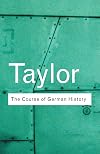
My favourite kind of history: sharply opinionated and controversial. A.J.P. Taylor is not afraid to reject conventional interpretations regarding the course of German history, nor to impose his own constructs in replacement of them. The two most salient arguments that Taylor repeatedly stresses in this book are:
1) Mere "ideals" are not substitutes for raw POWER.
2) Attempts at sociopolitical revolution without the broad support of the masses is folly.
In many cases, I found myself show more fundamentally disagreeing with Taylor's view of German history because of his overtly left-socialist political leanings. But that's okay, because his biases are not hidden nor obscured, and I was able to extract many relevant lessons from the book and add them to my own personal conception or "model" of German history. show less
1) Mere "ideals" are not substitutes for raw POWER.
2) Attempts at sociopolitical revolution without the broad support of the masses is folly.
In many cases, I found myself show more fundamentally disagreeing with Taylor's view of German history because of his overtly left-socialist political leanings. But that's okay, because his biases are not hidden nor obscured, and I was able to extract many relevant lessons from the book and add them to my own personal conception or "model" of German history. show less

In 1960, historian A.J.P. Taylor reviewed again the evidence available that described the series of political events between the two world wars. He dispensed with 'common knowledge' and worked from the records to arrive at his own conclusions. These boil down to some basic points: Hitler had no master plan, he was a master opportunist; appeasement did not seem nearly so weak or unreasonable a strategy in the heat of the moment, lacking foreknowledge; and World War II erupted more from a show more result of blunders than intentions. For all of these he builds a case based on evidence that he can point to (and it makes for an interesting exercise), but in terms of conclusions this winds up feeling like the proverbial "sound and fury signifying nothing." The faulty treaty of Versailles still set up Europe for another disaster, and Hitler was still a bully always threatening to use force and ready to go back on his word to achieve whatever next end he had in mind, a sequence of which seemed to have no final end in sight. Poland drew the line that nobody else would draw by absolutely refusing to negotiate with him, and thus a line was crossed. I'm more interested in the three points above that Taylor seems to win, rather than his suspect logic about shared blame for war.
Hitler was not a master strategist who executed a plan years in the making. He had vague ideas about a greater Germany and took opportunities to pursue it as those opportunities came to hand. That they arose so readily was more a factor of empathy for Germany's treatment in Versailles, and the stirring nationalism of neighbouring German peoples in Austria and elsewhere. At the end of the day this does not in fact paint a dramatically different picture from anyone else's assessment: Hitler is still bad, Chamberlain is still foolish. But if Hitler was not a frightening mastermind, the sketch drawn of him is still something just as frightening: a democratically elected tyrant guided only by his megalomania who did not share the decorum of the rest of the world order. A man who would act impulsively and outrageously when others only talked that way. He had no superior wisdom, pulled no puppet strings. He only liked power, and he liked to use it. You do not have to look nearly as far to find examples of people like that all around you.
The strategy of appeasement is much maligned, a backing down in the face of aggression. Taylor contextualizes this in its setting. Statesmen in the 1920s and 1930s had to grapple with fallout from the treaty at Versailles. It was not, in fact, a workable document in how it treated Germany; partly in it outrageous terms but primarily because there was never any means provided to enforce it if necessary. The disagreement among allies as to whether Germany deserved the harsh terms and/or could even survive them was a key factor. Certainly the German people didn't accept them, and used them as a scapegoat for literally everything that ever went wrong until Hitler came to power. Consequently British (willing) and French (grudging) diplomats allowed that some of the treaty's terms should justifiably be undone somehow, some way. It's unfortunate that Hitler happened to be the one in power, and that his way involved infantry, tanks and bluster. This proved particularly effective in the face of his opponents' already soft position.
Lastly, there is Taylor's blunders argument. It was proven to Hitler multiple times that the western powers (Britain and France) would not react to the point of war in the face of provocation. Mussolini would have had to withdraw from Abyssinia, Hitler from the Rhineland and his intervention in the Spanish Civil War, if Britain and France had reacted more strongly. Later, when Hitler stood a chance of military resistance, they were even more reluctant to do so over Austria or Czechslovakia, and demonstrated a horrible lack of regard for those countries' sovereignty. This explains Hitler's ready determination to invade Poland. He didn't expect any different a response. The lesson here is that when you are going to draw a line in the sand, be very firm and clear about it: think Cuban Missile Crisis.
Many years ago I read 'Rise and Fall of the Third Reich' which also covered all of this ground, was written at almost the same time and is just as heralded a work if not more. I wish I had read these books in closer proximity so I could contrast their perspectives. show less
Hitler was not a master strategist who executed a plan years in the making. He had vague ideas about a greater Germany and took opportunities to pursue it as those opportunities came to hand. That they arose so readily was more a factor of empathy for Germany's treatment in Versailles, and the stirring nationalism of neighbouring German peoples in Austria and elsewhere. At the end of the day this does not in fact paint a dramatically different picture from anyone else's assessment: Hitler is still bad, Chamberlain is still foolish. But if Hitler was not a frightening mastermind, the sketch drawn of him is still something just as frightening: a democratically elected tyrant guided only by his megalomania who did not share the decorum of the rest of the world order. A man who would act impulsively and outrageously when others only talked that way. He had no superior wisdom, pulled no puppet strings. He only liked power, and he liked to use it. You do not have to look nearly as far to find examples of people like that all around you.
The strategy of appeasement is much maligned, a backing down in the face of aggression. Taylor contextualizes this in its setting. Statesmen in the 1920s and 1930s had to grapple with fallout from the treaty at Versailles. It was not, in fact, a workable document in how it treated Germany; partly in it outrageous terms but primarily because there was never any means provided to enforce it if necessary. The disagreement among allies as to whether Germany deserved the harsh terms and/or could even survive them was a key factor. Certainly the German people didn't accept them, and used them as a scapegoat for literally everything that ever went wrong until Hitler came to power. Consequently British (willing) and French (grudging) diplomats allowed that some of the treaty's terms should justifiably be undone somehow, some way. It's unfortunate that Hitler happened to be the one in power, and that his way involved infantry, tanks and bluster. This proved particularly effective in the face of his opponents' already soft position.
Lastly, there is Taylor's blunders argument. It was proven to Hitler multiple times that the western powers (Britain and France) would not react to the point of war in the face of provocation. Mussolini would have had to withdraw from Abyssinia, Hitler from the Rhineland and his intervention in the Spanish Civil War, if Britain and France had reacted more strongly. Later, when Hitler stood a chance of military resistance, they were even more reluctant to do so over Austria or Czechslovakia, and demonstrated a horrible lack of regard for those countries' sovereignty. This explains Hitler's ready determination to invade Poland. He didn't expect any different a response. The lesson here is that when you are going to draw a line in the sand, be very firm and clear about it: think Cuban Missile Crisis.
Many years ago I read 'Rise and Fall of the Third Reich' which also covered all of this ground, was written at almost the same time and is just as heralded a work if not more. I wish I had read these books in closer proximity so I could contrast their perspectives. show less
Lists
Awards


You May Also Like


Associated Authors
Statistics
- Works
- 191
- Also by
- 14
- Members
- 6,210
- Popularity
- #3,949
- Rating
- 3.6
- Reviews
- 58
- ISBNs
- 226
- Languages
- 15
- Favorited
- 6