On This Page
Description
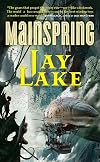
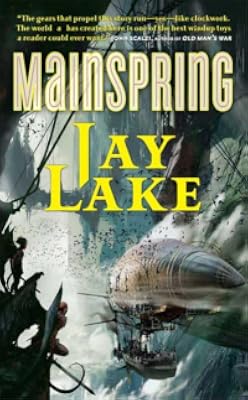
Jay Lake's first trade novel is an astounding work of creation. Lake has envisioned a clockwork solar system, where the planets move in a vast system of gears around the lamp of the Sun. It is a universe where the hand of the Creator is visible to anyone who simply looks up into the sky, and sees the track of the heavens, the wheels of the Moon, and the great Equatorial gears of the Earth itself. Mainspring is the story of a young clockmaker's apprentice, who is visited by the Archangel show more Gabriel. He is told that he must take the Key Perilous and rewind the Mainspring of the Earth. It is running down, and disaster to the planet will ensue if it's not rewound. From innocence and ignorance to power and self-knowledge, the young man will make the long and perilous journey to the South Polar Axis, to fulfill the commandment of his God. show lessTags
Recommendations










Member Reviews
Rating: 4.75* of five
The Publisher Says: Jay Lake's first trade novel is an astounding work of creation. Lake has envisioned a clockwork solar system, where the planets move in a vast system of gears around the lamp of the Sun. It is a universe where the hand of the Creator is visible to anyone who simply looks up into the sky, and sees the track of the heavens, the wheels of the Moon, and the great Equatorial gears of the Earth itself.
Mainspring is the story of a young clockmaker's apprentice, who is visited by the Archangel Gabriel. He is told that he must take the Key Perilous and rewind the Mainspring of the Earth. It is running down, and disaster to the planet will ensue if it's not rewound. From innocence and ignorance to power show more and self-knowledge, the young man will make the long and perilous journey to the South Polar Axis, to fulfill the commandment of his God.
My Review: Several things militate against my discovery of pleasure in this book, such as a Low Tolerance for Capitalization Errors, a complete and oft-expressed disdain for the kind of god present in this book, and its celebration of the Love that Should Shut The Hell Up Already, aka heterosexuality.
But there's an exception to every rule, and this is one.
I confess that the thoroughly requited love story elicited weary, disgusted sighs, and I did a bit of flippity-flip to get past the bits that made me most annoyed, but there's not a whole helluva lot of it, thank goodness.And working for the couple is the fact that she's a different species, sort of.
But the central joke of the book, the mainspring (!) of the humor, the drama, and the action, is the brass track in the sky that the Earth runs on. The Universe IS the clockwork that the famously disproved watchmaker-parable proof of god's existence posits! (If one finds a watch, that is proof there is, somewhere, a watchmaker...the rest is just as silly, so no need to go into it here.)
This I love. This alone gets five whole gold stars with an oak-leaf cluster. This is a new Universe, not just a warmed-over Operation-Sealion-worked yawnfest of an alternative history. (Side note to writers: WWII? Done, done, done, done, done. Aliens even. DONE. Pick something else! ANYthing else!) (Except the American Civil War, also DONE.)
Also because of this complete re-imagining of the laws of physics (good one, Mr. Lake!), I put aside my abiding mistrust of majgicqk as deus ex machina. After all, there's a giant brass track in the sky that emits a mechanical rumble forming the backdrop of all life, the gears of the track must be navigated to go from Northern to Southern Hemisphere, and there are airships! In for a penny, in for a pound. Majgicqk it is.
But it's like all the other tropes that annoy me in fiction (indeed in life), it's *used* in Lake's novel. It's not a Get-Out-Of-Jail-Free card. It's a necessary component of the kind of world this clockmaker god would create. It makes sense. And it happens to be made of desperate needs, which is more like the way the world works anyway.
Hethor, like all heroes, suffers on his quest to save the world, and loses his sense of himself outside his quest. He defines himself as his quest, and is forced to confront the inevitable end of such a self-definition: Complete and utter aloneness and alienation. Because Lake is on the Hero's Journey, the Hero must lose it all.
But Lake is on the Hero's Journey. So, in losing it all, Hethor is rewarded with his heart's desire, and it is not the one he started the quest desiring. That, in my well-read opinion, is how a writer of great gifts ends a Hero's Journey: Wishes granted; now what will those be?
A quarter star off for a villain who isn't a villain but a collection of nasty until far too late in the story to matter. His villainy, as finally expressed, would've launched me into six-star orbit had it been explicit earlier in the narrative.
Whipping back through Mainspring convinces me that a thoroughgoing re-read cannot come amiss. It's that good. It's that rich and dense and satisfying. Just wonderful, and thank you for it, Jay Lake. show less
The Publisher Says: Jay Lake's first trade novel is an astounding work of creation. Lake has envisioned a clockwork solar system, where the planets move in a vast system of gears around the lamp of the Sun. It is a universe where the hand of the Creator is visible to anyone who simply looks up into the sky, and sees the track of the heavens, the wheels of the Moon, and the great Equatorial gears of the Earth itself.
Mainspring is the story of a young clockmaker's apprentice, who is visited by the Archangel Gabriel. He is told that he must take the Key Perilous and rewind the Mainspring of the Earth. It is running down, and disaster to the planet will ensue if it's not rewound. From innocence and ignorance to power show more and self-knowledge, the young man will make the long and perilous journey to the South Polar Axis, to fulfill the commandment of his God.
My Review: Several things militate against my discovery of pleasure in this book, such as a Low Tolerance for Capitalization Errors, a complete and oft-expressed disdain for the kind of god present in this book, and its celebration of the Love that Should Shut The Hell Up Already, aka heterosexuality.
But there's an exception to every rule, and this is one.
I confess that the thoroughly requited love story elicited weary, disgusted sighs, and I did a bit of flippity-flip to get past the bits that made me most annoyed, but there's not a whole helluva lot of it, thank goodness.
But the central joke of the book, the mainspring (!) of the humor, the drama, and the action, is the brass track in the sky that the Earth runs on. The Universe IS the clockwork that the famously disproved watchmaker-parable proof of god's existence posits! (If one finds a watch, that is proof there is, somewhere, a watchmaker...the rest is just as silly, so no need to go into it here.)
This I love. This alone gets five whole gold stars with an oak-leaf cluster. This is a new Universe, not just a warmed-over Operation-Sealion-worked yawnfest of an alternative history. (Side note to writers: WWII? Done, done, done, done, done. Aliens even. DONE. Pick something else! ANYthing else!) (Except the American Civil War, also DONE.)
Also because of this complete re-imagining of the laws of physics (good one, Mr. Lake!), I put aside my abiding mistrust of majgicqk as deus ex machina. After all, there's a giant brass track in the sky that emits a mechanical rumble forming the backdrop of all life, the gears of the track must be navigated to go from Northern to Southern Hemisphere, and there are airships! In for a penny, in for a pound. Majgicqk it is.
But it's like all the other tropes that annoy me in fiction (indeed in life), it's *used* in Lake's novel. It's not a Get-Out-Of-Jail-Free card. It's a necessary component of the kind of world this clockmaker god would create. It makes sense. And it happens to be made of desperate needs, which is more like the way the world works anyway.
Hethor, like all heroes, suffers on his quest to save the world, and loses his sense of himself outside his quest. He defines himself as his quest, and is forced to confront the inevitable end of such a self-definition: Complete and utter aloneness and alienation. Because Lake is on the Hero's Journey, the Hero must lose it all.
But Lake is on the Hero's Journey. So, in losing it all, Hethor is rewarded with his heart's desire, and it is not the one he started the quest desiring. That, in my well-read opinion, is how a writer of great gifts ends a Hero's Journey: Wishes granted; now what will those be?
A quarter star off for a villain who isn't a villain but a collection of nasty until far too late in the story to matter. His villainy, as finally expressed, would've launched me into six-star orbit had it been explicit earlier in the narrative.
Whipping back through Mainspring convinces me that a thoroughgoing re-read cannot come amiss. It's that good. It's that rich and dense and satisfying. Just wonderful, and thank you for it, Jay Lake. show less
Mainspring is a hard book to categorize. It's like a theological steampunk/clockpunk adventure amalgamation. In this world, the Earth is actually a large clockwork that travels a cog orbit, the traveling gear spanning the Equatorial Wall that separates the planet into Northern and Southern Earth, with the moon following it's own cog orbit around the Earth. As the story opens, young apprentice Hethor is visited by the Archangel Gabriel and told that he must find the Key Perilous to wind the Mainspring of the world, as it is beginning to run down and slip and if he doesn't accomplish this holy task, the world will end. What follows is an adventure worthy of Robert Louis Stevenson with underlying tones of religion and theology. The basis show more of the religion of Northern Earth is a Clockwork Christianity (complete with a Brass Christ), but as Hethor journeys farther and farther in his mission and meets more people, he begins to question what he has been taught in his religious upbringing and instead begins to follow his own heart and path, even if these thoughts would normally be seen as heresy where he comes from. There is actually some deep theological thought processes going on in this book, which just added another layer of thought-provoking goodness to the story.
I was pleasantly surprised by the entire story with Mainspring. I wasn't actually sure what to expect (I thought I was actually just getting into a steampunk adventure), but Jay Lake weaves so much into this story concerning religion and what it can actually mean to each person when given the chance to view it away from their upbringing, it actually leaves quite a bit to think about. Don't get me wrong, though. There is plenty of adventure to big had; air ships, African jungles, polar expeditions, winged savages, clockwork statues, magicians. It seems Mainspring may actually have a little bit for everybody!
Recommended! show less
I was pleasantly surprised by the entire story with Mainspring. I wasn't actually sure what to expect (I thought I was actually just getting into a steampunk adventure), but Jay Lake weaves so much into this story concerning religion and what it can actually mean to each person when given the chance to view it away from their upbringing, it actually leaves quite a bit to think about. Don't get me wrong, though. There is plenty of adventure to big had; air ships, African jungles, polar expeditions, winged savages, clockwork statues, magicians. It seems Mainspring may actually have a little bit for everybody!
Recommended! show less
I got really excited when I saw Mainspring on the list of new items at the public library. I'm a fan of steampunk/clockpunk, and was really intrigued with the idea of a literal clockworks universe. In Mainspring, the clockworks is running down, and a young apprentice clockmaker is tasked to wind it back up. But it's not an easy task since he has to cross the whole world to get to the Earth's mainspring. Jay Lake has conceived of a marvelous world, but things are a little lacking on the "punk" side of things. Instead, there's wonder in the natural world and faith in the Creator so readily demonstrated by the clockworks that everyone can see.
Lake's plotting gets off to a bit of a bumpy start, but once the apprentice, Hathor, gets on show more board an airship, things smooth out well and the story becomes captivating. The prose was not consistently the lyrical prose of China Mieville, but there were positively brilliant moments. All in all, I had trouble putting it down and was happy that I had a rainy Saturday morning to devote to Mainspring. show less
Lake's plotting gets off to a bit of a bumpy start, but once the apprentice, Hathor, gets on show more board an airship, things smooth out well and the story becomes captivating. The prose was not consistently the lyrical prose of China Mieville, but there were positively brilliant moments. All in all, I had trouble putting it down and was happy that I had a rainy Saturday morning to devote to Mainspring. show less
I’ve steered clear of Steampunk up until this point, not out of any particular prejudice, but more because it has its roots in the era of industrial revolution and that’s not, generally, a period that I’ve ever been drawn to. So when Jay Lake’s ‘Mainspring’ fell into my lap (a reward for being his 500th follower on Twitter), I wasn’t sure what I’d make of it.
I certainly wasn’t expecting it to be such an intriguing, compelling story.
The main character is as engaging as he is innocent, and the world he explores is a fascinating and well-envisioned parallel of the familiar Victorian-industrial era, coherent and by turns dazzling and terrifying in its differences.
The attitudes and social mores, the obsessions with order show more and outward propriety are both familiar and therefore credible links from our own recognised history into this world, and serve to set up the conflicts in which the main character, Hethor (the clockmaker’s apprentice), struggles to unravel the mystery set for him by the angel, and to work out which of the powerful figures he encounters along the way he can trust. Hethor’s quest is simple enough: to find the Key Perilous and wind the Mainspring of the Earth, but the lack of information available to a boy with no social standing and little education AND the active opposition of theological factions, imperial ambitions and the physical barrier of the ‘Wall’ – an equatorial division on which the mechanism of the Earth turns, where heaven and earth meet – all deepen the conflicts and confusion Hethor must overcome if he is to realise his purpose. The storytelling is subtle, apparently random events driving the plot towards its climax, an unexpected realisation that flows in a satisfying way from the individual Hethor has become over the course of his various trials.
Hethor is an intriguing character. In his naivete and innocence, his lack of awareness and education, there are strong echoes of de Troyes’ Percival (indeed, there is a minor character called de Troyes – coincidence? I wonder…). The overtones of both the chivalrous quest for the Holy Grail and darker, more Wagnerian interpretation of the story (Parsifal) in the construction of Hethor’s character work well with the religious nature of the task he has undertaken. His status as the ‘pure fool’, unknowing and unformed, does, of course, mean that we learn about this world alongside him, and as his learning and development evolves out of his experiences, so too does our understanding and interpretation of the societies, situations and characters that push the story along. His evolution into an almost Christ-like figure – a man with wordly knowledge and understanding and yet still set apart by a simplicity of thought and behaviour – with magical/mystical powers of connection to the mechanisms that drive the Earth and all within/upon it develops naturally out of the callow boy we meet at the beginning – the first clues to this potential sown early on, and refined through the trials and treachery that envelop him right up to that moment of final realisation. In places, his naivete is frustrating – in the early stages of the story, he places his trust too easily and walks into traps with a wide-eyed stupidity, which undermines, to a degree, the later demonstrations of intelligence. Of course, a more charitable interpretation is that those early betrayals forge the determined and intelligent man of the latter stages, but the initial perception persists. His progression from simple (manipulated?) boy to a man confident in his own understanding and abilities comes with the transition from his rational, ordered existence in the Navy in the Northern hemisphere over the equatorial wall to the chaotic, factional, fractured societies of the Southern hemisphere, a powerful dividing line in so many ways in this story, not least of which is the evolution of Hethor’s magic. The form his powers take is absolutely consistent with the world with which we are presented. His magical abilities are hinted at, the potential is touched upon, but never fully explored in the Northern hemisphere, and only in the South, beyond the equatorial Wall, do these (conveniently) take on their full form and allow him to overcome the barriers of language, culture, technology and climate that are set in his path. Again, I think there is an understanding that the escape from the ordered restrictions of the Northern hemisphere sets him free and allows these powers to blossom in the less rational, more mystical and intuitive culture in which he finds himself, but there is, nonetheless, a touch of deus ex machina about its manifestation in a couple of places.
With the evidence of Divine workmanship on permanent, incontrovertible view in this clockwork world, atheism is an untenable position. However, theological factions exist in terms of the interpretation of Divine Intent – Rational Humanists, who claim god abandoned the world after creation and the world should therefore be freed of god, and a more spiritual faction who believe the Divine manifests in the ordinary, that god still has a care for his creation. Our earliest encounter with a Rational Humanist – the clockmaker’s son – sets them up as the natural enemy of both Hethor and his quest, and this perception is borne out with the arrival of William of Ghent. What is interesting is that William of Ghent is a magician and a prophet, a position that seems to sit strangely with the scientific precision of the faction he represents. It works, though, because the ambiguity means that right until the end, we are never sure that Hethor has judged him correctly. It works on other levels, too, particularly in terms of linking back to Wagner’s Parsifal, where William of Ghent could be interpreted as the magician Klingsor, though the impact of Hethor’s ultimate wisdom and compassion upsets that interpretation to an extent. The opposing faction, the mysterious ‘white birds’, are never fully glimpsed, but their agents assist Hethor at every turn, rescuing him from some seemingly impossible situations. This more spiritual, mystical interpretation of the Divine again echoes back the legend of the Grail, and also offers an interesting comment on our own society’s conflicts between the rather hard-edged obsession with rational, scientific progress and a more spiritual, earth-centred stability/sustainability, and it’s interesting to see this expressed and explored in this novel.
The two factions also demonstrate the conflicts and hypocracies within the Northern hemisphere society (and absolutely consistent with Victorian double-standards), contrasting a requirement for outer order and conformity with a hidden, internal chaos. This contrast is emphasised and deepened by the equatorial Wall dividing the Northern and Southern hemispheres where the reverse is true in the civilisation in which Hethor finally comes to rest. Although boundaries are blurred between human and animal, outward chaos is contradicted by inner calm, coherence, acceptance and, ultimately, love. I didn’t expect the romantic elements of the story to develop in the way that they did, but the relationship between Hethor and Arellya develops out of their mutual understanding and ability to communicate, mixed with a sense of curiosity, eagerness and simplicity the two of them seem to share. It’s effective and convincing, but also offers a wider comment on how a culture judged as uncivilised or primitive can actually have more coherence than those that attempt to detach themselves from the basic rhythms of life.
The juxtaposition of these two views of civilisation not only provides Hethor a framework in which to understand and question the values he has been inducted with, but also offers an interesting comment on the interpretations of Victorian analyses of civilisation and social structures from a contemporary perspective: are the societies we label as uncivilised truly so, or is it we who are the savages? The answer Hethor finds is not, perhaps, what one would expect, but it is internally consistent.
Is it a straightforward re-telling of the Grail, or Wagner’s Parsifal? No, not by any means. It draws on elements of both to set the stage, but the internal complexities of the world in which the story plays out make this quest something else altogether. It’s a riveting read, a layered story of contrasts and conflicts that come together in the end to create an exciting and satisfying finale. I loved every minute of it. show less
I certainly wasn’t expecting it to be such an intriguing, compelling story.
The main character is as engaging as he is innocent, and the world he explores is a fascinating and well-envisioned parallel of the familiar Victorian-industrial era, coherent and by turns dazzling and terrifying in its differences.
The attitudes and social mores, the obsessions with order show more and outward propriety are both familiar and therefore credible links from our own recognised history into this world, and serve to set up the conflicts in which the main character, Hethor (the clockmaker’s apprentice), struggles to unravel the mystery set for him by the angel, and to work out which of the powerful figures he encounters along the way he can trust. Hethor’s quest is simple enough: to find the Key Perilous and wind the Mainspring of the Earth, but the lack of information available to a boy with no social standing and little education AND the active opposition of theological factions, imperial ambitions and the physical barrier of the ‘Wall’ – an equatorial division on which the mechanism of the Earth turns, where heaven and earth meet – all deepen the conflicts and confusion Hethor must overcome if he is to realise his purpose. The storytelling is subtle, apparently random events driving the plot towards its climax, an unexpected realisation that flows in a satisfying way from the individual Hethor has become over the course of his various trials.
Hethor is an intriguing character. In his naivete and innocence, his lack of awareness and education, there are strong echoes of de Troyes’ Percival (indeed, there is a minor character called de Troyes – coincidence? I wonder…). The overtones of both the chivalrous quest for the Holy Grail and darker, more Wagnerian interpretation of the story (Parsifal) in the construction of Hethor’s character work well with the religious nature of the task he has undertaken. His status as the ‘pure fool’, unknowing and unformed, does, of course, mean that we learn about this world alongside him, and as his learning and development evolves out of his experiences, so too does our understanding and interpretation of the societies, situations and characters that push the story along. His evolution into an almost Christ-like figure – a man with wordly knowledge and understanding and yet still set apart by a simplicity of thought and behaviour – with magical/mystical powers of connection to the mechanisms that drive the Earth and all within/upon it develops naturally out of the callow boy we meet at the beginning – the first clues to this potential sown early on, and refined through the trials and treachery that envelop him right up to that moment of final realisation. In places, his naivete is frustrating – in the early stages of the story, he places his trust too easily and walks into traps with a wide-eyed stupidity, which undermines, to a degree, the later demonstrations of intelligence. Of course, a more charitable interpretation is that those early betrayals forge the determined and intelligent man of the latter stages, but the initial perception persists. His progression from simple (manipulated?) boy to a man confident in his own understanding and abilities comes with the transition from his rational, ordered existence in the Navy in the Northern hemisphere over the equatorial wall to the chaotic, factional, fractured societies of the Southern hemisphere, a powerful dividing line in so many ways in this story, not least of which is the evolution of Hethor’s magic. The form his powers take is absolutely consistent with the world with which we are presented. His magical abilities are hinted at, the potential is touched upon, but never fully explored in the Northern hemisphere, and only in the South, beyond the equatorial Wall, do these (conveniently) take on their full form and allow him to overcome the barriers of language, culture, technology and climate that are set in his path. Again, I think there is an understanding that the escape from the ordered restrictions of the Northern hemisphere sets him free and allows these powers to blossom in the less rational, more mystical and intuitive culture in which he finds himself, but there is, nonetheless, a touch of deus ex machina about its manifestation in a couple of places.
With the evidence of Divine workmanship on permanent, incontrovertible view in this clockwork world, atheism is an untenable position. However, theological factions exist in terms of the interpretation of Divine Intent – Rational Humanists, who claim god abandoned the world after creation and the world should therefore be freed of god, and a more spiritual faction who believe the Divine manifests in the ordinary, that god still has a care for his creation. Our earliest encounter with a Rational Humanist – the clockmaker’s son – sets them up as the natural enemy of both Hethor and his quest, and this perception is borne out with the arrival of William of Ghent. What is interesting is that William of Ghent is a magician and a prophet, a position that seems to sit strangely with the scientific precision of the faction he represents. It works, though, because the ambiguity means that right until the end, we are never sure that Hethor has judged him correctly. It works on other levels, too, particularly in terms of linking back to Wagner’s Parsifal, where William of Ghent could be interpreted as the magician Klingsor, though the impact of Hethor’s ultimate wisdom and compassion upsets that interpretation to an extent. The opposing faction, the mysterious ‘white birds’, are never fully glimpsed, but their agents assist Hethor at every turn, rescuing him from some seemingly impossible situations. This more spiritual, mystical interpretation of the Divine again echoes back the legend of the Grail, and also offers an interesting comment on our own society’s conflicts between the rather hard-edged obsession with rational, scientific progress and a more spiritual, earth-centred stability/sustainability, and it’s interesting to see this expressed and explored in this novel.
The two factions also demonstrate the conflicts and hypocracies within the Northern hemisphere society (and absolutely consistent with Victorian double-standards), contrasting a requirement for outer order and conformity with a hidden, internal chaos. This contrast is emphasised and deepened by the equatorial Wall dividing the Northern and Southern hemispheres where the reverse is true in the civilisation in which Hethor finally comes to rest. Although boundaries are blurred between human and animal, outward chaos is contradicted by inner calm, coherence, acceptance and, ultimately, love. I didn’t expect the romantic elements of the story to develop in the way that they did, but the relationship between Hethor and Arellya develops out of their mutual understanding and ability to communicate, mixed with a sense of curiosity, eagerness and simplicity the two of them seem to share. It’s effective and convincing, but also offers a wider comment on how a culture judged as uncivilised or primitive can actually have more coherence than those that attempt to detach themselves from the basic rhythms of life.
The juxtaposition of these two views of civilisation not only provides Hethor a framework in which to understand and question the values he has been inducted with, but also offers an interesting comment on the interpretations of Victorian analyses of civilisation and social structures from a contemporary perspective: are the societies we label as uncivilised truly so, or is it we who are the savages? The answer Hethor finds is not, perhaps, what one would expect, but it is internally consistent.
Is it a straightforward re-telling of the Grail, or Wagner’s Parsifal? No, not by any means. It draws on elements of both to set the stage, but the internal complexities of the world in which the story plays out make this quest something else altogether. It’s a riveting read, a layered story of contrasts and conflicts that come together in the end to create an exciting and satisfying finale. I loved every minute of it. show less
There’s no doubt there is a God who created Earth. The tracks on which the world runs across the heavens are clearly visible in the sky, as is the massive cord in which the sunlamp hangs. Around the equator a massive brass wall stands, on top of which are the huge gears that connects earth with the skytrack. The skilled ones can at all times hear the rumble of Earth’s orbit, as it clangs across the universe. The Creator, the Clockmaker is making his presence shown everywhere.
But when the lowly clockmaker’s apprentice Hethor is visited in the night by a brass angel, he still finds himself in the middle of a theological controversy. For the angel gives him the mission to find and wind the World’s Mainspring, which is running down show more – and the very idea of God needing Man to maintain his creation is heresy. Hethor’s quest takes him across the wall, to the fabled Southern Earth, which few has seen. Where he learns that his mission is both harder and simpler than he thought possible.
Jay Lake came to my attention after reading the “New Weird” anthology. I’ve since read and been underwhelmed by his “Trial of Flowers”, which is probably the reason why this one has lingered unread on my shelves for four years (having been a candidate in each of my challenges, but bumped each time). Now, I’m really eager to read more instead. Lake’s spin on Steampunk, with a world that is an advanced brass machine, is original, and he is full of cool ideas. I really enjoyed the theological twist here, unusual for the genre, and his depiction of the Wall is brimming with strangeness and imagination. The “Correct people” Hethor meets on the other side of the Wall are sometimes bordering on a noble savage cliché, but there is so much detail to them and their customs they end up feeling real instead. Lake even manages a rather unusual love story, and never overplays the tired old “Chosen one” trope.
Slight spoilers ahead: The story telling isn’t quite up to par with the world building at all times though. The ways that William of Ghent bloke keeps reappearing doesn’t seem organic to me. A few ideas, like the Candlemen, seem to belong in another book. And at times I wish Lake would build crescendos instead of just letting everything have more or less the same value. But there is no doubt this was a really enjoyable read, full of original ideas and adventure. I’m going to pick up Escapement, the second book set in this world, sooner than later. show less
But when the lowly clockmaker’s apprentice Hethor is visited in the night by a brass angel, he still finds himself in the middle of a theological controversy. For the angel gives him the mission to find and wind the World’s Mainspring, which is running down show more – and the very idea of God needing Man to maintain his creation is heresy. Hethor’s quest takes him across the wall, to the fabled Southern Earth, which few has seen. Where he learns that his mission is both harder and simpler than he thought possible.
Jay Lake came to my attention after reading the “New Weird” anthology. I’ve since read and been underwhelmed by his “Trial of Flowers”, which is probably the reason why this one has lingered unread on my shelves for four years (having been a candidate in each of my challenges, but bumped each time). Now, I’m really eager to read more instead. Lake’s spin on Steampunk, with a world that is an advanced brass machine, is original, and he is full of cool ideas. I really enjoyed the theological twist here, unusual for the genre, and his depiction of the Wall is brimming with strangeness and imagination. The “Correct people” Hethor meets on the other side of the Wall are sometimes bordering on a noble savage cliché, but there is so much detail to them and their customs they end up feeling real instead. Lake even manages a rather unusual love story, and never overplays the tired old “Chosen one” trope.
Slight spoilers ahead: The story telling isn’t quite up to par with the world building at all times though. The ways that William of Ghent bloke keeps reappearing doesn’t seem organic to me. A few ideas, like the Candlemen, seem to belong in another book. And at times I wish Lake would build crescendos instead of just letting everything have more or less the same value. But there is no doubt this was a really enjoyable read, full of original ideas and adventure. I’m going to pick up Escapement, the second book set in this world, sooner than later. show less
A fantastic main idea and concept marred by paper-thin characters, muddy descriptions, and A-to-B plotting. The main character is a flat, hesitant wimp who more or less lets the action of the book wash over him without taking any definitive action. There's no sense that he changes much over the course of the book, and his actions really don't seem to amount o much- there's a sense that everything that happens is preordained and that really kills any sense of adventure or forward motion. Like a Hollywood action flick, from the start it's clear that Hethor will complete his quest, and even though scores of disposable supporting characters are killed off messily all around him, he barely receives a scratch that might distract him from the show more track that he's set upon. There's also some really odd and never-quite fully explored issues of race in Lake's world, and the descriptions of the Southern (read: "African") people is condescending at best and downright offensive at worst.
The whole thing seemed like a treatment for a mediocre video game, complete with different areas to explore (The Mechanical Zone! The Jungle Level! The Dark City!) and mini-bosses and level bosses lurking around every major transition. show less
The whole thing seemed like a treatment for a mediocre video game, complete with different areas to explore (The Mechanical Zone! The Jungle Level! The Dark City!) and mini-bosses and level bosses lurking around every major transition. show less
I know Jay Lake. I have given up on a Jay Lake novel. I have critiqued a short story by Jay Lake that amounted to "what the hell is going on here?"
That being said, I enjoyed Mainspring. I enjoyed reading a novel that takes God seriously, but not so seriously that science is "an evil satanic thing designed to lure people away from faith." The story is a standard quest/hero's journey: Save the world. Leave everything behind and save the world. The world is quite nonstandard, something only Aristotle could have imagined, but not like this. The world is a real clock work world, and to save the world,Hethor, an apprentice horologist, must wind the mainspring.
The novel then takes the reader on a tour from New England to Antarctica, which show more means Hethor must get past the Wall, a massive structure that juts from the equator several miles (if the exact number is in the book I missed it) above the surface of the planet. Along the way he meets varied strange peoples, has more adventures than anyone probably wants, and gets abused in vastly creative ways. Everything he thought was serious before his quest began is ripped away from him. Yeah, that's what quests do to a character.
The villain seems to be at first one of the minor obstacles to Hethor's journey, and returns later to assert his world view dominance. But looking at what William of Ghent says, he seems to be just as religious asHethor, so the struggle of worldviews isn't so much a theism/atheism but a theism/Scientology debate.
The quest usually has a sad ending: in order to save the world Hethor must give it up. But Hethor doesn't lose it all. As cruel as Jay is to Hethor, he seems happier in the end than he started.
I am looking forward to Escapement, the current working title for the next book in this world, but by saving the world in the first book, I'm not sure how he will top that in book two. show less
That being said, I enjoyed Mainspring. I enjoyed reading a novel that takes God seriously, but not so seriously that science is "an evil satanic thing designed to lure people away from faith." The story is a standard quest/hero's journey: Save the world. Leave everything behind and save the world. The world is quite nonstandard, something only Aristotle could have imagined, but not like this. The world is a real clock work world, and to save the world,Hethor, an apprentice horologist, must wind the mainspring.
The novel then takes the reader on a tour from New England to Antarctica, which show more means Hethor must get past the Wall, a massive structure that juts from the equator several miles (if the exact number is in the book I missed it) above the surface of the planet. Along the way he meets varied strange peoples, has more adventures than anyone probably wants, and gets abused in vastly creative ways. Everything he thought was serious before his quest began is ripped away from him. Yeah, that's what quests do to a character.
The villain seems to be at first one of the minor obstacles to Hethor's journey, and returns later to assert his world view dominance. But looking at what William of Ghent says, he seems to be just as religious asHethor, so the struggle of worldviews isn't so much a theism/atheism but a theism/Scientology debate.
The quest usually has a sad ending: in order to save the world Hethor must give it up. But Hethor doesn't lose it all. As cruel as Jay is to Hethor, he seems happier in the end than he started.
I am looking forward to Escapement, the current working title for the next book in this world, but by saving the world in the first book, I'm not sure how he will top that in book two. show less
Members
- Recently Added By
Lists

Gaslamp Fantasy
87 works; 15 members

Readers Guide to Steampunk
65 works; 1 member

Alternate History Stories
11 works; 1 member
Author Information

220+ Works 3,764 Members
Jay Lake was born in Taiwan on June 6, 1964, and was raised there and in Nigeria. He graduated from the University of Texas in 1986. During his lifetime, he published over 300 short stories and nine novels including Kalimpura, Calamity of So Long a Life, and The Last Plane to Heaven. He received several awards including the John W. Campbell Award show more for Best New Writer in Science Fiction in 2004. He was also the subject of a documentary called Lakeside - A Year with Jay Lake, which follows his fight against cancer, and is scheduled for release in 2014. He died from colon cancer on June 1, 2014 at the age of 49. (Bowker Author Biography) show less
Some Editions
Awards and Honors
Series

Common Knowledge
- Original publication date
- 2007-06
- People/Characters
- Hethor Jacques; William of Ghent; Arellya; Emily McHenry Childress
- Dedication
- For Kristine Kathryn Rusch, Dean Wesley Smith, and Loren Coleman, who made me do it in the first place, in a place called Lincoln City
- First words
- The angel gleamed in the light of Hethor's reading candle bright as any brasswork automaton.
- Last words
- (Click to show. Warning: May contain spoilers.)Still, Hethor sometimes wished he could yet hear the clattering clockwork of Creation.
- Publisher's editor
- Meacham, Beth
- Blurbers
- Scalzi, John; Bear, Greg; Duncan, Hal; Doctorow, Cory; Di Filippo, Paul
Classifications
Statistics
- Members
- 808
- Popularity
- 34,288
- Reviews
- 35
- Rating
- (3.24)
- Languages
- Czech, English, German
- Media
- Paper, Audiobook, Ebook
- ISBNs
- 7
- ASINs
- 8