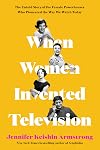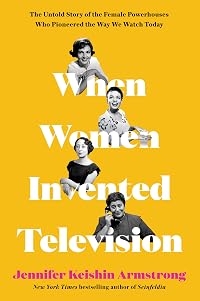
When Women Invented Television: The Untold Story of the Female Powerhouses Who Pioneered the Way We Watch Today
by Jennifer Keishin Armstrong
On This Page
Description
New and Noteworthy —New York Times Book ReviewMust-Read Book of March —Entertainment Weekly
Best Books of March —HelloGiggles
"Leaps at the throat of television history and takes down the patriarchy with its fervent, inspired prose. When Women Invented Television offers proof that what we watch is a reflection of who we are as a people." —Nathalia Holt, New York Times bestselling author of Rise of the Rocket Girls
New York Times bestselling author of Seinfeldia Jennifer Keishin show more Armstrong tells the little-known story of four trailblazing women in the early days of television who laid the foundation of the industry we know today.
It was the Golden Age of Radio and powerful men were making millions in advertising dollars reaching thousands of listeners every day. When television arrived, few radio moguls were interested in the upstart industry and its tiny production budgets, and expensive television sets were out of reach for most families. But four women—each an independent visionary— saw an opportunity and carved their own paths, and in so doing invented the way we watch tv today.
Irna Phillips turned real-life tragedy into daytime serials featuring female dominated casts. Gertrude Berg turned her radio show into a Jewish family comedy that spawned a play, a musical, an advice column, a line of house dresses, and other products. Hazel Scott, already a renowned musician, was the first African American to host a national evening variety program. Betty White became a daytime talk show fan favorite and one of the first women to produce, write, and star in her own show.
Together, their stories chronicle a forgotten chapter in the history of television and popular culture.
But as the medium became more popular—and lucrative—in the wake of World War II, the House Un-American Activities Committee arose to threaten entertainers, blacklisting many as communist sympathizers. As politics, sexism, racism, anti-Semitism, and money collided, the women who invented television found themselves fighting from the margins, as men took control. But these women were true survivors who never gave up—and thus their legacies remain with us in our television-dominated era. It's time we reclaimed their forgotten histories and the work they did to pioneer the medium that now rules our lives.
This amazing and heartbreaking history, illustrated with photos, tells it all for the first time.
. show less
Tags
Recommendations




Member Recommendations
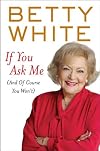
cbl_tn Betty White is one of the women profiled in Armstrong's book.
Member Reviews
I enjoyed learning about the four women profiled in this history of the early years of television. I was most familiar with Betty White. Who isn’t? She was a television staple for most of my lifetime. I wasn’t familiar with Irna Phillips by name, but I watched two soaps she created - The Guiding Light and As the World Turns. Gertrude Berg (aka Molly Goldberg) and Hazel Scott were new to me.
Armstrong’s thesis is that:
Men flooded the industry and took over many of the jobs women had been doing when, in the mid-1950s, television became big business and a conservative wave washed over the country…American life was grand—as long as you were a white, straight, well-heeled man with a house, a wife, a few kids, and a few cars. TV show more began to reflect that Father-knows-best patriarchy. As a result, many of those women’s contributions, aside from Lucy’s, vanished from memory.
I feel like the author cherry-picked examples to fit her narrative. Two of the four women she chose for the book’s focus didn’t fit the narrative all that well. The Guiding Light had a long run, and Irna Phillips continued to create new long-running soap operas in the 1950s and 1960s. Betty White’s popularity grew as she aged, and she had memorable roles in The Mary Tyler Moore Show in the 1970s, in The Golden Girls in the 1980s-1990s, and in Hot in Cleveland in the 21st century. Most actors only dream of that kind of success.
Did men really sideline women from the mid-1950s through the 1960s? Or were there other factors at play? The number of households with televisions grew exponentially, and broadcast technology changed rapidly. The oldest baby boomers were nearing their teens by the end of the 1950s. They were starting to make more of the viewing choices and television shows began targeting that demographic.
I started a list of shows from the 1950s and 1960s that don’t fit the Father Knows Best mold:
The Burns and Allen Show - One of my grandparents’ local stations showed reruns, and I looked forward to watching it when I visited. George and Gracie were married but had no children. George was the straight man to Gracie’s comedy, and he knew it.
Our Miss Brooks - Another show I watched in reruns at my grandparents’ house.
The Donna Reed Show - Can anyone recall the name of the actor who played her TV husband?
Hazel - The title character was a middle-aged maid. She worked for a married couple with a child, but Hazel was the show’s star.
Petticoat Junction - A widow and her three young adult daughters run a hotel with the help of her Uncle Joe.
The Patty Duke Show - One of Patty’s characters has lost her mother and she lives with her cousin’s family.
Gidget - A teenage girl and her widowed father.
Bewitched - A witch marries a mortal man and tries to live without using her magical powers, but it proves to be impossible. The show survived a change of actors in the role of Darrin. It would not have survived a cast change in the role of Samantha.
That Girl - A single woman in New York looks for her big acting break. She has a boyfriend, but they do not get married during the series.
The Doris Day Show - A widowed mother.
I keep thinking of more examples, but I’ll stop with these. It’s hard to get to the top in show business, and once you get there, it’s hard to stay there. The four women in this book all made it to the top, and some stayed there longer than others. They all deserve to be remembered for their accomplishments. show less
Armstrong’s thesis is that:
Men flooded the industry and took over many of the jobs women had been doing when, in the mid-1950s, television became big business and a conservative wave washed over the country…American life was grand—as long as you were a white, straight, well-heeled man with a house, a wife, a few kids, and a few cars. TV show more began to reflect that Father-knows-best patriarchy. As a result, many of those women’s contributions, aside from Lucy’s, vanished from memory.
I feel like the author cherry-picked examples to fit her narrative. Two of the four women she chose for the book’s focus didn’t fit the narrative all that well. The Guiding Light had a long run, and Irna Phillips continued to create new long-running soap operas in the 1950s and 1960s. Betty White’s popularity grew as she aged, and she had memorable roles in The Mary Tyler Moore Show in the 1970s, in The Golden Girls in the 1980s-1990s, and in Hot in Cleveland in the 21st century. Most actors only dream of that kind of success.
Did men really sideline women from the mid-1950s through the 1960s? Or were there other factors at play? The number of households with televisions grew exponentially, and broadcast technology changed rapidly. The oldest baby boomers were nearing their teens by the end of the 1950s. They were starting to make more of the viewing choices and television shows began targeting that demographic.
I started a list of shows from the 1950s and 1960s that don’t fit the Father Knows Best mold:
The Burns and Allen Show - One of my grandparents’ local stations showed reruns, and I looked forward to watching it when I visited. George and Gracie were married but had no children. George was the straight man to Gracie’s comedy, and he knew it.
Our Miss Brooks - Another show I watched in reruns at my grandparents’ house.
The Donna Reed Show - Can anyone recall the name of the actor who played her TV husband?
Hazel - The title character was a middle-aged maid. She worked for a married couple with a child, but Hazel was the show’s star.
Petticoat Junction - A widow and her three young adult daughters run a hotel with the help of her Uncle Joe.
The Patty Duke Show - One of Patty’s characters has lost her mother and she lives with her cousin’s family.
Gidget - A teenage girl and her widowed father.
Bewitched - A witch marries a mortal man and tries to live without using her magical powers, but it proves to be impossible. The show survived a change of actors in the role of Darrin. It would not have survived a cast change in the role of Samantha.
That Girl - A single woman in New York looks for her big acting break. She has a boyfriend, but they do not get married during the series.
The Doris Day Show - A widowed mother.
I keep thinking of more examples, but I’ll stop with these. It’s hard to get to the top in show business, and once you get there, it’s hard to stay there. The four women in this book all made it to the top, and some stayed there longer than others. They all deserve to be remembered for their accomplishments. show less
When Women Invented Television by Jennifer Keishin Armstrong is a 2021 Harper publication.
Gertrude Berg, Irna Phillips, Betty White, and Hazel Scott are true television pioneers. Before televisions were a staple in American households, these women saw its potential and helped to propel the medium into the mainstream…
After women laid the foundation, men took notice of this new medium and swooped down to overtake it. This book plays long overdue homage to these four women and presents to us the ways they changed television, and the impact they made, which can still be felt today.
I am embarrassed to admit I was not aware of this history. This is a very interesting profile of these trailblazing women and I’m so glad their stories are show more finally seeing the light of day and they are being recognized for their contributions to television, even if it is a long overdue accreditation.
We all know who Betty White is, but I had no idea she had her own talk show until after her death. The show aired in 1952-53 on one network, and in 1954 on another one- but the show was canceled soon after she refused to cancel Arthur Duncan’s appearance on the show.
It goes without saying that Betty’s television career was a big success, but this book gives us more insights into her early days as a television performer and a glimpse into her past that few are aware of. One could talk for days about all the impressive work Betty left behind, but there were three other groundbreaking women in this book whose names I was not familiar with:
Hazel Scott-
Hazel, a jazz performer, was the first black woman to host her own television show in the 1950s- but her show ended abruptly after she had to testify before the House of un-American Activities Committee.
Irna Phillips-
If you ever enjoyed ‘As the World Turns’ or ‘The Guiding Light’ you have Irna Phillips to thank for that. Irna was a script writer who created her stories with women in mind. She got her start in radio, but eventually transitioned over to television. (A fun bit of trivia-That organ music so often associated with soaps was Irna’s creation as well. It was meant to mimic a church organ- and was first heard at the beginning of Guiding Light and was inspired by the spiritual sermons Irna took comfort in after suffering personal losses.) Irna Phillips created a huge soap empire and mentored others in that business.
Gertrude Berg:
Gertrude, like Irna, got her start in radio. She was the first woman that multi-tasked a series- which was called ‘The Goldbergs’. The show featured a Jewish family living in a Bronx tenement. The show was adapted for television in 1949 and was aired until 1954. (The show was well- received, and Berg won an Emmy for her role in the show)
When I got to thinking about how truly incredible it was that these women broke through so many barriers at a time when those achievements were incredibly hard, I am amazed! Because men have long been given credit for advancements in television, they could not have achieved any of it were it not for these women who saw the potential television had. We owe a debt of gratitude to them, but it also boggles the mind that we don’t hear more about these women and their contributions and foresight. They stood up to bullies and brought loveable, diverse characters into American homes, something it took men decades to duplicate.
I’m sad that, other than Betty White, I had never heard of the other three women featured in the book, but I’m so glad I found this book and was finally made aware of them, and their accomplishments.
*The research is good, the history is enlightening, and it’s about time we were made aware of these women; the construction of the book, however, is not the best. The flow is not as smooth as I would have liked, and while the author’s work is obvious, the presentation is a little sloppy. Despite that, I recommend the book, for the history lesson and homage to these ladies who were ahead of their time. show less
Gertrude Berg, Irna Phillips, Betty White, and Hazel Scott are true television pioneers. Before televisions were a staple in American households, these women saw its potential and helped to propel the medium into the mainstream…
After women laid the foundation, men took notice of this new medium and swooped down to overtake it. This book plays long overdue homage to these four women and presents to us the ways they changed television, and the impact they made, which can still be felt today.
I am embarrassed to admit I was not aware of this history. This is a very interesting profile of these trailblazing women and I’m so glad their stories are show more finally seeing the light of day and they are being recognized for their contributions to television, even if it is a long overdue accreditation.
We all know who Betty White is, but I had no idea she had her own talk show until after her death. The show aired in 1952-53 on one network, and in 1954 on another one- but the show was canceled soon after she refused to cancel Arthur Duncan’s appearance on the show.
It goes without saying that Betty’s television career was a big success, but this book gives us more insights into her early days as a television performer and a glimpse into her past that few are aware of. One could talk for days about all the impressive work Betty left behind, but there were three other groundbreaking women in this book whose names I was not familiar with:
Hazel Scott-
Hazel, a jazz performer, was the first black woman to host her own television show in the 1950s- but her show ended abruptly after she had to testify before the House of un-American Activities Committee.
Irna Phillips-
If you ever enjoyed ‘As the World Turns’ or ‘The Guiding Light’ you have Irna Phillips to thank for that. Irna was a script writer who created her stories with women in mind. She got her start in radio, but eventually transitioned over to television. (A fun bit of trivia-That organ music so often associated with soaps was Irna’s creation as well. It was meant to mimic a church organ- and was first heard at the beginning of Guiding Light and was inspired by the spiritual sermons Irna took comfort in after suffering personal losses.) Irna Phillips created a huge soap empire and mentored others in that business.
Gertrude Berg:
Gertrude, like Irna, got her start in radio. She was the first woman that multi-tasked a series- which was called ‘The Goldbergs’. The show featured a Jewish family living in a Bronx tenement. The show was adapted for television in 1949 and was aired until 1954. (The show was well- received, and Berg won an Emmy for her role in the show)
When I got to thinking about how truly incredible it was that these women broke through so many barriers at a time when those achievements were incredibly hard, I am amazed! Because men have long been given credit for advancements in television, they could not have achieved any of it were it not for these women who saw the potential television had. We owe a debt of gratitude to them, but it also boggles the mind that we don’t hear more about these women and their contributions and foresight. They stood up to bullies and brought loveable, diverse characters into American homes, something it took men decades to duplicate.
I’m sad that, other than Betty White, I had never heard of the other three women featured in the book, but I’m so glad I found this book and was finally made aware of them, and their accomplishments.
*The research is good, the history is enlightening, and it’s about time we were made aware of these women; the construction of the book, however, is not the best. The flow is not as smooth as I would have liked, and while the author’s work is obvious, the presentation is a little sloppy. Despite that, I recommend the book, for the history lesson and homage to these ladies who were ahead of their time. show less
3.5 stars. I think the title is somewhat misleading. Armstrong focuses on four women who were pioneers in the early days of television, but I wouldn't say they were solely responsible for its development. Nevertheless, she makes a strong case that individually each of them were early successes in the era when many men hadn't yet made the jump from radio to television. Some of the profiles are more developed than others; I'm not convinced that Hazel Scott's contribution was on the same level as Betty White's or Gertrude Berg's, but her inclusion highlights the added level of discrimination she faced as a Black woman.
Armstrong does make a strong case that today's situation comedies, variety shows, soap operas, and talk shows owe a big show more debt to these women, and the fact that their accomplishments happened despite anti-Semitism, sexism, racism, and the growing tide of conservatism and anti-Communist fervor is even more impressive. The tragic impact of the House Unamerican Activities Committee and Senator Joseph McCarthy was especially poignant, as Armstrong portrays Berg's increasingly futile attempts to stave off efforts by the networks and advertisers to fire the blacklisted actor who played her husband. On a lighter note, I now know why soap operas used to have that cheesy organ music and the rationale behind all of those dramatic pauses (aka Joey Tribbiani's "Smell the fart" acting technique from Friends).
Other than Betty White, I would guess most of these women's names and stories will be unfamiliar to readers, and most people will be surprised to learn about White's early days in television (she is so much more than a Golden Girl). Armstrong moves beyond her previous books about popular television shows that have a built-in audience ([b:Mary and Lou and Rhoda and Ted: And All the Brilliant Minds Who Made The Mary Tyler Moore Show a Classic|15803728|Mary and Lou and Rhoda and Ted And All the Brilliant Minds Who Made The Mary Tyler Moore Show a Classic|Jennifer Keishin Armstrong|https://i.gr-assets.com/images/S/compressed.photo.goodreads.com/books/1362536973l/15803728._SY75_.jpg|21527147], [b:Sex and the City and Us: How Four Single Women Changed the Way We Think, Live, and Love|36580670|Sex and the City and Us How Four Single Women Changed the Way We Think, Live, and Love|Jennifer Keishin Armstrong|https://i.gr-assets.com/images/S/compressed.photo.goodreads.com/books/1515485561l/36580670._SY75_.jpg|58325073], etc.), but this one deserves to even more widely read to honor the women who managed such amazing feats in a man's world. show less
Armstrong does make a strong case that today's situation comedies, variety shows, soap operas, and talk shows owe a big show more debt to these women, and the fact that their accomplishments happened despite anti-Semitism, sexism, racism, and the growing tide of conservatism and anti-Communist fervor is even more impressive. The tragic impact of the House Unamerican Activities Committee and Senator Joseph McCarthy was especially poignant, as Armstrong portrays Berg's increasingly futile attempts to stave off efforts by the networks and advertisers to fire the blacklisted actor who played her husband. On a lighter note, I now know why soap operas used to have that cheesy organ music and the rationale behind all of those dramatic pauses (aka Joey Tribbiani's "Smell the fart" acting technique from Friends).
Other than Betty White, I would guess most of these women's names and stories will be unfamiliar to readers, and most people will be surprised to learn about White's early days in television (she is so much more than a Golden Girl). Armstrong moves beyond her previous books about popular television shows that have a built-in audience ([b:Mary and Lou and Rhoda and Ted: And All the Brilliant Minds Who Made The Mary Tyler Moore Show a Classic|15803728|Mary and Lou and Rhoda and Ted And All the Brilliant Minds Who Made The Mary Tyler Moore Show a Classic|Jennifer Keishin Armstrong|https://i.gr-assets.com/images/S/compressed.photo.goodreads.com/books/1362536973l/15803728._SY75_.jpg|21527147], [b:Sex and the City and Us: How Four Single Women Changed the Way We Think, Live, and Love|36580670|Sex and the City and Us How Four Single Women Changed the Way We Think, Live, and Love|Jennifer Keishin Armstrong|https://i.gr-assets.com/images/S/compressed.photo.goodreads.com/books/1515485561l/36580670._SY75_.jpg|58325073], etc.), but this one deserves to even more widely read to honor the women who managed such amazing feats in a man's world. show less
Interesting book about the start of television.
Ratings
Members
- Recently Added By
Lists

Entertainment
174 works; 1 member
Author Information

11+ Works 1,032 Members
Jennifer Keishin Armstrong is the author of the New York Times bestseller Seinfeldia as well as Mary and Lou and Rhoda and Ted, a history of The Mary Tyler Moore Show. She spent a decade on staff at Entertainment Weekly and now writes for BBC Culture, Dame, Billboard, and New York's Vulture, among other publications.
Awards and Honors
Notable Lists
Classifications
- Genres
- Nonfiction, General Nonfiction, History, Biography & Memoir, Sexuality and Gender Studies
- DDC/MDS
- 791.45092 — Arts & recreation Recreation, sports, and performing arts Public performances Motion pictures, radio, television, podcasting Television History, geographic treatment, biography Biography
- LCC
- PN1992.55 .A2 .A76 — Language and Literature Literature (General) Literature (General) Drama Broadcasting Television broadcasts
- BISAC
Statistics
- Members
- 125
- Popularity
- 260,849
- Reviews
- 4
- Rating
- (3.63)
- Languages
- English
- Media
- Paper, Audiobook, Ebook
- ISBNs
- 7
- ASINs
- 2