On This Page
Description
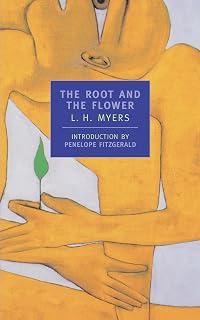
"Set in the early 1920s, the book centers on Augustine, a young man from an aristocratic Welsh family who has come of age in the aftermath og World War I. Unjustly suspected of having had a hand in the murder of a young girl, Augustine takes refuge in the remote castle of Bavarian relatives. There his hopeless love for his devout cousin Mitzi blinds him to the hate that will lead to the rise of German fascism." -- Back cover.Tags
Recommendations















Member Reviews
When I was in first grade, my mom got a copy of this through the Book of the Month Club. As an ambitious reader and lover of animal stories, it caught my eye and I asked Mom if it really was about a fox living in someone's attic, and she said, no, it wasn't that kind of story. Well, 60 years later, I finally got around to finding out for myself that yes, it is in fact a book containing an actual fox of the vulpine variety padding about castle corridors, as well as a predatory human variant.
This dense novel is meandering, discursive, with an interlinked cast of English and German households in the early 1920's. England is "waking from a bad dream," its young men suddenly at sea with the idea that they suddenly have 60 years of life to show more fill they didn't expect; Germany, plunging "deeper into nightmare," some of its young men continuing to murder in remote places on their own with vengeance in their blood. A monarchy falls, then is sort of restored, and a strange bug-eyed pasty-faced little weirdo delivers hour-long political rants at social affairs while stuffing his face with cream cakes, and tries to bring down the government from the tabletops of a beer hall. A callow, sweet young Welshman spared the trenches by a few days, visits German cousins, and falls headlong for a devout, beautiful girl who goes blind overnight, as he invents rollicking games with the children. The wife of a dying veteran loses one child in a mysterious accident in a marsh shortly before giving birth to another, her grief twisting her feelings for the newborn into indifference and resentment. The cake-eating weirdo, hiding out in another attic room, writhes in delirium and pain as the police are searching for him, to be hauled away tangled in a blue bathrobe. The human sociopath plans more bloodshed from his attic, where the little fox creeps and yips, rather as the blind girl does, emitting small cries to try to orient herself as she gropes up the attic stairs.
Much of the writing is gorgeous - the opening marsh scenes reminiscent of Pip's terrified stumble through the churchyard of Great Expectations. There are ruminations on the complexities of the human individual ("I-ness") and how it fits - or rejects - its "penumbra" of connected others ("We-ness"), and the sometimes lethal rejection of Others outside that sheltering penumbra - lethal both to "Them" as well as the "I" and the "We." Some parts are slow and opaque; others crisp and charming, poignant and tragic. Repays patient attention with much reward. show less
This dense novel is meandering, discursive, with an interlinked cast of English and German households in the early 1920's. England is "waking from a bad dream," its young men suddenly at sea with the idea that they suddenly have 60 years of life to show more fill they didn't expect; Germany, plunging "deeper into nightmare," some of its young men continuing to murder in remote places on their own with vengeance in their blood. A monarchy falls, then is sort of restored, and a strange bug-eyed pasty-faced little weirdo delivers hour-long political rants at social affairs while stuffing his face with cream cakes, and tries to bring down the government from the tabletops of a beer hall. A callow, sweet young Welshman spared the trenches by a few days, visits German cousins, and falls headlong for a devout, beautiful girl who goes blind overnight, as he invents rollicking games with the children. The wife of a dying veteran loses one child in a mysterious accident in a marsh shortly before giving birth to another, her grief twisting her feelings for the newborn into indifference and resentment. The cake-eating weirdo, hiding out in another attic room, writhes in delirium and pain as the police are searching for him, to be hauled away tangled in a blue bathrobe. The human sociopath plans more bloodshed from his attic, where the little fox creeps and yips, rather as the blind girl does, emitting small cries to try to orient herself as she gropes up the attic stairs.
Much of the writing is gorgeous - the opening marsh scenes reminiscent of Pip's terrified stumble through the churchyard of Great Expectations. There are ruminations on the complexities of the human individual ("I-ness") and how it fits - or rejects - its "penumbra" of connected others ("We-ness"), and the sometimes lethal rejection of Others outside that sheltering penumbra - lethal both to "Them" as well as the "I" and the "We." Some parts are slow and opaque; others crisp and charming, poignant and tragic. Repays patient attention with much reward. show less
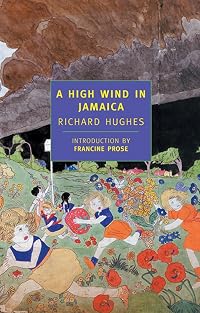
“At nightfall the days drowsing doubts, like roosting owls, tend to take wing and hoot.” It is not often that I encounter superlative craft like this serving superlative story-telling. Such is the deep satisfaction I encountered in Richard Hughes’ novel, The Fox in the Attic. I was unprepared for how skillfully Hughes gradually develops the story of a young Englishman’s visit to his aristocratic German cousin in 1923 post-World War I Germany. The descriptions of the German family, especially the children, are beautifully developed and written. No surprise here, coming from the author of, A High Wind in Jamaica. Hughes’s description of Hitler during and after the attempted putsch creates a lasting, disturbing shutter. His show more initial psychological section early in the novel, explaining how the “I,” and the, “they,” develop as we mature into normal adulthood, is later applied to his young cousin’s religious love of God, then terrifyingly applied to Hitler. “I am, none else besides me.” “The universe contained no other persons than him, only things….”, This novel is no less relevant to the world of 2023 as it was to the world of 1923 when Hughes published it in 1961. I would urge patience with early sections of the novel, its description of rural Wales along with certain English words unfamiliar to some Americans. You will find their meaning in a decent dictionary. The patience and tolerance is well worth any effort in this well-crafted masterpiece. FYI, if necessary. Much of the novel occurs in Munich, Germany, 1923. For those who question the space Hughes devoted to the attempted Hitler-putsch, they should be aware that the putsch-attempt occurred in Munich, Germany, 1923. Any worthy novelist would find it impossible to avoid devoting space to the putsch if their setting was Munich in the year of 1923. show less
I'm suspending judgment on this for the time being; Hughes said that he only published 'The Human Predicament' in sections because otherwise it might never get published at all. So this is only one episode in a much longer work, kind of like taking the third volume of Proust on its own, except even less complete in itself. After just this book, the Tolstoyan project seems a little heavy handed: private scene with fictional characters over here; public scene with historical characters over here; socio-philosophical reflections on the early twentieth century over here. The book's closing image starts to bring the reflections together with the private, but the Hitler chapters still seem a little formally disconnected. I suspect that this show more is the sort of thing that gets resolved as the project unfolds, and I'm really looking forward to The Wooden Shepherdess. Too bad he only got those two volumes done.
Large-scale project issues aside, The Fox... has everything you will love about Hughes: the light touch; the fluid prose; the just-difficult-enough-to-be-interesting-but-not-so-difficult-you-need-a-guidebook imagery, symbolism and technique; the understanding that the particular is only of interest when it reflects on the universal and vice versa; the willingness to break modernist and anti-modernist taboos whenever the book will benefit from such a breaking. Great stuff. show less
Large-scale project issues aside, The Fox... has everything you will love about Hughes: the light touch; the fluid prose; the just-difficult-enough-to-be-interesting-but-not-so-difficult-you-need-a-guidebook imagery, symbolism and technique; the understanding that the particular is only of interest when it reflects on the universal and vice versa; the willingness to break modernist and anti-modernist taboos whenever the book will benefit from such a breaking. Great stuff. show less
An English novel set in the period between the world wars, the book follows a young, naive member of the English gentry from his Welsh countryside manor through his journeys to visit distant cousins in Germany. We also get a very close-up view of the political turmoils of Germany during the early 20s, including a description of Hitler's ill-fated 1923 Beer Hall Putsch, which Hughes claimed was based on first-hand accounts. The whole story read to me as an allegory for the relative states of awareness of the English and German societies during the period. Our English hero is entirely ignorant of the politic unrest going on in Germany, believing it to be a passified and now peaceful place. It's hard for me to be wholly drawn into a story show more where the protagonist is almost entirely and in every possible way clueless. Still the book was quite interesting to read, and did definitely hold my attention.
Here's a passage near the end of the book, as the protagonist gazes upon a mostly frozen Danube River, that gives an idea of the metaphorical thrust of the narrative, as river and ice stand in for pre-WW II Germany:
"The road to the station took Augustine close to the river itself. Even now the river was not everywhere frozen: here and there where the current was strongest there were still patches of dark grey water that steamed in the sun, so that the solitary swan indefatigably swimming there was half-hidden in vapour. But elsewhere the Danube seemed to be frozen solid in heaps. It was wild, yet utterly still. Huge blocks of ice had jostled each other and climbed on top of each other like elephants rutting and then got frozen in towering lumps: or had swirled over and over before coagulating till they were curled like a Chinese sea. None of them had remained in the place where first it had frozen: each block was complete in itself but now out of place--like a jig-saw puzzle glued in a heap helter-skelter so that now it could never be solved.
It was all such a muddle! Although it was utterly still it expressed such terrific force it was frightening: the force that had made it--thrusting flows weighing hundreds of tons high into the air, and the force it would release when it thawed. When that ice melted at last it would go thundering down the river grinding to bits everything in its path. No bridge could possibly stand up to it. The longer you looked at its stillness, the greater your feeling of panic...Augustine hated Germany: all he wanted now was to get away as quick as he could." show less
Here's a passage near the end of the book, as the protagonist gazes upon a mostly frozen Danube River, that gives an idea of the metaphorical thrust of the narrative, as river and ice stand in for pre-WW II Germany:
"The road to the station took Augustine close to the river itself. Even now the river was not everywhere frozen: here and there where the current was strongest there were still patches of dark grey water that steamed in the sun, so that the solitary swan indefatigably swimming there was half-hidden in vapour. But elsewhere the Danube seemed to be frozen solid in heaps. It was wild, yet utterly still. Huge blocks of ice had jostled each other and climbed on top of each other like elephants rutting and then got frozen in towering lumps: or had swirled over and over before coagulating till they were curled like a Chinese sea. None of them had remained in the place where first it had frozen: each block was complete in itself but now out of place--like a jig-saw puzzle glued in a heap helter-skelter so that now it could never be solved.
It was all such a muddle! Although it was utterly still it expressed such terrific force it was frightening: the force that had made it--thrusting flows weighing hundreds of tons high into the air, and the force it would release when it thawed. When that ice melted at last it would go thundering down the river grinding to bits everything in its path. No bridge could possibly stand up to it. The longer you looked at its stillness, the greater your feeling of panic...Augustine hated Germany: all he wanted now was to get away as quick as he could." show less
I picked this up in a second hand bookshop, because of the rave reviews on the back cover, with comparisons to Tolstoy etc. So here was apparently one of the great British post war novelists, and I had never heard of him (which is particularily serious, me having a degree in English Lit and all). So, what is the fuss all about?
I can see where the rave reviews come from. It is a brave attempt to recreate a pivotal era in the 20th Century, when the war was over but Fascism hadn't yet begun. A serious look at the world of Bertie Wooster, in a sense. The novel has a very wide scope, taking in Britain and Germany, several families, social strata etc. One of the themes is how the same things are interpreted in different ways by diffferent show more people and how motivations and actions are misunderstood. In this way, it reminded me a bit of Anglo Saxon Attitudes.
Yet, ultimately, it fails to deliver. The set up is very ambitious, and by Book 2 we don't have Chekhov's gun, we have an entiry armoury of Chekhov, and these strands are hardly tied up by the end of the book. Many aspects, such as the whole business of Mitzi are unconvincing. Also, it has Hitler in it. There is an end note of the author, assuring us that everything has been painstakingly researched, yet it remains the least convincing Hitler this side of the Indiana Jones movies.
It does have moments of great beauty, and the fragmented technique of very short chapters (a few pages at most) is very effective. In fact, the opening chapters when the hunters return with the dead girl are breathtaking. show less
I can see where the rave reviews come from. It is a brave attempt to recreate a pivotal era in the 20th Century, when the war was over but Fascism hadn't yet begun. A serious look at the world of Bertie Wooster, in a sense. The novel has a very wide scope, taking in Britain and Germany, several families, social strata etc. One of the themes is how the same things are interpreted in different ways by diffferent show more people and how motivations and actions are misunderstood. In this way, it reminded me a bit of Anglo Saxon Attitudes.
Yet, ultimately, it fails to deliver. The set up is very ambitious, and by Book 2 we don't have Chekhov's gun, we have an entiry armoury of Chekhov, and these strands are hardly tied up by the end of the book. Many aspects, such as the whole business of Mitzi are unconvincing. Also, it has Hitler in it. There is an end note of the author, assuring us that everything has been painstakingly researched, yet it remains the least convincing Hitler this side of the Indiana Jones movies.
It does have moments of great beauty, and the fragmented technique of very short chapters (a few pages at most) is very effective. In fact, the opening chapters when the hunters return with the dead girl are breathtaking. show less
This is a bit of a strange read. It gives little glimpses here and there... of the young, just beginning Hitler, for one. The protagonist, Augustine, is 23 years old, heir to an estate that he doesn't care about. He is obviously too young to Know himself, or what he wants. Escaping from the uncomfortable atmosphere of the village by his home, he goes to visit relations in Germany, in the country outside Munich. He is puzzled by the people and their culture, and seems to knock about without any aim. The language describing the scenery and characters is beautiful; you can feel how hard the author worked to get these words "just so."
Conceived as the first volume of The Human Predicament, a historical novel in three parts (only some notes towards the third part exist) that describes his own formative years, the times between the two wars - R.H. was born in 1900 - and is set in England as well as in Bavaria. The foreground characters, the young Augustine like the author just too young to have served, the main protagonist and present lord of the Wales family seat, his older brother being killed in the war, and their aristocratic German cousins are fictitious but - importantly - R.H., so he assures the reader, made every effort to present historical characters and events as accurately as it was possible for him.
The narration starts in 1923, 5 years after the war und show more this first part of the intended trilogy ends shortly after the Munich Putsch in November that year.
The writing is in multiple voices, not confined to Augustine. Part of Chapter i-26 is an essay on the perceived boundary of the self, the ‘I’, and the meaning of ‘we’, a boundary that changes from ‘primitive’ man to ‘civilized’ man but is also perceived differently in the English and German society we encounter later, but may also shift not only from person to person but within a context of momentary emotions. R.H.’s philosophical thoughts woven into the narrative are an unusual feature for a novel - it appeals to me. The theme of the ‘I’ and the ‘Other’ and the boundary between both is taken up again at various places, most directly in chapter iii-10, in characterising the two extremes: "Hitler existed alone: ‘I am, none else besides me.’" Hughes writes and I agree. Hitler's universe contained no other person than him, only things: material and tools to be used. The other extreme: Mitzi, the young woman fallen blind, loosing the rest of her sight in an afternoon; the crisis caused her ‘I’ to shrivell beneath the overwhelming power of God.
Hughes also adds general descriptions like the life under hyper-inflation Germany experienced in 1923 (Ch. ii-2). Suffering turns to hatred which cannot remain objectless: „it conjures its own Enemy out of thin air“: Jews, Communists, Capitalists, Catholics … the ‘November Criminals’ of the then elected German government. And it turns to its own fictive WE - its myths of Soil and Race, …
A vivid description of the Munich Putsch and Hitler being sheltered by ‘Putzi’ i.e. Dr. Ernst Hanfstaengl and his wife Helene. (quite true!)
At times Hughes uses strange expressions not much to my liking; some examples:
„… he had never before funked children“ (iii-5); (here: to flinch from)
„… to have havered so long“ (iii-5); (to have hesitated so long)
„… he barked his nose on the door.“ /iii-26); (here: he banged his nose on the door)
Having read the book many years ago it had stayed with me, but now re-reading it I am just slightly disappointed. (XI-19) show less
The narration starts in 1923, 5 years after the war und show more this first part of the intended trilogy ends shortly after the Munich Putsch in November that year.
The writing is in multiple voices, not confined to Augustine. Part of Chapter i-26 is an essay on the perceived boundary of the self, the ‘I’, and the meaning of ‘we’, a boundary that changes from ‘primitive’ man to ‘civilized’ man but is also perceived differently in the English and German society we encounter later, but may also shift not only from person to person but within a context of momentary emotions. R.H.’s philosophical thoughts woven into the narrative are an unusual feature for a novel - it appeals to me. The theme of the ‘I’ and the ‘Other’ and the boundary between both is taken up again at various places, most directly in chapter iii-10, in characterising the two extremes: "Hitler existed alone: ‘I am, none else besides me.’" Hughes writes and I agree. Hitler's universe contained no other person than him, only things: material and tools to be used. The other extreme: Mitzi, the young woman fallen blind, loosing the rest of her sight in an afternoon; the crisis caused her ‘I’ to shrivell beneath the overwhelming power of God.
Hughes also adds general descriptions like the life under hyper-inflation Germany experienced in 1923 (Ch. ii-2). Suffering turns to hatred which cannot remain objectless: „it conjures its own Enemy out of thin air“: Jews, Communists, Capitalists, Catholics … the ‘November Criminals’ of the then elected German government. And it turns to its own fictive WE - its myths of Soil and Race, …
A vivid description of the Munich Putsch and Hitler being sheltered by ‘Putzi’ i.e. Dr. Ernst Hanfstaengl and his wife Helene. (quite true!)
At times Hughes uses strange expressions not much to my liking; some examples:
„… he had never before funked children“ (iii-5); (here: to flinch from)
„… to have havered so long“ (iii-5); (to have hesitated so long)
„… he barked his nose on the door.“ /iii-26); (here: he banged his nose on the door)
Having read the book many years ago it had stayed with me, but now re-reading it I am just slightly disappointed. (XI-19) show less
Members
- Recently Added By
Lists

Anthony Burgess 99 Post War Novels
99 works; 7 members

Tammen Keltainen kirjasto
81 works; 1 member
Author Information

22+ Works 3,653 Members
Some Editions
Awards and Honors
Distinctions
Notable Lists
Series

Belongs to Publisher Series
Common Knowledge
- Canonical title
- The Fox in the Attic
- Original publication date
- 1961
- People/Characters
- Augustine Penry-Herbert; Mary Wadamy; Baron Walther van Kessel; Baroness van Kessel; Franz van Kessel; Mitzi van Kessel (show all 10); Adolf Hitler; Hermann Göring; Erich Ludendorff; Polly Wadamy
- Important places
- Wales, UK; Munich, Bavaria, Germany
- Important events
- Beer Hall Putsch (1923)
- First words
- Only the steady creaking of a flight of swans disturbed the silence, labouring low overhead with outstretched necks towards the sea.
- Last words
- (Click to show. Warning: May contain spoilers.)Augustine turned round in surprise; but he was wrong, it was only a bag.
Classifications
Statistics
- Members
- 471
- Popularity
- 64,920
- Reviews
- 10
- Rating
- (3.75)
- Languages
- 7 — Dutch, English, Finnish, French, Hungarian, Italian, Spanish
- Media
- Paper, Ebook
- ISBNs
- 15
- ASINs
- 24