The Long Winter
by John Christopher
On This Page
Description
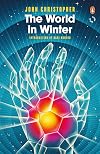
Penguin reissues a classic work of science fiction from the author of The Death of Grass- now with a new introduction by Hari Kunzru One year the UK suffers a terrible, harsh winter- rivers freeze solid, food and fuel run low, the whole of Europe lies under snow. As months pass and the arctic weather remains, it becomes clear that the world's climate has changed permanently. Now, humanity must adapt to survive in the brutal new conditions. As the northern hemisphere nations fall into chaos show more and barbarism, with packs of men roaming like wolves through the frozen wastelands, citizens flee south to Africa and South America. Journalist Andrew Leedon is one of the lucky ones who escaped in time - swapping London for the white refugee slums of habitable Nigeria. Horrified by conditions and determined to act, Leedon makes a desperate plan to return and reclaim the dangerous wilderness of his abandoned country... The World in Winter ispart of the Penguin Worlds classic science fiction series show lessTags
Recommendations














Member Reviews
I found this re-release of this SF-novel a few weeks ago, during the sales of an English bookshop in Brussels, Belgium. In other words, were it not priced lower, I probably would not have bought it, or not immediately.
The premise looked interesting: climate-fiction (cli-fi) in vein of e.g. [a:Kim Stanley Robinson|1858|Kim Stanley Robinson|https://images.gr-assets.com/authors/1376955089p2/1858.jpg] and others. See, for example, his Science in the Capital trilogy. Winter is extending its tentacles in northern Europe and America. As hell freezes over, because the sun is giving off less and less heat, entire populations (incl. politicians) are forced to move out of their countries and seek warmer shelter in the south, like Africa and South show more America. Asia seems to be of no concern in this book, or I must have overlooked it.
Beware: spoilers! I'll just hide the next blocks of text.
The focus lies on two couples which have one thing in common: cheating partners. Then again, women are considered products, submissive and such. In other words, the classic "women fall for macho types". And so, at some point, they indeed switch partners. And new love is established. But anyway, the move to Africa then. White people try to settle there, find jobs, etc. There is racism, of course. The book was written in the 1960's. Black people and white people don't like each other; racism is alive in Europe as it is alive in Africa. White people take on jobs, for which, in Europe, black people would be hired: waiter, driver/chauffeur, ... all those little jobs which require not much schooling or critical thinking. You could fault the book or the author for the racist input, but racism is still alive, everywhere in the world - it doesn't mean one must approve of it, of course -, although there has been and still is more resistance and opposition.
Andrew Leedon, a journalist, and his new-found love Madeleine (David's former partner) have fled to Africa, Nigeria. Of course, as all is frozen up north, this also affects financial actions and trade. Sterling is not accepted, so they can't access the money that was sent to them, and have to survive on the limited sum they could bring with them. As a result, they can't do otherwise but rent a very cheap house in the slums. Tightly packed groups of people, an unrelenting heat, not much security, a lack of basic comfort and infrastructure, and so on. Totally inhuman conditions to live in.
Both do manage to find jobs, albeit badly paid, and have to save a lot to be able to afford something. Carol, Andrew's cheating wife, also fled to Africa, found a job (social secretary -prostitution? - for a wealthy African businessman) and so managed to get their sons to go to a very decent school; the studies being paid by her new, African "owner" (by lack of a better term). She and Andrew do write to each other, although not very often.
But then, the tide turns and Andrew and Madeleine can improve their social standards and situation. More income, better housing, etc., since Andrew was accepted as camera-man for a documentary about the Nigerian army going up north to investigate the frozen situation in England, and maybe even conquer the country, little by little.
David stayed in England, while his ex and others moved to Africa. It turns out later that he took control of one gang of survivors. Of course, all they had were stocks of food and beverages. England is so frozen that nothing new can grow. No agriculture, no cattle, nothing. All supplies have stopped: electricity, fuel, and more. Which reminded me of [a:Andreas Eschbach|40381|Andreas Eschbach|https://images.gr-assets.com/authors/1200336594p2/40381.jpg]'s [b:Ausgebrannt|1435541|Ausgebrannt|Andreas Eschbach|https://images.gr-assets.com/books/1183572530s/1435541.jpg|1426096] (Burnt out); see my review here. So one has to rely on paraffin lamps, for example.
The Nigerians are confronted with proper resistance, within (over leadership and taking the right decisions on their journey towards England) and without (David's crew).
In the end, Andrew again chooses his own side, for one reason of another (Madeleine? Her being pregnant? Him thinking it's his? Or just because he indeed feels more at home in his home country?). Racism? White over black? Each rooting for his own colour? Given the circumstances, it's understandable. Not always something to approve of, but from e.g. an anthropological point of view understandable.
I found this book reasonably good. It shows how white supremacy has its version in Africa (and elsewhere). The story follows mainly white people seeking a new future in Africa, which has its own laws, its own culture(s), its own norms and values, ... Some of those agree with western values, others differ, and vice versa. The author should indeed have focused more on how people try to survive in a frozen world, what the consequences are for nature (fauna and flora), and so on. I agree on that point with Jason, who was less positive about the book.
The story also shows - if you read between the lines -, or should show, that the West is not always the best in everything, that our progress, our industries, ... must indeed take more and more care of the environment. We (generally speaking) do not always treat others/immigrants/strangers with sympathy or empathy, for various reasons and influenced by various parameters. Considering the recent refugee crisis, what if the West was indeed suffering from a severe winter (or a very long and hot summer) that would have such an impact, and was to move to warmer (or more temperate) countries? Has this been considered?
Long story short - and I don't even know why I wrote so many words about such a short book -, a story with flaws, but one that does make you think about the environment, immigration (under severe climate or other conditions), and so on. show less
The premise looked interesting: climate-fiction (cli-fi) in vein of e.g. [a:Kim Stanley Robinson|1858|Kim Stanley Robinson|https://images.gr-assets.com/authors/1376955089p2/1858.jpg] and others. See, for example, his Science in the Capital trilogy. Winter is extending its tentacles in northern Europe and America. As hell freezes over, because the sun is giving off less and less heat, entire populations (incl. politicians) are forced to move out of their countries and seek warmer shelter in the south, like Africa and South show more America. Asia seems to be of no concern in this book, or I must have overlooked it.
Beware: spoilers! I'll just hide the next blocks of text.
Andrew Leedon, a journalist, and his new-found love Madeleine (David's former partner) have fled to Africa, Nigeria. Of course, as all is frozen up north, this also affects financial actions and trade. Sterling is not accepted, so they can't access the money that was sent to them, and have to survive on the limited sum they could bring with them. As a result, they can't do otherwise but rent a very cheap house in the slums. Tightly packed groups of people, an unrelenting heat, not much security, a lack of basic comfort and infrastructure, and so on. Totally inhuman conditions to live in.
Both do manage to find jobs, albeit badly paid, and have to save a lot to be able to afford something. Carol, Andrew's cheating wife, also fled to Africa, found a job (social secretary -
But then, the tide turns and Andrew and Madeleine can improve their social standards and situation. More income, better housing, etc., since Andrew was accepted as camera-man for a documentary about the Nigerian army going up north to investigate the frozen situation in England, and maybe even conquer the country, little by little.
David stayed in England, while his ex and others moved to Africa. It turns out later that he took control of one gang of survivors. Of course, all they had were stocks of food and beverages. England is so frozen that nothing new can grow. No agriculture, no cattle, nothing. All supplies have stopped: electricity, fuel, and more. Which reminded me of [a:Andreas Eschbach|40381|Andreas Eschbach|https://images.gr-assets.com/authors/1200336594p2/40381.jpg]'s [b:Ausgebrannt|1435541|Ausgebrannt|Andreas Eschbach|https://images.gr-assets.com/books/1183572530s/1435541.jpg|1426096] (Burnt out); see my review here. So one has to rely on paraffin lamps, for example.
The Nigerians are confronted with proper resistance, within (over leadership and taking the right decisions on their journey towards England) and without (David's crew).
In the end, Andrew again chooses his own side, for one reason of another (Madeleine? Her being pregnant? Him thinking it's his? Or just because he indeed feels more at home in his home country?). Racism? White over black? Each rooting for his own colour? Given the circumstances, it's understandable. Not always something to approve of, but from e.g. an anthropological point of view understandable.
I found this book reasonably good. It shows how white supremacy has its version in Africa (and elsewhere). The story follows mainly white people seeking a new future in Africa, which has its own laws, its own culture(s), its own norms and values, ... Some of those agree with western values, others differ, and vice versa. The author should indeed have focused more on how people try to survive in a frozen world, what the consequences are for nature (fauna and flora), and so on. I agree on that point with Jason, who was less positive about the book.
The story also shows - if you read between the lines -, or should show, that the West is not always the best in everything, that our progress, our industries, ... must indeed take more and more care of the environment. We (generally speaking) do not always treat others/immigrants/strangers with sympathy or empathy, for various reasons and influenced by various parameters. Considering the recent refugee crisis, what if the West was indeed suffering from a severe winter (or a very long and hot summer) that would have such an impact, and was to move to warmer (or more temperate) countries? Has this been considered?
Long story short - and I don't even know why I wrote so many words about such a short book -, a story with flaws, but one that does make you think about the environment, immigration (under severe climate or other conditions), and so on. show less
Very good post-apocalyptic novel about a future where the level of solar radiation declines so it becomes perpetual winter in the northern hemisphere and most of the population flees to the warmer climes of Africa. Africa then becomes politically dominant leading to an ironic post-colonialist situation where white waiters kowtow to black masters in Lagos. Written in 1962 the novel contains some conceptions of racial loyalty that read uncomfortably today and the final section jars slightly because of this. The marital relationships of the leading four characters also remind one of Noel Coward's Private Lives!
This is only the second book of his I've read (the first was No Blade of Grass), and again I'm impressed with how well constructed the story is. He gives a little bit of background on his characters under relatively normal circumstances then drops the end of the world on them, and you believe them in that situation because he made them real from the start. There is some interesting--and pointed--racial role reversal in the midsection when everyone escapes to Africa, but it's part of the story, not an agenda. The last part of the book reads almost like a sea-faring adventure, and his descriptions of his ravaged homeland are haunting and sad. The ending struck me as a little too neat, but it's a page turner in the best sense, and I left show more the book wishing it was longer. He seems to have fallen into neglect as a writer, as evidenced by the rarity and expense of decent copies of his books, and he definitely deserves a wider audience. One of the better post-apocalypse books I've read, and I thought the same about No Blade of Grass. show less
This book is very dated in its attitude to gender and race but incredibly relevant in its subject matter: climate change. In this novel, a drop in the sun's radiation is causing the earth to get colder. Formerly temperate countries are becoming covered in snow and ice. Andy is living in England as this begins and the story tells of the slow start to this long winter that results in many people fleeing south to warmer countries. It covers both the situation in England and what happens to the refugees once they reach Africa.
One thing I liked about this book was how it focused mainly on the relationships between the characters. I wasn't always sure I believed them, but it almost made the end of the world the background of the novel rather show more than its centre.
I just couldn't get over the way the race issue was handled. Unfortunately, even today there was probably still some truth in the racism portrayed but, while the rest of the book was relevant today, the way the narrative dealt with the differences between blacks and whites made the book seem incredibly old fashioned. show less
One thing I liked about this book was how it focused mainly on the relationships between the characters. I wasn't always sure I believed them, but it almost made the end of the world the background of the novel rather show more than its centre.
I just couldn't get over the way the race issue was handled. Unfortunately, even today there was probably still some truth in the racism portrayed but, while the rest of the book was relevant today, the way the narrative dealt with the differences between blacks and whites made the book seem incredibly old fashioned. show less
Pessimistic futuristic story about climate change. Well written, and engaging. Especially fascinated to the state of poverty the characters were reduced to and how they survived - touching on a Knut Hamsun style of living. Plot: Londoners move to Nigeria to flee the frozen summer. The book is split into three parts; one in London as the journalists discuss the pros and cons of a possible freeze, whether to invest in fuel companies, whether the scientists are exaggerating, how the snow fell in November and as spring approached there was no sign of any thaw. Part two where two of the Londoners had moved to Africa, but found they had no money, forced to live in poverty and encountered racism and hardship whilst slowly trying to rebuild show more their lives. Part three is a return to London as a journalist reporting current conditions, only to find a reduced population, and a few people in power resorting to military means to protect their areas. show less
A curious one, this. I sought it out after remembering the cover used to scare my as a child (my Dad had a copy). An interesting story about the gradual ice age creeping into the northern hemisphere, and how British society reacts. We then move into Nigeria where the main character escapes to a more hospitable climate, and then back to find out what happened to those remaining in the UK.
As a premise it's a good one, but the racism and misogyny made it hard to focus on the story. I imagine it's partly a product of the time of writing and I don't agree with censoring the past for modern sensibilities, but it, along with the conduct of pretty much every main character (they are all either hopeless or reprehensible) means it left a nasty show more taste in my mouth. I will probably stick with John Wyndham in future. show less
As a premise it's a good one, but the racism and misogyny made it hard to focus on the story. I imagine it's partly a product of the time of writing and I don't agree with censoring the past for modern sensibilities, but it, along with the conduct of pretty much every main character (they are all either hopeless or reprehensible) means it left a nasty show more taste in my mouth. I will probably stick with John Wyndham in future. show less
In the light of current concerns about the effect on society of a warming climate, it is interesting to read a novel based on the opposite: the collapse of European civilization after a decline in solar radiation and the consequent return of Arctic conditions to Europe, leaving Africa and other southern regions in the ascendancy. This edition comes with a careful introduction for the younger contemporary reader, setting the book's attitude to race relations in the original context of the early 1960s. The plot involves a love triangle as well as the purely SF element, the later being somewhat reminiscent of The Day of the Triffids. I enjoyed it. MB 19-xi-2021
Members
- Recently Added By
Lists

Best Post-Apocalyptic Stories
143 works; 88 members

Books Read in 2018
4,360 works; 110 members
Author Information

55+ Works 13,337 Members
Some Editions
Series
Belongs to Publisher Series
Common Knowledge
- Alternate titles
- The Long Winter; The World in Winter
- Original publication date
- 1962
- Important places
- London, England, UK; Nigeria
- First words
- The reading room seemed warm when one first came in from the outside, but the impression did not last.
- Disambiguation notice
- published as The Long Winter and The World in Winter
Classifications
Statistics
- Members
- 332
- Popularity
- 95,911
- Reviews
- 11
- Rating
- (3.49)
- Languages
- English
- Media
- Paper, Audiobook, Ebook
- ISBNs
- 8
- ASINs
- 14