

Hari Kunzru
Author of The Impressionist
About the Author
Born in London and raised in Essex, Hari Kunzru is a freelance journalist and editor living in London.
Works by Hari Kunzru
One For the Trouble 2 copies
Kaltes Klares Wasser 1 copy
Magda Mandela - story 1 copy
Associated Works
True Names and the Opening of the Cyberspace Frontier (2001) — Introduction, some editions — 610 copies, 10 reviews
Kingdom of Olives and Ash: Writers Confront the Occupation (2017) — Contributor — 165 copies, 5 reviews
Tagged
Common Knowledge
- Legal name
- Kunzru, Hari Mohan Nath
- Birthdate
- 1969-12
- Gender
- male
- Education
- Bancroft's School
University of Oxford (Wadham College)
University of Warwick (MA - Philosophy and Literature) - Occupations
- journalist
author - Organizations
- English PEN
- Awards and honors
- British Book Award (deciBel Writer of the Year, 2005)
Granta's Best of Young British novelists (2003)
Observer Young Travel Writer of the Year (1999) - Relationships
- Kitamura, Katie (echtg.)
- Short biography
- Hari Kunzru, né en 1969 d'une mère anglaise et d'un père indien, vit à Londres. Son premier roman, L'Illusionniste (Pion, 2003), couronné par le prix Somerset Maugham, l'a placé parmi les vingt meilleurs jeunes écrivains de l'année 2003, liste établie par la prestigieuse revue Granta.
- Nationality
- UK
- Birthplace
- London, England, UK
- Places of residence
- Essex, England, UK
London, England, UK - Map Location
- UK
Members
Reviews
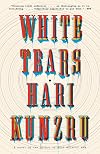
This starts out as a novel about two white hipsters who want to become music producers. Seth, the middle-class, socially awkward computer guy, spends his time recording sounds, while Carter, the trustafarian, is obsessed with blues and other black music from the first half of the 20thC. They record and sample and mix and are on the verge of breakout success, catering mostly to white musicians who want "authentic" analog sound. Then disaster occurs and the story takes a turn from acerbic and show more satirical to angry and hallucinatory.
Seth is initially a moderately sympathetic character, an EveryWhiteMan who hasn't done anything obvious to make his privilege infuriating; unlike Carter, who is a walking stereotype but a very accurate one. But then, after Seth is basically on his own, the past becomes present and the roots of their appropriation grow and wrap themselves around Seth, Carter, and the rest of Carter's family. There are living and dead narrators (sometimes it's hard to tell which is which) and at times the reader is just as confused as Seth is. But Kunzru never loses control of his narrative threads no matter how much fury pours from these pages.
Musical appropriation, particularly of the blues tradition, is something that whites are either ignorant of, take for granted, or excuse away as "the way art and the creative process work." Elvis stole, the Beatles and the Rolling Stones stole, Clapton stole, and their sincere love for the music doesn't change the fact that the original artists are barely known by most listeners. We attribute brilliance to the appropriators but render the original creators invisible.
In the novel, the white characters pay the price for their theft, but it takes ghosts to do it. In the real world, they just keep getting richer. show less
Seth is initially a moderately sympathetic character, an EveryWhiteMan who hasn't done anything obvious to make his privilege infuriating; unlike Carter, who is a walking stereotype but a very accurate one. But then, after Seth is basically on his own, the past becomes present and the roots of their appropriation grow and wrap themselves around Seth, Carter, and the rest of Carter's family. There are living and dead narrators (sometimes it's hard to tell which is which) and at times the reader is just as confused as Seth is. But Kunzru never loses control of his narrative threads no matter how much fury pours from these pages.
Musical appropriation, particularly of the blues tradition, is something that whites are either ignorant of, take for granted, or excuse away as "the way art and the creative process work." Elvis stole, the Beatles and the Rolling Stones stole, Clapton stole, and their sincere love for the music doesn't change the fact that the original artists are barely known by most listeners. We attribute brilliance to the appropriators but render the original creators invisible.
In the novel, the white characters pay the price for their theft, but it takes ghosts to do it. In the real world, they just keep getting richer. show less

A masterful book of controlled tension and terror. It's brilliantly-executed on the level of narrative and symbolism. An incredibly layered story about slavery and the prison industrial complex, about black people as property and possessions for the white owners, and draws a line down to record collecting and the music industry in terms of who owns black music. Cultural appropriation as the "liberal" form of ownership. And thus this injustice, embedded in the very core of America, can only show more be addressed to white capitalists via a different kind of "possession". It left me reeling; the message was powerful.
In thinking about how this book is structured, the question of responsibility in art comes up. To be precise, the ethics of writing a story about the legacy of slavery and black people's suffering when you haven't endured it or are not descended from people who have. Structuring the narrative this way strikes me as a responsible choice on Kunzru's part because the focus, and thus the blame, is rightly on the oppressors, on the people who profit from slavery and prisons. But the depiction of American whiteness in this book is not monolithic; class is a factor in how Seth, the white narrator, is used and abused and discarded.
This review doesn't do the book justice. So much to think about. show less
In thinking about how this book is structured, the question of responsibility in art comes up. To be precise, the ethics of writing a story about the legacy of slavery and black people's suffering when you haven't endured it or are not descended from people who have. Structuring the narrative this way strikes me as a responsible choice on Kunzru's part because the focus, and thus the blame, is rightly on the oppressors, on the people who profit from slavery and prisons. But the depiction of American whiteness in this book is not monolithic; class is a factor in how Seth, the white narrator, is used and abused and discarded.
This review doesn't do the book justice. So much to think about. show less
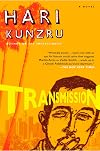
Transmission is the story of the havoc wreaked on society by a computer virus named Leela, named after a fictional Bollywood star named Leela Zahir. At its center is a young Indian computer programmer, Arjun Mehta, who releases the virus when his tenuous, exploitative job with a Silicon Valley antivirus company comes under threat. Kunzru interweaves this main story with several other threads: the rise and fall of Guy Swift, a British new-money entrepreneur who runs a company called show more Tomorrow*, which seems to specialize in marketing empty rhetoric to various multinational businesses; the career of Gabriella Caro, Guy's girlfriend, who works as a public relations manager and suffers from her family's old money; and briefly, Leela Zahir herself, who has been thrust into the world of show-business by her pushy mother.
Kunzru has a brilliant eye for satire. Guy Swift's proposal, for instance, that Europe be rebranded as a sort of "VIP zone" for elites in the same way that certain nightclubs market themselves toward the rich and the famous is comedy gold, especially given what happens to him later in the novel. The only problem, in my opinion, is that most readers are a little too used to having their hands held: that is, they often want authors to reveal the satirical facade, just for a moment, to drop a wink after delivering a piece of searing irony so as to say "hey, it's just satire, I'm only kidding." What I admire about Kunzru is that he doesn't do this, and so those who don't get joke, well, they miss out. It's a daring strategy, one that, as a quick perusal of the academic criticism about Kunzru's novels suggests, leads to some overly literal interpretations of his work.
The main shortcoming I found in Transmission was that Kunzru struggled to find a consistent range for his considerable comedic talents. A deliberately flat character like Guy Swift, for example, seems better designed for a much broader kind of comedy than was on offer. Mostly, I think this problem had to do with how Kunzru deals with social class, since the grand conceits of those in charge generally make them a perfect target for the kind of humorous poetic justice which is conferred on characters like Swift or Darryl Gant, Arjun's passive-aggressive boss at Virugenix. The strategy works less well when it comes to the more difficult aspects of society, for disillusionment, poverty, and exploitation are much harder to laugh at from the bottom up.
Kunzru usually manages to address such issues without seeming preachy, but it does make it seem as though the novel proceeds at two different speeds that don't quite gel with each other. Thus, there is the touching story of Arjun, who seems like a kind of holy fool, on the one hand, on whom is conferred a mixture of innocent sincerity and frustrated pathos, and on the other hand, the broad satire of the delusional Guy Swift, who could easily have wandered out of the pages of a Martin Amis story. The result is an entertaining but uneven novel, one in which the various threads are tied together competently but a little too glibly for my taste. show less
Kunzru has a brilliant eye for satire. Guy Swift's proposal, for instance, that Europe be rebranded as a sort of "VIP zone" for elites in the same way that certain nightclubs market themselves toward the rich and the famous is comedy gold, especially given what happens to him later in the novel. The only problem, in my opinion, is that most readers are a little too used to having their hands held: that is, they often want authors to reveal the satirical facade, just for a moment, to drop a wink after delivering a piece of searing irony so as to say "hey, it's just satire, I'm only kidding." What I admire about Kunzru is that he doesn't do this, and so those who don't get joke, well, they miss out. It's a daring strategy, one that, as a quick perusal of the academic criticism about Kunzru's novels suggests, leads to some overly literal interpretations of his work.
The main shortcoming I found in Transmission was that Kunzru struggled to find a consistent range for his considerable comedic talents. A deliberately flat character like Guy Swift, for example, seems better designed for a much broader kind of comedy than was on offer. Mostly, I think this problem had to do with how Kunzru deals with social class, since the grand conceits of those in charge generally make them a perfect target for the kind of humorous poetic justice which is conferred on characters like Swift or Darryl Gant, Arjun's passive-aggressive boss at Virugenix. The strategy works less well when it comes to the more difficult aspects of society, for disillusionment, poverty, and exploitation are much harder to laugh at from the bottom up.
Kunzru usually manages to address such issues without seeming preachy, but it does make it seem as though the novel proceeds at two different speeds that don't quite gel with each other. Thus, there is the touching story of Arjun, who seems like a kind of holy fool, on the one hand, on whom is conferred a mixture of innocent sincerity and frustrated pathos, and on the other hand, the broad satire of the delusional Guy Swift, who could easily have wandered out of the pages of a Martin Amis story. The result is an entertaining but uneven novel, one in which the various threads are tied together competently but a little too glibly for my taste. show less
This novel starts as a pretty average read about two culture-appropriating, music-loving bros. I kept reading because every few pages there would be a detail, a comment, that rose above that morass of mediocrity and said something clever and true. As the book went on those details became paragraphs, then pages, then chapters, but still I was not so impressed. Then I hit pages 252-255 and this book took my breath away, as in, it punched me in the solar plexus, then kept punching right until show more the end. The last 20 pages transform every page you've read before, make this okay book brilliant, terribly true and horribly pertinent. I started reading it again from the beginning when I finished just to see how Kunzru works this magic. It's an incredible risk, making your reader wait that long for such revelation, but what a reward. All of which is to say, if you're thinking of quitting in the middle: Keep Going! And don't skip to the end because, like a piece of music building to its climax, you need all of those early bits to understand, be moved by, the climactic finish. (That second-to-last paragraph!) show less
Lists
Indian Diaspora (3)
All Things India (1)
Library TBR (1)
music to my eyes (1)
Diverse Horror (1)
2024 (1)
2020 (1)
Awards


You May Also Like


Associated Authors
Statistics
- Works
- 20
- Also by
- 17
- Members
- 4,893
- Popularity
- #5,133
- Rating
- 3.6
- Reviews
- 174
- ISBNs
- 162
- Languages
- 14
- Favorited
- 15
