

Hanif Kureishi
Author of The Buddha of Suburbia
About the Author
Hanif Kureishi won England's prestigious Whitbread Prize for his first novel, The Buddha of Suburbia. His screenplays include Sammy and Rosie Get Laid and My Beautiful Laundrette, which received an Oscar nomination for Best Screenplay. His other works include the novels The Black Album and show more Gabriel's Gift and the short story collection Love in a Blue Time. He lives in London. (Publisher Fact Sheets) show less
Image credit: Jane Brown
Works by Hanif Kureishi
Collected Screenplays 'My Beautiful Laundrette', 'Sammy and Rosie Get Laid', 'London Kills Me', 'My Son the Fanatic (2002) 7 copies
London Kills Me 2 copies
הגוף : ושבעה סיפורים 2 copies
Οικείες απιστίες 2 copies
Am ceva sa-ti spun 1 copy
VAROŞLARIN BUDA'SI 1 copy
Náin kynni 1 copy
Cultural Encounters: Three Stories Exploring the Colonial Legacy (Klett English Editions) (2020) 1 copy
Eight Arms to Hold You 1 copy
האלבום השחור 1 copy
Humouring the State 1 copy
Ništa 1 copy
אהבה בימי עצב 1 copy
Kara Plak 1 copy
אוזני בסמוך ללבו 1 copy
משהו לספר לך 1 copy
ثمّة ما أقول لكم 1 copy
Associated Works
The Art of the Story: An International Anthology of Contemporary Short Stories (1999) — Contributor — 394 copies, 5 reviews
The Penguin Book of Migration Literature: Departures, Arrivals, Generations, Returns (2019) — Contributor — 96 copies
Fotspår : noveller ur Sveriges radio P1:s serie Författarskap på fötter (2003) — Contributor — 5 copies
Hebbes 2 — Contributor — 4 copies
Tagged
Common Knowledge
- Birthdate
- 1954-12-05
- Gender
- male
- Education
- Bromley Technical High School
University of Lancaster (Philosophy)
King's College, London (Philosophy) - Occupations
- director
screenwriter
novelist
short story writer - Awards and honors
- George Davies Award (1981)
Granta's Best Of Young British Novelists (1993)
Order of the British Empire (Commander, 2008)
PEN Pinter prize (2010) - Relationships
- Kureshi, Maki (aunt)
Kureishi, Omar (uncle) - Nationality
- UK
- Birthplace
- Bromley, Kent, England, UK
- Places of residence
- London, England, UK
- Map Location
- England, UK
Members
Reviews
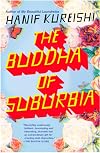
I am in love with this book. I think it's shameful how Hanif Kureishi went from writing this wonderful book, to an OK book like the Black Album (his second novel) to a long string of novels that really did not even stick in memory. Maybe this is one of those cases where good is in the eye of the beholder. I had met Victoria, my first girlfriend, one night in the Imperial College's Falmouth-Keogh Halls of Residence at Princes' Gate Gardens. It was the first or second month into my maths show more B.Sc., and was coming home late from some drinking session or other. I was only slightly tipsy. There's this cute, long-haired, very english-looking girl crying over someone's shoulder near the public telephones. I eye them a little and from the body language I understand that this someone is not anyone she's crying over, but just a passer-by. Good, I tell myself. Let's DO this! So I quickly sent him on his way (he was actually relieved, he'd had enough of her tears I guess) and proceded to console the distraught girl. We have been together for three years and then split up when I moved back to Italy after the end of the B.Sc. One and a half years into our relationship, she lent me her copy of the Buddha of Suburbia, and I've been reading it once every two years on average ever since. I have a weak spot for books relating stories from the seventies. A lot of individuals have the feeling they've been born a generation too late. From what I was told and read about being a young twentysomething during the seventies, it sure looked like a fun period to be alive in. Ideals drove politics that drove economy, whilst nowadays it's imperfect market laws driving economy driving politics. People discussed books, stories, and culture. Experimented with sex and art. Fought political battles demonstrating from the streets against the Powers That Be. When I attended demonstrations, they had already become marginal events (in the economic sense). They'd gone from the workers' struggles to the university struggles down to high school level. I was fourteen. What can a shy, sexually immature, hormone-imbalanced fourteen year old possibly demonstrate about? Like many other kids, I think I went to demonstrations partially to avoid one day of school and partially to try and catch girls' attention (going to demonstrations for sexual reasons was wildly popular, at least in Italy, as related by both Umberto Eco in Foucault's Pendulum and in Ravera and Radice's Porci con le Ali). I was successful in the first feat, largely by default, whilst I was a failure in the much more important girl-scoring area. Never mind. So I would have liked to attend demonstrations which were not just copies of copies of copies. I would have liked to see and live the real thing. I read books and books and I think I can refer to seventies' idols and trends in a hip, knowing way, without ever having been there. Now I'm an adult, I tell myself that if I'd lived during the seventies, I'd have probably stayed on the side anyway, and dreamt of how nice it would have been to be living in the fifties. The Buddha of Suburbia told me a seventies' story from two novel points of view: that of geography (I'd only ever known about the seventies in Italy) and race (which was not an issue in Italy, but was very much an issue in the UK). And it did so whilst transmitting a curiosity towards all that is Indian, for all the black (well, Indian really) characters in the book are interesting and much more alive than the white ones. This book gave me a key to interpreting a lot of current English behaviour. Having been bullied by English people myself, without really being able to explain why --- since there was very little bullying in Italy --- I'd always been extremely puzzled about it. Now I started to understand the backlash of the colonies, the poverty of the basest home-grown culture confronted with the most enterprising individuals choosing the difficult task of moving from India to England, and the resulting defeat. Jobs were robbed and competition became fiercer at the margins, but the competitors from outside had already proven to be of sturdier stock. This generated hate. Besides, England being an island, they were always somewhat prone to xenophobia. Helen's father saying ``we're with Enoch'' was a sentence that always perplexed me. I recently found out about Enoch Powell and his movement. This book had a way of introducing me to things and events that English people in the nineties did not talk about --- maybe simply because Enoch was far from making the news in the 1990s --- but all knew, and sometimes referred to implicitly. I also took in all the good hints like touching girls' ears to see if they're ready for sex (actually, after much experimenting, I think this is false). I was fascinated by the sexual relationship between the cousins, and could see the difference between real London and that described in the book. West Kensington was much less run-down, for example. But Earls' court, although more upscale, was still ambivalent about its social status. And all these places were within walking distance from Imperial College! How much better can you get huh? Furthermore, although I hate books without a definite ending, I make an exception for this one. Yes, the story actually ends without strictly needing to. But there is a sense of conclusion to it. Like an age has been told, there may be strands of the past age drawing into the new one, but fundamentally the boy's gotten out of adolescence and into adulthood. show less
In the early 70's, South London, we meet teenager Karim, the son of an English mother and Indian father, Haroon, whom Karim nicknames both "God" and "Buddha of Suburbia" after Haroon begins leading groups of middle-class English suburbanites in his brand of living room Eastern mysticism. That the woman who is encouraging Haroon in the new career is also seducing him away from his family is obviously to Karim, who wants his family to survive but who also is entranced by both the woman and her show more handsome teenage son and wants to see what will unfold.
Over the next few years the reader follows Karim as he drops out of college, lies to his parents, gets brutally truthful at times, and has various crushes and encounters with both men and women, and makes good on his pronounced desire to be an actor. There's an awful lot of graphic sex, and some hilarious scenes, especially with Changez, a physically repulsive and lazy man who Karim's uncle was tricked into bringing over from Bombay to marry his daughter and help with the family business. That everyone else loathes Changez just makes him more interesting to the contrary Karim. show less
Over the next few years the reader follows Karim as he drops out of college, lies to his parents, gets brutally truthful at times, and has various crushes and encounters with both men and women, and makes good on his pronounced desire to be an actor. There's an awful lot of graphic sex, and some hilarious scenes, especially with Changez, a physically repulsive and lazy man who Karim's uncle was tricked into bringing over from Bombay to marry his daughter and help with the family business. That everyone else loathes Changez just makes him more interesting to the contrary Karim. show less
This was a tough book for me to rate, due to its subject matter. The narrator was a repulsive character, and the topic is supposedly semi-autobiographical; however, the writing is quite good.
Jay, like the author, is a London playwright who has decided to leave his partner, who he has never married, and their two young sons, who he loves dearly. However, he is bored in this loveless relationship, and sees no hope that it can be salvaged. He is most happy when he is with his current show more girlfriend, a young woman who excites and challenges him sexually, though she is not his social or intellectual equal.
This short novel, set in London in the early 1990s, describes the mind set of one restless but decent urban professional approaching middle age, who is not ready to settle into a monogamous, steady relationship. I found Jay to be quite superficial, self-absorbed and immature; however, his desires and attitudes remind me of those of a cousin of mine, and couple of former acquaintances, and are spot on with their views. This book may not be for everyone, but it is a well-written, accurate work. show less
Jay, like the author, is a London playwright who has decided to leave his partner, who he has never married, and their two young sons, who he loves dearly. However, he is bored in this loveless relationship, and sees no hope that it can be salvaged. He is most happy when he is with his current show more girlfriend, a young woman who excites and challenges him sexually, though she is not his social or intellectual equal.
This short novel, set in London in the early 1990s, describes the mind set of one restless but decent urban professional approaching middle age, who is not ready to settle into a monogamous, steady relationship. I found Jay to be quite superficial, self-absorbed and immature; however, his desires and attitudes remind me of those of a cousin of mine, and couple of former acquaintances, and are spot on with their views. This book may not be for everyone, but it is a well-written, accurate work. show less
The Buddha of Suburbia by Hanif Kureishi is a wide-ranging coming-of-age tale whose narrator, young Karim Amir, discovers life and love in a series of picaresque adventures. With likable characters who change and grow in response to developments in their situations, I found this novel to be an irresistible read. The story is set in the London suburbs of the 70's and 80's and is replete with the cultural icons, musical and otherwise, of the times. Kureishi has a deft touch with both quirky show more characters and erotic situations, spun with a style that is infused with his cinematic eye. I look forward to his newest screenplay, Venus, for the movie starring Peter O'Toole. show less
Lists
Awards


You May Also Like


Associated Authors
Statistics
- Works
- 90
- Also by
- 23
- Members
- 8,972
- Popularity
- #2,681
- Rating
- 3.5
- Reviews
- 157
- ISBNs
- 450
- Languages
- 26
- Favorited
- 24
