
Tom McCarthy (1) (1969–)
Author of Remainder
For other authors named Tom McCarthy, see the disambiguation page.
About the Author
Tom McCarthy is the author of Satin Island, and made the Man Booker Prize for Fiction 2015 shortlist. This same title also made the shortlist for the Goldsmiths Prize 2015. (Bowker Author Biography)
Image credit: Mathieu Bourgois
Works by Tom McCarthy
Associated Works
Swimming Home (2011) — Afterword, some editions; Introduction, some editions — 1,026 copies, 58 reviews
Significant Objects: 100 Extraordinary Stories about Ordinary Things (2012) — Contributor — 63 copies, 1 review
Tagged
Common Knowledge
- Legal name
- McCarthy, Tom Patrick
- Birthdate
- 1969-05-22
- Gender
- male
- Education
- Dulwich College, London, England, UK
New College, Oxford - Occupations
- novelist
artist - Organizations
- International Necronautical Society
- Awards and honors
- Windham–Campbell Literature Prize (2013)
- Agent
- Jonathan Pegg
- Nationality
- UK
- Birthplace
- London, Middlesex, England, UK
- Places of residence
- London, Middlesex, England, UK
Prague, Czech Republic
Berlin, Germany
Amsterdam, Netherlands - Map Location
- UK
Members
Reviews
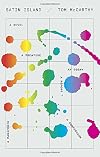
If W.G. Sebald had written Remainder instead of Tom McCarthy, it would have turned out to be a book exactly like Satin Island.
The novel requires concentration. Events occur in repeating patterns and you get the feeling that these patterns matter, but you're not sure why. To my way of reading, the patterns feel like a refined and far more subtle expression of Remainder's "reenactments." The novel presents a way of looking at the world that is more rational than the world of Remainder, but no show more less disorienting. When I put the book down to go do something else, the feelings I had while reading the novel affected my lived experience. I saw things differently. It's as if the novel made me feel a little stoned. Quite an accomplishment for words on a page. show less
The novel requires concentration. Events occur in repeating patterns and you get the feeling that these patterns matter, but you're not sure why. To my way of reading, the patterns feel like a refined and far more subtle expression of Remainder's "reenactments." The novel presents a way of looking at the world that is more rational than the world of Remainder, but no show more less disorienting. When I put the book down to go do something else, the feelings I had while reading the novel affected my lived experience. I saw things differently. It's as if the novel made me feel a little stoned. Quite an accomplishment for words on a page. show less
Novela extraña donde las haya, pero también de las que perduran en la memoria tiempo después de su lectura. Mediante una prosa sencilla, Tom McCarthy aborda temas trascendentales como la imperfección de la realidad o la búsqueda de lo auténtico.
La historia tiene como protagonista a un londinense que nos irá narrando lo que le sucedió. Acaba de recuperarse de un accidente; algo le cayó del cielo provocándole unas lesiones que le dejaron temporalmente en coma, y borrándole parte de show more su memoria. Tras meses de recuperación, un abogado le comunica que ha recibido una indemnización por parte de una extraña entidad: ocho millones y medio de libras. A cambio, él no podrá contarle a nadie lo que le ha pasado.
Tras haberse recuperado y haber pasado por una etapa de re-aprendizaje, el protagonista se da cuenta de que no percibe la realidad de manera natural. Se muestra apático, y la mayoría de cosas le parecen artificiales, como aprendidas. Hasta que un día, en la fiesta en casa de un conocido, tiene un déjà vu que le hace recordar ciertas escenas y personas asociadas a ellas. No sabe quiénes son, pero le parecen unos recuerdos ya vividos. A partir de aquí, el protagonista se obsesiona por los ecos de estos recuerdos, por las sensaciones que le proporcionan. Y no es que se trate de nada extraordinario, se trata de recuerdos de una realidad anodina, pero eso sí, le transmiten esa sensación de naturalidad y autenticidad que tanto desea el narrador. Así que ni corto ni perezoso, decide utilizar su dinero para re-crear estos recuerdos, comprando edificios y contratando a la gente que sea necesaria para dar vida al proyecto. Pero los recuerdos serán sólo el principio de una espeluznante obsesión: repetir la realidad, una y otra y otra vez.
Este argumento que introduce la ficción en la realidad, que puede recordar a ‘El Show de Truman’, tiene más de una lectura: realidad contra ficción, donde el protagonista únicamente se siente real cuando re-crea y se siente parte de una realidad escenificada, entrando en una clara paradoja; lo que cierta gente es capaz de hacer por dinero, cuando se les pide que se rebajen a realizar todo aquello que se les ordene; la realidad enfrentada al tiempo y al espacio, o movimiento perpetuo, cuando el protagonista se obsesiona en la re-creación de escenas; la obsesión por la materia y sus residuos.
Me pregunto cuándo deja de ser auténtico un hecho que se repite múltiples veces. Sin duda, la novela de Tom McCarthy está llamada a convertirse en un clásico. show less
La historia tiene como protagonista a un londinense que nos irá narrando lo que le sucedió. Acaba de recuperarse de un accidente; algo le cayó del cielo provocándole unas lesiones que le dejaron temporalmente en coma, y borrándole parte de show more su memoria. Tras meses de recuperación, un abogado le comunica que ha recibido una indemnización por parte de una extraña entidad: ocho millones y medio de libras. A cambio, él no podrá contarle a nadie lo que le ha pasado.
Tras haberse recuperado y haber pasado por una etapa de re-aprendizaje, el protagonista se da cuenta de que no percibe la realidad de manera natural. Se muestra apático, y la mayoría de cosas le parecen artificiales, como aprendidas. Hasta que un día, en la fiesta en casa de un conocido, tiene un déjà vu que le hace recordar ciertas escenas y personas asociadas a ellas. No sabe quiénes son, pero le parecen unos recuerdos ya vividos. A partir de aquí, el protagonista se obsesiona por los ecos de estos recuerdos, por las sensaciones que le proporcionan. Y no es que se trate de nada extraordinario, se trata de recuerdos de una realidad anodina, pero eso sí, le transmiten esa sensación de naturalidad y autenticidad que tanto desea el narrador. Así que ni corto ni perezoso, decide utilizar su dinero para re-crear estos recuerdos, comprando edificios y contratando a la gente que sea necesaria para dar vida al proyecto. Pero los recuerdos serán sólo el principio de una espeluznante obsesión: repetir la realidad, una y otra y otra vez.
Este argumento que introduce la ficción en la realidad, que puede recordar a ‘El Show de Truman’, tiene más de una lectura: realidad contra ficción, donde el protagonista únicamente se siente real cuando re-crea y se siente parte de una realidad escenificada, entrando en una clara paradoja; lo que cierta gente es capaz de hacer por dinero, cuando se les pide que se rebajen a realizar todo aquello que se les ordene; la realidad enfrentada al tiempo y al espacio, o movimiento perpetuo, cuando el protagonista se obsesiona en la re-creación de escenas; la obsesión por la materia y sus residuos.
Me pregunto cuándo deja de ser auténtico un hecho que se repite múltiples veces. Sin duda, la novela de Tom McCarthy está llamada a convertirse en un clásico. show less
Shades of Thomas Pynchon - literally. This reads almost like an AI generated amalgam of Pynchonian stock characters, plot/subplots and overarching theme of modernity as the mechanized, capital-amped System in hyperdrive, driving humanity to the wall, while its quest for total knowledge, total understanding and thus total control is forever frustrated, lost in aporia, entropy, glitches, mise en abime, black boxes (or their absence). It's more muted (and shorter!) than Pynchon's classic works, show more without all the kinky sex and extended slapstick sequences. But very much in that vein. Fortunately, it's a vein that can still be mined to some effect, and there are some nice gestures towards significance in it, amid the relentless flood of proper nouns, engineering jargon, parenthetical asides and overused italics. You have to appreciate the amount of technical research that goes into creating a work like this, anyway. show less
I give this book one star as a desperate cry for attention, which I figure is okay, since the book's blurb describes SI as "an unnerving novel that promises to give us the first and last word on the world" and suggests that in this book McCarthy "captures--as only he can--the way we experience our world." Take that, entire rest of the world!
Of course, the blurb is in part a joke, because the book's main character, U., is meant to write a report that is about everything--that will "name the show more world we live in"--for a rich business tycoon. And my one star is in part a joke, because it might also be a five star book.
How is this possible, you ask? Well, I have two readings of this book. In the first (one star), this is just another self-indulgent piece of flatulence, only yet more cliched than the self-indulgent flatulence that preceded it. I had repeated flashbacks to the '90s--here we have an anthropologist who apparently got his PhD without ever reading anything other than Levi-Strauss (compare: a biologist who still believes in genetic determinism); we have a lot of stuff about masks and performativity; he quotes Deleuze and Badiou as if they were fresh meat; he doesn't quote, but uses concepts from, Lacan; the novel draws false analogies between constructedness and fictiveness; IT BRINGS UP AND MISUES SCHRODINGER'S POOR ABUSED CAT [at this point my notes consist of the all-caps exclamation REALLY DUDE?!]; it quotes sous les paves la plage; like '90s theory it mistakes easily dissolved fallacies to produce apparent paradoxes (if a skydiver dies because the cords to his parachute were cut, when was he murdered? Incipit pages of guff); it acts as if writing was an act of oppression against the material world (words pollute us just like oil pollutes oceans!); it frets about the way media and the internet have changed everything (please ignore actually existing suffering and injustice); it somehow manages to imply that Mallarme was a totalitarian; it is a paeon in praise of trash and excrescence.
It does all this in what appears to be our new normal form: juxtapositions of random images that are meant to produce meaning. You may have experienced this as "modernism." But now, for some reason, it's freighted with all kinds of revolutionary freshness. McCarthy's images, fyi, are Staten Island, anthropology, material culture, oil-spills, the dead parachutist, media images of crowds, the Mallaremean 'book,' sex with a woman called Madison, Leibniz, pomo theory, corporate speak, Vanuatu, the Shroud of Turin, the internet, and cancer. It ends, of course, in New York. Thank you Teju Cole, Ben Lerner, et al.
Now, note "sex with a woman called Madison," because this where the book *might* get interesting, though no reviewers have picked up on this. The above list of cliches might have been produced by a random literary novelist who didn't bother to read anything and thinks he's being original. But introducing a woman who, for three quarters of the novel, does literally nothing other than be inseminated is simply not done any more, and McCarthy knows this. True, at the end of the book Madison confronts U. with the fairly trite observation that ideas aren't as important as, you know, actual suffering.
It is impossible to believe that McCarthy would willingly write a book so cliche-ridden as to include the girl who's up for anything sexually, and doesn't bother to, you know, talk or anything. And this leads me to think that the book's best scene is also the key to unlocking its secret. U. imagines giving a speech at a conference, where someone accuses him of aestheticizing of pollution. U. shouts down this dissenter, and it's quite funny.
But imagine for a second a writer so brave, so reckless, that he would actually write a spot-on parody of almost all of his time's most tiresome literary tropes. That he would do so with almost no sign whatsoever that he intended the book to be taken as a parody, except for this lone dissenting voice and the curious absence of one particular literary trope, viz., the excellent insistence that female characters be something other than sex toys. Why, I wonder, did McCarthy miss this one, even as he produced so much uncertainty, media fluff, internetism, and definitively boring theoretical goop? Could it be that McCarthy intentionally wrote a *terrible* novel, including a reckless act of immorality (i.e., objectifying the only woman in the novel) as a sign that he *knew* it was a terrible novel? Could it be that this is the best worst book ever written, a marvelous literary polemic taking aim at everything horrible in 'high-brow' literary writing, including the "now our hero comes into contact with other people and doesn't have to think about them anymore" conclusion?
I hope so, because otherwise this is just an even worse version of what everyone else is doing. show less
Of course, the blurb is in part a joke, because the book's main character, U., is meant to write a report that is about everything--that will "name the show more world we live in"--for a rich business tycoon. And my one star is in part a joke, because it might also be a five star book.
How is this possible, you ask? Well, I have two readings of this book. In the first (one star), this is just another self-indulgent piece of flatulence, only yet more cliched than the self-indulgent flatulence that preceded it. I had repeated flashbacks to the '90s--here we have an anthropologist who apparently got his PhD without ever reading anything other than Levi-Strauss (compare: a biologist who still believes in genetic determinism); we have a lot of stuff about masks and performativity; he quotes Deleuze and Badiou as if they were fresh meat; he doesn't quote, but uses concepts from, Lacan; the novel draws false analogies between constructedness and fictiveness; IT BRINGS UP AND MISUES SCHRODINGER'S POOR ABUSED CAT [at this point my notes consist of the all-caps exclamation REALLY DUDE?!]; it quotes sous les paves la plage; like '90s theory it mistakes easily dissolved fallacies to produce apparent paradoxes (if a skydiver dies because the cords to his parachute were cut, when was he murdered? Incipit pages of guff); it acts as if writing was an act of oppression against the material world (words pollute us just like oil pollutes oceans!); it frets about the way media and the internet have changed everything (please ignore actually existing suffering and injustice); it somehow manages to imply that Mallarme was a totalitarian; it is a paeon in praise of trash and excrescence.
It does all this in what appears to be our new normal form: juxtapositions of random images that are meant to produce meaning. You may have experienced this as "modernism." But now, for some reason, it's freighted with all kinds of revolutionary freshness. McCarthy's images, fyi, are Staten Island, anthropology, material culture, oil-spills, the dead parachutist, media images of crowds, the Mallaremean 'book,' sex with a woman called Madison, Leibniz, pomo theory, corporate speak, Vanuatu, the Shroud of Turin, the internet, and cancer. It ends, of course, in New York. Thank you Teju Cole, Ben Lerner, et al.
Now, note "sex with a woman called Madison," because this where the book *might* get interesting, though no reviewers have picked up on this. The above list of cliches might have been produced by a random literary novelist who didn't bother to read anything and thinks he's being original. But introducing a woman who, for three quarters of the novel, does literally nothing other than be inseminated is simply not done any more, and McCarthy knows this. True, at the end of the book Madison confronts U. with the fairly trite observation that ideas aren't as important as, you know, actual suffering.
It is impossible to believe that McCarthy would willingly write a book so cliche-ridden as to include the girl who's up for anything sexually, and doesn't bother to, you know, talk or anything. And this leads me to think that the book's best scene is also the key to unlocking its secret. U. imagines giving a speech at a conference, where someone accuses him of aestheticizing of pollution. U. shouts down this dissenter, and it's quite funny.
But imagine for a second a writer so brave, so reckless, that he would actually write a spot-on parody of almost all of his time's most tiresome literary tropes. That he would do so with almost no sign whatsoever that he intended the book to be taken as a parody, except for this lone dissenting voice and the curious absence of one particular literary trope, viz., the excellent insistence that female characters be something other than sex toys. Why, I wonder, did McCarthy miss this one, even as he produced so much uncertainty, media fluff, internetism, and definitively boring theoretical goop? Could it be that McCarthy intentionally wrote a *terrible* novel, including a reckless act of immorality (i.e., objectifying the only woman in the novel) as a sign that he *knew* it was a terrible novel? Could it be that this is the best worst book ever written, a marvelous literary polemic taking aim at everything horrible in 'high-brow' literary writing, including the "now our hero comes into contact with other people and doesn't have to think about them anymore" conclusion?
I hope so, because otherwise this is just an even worse version of what everyone else is doing. show less
Lists
Awards


You May Also Like


Associated Authors
Statistics
- Works
- 12
- Also by
- 9
- Members
- 3,917
- Popularity
- #6,460
- Rating
- 3.4
- Reviews
- 142
- ISBNs
- 241
- Languages
- 11
- Favorited
- 9


