
Paul Scott (1) (1920–1978)
Author of The Jewel in the Crown
For other authors named Paul Scott, see the disambiguation page.
About the Author
Author Paul Scott was born in England on March 25, 1920. At the age of 16, he left the Winchmore Hill Collegiate School because of financial difficulties and started a career as an accountant. In 1940, he joined the army and was sent to India. After World War II, he worked as an accountant for two show more small publishing houses and then as a literary agent. In 1952, he published his first novel Johnny Sahib and in 1960, he decided to become a full-time author. He is best-known for his series the Raj Quartet and his novel Staying On won the 1977 Booker Prize. He also wrote reviews and was a visiting professor at the University of Tulsa in Oklahoma. He died on March 1, 1978. (Bowker Author Biography) show less
Series
Works by Paul Scott
The Raj Quartet, Volume 1: The Jewel in the Crown; The Day of the Scorpion (2007) 247 copies, 1 review
The Raj Quartet, Volume 2: The Towers of Silence; A Division of the Spoils (1971) 153 copies, 1 review
Associated Works
Tagged
Common Knowledge
- Legal name
- Scott, Paul Mark
- Birthdate
- 1920-03-25
- Date of death
- 1978-03-01
- Gender
- male
- Education
- Winchmore Hill Collegiate School
- Occupations
- novelist
playwright
poet
literary agent
accountant - Organizations
- Pearn, Pollinger & Higham
Gray Walls Press
Falcon Press
British Army (WWII)
C. T. Payne - Short biography
- http://www.lib.utexas.edu/taro/uthrc/...
- Cause of death
- colon cancer
- Nationality
- UK
- Birthplace
- Southgate, Middlesex, England, UK
- Places of residence
- London, Middlesex, England, UK
India - Place of death
- London, Middlesex, England, UK
- Map Location
- England, UK
Members
Discussions
British Author Challenge May 2025: Nancy Mitford & Paul Scott in 75 Books Challenge for 2025 (August 2025)
May Group Read - The Raj Quartet 2 - The Day of The Scorpion in 2014 Category Challenge (October 2020)
September Group Read: The Raj Quartet 4 : A Division of the Spoils in 2014 Category Challenge (October 2014)
July Group Read: The Raj Quartet #3 - Towers of Silence in 2014 Category Challenge (July 2014)
March Group Read:The Raj Quartet 1 - The Jewel in the Crown in 2014 Category Challenge (June 2014)
Reviews

"There's a difference between trying to stop an injustice and obstructing justice."
Set in 1942, shortly after the collapse of British Burma and the Japanese forces threatening other British colonies in the east, 'The Jewel in the Crown' is the first book in Scott's Raj quartet which cover the final decline of the British Raj in India. The novel features such hefty issues as racism, class and colonialism but revolves around one particular incident, the rape of a young English woman.
The novel show more is told as if the incident is being investigated years later from the point of view of a number of characters and times using a variety of forms, from diaries and letters to interviews which allows the author to cover a number of topics such as the war, the independence movement and various social, political and religious concerns of the time without the reader being sidetracked by too much extraneous plot.
Using a sexual assault to explore themes of race and class is nothing new, in fact it had already been done within a colonial Indian context in 'A Passage to India' as well as more modern classics like 'To Kill a Mockingbird'. However, what I found the most interesting aspect of this book was the tale of Hari. In an age where migration seems to have become the norm I found his experiences thought provoking. How are we altered, even benignly, when we move to another country and would we or our offspring be ever able to resettle back in their home nation? Or is it simply a matter of the age we are when we do it? My own brother has lived in Germany for over thirty years (not as varied as Britain and India I realise) but was left wondering just how he would manage if he moved back and would his children be able to do so? Equally is his presence in the country having any affects on the natives that he comes into contact with?
This is not an easy read by any means. Some of the topics are difficult and uncomfortable reading, Britain doesn't come out of it very well as you would expect, but I also feel that at times it was rather over-blown (there are a lot of brackets) and could have done with some judicious editing. However, I still feel that it is worth tackling and as such am moving on to the next in the series. show less
Set in 1942, shortly after the collapse of British Burma and the Japanese forces threatening other British colonies in the east, 'The Jewel in the Crown' is the first book in Scott's Raj quartet which cover the final decline of the British Raj in India. The novel features such hefty issues as racism, class and colonialism but revolves around one particular incident, the rape of a young English woman.
The novel show more is told as if the incident is being investigated years later from the point of view of a number of characters and times using a variety of forms, from diaries and letters to interviews which allows the author to cover a number of topics such as the war, the independence movement and various social, political and religious concerns of the time without the reader being sidetracked by too much extraneous plot.
Using a sexual assault to explore themes of race and class is nothing new, in fact it had already been done within a colonial Indian context in 'A Passage to India' as well as more modern classics like 'To Kill a Mockingbird'. However, what I found the most interesting aspect of this book was the tale of Hari. In an age where migration seems to have become the norm I found his experiences thought provoking. How are we altered, even benignly, when we move to another country and would we or our offspring be ever able to resettle back in their home nation? Or is it simply a matter of the age we are when we do it? My own brother has lived in Germany for over thirty years (not as varied as Britain and India I realise) but was left wondering just how he would manage if he moved back and would his children be able to do so? Equally is his presence in the country having any affects on the natives that he comes into contact with?
This is not an easy read by any means. Some of the topics are difficult and uncomfortable reading, Britain doesn't come out of it very well as you would expect, but I also feel that at times it was rather over-blown (there are a lot of brackets) and could have done with some judicious editing. However, I still feel that it is worth tackling and as such am moving on to the next in the series. show less
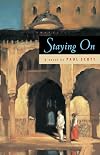
Staying On is Paul Scott’s follow-up to the Raj Quartet. Tusker and Lucy Smalley have elected to stay behind after the British Raj is disassembled and Scott picks up their story in 1972, when they are living in the lodge of the Smith hotel, without any other British citizens around them. They have a loyal servant, Ibrahim, who treats them much as they were treated when they were members of the Raj, and is probably the main reason they can still navigate life in India.
I would say this is a show more study of a marriage as much as anything else. As they look back on their lives and the choices they have made, we are allowed to glimpse not only what life has become, but what it once was for Tusker and Lucy, and to see how the order of things has flipped on its head and yet remained the same in so many ways.
...because when I look back on it, when I sit back and concentrate on it, I feel that India brought out all my worst qualities. I don't mean this India, though Heaven help me I sometimes don't see a great deal of difference between theirs and the one in which I was memsahib, but our India, British India, which kept me in my place, bottled up and bottled in, and brainwashed me into believing that nothing was more important than to do everything my place required me to do to be a perfectly complementary image of Tusker and his position.
Married for 40 years, and having spent most of that in India, their decision to remain and not return to England was made mainly for financial reasons. Now they find themselves older, nearing the end, and the situation for them is all too real and desolate.
She would be alone. She would be alone in Pankot. She would be alone in a foreign country. There would be no one of her own kind, her own colour, no close friend by whom to be comforted or on whom she could rely for help and guidance. The question whether she would be virtually destitute was one that frightened her so much that even her subconscious mind had been keeping that fear buried deep.
After reading the Raj Quartet and seeing how the Raj ruled and crumbled, it is sad to see the aftermath for those who remained. Both the English and the Indian population had to make serious adjustments, and as is often the case, the older generation on both sides met those changes with trepidation. show less
I would say this is a show more study of a marriage as much as anything else. As they look back on their lives and the choices they have made, we are allowed to glimpse not only what life has become, but what it once was for Tusker and Lucy, and to see how the order of things has flipped on its head and yet remained the same in so many ways.
...because when I look back on it, when I sit back and concentrate on it, I feel that India brought out all my worst qualities. I don't mean this India, though Heaven help me I sometimes don't see a great deal of difference between theirs and the one in which I was memsahib, but our India, British India, which kept me in my place, bottled up and bottled in, and brainwashed me into believing that nothing was more important than to do everything my place required me to do to be a perfectly complementary image of Tusker and his position.
Married for 40 years, and having spent most of that in India, their decision to remain and not return to England was made mainly for financial reasons. Now they find themselves older, nearing the end, and the situation for them is all too real and desolate.
She would be alone. She would be alone in Pankot. She would be alone in a foreign country. There would be no one of her own kind, her own colour, no close friend by whom to be comforted or on whom she could rely for help and guidance. The question whether she would be virtually destitute was one that frightened her so much that even her subconscious mind had been keeping that fear buried deep.
After reading the Raj Quartet and seeing how the Raj ruled and crumbled, it is sad to see the aftermath for those who remained. Both the English and the Indian population had to make serious adjustments, and as is often the case, the older generation on both sides met those changes with trepidation. show less

Staying On focuses on Tusker and Lucy Smalley, who are briefly mentioned in the latter two books of the Raj Quartet, The Towers of Silence and A Division of the Spoils, and are the last British couple living in the small hill town of Pankot after Indian independence. Tusker had risen to the rank of colonel in the British Indian Army, but on his retirement had entered the world of commerce as a 'box wallah', and the couple had moved elsewhere in India. However, they had returned to Pankot to show more take up residence in the Lodge, an annexe to Smith's Hotel. This, formerly the town's principal hotel, was now symbolically overshadowed by the brash new Shiraz Hotel, erected by a consortium of Indian businessmen from the nearby city of Ranpur.
We learn about life as an expat in Pankot principally by listening to Lucy's ponderings, for it is she who is the loquacious one, in contrast to Tusker's pathological reticence. He talks in clipped verbless telegraphese, often limiting his utterances to a single "Ha!". He has been purposeless since being obliged to retire, and it is left to Lucy to make sense of the world herself. It is a sad story of frustration that she recounts to herself. She remembers how the young Captain Smalley came back to London on leave in 1930, visited his bank, where she, a vicar's daughter, worked, and tentatively asked her out. She was swept off her feet by the thought of marrying an army officer and dreamt of a glamorous wedding with his fellow officers making an arch with their swords, but life turned out very differently. His job was dull administration, and his early attentiveness in bed rapidly waned. He prohibited her from fulfilling herself by taking part in amateur dramatics. Not only this, but she ranked fairly low in the social pecking order among the white women in Pankot and suffered numerous indignities. A symbol of this retrospection is that their preferred conveyance is the Tonga, a horse-drawn carriage in which they choose to sit facing backwards, "looking back at what we're leaving behind".
It falls to Lucy to navigate a path between her husband's obstinacy and obtuseness and the increasingly pressing demands of India's slow transition to modernity. The question of who pays the gardener, for example, requires the skilful management of human relationships. She also tries to maintain some continuity in her life, through correspondence with her old acquaintances (characters in the Raj Quartet), such as Sarah Layton (now Sarah Perron), who have moved back to England. It is through a letter from Sarah Perron that romantic fans of the Raj Quartet learn that she did indeed meet Guy again, and they are living happily ever after with their two boys, Lance and Perceval.
It is clear she blames Tusker for insisting on 'staying on'—at one point they could have retired comfortably to England, but he has been reckless ("nothing goes quicker than hundred rupee notes"), and now she has no idea if they could afford it. She entreats him to tell her how she would stand financially if he were to die. At long last, he writes her a letter, setting out their finances and also remarking that she had been "a good woman" to him. But he also tells her not to ask him about it, as he is incapable of discussing it face to face: "If you do I'll only say something that will hurt you". Nevertheless, she treasures this, the only love letter she has ever received.
Meanwhile, we see the new India that is replacing the British Raj, symbolised by Mrs Lila Bhoolabhoy, the temperamental and overweight owner of Smith's Hotel, and her much put upon husband and hotel manager, who is Tusker's drinking companion. The richly humorous context includes the engagement of servants, the railway service, poached eggs, hairdressing and the church organ. There is an intimate relationship between the Smalleys' servant Ibrahim and Mrs Bhoolabhoy's maid Minnie.
Mrs Bhoolabhoy's greed induces her to trade her ownership of the now shabby Smith's hotel for a share in the competing consortium. She instructs Mr Bhoolabhoy to issue the Smalleys with a notice to quit the Lodge.
On receipt of this letter, Tusker flies into an impotent rage and drops dead of a heart attack. Lucy is downcast and puts on a brave face as she prepares for the funeral and a solitary life. But, at last, she would potentially be free to return to England, perhaps able to scrape by on her £1,500 a year. She is a survivor, because she can adapt, as is shown by the fact that, on the day of Tusker's death, she was about to break a previously upheld taboo and welcome her hairdresser, Susy, who is of mixed race, to dinner. In her imagination, she asks Tusker one last thing – to take her with him, for if she had been a good woman to him, as he wrote, why has he now gone home without her?
Both funny and deeply moving, Staying On is a unique, engrossing portrait of the end of an empire and of a forty-year love affair. show less
We learn about life as an expat in Pankot principally by listening to Lucy's ponderings, for it is she who is the loquacious one, in contrast to Tusker's pathological reticence. He talks in clipped verbless telegraphese, often limiting his utterances to a single "Ha!". He has been purposeless since being obliged to retire, and it is left to Lucy to make sense of the world herself. It is a sad story of frustration that she recounts to herself. She remembers how the young Captain Smalley came back to London on leave in 1930, visited his bank, where she, a vicar's daughter, worked, and tentatively asked her out. She was swept off her feet by the thought of marrying an army officer and dreamt of a glamorous wedding with his fellow officers making an arch with their swords, but life turned out very differently. His job was dull administration, and his early attentiveness in bed rapidly waned. He prohibited her from fulfilling herself by taking part in amateur dramatics. Not only this, but she ranked fairly low in the social pecking order among the white women in Pankot and suffered numerous indignities. A symbol of this retrospection is that their preferred conveyance is the Tonga, a horse-drawn carriage in which they choose to sit facing backwards, "looking back at what we're leaving behind".
It falls to Lucy to navigate a path between her husband's obstinacy and obtuseness and the increasingly pressing demands of India's slow transition to modernity. The question of who pays the gardener, for example, requires the skilful management of human relationships. She also tries to maintain some continuity in her life, through correspondence with her old acquaintances (characters in the Raj Quartet), such as Sarah Layton (now Sarah Perron), who have moved back to England. It is through a letter from Sarah Perron that romantic fans of the Raj Quartet learn that she did indeed meet Guy again, and they are living happily ever after with their two boys, Lance and Perceval.
It is clear she blames Tusker for insisting on 'staying on'—at one point they could have retired comfortably to England, but he has been reckless ("nothing goes quicker than hundred rupee notes"), and now she has no idea if they could afford it. She entreats him to tell her how she would stand financially if he were to die. At long last, he writes her a letter, setting out their finances and also remarking that she had been "a good woman" to him. But he also tells her not to ask him about it, as he is incapable of discussing it face to face: "If you do I'll only say something that will hurt you". Nevertheless, she treasures this, the only love letter she has ever received.
Meanwhile, we see the new India that is replacing the British Raj, symbolised by Mrs Lila Bhoolabhoy, the temperamental and overweight owner of Smith's Hotel, and her much put upon husband and hotel manager, who is Tusker's drinking companion. The richly humorous context includes the engagement of servants, the railway service, poached eggs, hairdressing and the church organ. There is an intimate relationship between the Smalleys' servant Ibrahim and Mrs Bhoolabhoy's maid Minnie.
Mrs Bhoolabhoy's greed induces her to trade her ownership of the now shabby Smith's hotel for a share in the competing consortium. She instructs Mr Bhoolabhoy to issue the Smalleys with a notice to quit the Lodge.
On receipt of this letter, Tusker flies into an impotent rage and drops dead of a heart attack. Lucy is downcast and puts on a brave face as she prepares for the funeral and a solitary life. But, at last, she would potentially be free to return to England, perhaps able to scrape by on her £1,500 a year. She is a survivor, because she can adapt, as is shown by the fact that, on the day of Tusker's death, she was about to break a previously upheld taboo and welcome her hairdresser, Susy, who is of mixed race, to dinner. In her imagination, she asks Tusker one last thing – to take her with him, for if she had been a good woman to him, as he wrote, why has he now gone home without her?
Both funny and deeply moving, Staying On is a unique, engrossing portrait of the end of an empire and of a forty-year love affair. show less
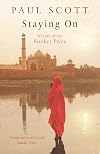
An old couple slowly eke out their days long after the departure of the British, the ending of the Raj, and the independence of India. Around them, the country modernises and Indians grow wealthy while they endure in almost-genteel poverty, reminders of the old days, but also repositories of memories. hjile Lucy and Tusker circle each other in a marriage that isn't exactly loveless but seems more like something endured out of habit, their landlady's plans do not include them staying on much show more longer in the old cottage that is an annexe to her hotel.
Funny, touching, bitter, a portrait of a life that has always seemed on the margins of something much grander and more epic - we get to hear news of Sarah Layton and Guy and their family, a graceful epilogue to the epic Jewel In The Crown - Lucy and Tusker's greatest virtue is that they somehow hang on, both in India and to each other, despite disappointment and betrayal. They seem lonely despite being part of a community that includes their servants and neigbours and fellow church-goers - but they're not British, you see. The last curse of the Raj is the seperateness it inculcated in them, leaving them isolated in their, not quite superiority, but sense of class and racial divisions.
A brilliant little novel, full of life and character and superb writing. show less
Funny, touching, bitter, a portrait of a life that has always seemed on the margins of something much grander and more epic - we get to hear news of Sarah Layton and Guy and their family, a graceful epilogue to the epic Jewel In The Crown - Lucy and Tusker's greatest virtue is that they somehow hang on, both in India and to each other, despite disappointment and betrayal. They seem lonely despite being part of a community that includes their servants and neigbours and fellow church-goers - but they're not British, you see. The last curse of the Raj is the seperateness it inculcated in them, leaving them isolated in their, not quite superiority, but sense of class and racial divisions.
A brilliant little novel, full of life and character and superb writing. show less
Lists
Awards


You May Also Like


Associated Authors
Statistics
- Works
- 27
- Also by
- 2
- Members
- 6,928
- Popularity
- #3,529
- Rating
- 4.0
- Reviews
- 122
- ISBNs
- 302
- Languages
- 15
- Favorited
- 19