
L. P. Hartley (1895–1972)
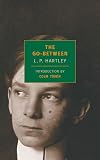
Author of The Go-Between
About the Author
Novelist, short-story writer, and literary critic, L. P. Hartley won the James Tait Black Memorial Prize in 1947 for Eustace and Hilda. Part of a trilogy that offers a penetrating and disturbing psychological study of what Hartley called "sisteritis" in an upper-middle-class family, the three books show more were described by the London Times as "unique in modern writing...diverting and disturbing. Beneath a surface "almost overcivilized' the reviewer found "a hollow of horror."' One of Hartley's special interests is Henry James, with whom he has been compared. In The Tragic Comedians, James Hall devotes a chapter to Hartley, who is respected but not popular in Britain, read by few in America, but praised by discerning critics in both countries: "Along with Green and Powell, Hartley has changed the direction of the comic novel, raising even more seriously than they the question of whether it remains comic at all.... His freshness consists at first in simply changing the patterns of the naturalist novel from social insights to emotional ones; yet in doing so he departs from both the older solid way of conceiving character and the more recent fluid way of conceiving consciousness." David Cecil called The Go-Between (1953) "impressive," and wrote: "Hartley is for me the first of living novelists in certain important respects; beauty of style, lyrical quality of feeling and, above all, the power and originality of his imagination, which wonderfully mingles ironic comedy, whimsical fancy and a mysterious Hawthorne-like poetry." The Novelist's Responsibility is a collection of essays and letters. (Bowker Author Biography) show less
Series
Works by L. P. Hartley
The killing bottle. [Short stories.] 2 copies
Someone in the Lift 2 copies
Monkshood Manor 1 copy
The Betrayal 1 copy
The Waits [short story] 1 copy
Essays By Divers Hands, being the Transactions of the Royal Society of Literature, New Series, vol. XXXIV (1966) 1 copy
The Island 1 copy
Смертельный номер: рассказы 1 copy
Associated Works
The Haunted Looking Glass: Ghost Stories Chosen by Edward Gorey (1959) — Contributor — 752 copies, 7 reviews
Murder on the Menu: Cordon Bleu Stories of Crime and Mystery, Volume 1 (1984) — Contributor — 213 copies, 2 reviews
There Is a Graveyard That Dwells in Man: More Strange Fiction and Hallucinatory Tales (2020) — Contributor — 65 copies
The Haunted Library: Tales of Cursed Books and Forbidden Shelves (British Library Tales of the Weird) (2025) — Contributor — 36 copies
The Near and the Far: Containing The Root and the Flower & The Pool of Vishnu (1929) — Introduction — 26 copies, 1 review
All the Fear of the Fair: Uncanny Tales of Circus and Sideshow (2025) — Contributor — 22 copies, 1 review
Fourteen stories from one plot, based on "Mr. Fothergill's plot" (1932) — Contributor — 6 copies, 1 review
The Best British Short Stories of 1933 — Contributor, some editions — 2 copies
Tagged
Common Knowledge
- Canonical name
- Hartley, L. P.
- Legal name
- Hartley, Leslie Poles
- Birthdate
- 1895-12-30
- Date of death
- 1972-12-13
- Gender
- male
- Education
- Harrow School, London, England, UK
University of Oxford (Balliol College)
Clifton College, Clifton, Bristol, England, UK - Occupations
- soldier (British Army, WWI)
reviewer
novelist
critic - Organizations
- British Army
- Awards and honors
- Order of the British Empire (Commander, 1956)
Royal Society of Literature (Companion of Literature, - Nationality
- UK
- Birthplace
- Whittlesey, Cambridgeshire, England, UK
- Places of residence
- Fletton Tower, England, UK
London, England, UK - Place of death
- London, England, UK
- Map Location
- England, UK
Members
Reviews
The household will be happy to have my attention again. It hasn't seen a flicker of it since I started reading this book. I've seen the movie. Liked it very much. Yet even knowing what was going to happen, the story in the book still felt new to me.
That's a quality in the writing; it's the kind that makes everything new. And by the end of the book, the crystalline narration , that is never precious, had made his memories, my memories. I haven't had a narrator do that since Nick Carraway. show more And the dialogue too, is just...right. Dialogue, when it's perfect is that--it's right. It doesn't call attention to itself. I'm in the room with them, and they can't see me. What an ear Hartley had. And often it's a 12 year-old asking the questions. Not easy. But he presses every advantage there is in this, while avoiding every pitfall.
The cricket game around the middle, was also exciting. Everything I know about cricket is from 'Netherland', and Masterpiece Theater, which is probably about as useful as having all your baseball knowledge from 'Underworld'. Hartley had all the undercurrents flowing while he sneakily explained the game just enough so I could understand the match played on the field and the one played in the stands.
The story, overall, is told quietly. Leo's plates get shifted. We all know how that plays out on the surface. The epilogue describes a life lived in aftershocks. show less
That's a quality in the writing; it's the kind that makes everything new. And by the end of the book, the crystalline narration , that is never precious, had made his memories, my memories. I haven't had a narrator do that since Nick Carraway. show more And the dialogue too, is just...right. Dialogue, when it's perfect is that--it's right. It doesn't call attention to itself. I'm in the room with them, and they can't see me. What an ear Hartley had. And often it's a 12 year-old asking the questions. Not easy. But he presses every advantage there is in this, while avoiding every pitfall.
The cricket game around the middle, was also exciting. Everything I know about cricket is from 'Netherland', and Masterpiece Theater, which is probably about as useful as having all your baseball knowledge from 'Underworld'. Hartley had all the undercurrents flowing while he sneakily explained the game just enough so I could understand the match played on the field and the one played in the stands.
The story, overall, is told quietly. Leo's plates get shifted. We all know how that plays out on the surface. The epilogue describes a life lived in aftershocks. show less

Growing up is a hazardous journey filled with dangerous moments; defeats which could destroy a dream and alter a lifetime. The age of 12- 13 is a transition period when we begin to move in and negotiate the adult world. We learn adult rules, and begin to see ourselves as adults see us. A story of one mans journey to rediscover, reconnect and reconcile with his past self aged 13 and thereby understand his present. Through Leo’s journey Hartley explores themes of foreignness and the learned show more nature of culture by counterposing social groups: across time, across generations and age groups, and across classes, and themes of forgiveness.
Poor Leo, bewildered by the rules, practices and graces of adult upper class society, he is beguiled by Marian; the Venus, the mythical virgin; the Atropa Belladonna, beautiful, evil, healthy, scary and enchanting. So conflicted, sometimes ashamed, sometimes proud and triumphant, sometimes desperately ignorant, but always aching in admiration of Marian and probably jealous of her fellow stars, Ted and Hugh, the Archer and the Water carrier.
Leo contents his yearning by orbiting their beguiling clique. In this fateful proximity he plays Mercury to their gods and becomes tangled in their otherworldly affairs. Until, too “green” his is unable to control the situation and it erupts, engulfing him. His childhood perverted, his adulthood a lonely perversion of life.
Reviewing the past with simple nostalgia the voice of Leo is patient, tender, understanding and in this way charming and likeable. Hartley interlocks symbolic references through the story without seeming contrived or laboured. And of course, the novel begins with one of my favourite opening lines: “The past is a foreign country; they do things differently there”.
The ending though diverts the reader from the direction of travel the novel has been travelling up to that point. The journey into the past has taken some of the sheen off events, and, more importantly, people. Marian’s star no longer shines so brightly and he has greater empathy for Ted and Hugh. Perhaps also some of the sheen has come off hisself, because otherwise his acquiesce in the penultimate scene doesn’t follow. Or perhaps I expect justice to be his motivating force when it is never was. He is grieving for himself “a foreigner in the world of emotions, ignorant of their language but compelled to listen to it”. Still in the periphery, admiring wistfully. show less
Poor Leo, bewildered by the rules, practices and graces of adult upper class society, he is beguiled by Marian; the Venus, the mythical virgin; the Atropa Belladonna, beautiful, evil, healthy, scary and enchanting. So conflicted, sometimes ashamed, sometimes proud and triumphant, sometimes desperately ignorant, but always aching in admiration of Marian and probably jealous of her fellow stars, Ted and Hugh, the Archer and the Water carrier.
Leo contents his yearning by orbiting their beguiling clique. In this fateful proximity he plays Mercury to their gods and becomes tangled in their otherworldly affairs. Until, too “green” his is unable to control the situation and it erupts, engulfing him. His childhood perverted, his adulthood a lonely perversion of life.
Reviewing the past with simple nostalgia the voice of Leo is patient, tender, understanding and in this way charming and likeable. Hartley interlocks symbolic references through the story without seeming contrived or laboured. And of course, the novel begins with one of my favourite opening lines: “The past is a foreign country; they do things differently there”.
The ending though diverts the reader from the direction of travel the novel has been travelling up to that point. The journey into the past has taken some of the sheen off events, and, more importantly, people. Marian’s star no longer shines so brightly and he has greater empathy for Ted and Hugh. Perhaps also some of the sheen has come off hisself, because otherwise his acquiesce in the penultimate scene doesn’t follow. Or perhaps I expect justice to be his motivating force when it is never was. He is grieving for himself “a foreigner in the world of emotions, ignorant of their language but compelled to listen to it”. Still in the periphery, admiring wistfully. show less
It's been a long time since I've been so flummoxed by a book that it leaves me (almost) without words.
One part of my mind says this: I like the writing well enough, and Hartley seems to spin a well-constructed story; and for the most part, it isn't objectionable.
The other part says this: I hated it with undefinable passion.
I wondered, what did I really dislike? I didn't like the pretentious little prig who was nothing but a little blusterer with an inflated sense of self. In his defence, show more one could argue that self interest is the raison d'être of every 12-year old boy -- and leave it at that. But this particular 12-year-old-boy added a special type of annoyance, for some reason.
I objected to his affected naivety which, at times, co-mingled with a worldly arrogance of class-conscious superiority. I objected to his condescensions. He was sometimes-insolent; smug; cocky, without having any right to be, by virtue of his age, and his class.
Class mattered to him a great deal, and in the end, was the sin that unravelled the lives of so many. It mattered to him that boundaries should not be crossed, even though he was the first transgressor of those boundaries. By natural extension, then, he had no right to enjoy the patronage of his social superiors when he could not return the courtesy to his social inferiors. And that's the great fault in the novel: while enjoying the hospitality and benefaction of his friend's family, he turns his own narrow-mindedness against someone who had not done him any harm; to compound the sin, he somehow manages to put the blame on others.
He takes cover under the notion that he was young; he ascribes blame to the adults who "used" him. He turns the emotional tables to say he was "put upon" by those who were older and wiser. If he had simply played his role as it was defined for him, that of a simple go-between, and nothing more, then perhaps he could have used that argument in his defence. But, he took charge, and manipulated the circumstances to suit his own selfish nature. No one forced him to lie. He interfered, where he had no right to interfere, because he was a class-conscious and jealous little snob.
While naivety, and innocence and youth could all be mitigating factors in that horrible, unconscionable decision that he made, it strikes me that Hartley doesn't paint him well enough; it seems that Hartley paints him more as a "simpleton adult" rather than as a child in the in-between years of childhood and adulthood. And that is the other great fault: Hartley hasn't captured what it is to be a child; he's merely super-imposed adult sensibilities onto a shorter, younger body and pretended that it's a child's point of view.
There are irritating little interjections and insertions throughout the novel that are quite beside the point and provide nothing but an unwelcome distraction.
As a complete aside, one of the greatest annoyances was the repeated trope of mispronouncing the name Hugh. A constant play on Hugh/you, which first time was charming; by the fifth or sixth time I wanted to step into the story and slap him silly, or into oblivion.
"Hugh asked me to tell you"- I began.
"I asked you to tell me?"
"No, not you, Hugh."
"Not you, you," she repeated. "I can't understand a word you say. Is it a game?"
"No," I said wretchedly, for it seemed I was fated to mispronounce Hugh's name. "Hugh, you know, Hugh."
"Yes, of course I know myself," she said, apparently more mystified than ever. ...
... "Oh, HUGH, " she said, almost like an owl hooting. "How stupid of me. But you do pronounce his name in a funny way."
Really? This is barely funny the first time, let alone at least a dozen more. Who's On First only worked for Abbott & Costello.
The boy (Leo is his name) is also playing out a CinderFella fantasy, it strikes me. (With apologies to Jerry Lewis!)
Leo ends up being the star of the cricket match... of course! (They would have been lost without him, apparently.) Leo ends up being the star of the after dinner concert, singing "like no one has sung before" ... of course! Some might call his interpretations charming. I call them delusional.
I don't see the Grand Romance/Grand Tragedy that people tell me it is. I see an annoying little-man-in-the-making inserting a stick into the spokes of the wheel and upsetting the balance of lives, just out of a moment of spite. I don't see the Coming-of-Age trope as a successful argument either: he barely grows an inch, spiritually or psychologically; in fact, you could say he is in stasis, since his own actions bring on a mental collapse.
Too many problems here to satisfy my enquiring mind.
What gnaws at me further is the Introduction, written by Douglas-Brook-Davies in my edition, who points out that many of the elements of this story are autobiographical. It's a disturbing thought that L.P. Hartley was such a boy as Leo Colston.
So, why 3 stars? I did read it to the end. It was certainly "better than OK", but definitely not what I would term "very good". Would I read more by Hartley? Hmmm .... I doubt it. But never say never ... ? show less
One part of my mind says this: I like the writing well enough, and Hartley seems to spin a well-constructed story; and for the most part, it isn't objectionable.
The other part says this: I hated it with undefinable passion.
I wondered, what did I really dislike? I didn't like the pretentious little prig who was nothing but a little blusterer with an inflated sense of self. In his defence, show more one could argue that self interest is the raison d'être of every 12-year old boy -- and leave it at that. But this particular 12-year-old-boy added a special type of annoyance, for some reason.
I objected to his affected naivety which, at times, co-mingled with a worldly arrogance of class-conscious superiority. I objected to his condescensions. He was sometimes-insolent; smug; cocky, without having any right to be, by virtue of his age, and his class.
Class mattered to him a great deal, and in the end, was the sin that unravelled the lives of so many. It mattered to him that boundaries should not be crossed, even though he was the first transgressor of those boundaries. By natural extension, then, he had no right to enjoy the patronage of his social superiors when he could not return the courtesy to his social inferiors. And that's the great fault in the novel: while enjoying the hospitality and benefaction of his friend's family, he turns his own narrow-mindedness against someone who had not done him any harm; to compound the sin, he somehow manages to put the blame on others.
He takes cover under the notion that he was young; he ascribes blame to the adults who "used" him. He turns the emotional tables to say he was "put upon" by those who were older and wiser. If he had simply played his role as it was defined for him, that of a simple go-between, and nothing more, then perhaps he could have used that argument in his defence. But, he took charge, and manipulated the circumstances to suit his own selfish nature. No one forced him to lie. He interfered, where he had no right to interfere, because he was a class-conscious and jealous little snob.
While naivety, and innocence and youth could all be mitigating factors in that horrible, unconscionable decision that he made, it strikes me that Hartley doesn't paint him well enough; it seems that Hartley paints him more as a "simpleton adult" rather than as a child in the in-between years of childhood and adulthood. And that is the other great fault: Hartley hasn't captured what it is to be a child; he's merely super-imposed adult sensibilities onto a shorter, younger body and pretended that it's a child's point of view.
There are irritating little interjections and insertions throughout the novel that are quite beside the point and provide nothing but an unwelcome distraction.
"Hugh asked me to tell you"- I began.
"I asked you to tell me?"
"No, not you, Hugh."
"Not you, you," she repeated. "I can't understand a word you say. Is it a game?"
"No," I said wretchedly, for it seemed I was fated to mispronounce Hugh's name. "Hugh, you know, Hugh."
"Yes, of course I know myself," she said, apparently more mystified than ever. ...
... "Oh, HUGH, " she said, almost like an owl hooting. "How stupid of me. But you do pronounce his name in a funny way."
Really? This is barely funny the first time, let alone at least a dozen more. Who's On First only worked for Abbott & Costello.
The boy (Leo is his name) is also playing out a CinderFella fantasy, it strikes me. (With apologies to Jerry Lewis!)
I don't see the Grand Romance/Grand Tragedy that people tell me it is. I see an annoying little-man-in-the-making inserting a stick into the spokes of the wheel and upsetting the balance of lives, just out of a moment of spite. I don't see the Coming-of-Age trope as a successful argument either: he barely grows an inch, spiritually or psychologically; in fact, you could say he is in stasis, since his own actions bring on a mental collapse.
Too many problems here to satisfy my enquiring mind.
What gnaws at me further is the Introduction, written by Douglas-Brook-Davies in my edition, who points out that many of the elements of this story are autobiographical. It's a disturbing thought that L.P. Hartley was such a boy as Leo Colston.
So, why 3 stars? I did read it to the end. It was certainly "better than OK", but definitely not what I would term "very good". Would I read more by Hartley? Hmmm .... I doubt it. But never say never ... ? show less

Tea was made a feature of at Brandham. {…} cakes and sandwiches and jam. Half of it went back into servants’ hall. The decorous sounds we all made eating and drinking, the light chatter, the unemphatic voices, small safe sounds of things being moved about and passed from hand to hand, the glitter of the trail of gold. How captivating it all was and yet I shouldn’t have realized it so much if I hadn’t known the other when I took my cup.
This is the story of the young 12-year-old show more Leo’s stay at Brandham Hall in his host’s family’s Norfolk counry estate in England during the hot summer of 1900. Leo has been invited for the summer holidays by his school- friend, Marcus. There is a gap between the two boys in terms of social class, and Leo feels out of place. Although unused to the upper-class rituals of the ruling class, he manages to get by.
Marian is the only daughter of the wealthy Maudsley family of Brandham Hall. She is kind to Leo he is initially enraptured by her beauty. She’s a kind of woman often seen in British novels and TV dramas. Lady Mary Crawley in Downton Abbey, and Cecilia Tallis in Mcewan’s Atonement come to mind. Indeed, McEwan wrote his novel Atonement In homage to L.P. Hartley's classic novel. Or did he just steal the plot?
it’s a fairly simple story, Leo becomes a secret messenger for Marion, carrying letters between her and her lover, the local farmer Ted Burgess. Of course the affair cannot be known, Ted being Marian’s social inferior. In any case she is about to be engaged to the Viscount Trimingham Hugo, whose face has been horribly scarred during his stint in the Second Boer war.
What makes this book so special is the way it is told, from the older Leo 50 years hence, looking back at his childhood self. We learn of the 12 year-old’s experience and emotions in such a way that the reader is placed into the story. Young Leo possesses innate moral standards, but is a child of his time. He admire the Viscount as a true man, a war-hero, but at the same time he is impressed by the physical prowess and features of Ted the farmer.
Leo does not at first realise what the messages are about, until by chance he manages to see a few lines of a letter, and realises in part of what’s going on, though he never really understands the physical aspect of the love between Marian and Ted. He is an intelligent child and tries hard to make sense of what’s happening in the Hall.
During a cricket match between the Hall and the local villagers, Leo’s heart is on the side of the villagers. His natural instincts are good. But he’s taken over by the comfort and generosity of his hosts. But is it generosity, he starts to wonder? Is he being used?
As well as the dark intrigue to do with the bar between the ill-matched lovers, there are many delightful scenes. I particularly remember this scenes between Leo and Marcus, using their schoolboy language of the Eton-like Southdown Hill preparatory school. They actually call each other terms like “old chum”, and sometimes lapse into French, Marcus doing his best to outdo the socially inferior Leo.
What makes The Go-between such a good novel, better I think than McEwans’s Atonement, is how the period is captured, the class difference is gently exposed, the life of the people being described subtly and the affair being told through the eyes of the innocent 12-year-old.
I can’t remember a lot of McEwans Atonement, and my memory is a bit tainted by seeing the film version. Perhaps the film version is more obvious and has made me remember that the actual book was so. In any case, I really enjoyed The Go-between and the can see why it is often considered a classic. Highly recommended. show less
This is the story of the young 12-year-old show more Leo’s stay at Brandham Hall in his host’s family’s Norfolk counry estate in England during the hot summer of 1900. Leo has been invited for the summer holidays by his school- friend, Marcus. There is a gap between the two boys in terms of social class, and Leo feels out of place. Although unused to the upper-class rituals of the ruling class, he manages to get by.
Marian is the only daughter of the wealthy Maudsley family of Brandham Hall. She is kind to Leo he is initially enraptured by her beauty. She’s a kind of woman often seen in British novels and TV dramas. Lady Mary Crawley in Downton Abbey, and Cecilia Tallis in Mcewan’s Atonement come to mind. Indeed, McEwan wrote his novel Atonement In homage to L.P. Hartley's classic novel. Or did he just steal the plot?
it’s a fairly simple story, Leo becomes a secret messenger for Marion, carrying letters between her and her lover, the local farmer Ted Burgess. Of course the affair cannot be known, Ted being Marian’s social inferior. In any case she is about to be engaged to the Viscount Trimingham Hugo, whose face has been horribly scarred during his stint in the Second Boer war.
What makes this book so special is the way it is told, from the older Leo 50 years hence, looking back at his childhood self. We learn of the 12 year-old’s experience and emotions in such a way that the reader is placed into the story. Young Leo possesses innate moral standards, but is a child of his time. He admire the Viscount as a true man, a war-hero, but at the same time he is impressed by the physical prowess and features of Ted the farmer.
Leo does not at first realise what the messages are about, until by chance he manages to see a few lines of a letter, and realises in part of what’s going on, though he never really understands the physical aspect of the love between Marian and Ted. He is an intelligent child and tries hard to make sense of what’s happening in the Hall.
During a cricket match between the Hall and the local villagers, Leo’s heart is on the side of the villagers. His natural instincts are good. But he’s taken over by the comfort and generosity of his hosts. But is it generosity, he starts to wonder? Is he being used?
As well as the dark intrigue to do with the bar between the ill-matched lovers, there are many delightful scenes. I particularly remember this scenes between Leo and Marcus, using their schoolboy language of the Eton-like Southdown Hill preparatory school. They actually call each other terms like “old chum”, and sometimes lapse into French, Marcus doing his best to outdo the socially inferior Leo.
What makes The Go-between such a good novel, better I think than McEwans’s Atonement, is how the period is captured, the class difference is gently exposed, the life of the people being described subtly and the affair being told through the eyes of the innocent 12-year-old.
I can’t remember a lot of McEwans Atonement, and my memory is a bit tainted by seeing the film version. Perhaps the film version is more obvious and has made me remember that the actual book was so. In any case, I really enjoyed The Go-between and the can see why it is often considered a classic. Highly recommended. show less
Lists
Awards


You May Also Like


Associated Authors
Statistics
- Works
- 47
- Also by
- 64
- Members
- 4,368
- Popularity
- #5,740
- Rating
- 3.9
- Reviews
- 84
- ISBNs
- 137
- Languages
- 10
- Favorited
- 16