
Ivy Compton-Burnett (1884–1969)
Author of A House and Its Head
About the Author
Ivy Compton-Burnett was born in Pinner, Middlesex, England on June 5, 1884. She studied classics at Royal Holloway College, London University, where she graduated in 1906. After publishing her first novel, Dolores, in 1911 she went on to become a prolific writer. Her other works include Pastors and show more Masters, Brothers and Sisters, Men and Wives, The Mighty and Their Fall, More Women Than Men, A House and Its Head, Manservant and Maidservant, and Two Worlds and Their Ways. In 1956, she won the James-Tait Black Memorial Award for Fiction for Mother and Son. In 1967, she was made a Dame Commander of the Order of the British Empire. She died on August 27, 1969. (Bowker Author Biography) show less
Image credit: Courtesy of The Ivy Compton-Burnett Home Page
Works by Ivy Compton-Burnett
Des Hommes Et Des Femmes 1 copy
Une Famille Et Une Fortune 1 copy
Tagged
Common Knowledge
- Canonical name
- Compton-Burnett, Ivy
- Legal name
- Compton-Burnett, Ivy
- Birthdate
- 1884-06-05
- Date of death
- 1969-08-27
- Gender
- female
- Education
- Royal Holloway College, University of London (BA|1906|Classics)
Addiscombe College, Hove
Howard College, Bedford - Occupations
- novelist
- Awards and honors
- Royal Society of Literature (Companion of Literature, 1968)
Order of the British Empire (Dame Commander, 1967)
Order of the British Empire (Commander, 1951) - Agent
- Caroline Dawnay (PFD)
- Relationships
- Compton-Burnett, James (father)
Jourdain, Margaret (companion) - Short biography
- Ivy Compton-Burnett was born in the town of Pinner, now a suburb of London, the seventh of 12 children of an English homeopathic doctor. She grew up in the coastal town of Hove, Sussex, and attended Addiscombe College before reading classics at the University of London. After graduating in 1906, she returned home to help her widowed mother, said to be the model for some of the domestic tyrants in Ivy's fiction. In 1911, she published her debut novel, Dolores, the tale of a dutiful daughter at home, but afterwards disowned it. Her beloved younger brother Guy had died of pneumonia at the age of 20, and then a second brother, Noel, was killed in World War I. Four of Ivy's sisters rebelled against home life after their mother's death, and ran away together to London. Her two youngest sisters, Stephanie and Catharine, committed suicide together in 1917, after which Ivy herself fell severely ill in the influenza pandemic and suffered a prolonged mental and emotional collapse. However, she recovered and successfully managed the family trust as she began to write again. At age 35, she met Margaret Jourdain, who became her lifelong companion. In 1925, at age 41, Ivy published Pastors and Masters, the first of 19 novels written in her mature manner; the last one, A God and His Gifts, appeared in 1963. Ivy developed a distinct form of novel,
with a cool, dry, ironic tone, telling stories often through dialogue alone, focusing on personal relationships within stifling, middle-class Edwardian households such as the one in which she was raised. In 1955, she received the James Tait Black Memorial Prize for her novel Mother and Son. She was created Dame of the British Empire in 1967. - Nationality
- UK
- Birthplace
- Pinner, Middlesex, England, UK
- Places of residence
- Pinner, Middlesex, England, UK
Kensington, London, England, UK
Hove, Sussex, England, UK - Place of death
- London, England, UK
- Burial location
- Putney Vale Cemetery, Wandsworth, London, England, UK
- Map Location
- England, UK
Members
Reviews

A dark, witty, upstairs-downstairs study of a house made miserable by a bullying, miserly Edwardian paterfamilias. Horace does his best to keep his children in fear and unnecessary discomfort (in the classic British way, by shouting a lot and saving on heating fuel) and behaves equally badly towards his servants, but he is a bear of very little brain, and things have a way of rebounding on him. Meanwhile, the local shopkeeper’s pleasant visits to Horace’s cook and butler threaten to lead show more to the exposure of her dark secret.
As usual, Compton-Burnett lets the dialogue do all the heavy lifting of narrative and characterisation, interrupted only by a few brief passages of prose scaffolding to ensure we know where we are and who is speaking. It’s an effective technique when done with her relentlessly precise eye for social nuance. And it’s particularly interesting here, since this is a novel where the relationship of spoken to written words is brought into question by several of the characters at different points.
An odd book, since a great many things that happen in it end up having far less drastic consequences than we were expecting, but a disturbingly close look at the inside of what we always like to imagine as the smoothly-running pre-WWI English middle-class household. show less
As usual, Compton-Burnett lets the dialogue do all the heavy lifting of narrative and characterisation, interrupted only by a few brief passages of prose scaffolding to ensure we know where we are and who is speaking. It’s an effective technique when done with her relentlessly precise eye for social nuance. And it’s particularly interesting here, since this is a novel where the relationship of spoken to written words is brought into question by several of the characters at different points.
An odd book, since a great many things that happen in it end up having far less drastic consequences than we were expecting, but a disturbingly close look at the inside of what we always like to imagine as the smoothly-running pre-WWI English middle-class household. show less
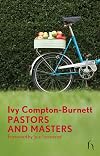
Ivy Compton-Burnett’s ‘Pastors and Masters’ is a brief dark novella. Written almost entirely as dialogue, this early book of Compton-Burnett’s is not always the easiest of reads, but it rewards persistence. The sharp-sighted depiction of idle headmaster Nicholas Herrick and his coterie of friends and colleagues cuts cleanly and cruelly through their deceptions. At the end of the book, a couple of her characters dismiss Austen “‘Personally, I can’t get over the littleness in her show more books,’ said Miss Basden.” Little do these characters realise how perfectly they have been assassinated in one of those ‘books written by ladies’ that the Reverend Peter Fletcher so dismisses. The restrained environment of a small boy’s school in an old college town is the ivory on which Ivy Compton-Burnett paints her devastating portrait of petty human interactions. This world feels deeply bleak, but also sharply funny. show less
 This review was written for LibraryThing Early Reviewers.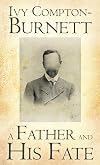
Try to imagine a telenovela that takes place in the late Victorian era, and uses very formal language. Add in the most biting sarcasm imaginable, and you might have an idea of what this book is like.
Miles Mowbray rules his family with an iron hand wrapped in self-aggrandizement and self-pity. His dinner table orations, in which he doesn’t hesitate to contradict himself, are something to marvel at. His three grown daughters, while completely in his power in the physical sense, are mentally show more both independent and contemptuous of him. Only Constance tries to explain, excuse, and accept his behavior. His heir (the property is entailed), who is his nephew Malcolm, is continually at odds with him. But of course Malcolm won’t leave the house: he might have to work and live with his mother Eliza. The only person who exercises any sort of sway over Miles is his wife Ellen, a wise knowing woman. There is another household ruled by Malcolm’s mother; they live very close by.
The story is told almost completely through dialogue. The only action on the page consists of people entering and leaving rooms, and one or two walks between the two establishments. But there are plenty of melodramatic plot twists to keep up one’s interest.
This book isn’t for everyone. Most of the characters are devastatingly honest, not to say hateful. I admit that I didn’t like the book at all until about the last third, when the farcical story elements began to appear. Then I started to like it very much. This isn’t light or frothy, but Compton-Burnett shows a keen knowledge of the secret thoughts, hates, and desires of her characters. I’ll be looking for more of her books. They’re a challenge. show less
Miles Mowbray rules his family with an iron hand wrapped in self-aggrandizement and self-pity. His dinner table orations, in which he doesn’t hesitate to contradict himself, are something to marvel at. His three grown daughters, while completely in his power in the physical sense, are mentally show more both independent and contemptuous of him. Only Constance tries to explain, excuse, and accept his behavior. His heir (the property is entailed), who is his nephew Malcolm, is continually at odds with him. But of course Malcolm won’t leave the house: he might have to work and live with his mother Eliza. The only person who exercises any sort of sway over Miles is his wife Ellen, a wise knowing woman. There is another household ruled by Malcolm’s mother; they live very close by.
The story is told almost completely through dialogue. The only action on the page consists of people entering and leaving rooms, and one or two walks between the two establishments. But there are plenty of melodramatic plot twists to keep up one’s interest.
This book isn’t for everyone. Most of the characters are devastatingly honest, not to say hateful. I admit that I didn’t like the book at all until about the last third, when the farcical story elements began to appear. Then I started to like it very much. This isn’t light or frothy, but Compton-Burnett shows a keen knowledge of the secret thoughts, hates, and desires of her characters. I’ll be looking for more of her books. They’re a challenge. show less

Lots of very mannered, self-consciously clever dialogue - almost like reading a Wildean play script. Superb descriptions of people's tone of voice, mannerisms, emotions, motivation, inner fears, hidden agendas etc. Not something one can skim. Although lots of dialogue, it is not always immediately obvious who is saying what. Most characters are cold and detached, with not much plot happening and nothing resolved at the end.
Large, three-generation (Edwardian?) family, with children from 3 to show more 24. Father apparently dies in S America, though no one seems particularly upset. No hero or central character, not even many very sympathetic ones. Bleak in a nice way?! show less
Large, three-generation (Edwardian?) family, with children from 3 to show more 24. Father apparently dies in S America, though no one seems particularly upset. No hero or central character, not even many very sympathetic ones. Bleak in a nice way?! show less
Lists
Awards


You May Also Like


Associated Authors
Statistics
- Works
- 26
- Members
- 2,650
- Popularity
- #9,689
- Rating
- 3.4
- Reviews
- 56
- ISBNs
- 185
- Languages
- 6
- Favorited
- 16
