

Simon Raven (1) (1927–2001)
Author of Alms for Oblivion, Volume 1
For other authors named Simon Raven, see the disambiguation page.
About the Author
Simon Arthur Noel Raven, December 28, 1927 - May 19, 2001. Simon Raven was born in London on December 28, 1927. His father was independently wealthy from Raven's grandfathers death and his mother was a cross country runner who was once the second fastest woman in England. Raven attended show more Charterhouse, an exclusive private school which he was expelled from for homosexual activities. He spent some time in the army before heading off to Cambridge where his obvious intelligence was rewarded with a research scholarship to study the influence of the classics on Victorian schools. Eventually the scholarship money ran out, causing Raven to re-enlist in the army, where he served in Germany and Kenya. During his tour, Raven racked up serious gambling debts and the army eventually allowed him to resign rather than face court martial. In 1963, Raven told a publisher about his idea for his famous "Oblivion" series and signed a deal for 5,000 pounds for the entire collection. Raven also dramatized novels and plays for television and constantly chased after money. Raven wrote 36 novels in the satirical style, usually about homosexuality in upperclass English society. He died May 19, 2001 at a London hospital, the cause was unknown. He was 73. show less
Series
Works by Simon Raven
Chriseis 1 copy
Associated Works
The London Magazine : April 1963, New series Volume 3, No. 1 — Contributor — 1 copy
Tagged
Common Knowledge
- Legal name
- Raven, Simon Arthur Noël
- Birthdate
- 1927-12-28
- Date of death
- 2001-05-12
- Gender
- male
- Education
- Charterhouse School
University of Cambridge (King's College) - Occupations
- soldier
author
gambler
television writer
novelist
journalist (show all 8)
autobiographer
playwright - Organizations
- King's Own Shropshire Light Infantry
The Parachute Regiment - Awards and honors
- Royal Society of Literature (Fellow)
- Agent
- Curtis Brown
- Cause of death
- stroke
- Nationality
- UK
- Places of residence
- Deal, Kent, England, UK
Sutton's Hospital, London, England, UK
Virginia Water, Surrey, England, UK
Cambridge, Cambridgeshire, England, UK
Bangalore, India
Shrewsbury, Shropshire, England, UK - Place of death
- London, England, UK
- Associated Place (for map)
- England, UK
Members
Reviews

If you have ever been puzzled by the English expression "it's not cricket...", this book will do much to increase that confusion. All the anecdotes Raven includes in this memoir are based around cricket games of one sort or another, and they all, without exception, reveal the author and the English upper classes behaving in the worst possible way: Petty revenge, public urination, various odd sexual activities, excessive eating and drinking, the defrauding of shopkeepers and bookmakers, and show more all manner of bad sportsmanship.
Raven's masochistic streak ensures that he himself is shown in a worse light than anybody else, but there's also a certain pleasure in reading about the misdemeanours of associates of Raven's who had become pillars of English society by the time the book appeared (a Tory cabinet minister, the editor of the Times, various Oxbridge dons...). Those who are described as acting in ways that are actually criminal appear under pseudonyms, of course, and we don't have to believe all the stories (in some cases, it's clear from Barber's biography that Raven changed the facts quite significantly). Obviously Raven (or his publisher) knew exactly how far he could go without ending up in court.
Candid though Raven seems to be here, there is one silence which becomes very conspicuous when we compare his account with Barber's. There is not a single mention of his marriage. This is perhaps a laudable wish not to cause his ex-wife and son more distress, but it does require him to massage the facts quite considerably at a couple of points, notably when he explains his reasons for being forced to resign his army commission.
I tend to take the view that reading about ball games is almost as tedious as watching them, but I have to admit that Raven, writing about cricket, is still enjoyable. Even if you don't follow all the technicalities, there's a real pleasure in his use of the arcane terminology of the game, and most of the time it's perfectly clear how everything fits into the narrative.
As usual with Raven, you don't have to agree with his (real or assumed) attitudes to enjoy this book. You may think him the most awful bounder, or an unpleasantly unrepentant advocate of elitism and privilege, but it's his fluent writing and effortless storytelling ability that draws you in and allows you to find so much to laugh at in the nastiness of human nature.
In the end, though, I just had to drool at the thought of the dinner-party Raven describes in the penultimate chapter: the host was E.M. Forster, and the other guests beside Raven were Joe Ackerley and Christopher Isherwood. I think that might almost have been worth travelling to Cambridge for... show less
Raven's masochistic streak ensures that he himself is shown in a worse light than anybody else, but there's also a certain pleasure in reading about the misdemeanours of associates of Raven's who had become pillars of English society by the time the book appeared (a Tory cabinet minister, the editor of the Times, various Oxbridge dons...). Those who are described as acting in ways that are actually criminal appear under pseudonyms, of course, and we don't have to believe all the stories (in some cases, it's clear from Barber's biography that Raven changed the facts quite significantly). Obviously Raven (or his publisher) knew exactly how far he could go without ending up in court.
Candid though Raven seems to be here, there is one silence which becomes very conspicuous when we compare his account with Barber's. There is not a single mention of his marriage. This is perhaps a laudable wish not to cause his ex-wife and son more distress, but it does require him to massage the facts quite considerably at a couple of points, notably when he explains his reasons for being forced to resign his army commission.
I tend to take the view that reading about ball games is almost as tedious as watching them, but I have to admit that Raven, writing about cricket, is still enjoyable. Even if you don't follow all the technicalities, there's a real pleasure in his use of the arcane terminology of the game, and most of the time it's perfectly clear how everything fits into the narrative.
As usual with Raven, you don't have to agree with his (real or assumed) attitudes to enjoy this book. You may think him the most awful bounder, or an unpleasantly unrepentant advocate of elitism and privilege, but it's his fluent writing and effortless storytelling ability that draws you in and allows you to find so much to laugh at in the nastiness of human nature.
In the end, though, I just had to drool at the thought of the dinner-party Raven describes in the penultimate chapter: the host was E.M. Forster, and the other guests beside Raven were Joe Ackerley and Christopher Isherwood. I think that might almost have been worth travelling to Cambridge for... show less
Alms for oblivion - Vol.2 (The Judas Boy / Places where they sing / Sound the retreat / Come like shadows) by Simon Raven
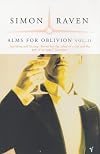
Omnibus editions are rarely very attractive to look at, but they do encourage you to read the books they contain as a sequence, rather than as individual novels. When you do this with Alms for oblivion, it is striking how different Simon Raven's approach is from that of other well-known romans-fleuves, like Anthony Powell's A dance to the music of time. Raven jumps about freely in time, and there is no linking central figure (like Powell's narrator) to impose an overall narrative structure show more on the sequence. Each novel is an independent story, making its own point about the randomness of history and the sordidness of human nature, and they slot together in complicated ways to build up a picture of the characters and the world they live in.
The Judas boy is set in 1962. Tom Llewellyn is working for the BBC and commissions Fielding Gray, by now reasonably well established as a novelist, to research a documentary about suspected CIA support for EOKA terrorists in Cyprus in the 50s. Naturally enough, there are all sorts of people who would like to prevent any evidence from coming to light, and Fielding allows himself to be manipulated into betraying his friends by an elegant plot, playing on the events of Fielding Gray.
Places where they sing shifts the scene to what I think is Raven's most successful setting, Lancaster [i.e. King's] College, Cambridge, in 1967. The dons are mostly self-satisfied hypocrites, the students are revolting, and the scene is set for a spectacular confrontation in which all concerned appear at their worst. Raven is better at mocking the right than the left, probably because he's something of a crusty old reactionary himself, but he has a lot of fun with both sides here.
Sound the retreat takes us back to India in 1945. The war is over, the British government has announced that India will become independent, but somehow the authorities have still sent a batch of young men, one of whom is Peter Morrison, from Britain to Bangalore to train as officers for the Indian Army. On the face of it, this is yet another version of the familiar military "coming-of-age" story, complete with ludicrously over the top sex scenes such as only Raven can write. The underlying theme, though, is the betrayal and hypocrisy that results from the conflict between the political aim of decolonisation and the humanitarian aim of maintaining civil order and good governance. Morrison completes his training, is posted to a British regiment in India, and finds himself in a situation where his duty requires him to betray a friend and former fellow officer. In much the same way that Fielding Gray established Fielding as a man who makes himself scarce when his friends need him, Morrison is here shown as the consummate politician who can always persuade himself that he is acting for the best possible reasons. As Detterling says, "he has a lot of shit in his tanks."
Come like shadows takes us forward to 1970, with Fielding Gray in Corfu, employed as scriptwriter on a film version of the Odyssey with rather dodgy pretensions to be educational. Naturally, there is scope for a lot of not altogether innocent fun at the expense of the film industry and the well-meaning foundations that finance "cultural" films. The company is plagued by a left-wing actress (think Vanessa Redgrave/Glenda Jackson) who wants to correct Homer's elitism by giving a bigger role to the working classes (but not in her own scenes as Nausicaa, of course), and Fielding decides to seduce her to keep her quiet, leading inevitably to more trouble... show less
The Judas boy is set in 1962. Tom Llewellyn is working for the BBC and commissions Fielding Gray, by now reasonably well established as a novelist, to research a documentary about suspected CIA support for EOKA terrorists in Cyprus in the 50s. Naturally enough, there are all sorts of people who would like to prevent any evidence from coming to light, and Fielding allows himself to be manipulated into betraying his friends by an elegant plot, playing on the events of Fielding Gray.
Places where they sing shifts the scene to what I think is Raven's most successful setting, Lancaster [i.e. King's] College, Cambridge, in 1967. The dons are mostly self-satisfied hypocrites, the students are revolting, and the scene is set for a spectacular confrontation in which all concerned appear at their worst. Raven is better at mocking the right than the left, probably because he's something of a crusty old reactionary himself, but he has a lot of fun with both sides here.
Sound the retreat takes us back to India in 1945. The war is over, the British government has announced that India will become independent, but somehow the authorities have still sent a batch of young men, one of whom is Peter Morrison, from Britain to Bangalore to train as officers for the Indian Army. On the face of it, this is yet another version of the familiar military "coming-of-age" story, complete with ludicrously over the top sex scenes such as only Raven can write. The underlying theme, though, is the betrayal and hypocrisy that results from the conflict between the political aim of decolonisation and the humanitarian aim of maintaining civil order and good governance. Morrison completes his training, is posted to a British regiment in India, and finds himself in a situation where his duty requires him to betray a friend and former fellow officer. In much the same way that Fielding Gray established Fielding as a man who makes himself scarce when his friends need him, Morrison is here shown as the consummate politician who can always persuade himself that he is acting for the best possible reasons. As Detterling says, "he has a lot of shit in his tanks."
Come like shadows takes us forward to 1970, with Fielding Gray in Corfu, employed as scriptwriter on a film version of the Odyssey with rather dodgy pretensions to be educational. Naturally, there is scope for a lot of not altogether innocent fun at the expense of the film industry and the well-meaning foundations that finance "cultural" films. The company is plagued by a left-wing actress (think Vanessa Redgrave/Glenda Jackson) who wants to correct Homer's elitism by giving a bigger role to the working classes (but not in her own scenes as Nausicaa, of course), and Fielding decides to seduce her to keep her quiet, leading inevitably to more trouble... show less
Alms for Oblivion: Vol 1 (Omnibus Edition: The Rich Pay Late; Friends in Low Places; The Sabre Squadron; Fielding Gray) by Simon Raven
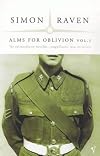
This is a review of the second novel in this series. ‘Friends in Low Places’ by Simon Raven, second in the ‘Alms for Oblivion’ series, starts in April 1959 with an old character and a new. Widow Angela Tuck has taken up with a sleazy con man. Mark Lewson, who steals from Angela and then loses her money at the casino, is a loathsome character and she can’t wait to be rid of him. Rippling throughout the novel is the seemingly impossible plan hatched by Angela’s gambler friend to show more help her. He charges Lewson with buying or stealing a letter that incriminates the British Government in a scandal concerning Suez.
This is an enjoyable read about a bunch of charlatans and is a window on the behavior of a group of the English upper class in the Sixties, when the reverberations of the Suez Crisis continued to ripple throughout society. At the heart is the manipulation by everyone concerned during the selection process by the local Tory party to choose its parliamentary candidate for Bishop’s Cross. When the mysterious letter about the Suez scandal becomes available, a chase is on to first, possess the letter; and second, to use it as a bargaining chip for the candidature. The Suez errors are never defined, and perhaps by modern standards they would seem small beer, but the manipulations, double-crossing and blackmail seem, unfortunately, very believable today. Behind the smiles are knives. Do not take anyone at face value.
As well as Angela Tuck, familiar characters from the first book reappear, including rival parliamentary candidates Somerset Lloyd-James and Peter Morrison. Journalist Tom Llewellyn also features again, marring the daughter of the grandly named conservative minister Sir Edwin Turbot who may, or may not, be involved in the Suez scandal. Turbot’s friend Lord Canteloupe [the more outrageous the name, the more outrageous the satire] is put in charge of entertaining the working class population. His Westward Ho! caravan park is a political fudge designed for publicity purposes, which unwittingly becomes the hideout for a couple on the run from the law. This is a whirlwind of political shenanigans, sexual shenanigans, two-timing, betrayals and marriages of convenience.
Raven has a wonderful turn of phrase. For example, ‘Sir Edwin turned up his eyes and stuck his spoon into the middle of his peach melba, with the air of a soldier planting a sabre to mark a fallen comrade’s newly filled grave.’
Much easier to read than ‘The Rich Pay Late’, first in the series, I think because many of the same characters appear and I felt familiar with them. Well-written, humorous in places but not shocking when compared with modern politics.
Read more of my book reviews at http://www.sandradanby.com/book-reviews-a-z/ show less
This is an enjoyable read about a bunch of charlatans and is a window on the behavior of a group of the English upper class in the Sixties, when the reverberations of the Suez Crisis continued to ripple throughout society. At the heart is the manipulation by everyone concerned during the selection process by the local Tory party to choose its parliamentary candidate for Bishop’s Cross. When the mysterious letter about the Suez scandal becomes available, a chase is on to first, possess the letter; and second, to use it as a bargaining chip for the candidature. The Suez errors are never defined, and perhaps by modern standards they would seem small beer, but the manipulations, double-crossing and blackmail seem, unfortunately, very believable today. Behind the smiles are knives. Do not take anyone at face value.
As well as Angela Tuck, familiar characters from the first book reappear, including rival parliamentary candidates Somerset Lloyd-James and Peter Morrison. Journalist Tom Llewellyn also features again, marring the daughter of the grandly named conservative minister Sir Edwin Turbot who may, or may not, be involved in the Suez scandal. Turbot’s friend Lord Canteloupe [the more outrageous the name, the more outrageous the satire] is put in charge of entertaining the working class population. His Westward Ho! caravan park is a political fudge designed for publicity purposes, which unwittingly becomes the hideout for a couple on the run from the law. This is a whirlwind of political shenanigans, sexual shenanigans, two-timing, betrayals and marriages of convenience.
Raven has a wonderful turn of phrase. For example, ‘Sir Edwin turned up his eyes and stuck his spoon into the middle of his peach melba, with the air of a soldier planting a sabre to mark a fallen comrade’s newly filled grave.’
Much easier to read than ‘The Rich Pay Late’, first in the series, I think because many of the same characters appear and I felt familiar with them. Well-written, humorous in places but not shocking when compared with modern politics.
Read more of my book reviews at http://www.sandradanby.com/book-reviews-a-z/ show less

This is a book where readers will certainly differ in their reactions according to whether they choose it because of the author or because of the title and subject. Those looking for a serious examination of the English public school system will come away not much the wiser, but fans of Simon Raven will find an enjoyable sequence of salacious anecdotes, containing much the same mix of fact and fiction as his novels.
The anecdotes that make up this "memoir" are put into the mouths of various show more people he encountered at different stages in his career: a Jewish godparent, an uncle who gives him the basic data about schoolboy sex, various teachers, fellow undergraduates and army officers. All are presented in direct speech (even the stories he was supposedly told when he was seven-and-a-half years old), so we know that we shouldn't take them too literally as testimony: it is a novelist's way of setting different points of view for us.
Raven approves of public schools, of course, but he approves of them for typically outrageous reasons. They provide endless opportunities for harmless, pleasurable sex; they teach intellectually challenging but useless knowledge (Greek grammar; Latin verse composition); and above all, they produce an arrogant, self-confident élite, indefensible but utterly unscrupulous in its own defence, without which life (especially for the novelist) would be too dull for words. His straw men find plenty to bitch about: public schools are intolerant of Jews and of those who refuse to fit in; they demand not participation (in games, religion, whatever), but total allegiance; those who mock their institutions and those who deviate in the most minor ways from dress codes and similar arcane conventions are punished far more harshly then those who cheat, steal, or abuse their fellow scholars; schools other than Charterhouse are variously bourgeois, arrogant, philistine, boorish or hypocritically pious; the public school system tramples on the faces of the poor; the public school myth (as represented in the boys' magazines of Raven's youth) sets up an impossible dream of what education should be like; public school politics teaches utter contempt for outsiders and puts the preservation of the group above all other moral values. Of course, Raven sees (or provocatively pretends to see) many of these "arguments against" as reasons for seeing public schools as a good thing in themselves.
Obviously there are scores of various kinds being settled here. We should remember that Raven was proud of having been expelled from Charterhouse "for the usual reason". By claiming to espouse élitist values, he was irritating the élite that had tried to get rid of him, and at the same time stirring up the peasants by revealing to them just how unjustly privileged their betters were. Fun for all. His defence of Jews and attack on Roman Catholics is probably calculated to annoy as well, rather than revealing his true opinions (although Barber does point out in his biography that Raven resented his mother's conversion to Catholicism). show less
The anecdotes that make up this "memoir" are put into the mouths of various show more people he encountered at different stages in his career: a Jewish godparent, an uncle who gives him the basic data about schoolboy sex, various teachers, fellow undergraduates and army officers. All are presented in direct speech (even the stories he was supposedly told when he was seven-and-a-half years old), so we know that we shouldn't take them too literally as testimony: it is a novelist's way of setting different points of view for us.
Raven approves of public schools, of course, but he approves of them for typically outrageous reasons. They provide endless opportunities for harmless, pleasurable sex; they teach intellectually challenging but useless knowledge (Greek grammar; Latin verse composition); and above all, they produce an arrogant, self-confident élite, indefensible but utterly unscrupulous in its own defence, without which life (especially for the novelist) would be too dull for words. His straw men find plenty to bitch about: public schools are intolerant of Jews and of those who refuse to fit in; they demand not participation (in games, religion, whatever), but total allegiance; those who mock their institutions and those who deviate in the most minor ways from dress codes and similar arcane conventions are punished far more harshly then those who cheat, steal, or abuse their fellow scholars; schools other than Charterhouse are variously bourgeois, arrogant, philistine, boorish or hypocritically pious; the public school system tramples on the faces of the poor; the public school myth (as represented in the boys' magazines of Raven's youth) sets up an impossible dream of what education should be like; public school politics teaches utter contempt for outsiders and puts the preservation of the group above all other moral values. Of course, Raven sees (or provocatively pretends to see) many of these "arguments against" as reasons for seeing public schools as a good thing in themselves.
Obviously there are scores of various kinds being settled here. We should remember that Raven was proud of having been expelled from Charterhouse "for the usual reason". By claiming to espouse élitist values, he was irritating the élite that had tried to get rid of him, and at the same time stirring up the peasants by revealing to them just how unjustly privileged their betters were. Fun for all. His defence of Jews and attack on Roman Catholics is probably calculated to annoy as well, rather than revealing his true opinions (although Barber does point out in his biography that Raven resented his mother's conversion to Catholicism). show less
Lists
Wishlist (3)
Hidden Classics (1)
Awards


You May Also Like


Associated Authors
Statistics
- Works
- 51
- Also by
- 12
- Members
- 1,772
- Popularity
- #14,529
- Rating
- 3.9
- Reviews
- 34
- ISBNs
- 158
- Languages
- 1
- Favorited
- 5
