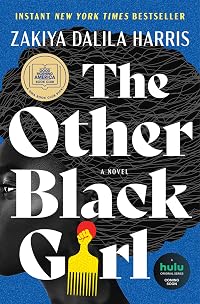
The Other Black Girl
by Zakiya Dalila Harris
On This Page
Description
"Get Out meets The Devil Wears Prada in this electric debut about the tension that unfurls when two young Black women meet against the starkly white backdrop of New York City book publishing. Twenty-six-year-old editorial assistant Nella Rogers is tired of being the only Black employee at Wagner Books. Fed up with the isolation and microaggressions, she's thrilled when Harlem-born and bred Hazel starts working in the cubicle beside hers. They've only just started comparing natural hair care show more regimens, though, when a string of uncomfortable events elevates Hazel to Office Darling, and Nella is left in the dust. Then the notes begin to appear on Nella's desk: LEAVE WAGNER. NOW. It's hard to believe Hazel is behind these hostile messages. But as Nella starts to spiral and obsess over the sinister forces at play, she soon realizes that there's a lot more at stake than just her career. A whip-smart and dynamic thriller and sly social commentary that is perfect for anyone who has ever felt manipulated, threatened, or overlooked in the workplace, The Other Black Girl will keep you on the edge of your seat until the very last twist"-- show lessTags
Recommendations




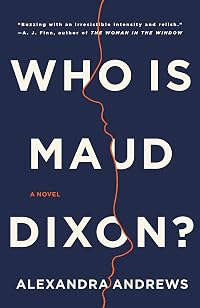
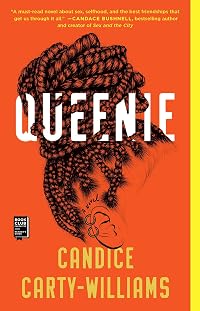
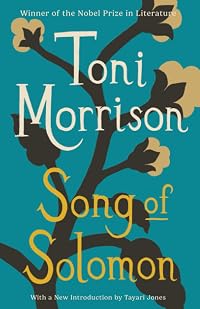

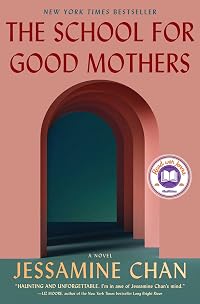



Member Recommendations
vwinsloe BIPOC in publishing industry
Member Reviews
2021 critical darling, The Other Black Girl by Zakiya Dalila Harris stumped me. Don’t get wrong — I liked the contemporary tale of Nella, a young black woman trying to find her place in the lily-white world of publishing in New York City. Having recently finished You’ll Never Believe What Happened to Lacey (Amber Ruffin) Nella’s experiences as the only person of color in her office rang very true and Harris’ social commentary came straight at the reader with no hesitation. The confusion came with the sub-plot, which has blurbs using words like “suspense” and “thriller”. For me, this aspect of the book felt contrived and really too ridiculous to be satirical, if that was the goal. I just didn’t really get it — I show more think the office narrative and social justice theme could have stood on their own. But, The Other Black Girl is still well worth reading, and I definitely recommend it to anyone looking for a good page-turner with literary and societal chops. show less
Welcome to Stepford Wives for a new era and ethnicity! This is a stunner of a book, based on the crabs-in-a-barrel metaphor, rather than each-one-teach-one. Nella is a Black editorial assistant at a blindingly white publishing house who has been stymied for two years by bias and macro-aggressions at her job. When one of their popular authors submits a manuscript with the most wretched stupid stereotype of a "crack 'ho", updated for the opioid epidemic, Nella objects strenuously and seems to be on the verge of getting fired when in walks Hazel, an impeccably dressed and groomed Black woman who wins immediate approval from everyone at Wagner's, including the iconic founder Richard Wagner, and slides effortlessly into the company and moves show more to the front of the two person Black woman line, in front of Nella. Then threatening notes appear on Nella's desk, telling her to leave Wagner's, and Hazel's reaction of disapproval creates a small bond between them. In between the 2018 Nella story timeframe, we meet Shani and Kendra Rae, who had their own literary careers blown up in similar instances back in 1983. What do they all have in common? Is there “a river of Uncle Toms flowing through the shiny plastic surface of white America?” There's a mystery to be unraveled here, but the strength is in the author's remarkable ability to see and amplify Nella's struggle to rise while maintaining her outrage and her belief in her own talent. There are a few not-minor plot holes here involving Nella’s white boyfriend and her dear best friend Malaika, but there’s also going to be a great movie/TV series here if the Black truth portrayed so vividly here can be sustained in other media.
Quotes: “They rarely asked her about “Black issues” – either because they didn’t want to offend her by doing so, or because they simply didn’t care enough to ask.”
“At a historically Black college, she’d been blessed with the ability to forget white people existed, if only for a little while.”
“It was in seemingly mundane moments like those – when she told a white man something so basic about herself that made his eyes boggle out of his head – that she felt closest to all of the enslaved Black people who were Black long before she was: all of the enslaved Black men and women who impressed white people with their reading abilities; all the Black men and women who had impressed a white person simply by existing.”
“She picked her battles, if she dared pick any, wisely. That was what she had been taught: to stand still for so long that when you started to run, they’d be so dumbfounded that they wouldn’t even follow.” show less
Quotes: “They rarely asked her about “Black issues” – either because they didn’t want to offend her by doing so, or because they simply didn’t care enough to ask.”
“At a historically Black college, she’d been blessed with the ability to forget white people existed, if only for a little while.”
“It was in seemingly mundane moments like those – when she told a white man something so basic about herself that made his eyes boggle out of his head – that she felt closest to all of the enslaved Black people who were Black long before she was: all of the enslaved Black men and women who impressed white people with their reading abilities; all the Black men and women who had impressed a white person simply by existing.”
“She picked her battles, if she dared pick any, wisely. That was what she had been taught: to stand still for so long that when you started to run, they’d be so dumbfounded that they wouldn’t even follow.” show less
I saw someone in a Goodreads review call this book “a rollercoaster.” Given that the novel is billed a a “thriller,” I took that to be a good thing—boy, was I wrong.
The first third of the book was intriguing and well-paced: the reader is sucked into Nella’s world as a disposable editorial assistant at Wagner Books, where she’s the only Black employee. Into this office pool is thrown another Black colleague, Hazel, and that’s when things start to get tense, go sour, and the scene gets set for what follows.
But what follows is the aforementioned “rollercoaster,” where the plot heads south and never recovers.
There are intercalary sections which—at first—built suspense, but then become cumbersome show more and take away from the suspense in Nella’s own narrative. These intercalary sections are told from several other women’s perspectives, some in the present day and some thirty years ago. All of these are told using the first-person voice, which, despite most of these sections bearing names, still confuses readers: the “voices” all sound identical to each other, with no attempt to carve out a real, individual voice for each character. Indeed, it seemed a bit odd that a book following Nella’s plight so closely wouldn’t have the main sections told her her perspective, in her own voice; instead, we get sections from minor characters feeling like they steal the show here—which makes for quite an uneven narrative mess.
Add to this the novel’s promise, where it seems that in the early pages Zakiya Dalila Harris will be dissecting the world of publishing, white privilege, and racism. As the first third of the novel progresses, it seems to be doing just this, and the interest mounts as Nella’s world starts caving in on her. But this is almost a MacGuffin of sorts, as the real issues—as they unfold across past and present—seem to be among the Black characters themselves.
As if these many flops didn’t make matters worse enough, throw in a little science fiction—as Harris does—and what started out promising, turns into a shitshow. One begins The Other Black Girl feeling like it’s going to be a novel that takes no-holds-barred sucker punches in examining race in corporate America today; one finishes it wondering how Harris received a seven-figure advance for this debut (one that has odd phrasing; odd uses of whom; redundant words abounding; you-name-it).
A shame: this has such promise, and, in better hands, it might have actually delivered a true social critique.
2.5 stars show less
The first third of the book was intriguing and well-paced: the reader is sucked into Nella’s world as a disposable editorial assistant at Wagner Books, where she’s the only Black employee. Into this office pool is thrown another Black colleague, Hazel, and that’s when things start to get tense, go sour, and the scene gets set for what follows.
But what follows is the aforementioned “rollercoaster,” where the plot heads south and never recovers.
There are intercalary sections which—at first—built suspense, but then become cumbersome show more and take away from the suspense in Nella’s own narrative. These intercalary sections are told from several other women’s perspectives, some in the present day and some thirty years ago. All of these are told using the first-person voice, which, despite most of these sections bearing names, still confuses readers: the “voices” all sound identical to each other, with no attempt to carve out a real, individual voice for each character. Indeed, it seemed a bit odd that a book following Nella’s plight so closely wouldn’t have the main sections told her her perspective, in her own voice; instead, we get sections from minor characters feeling like they steal the show here—which makes for quite an uneven narrative mess.
Add to this the novel’s promise, where it seems that in the early pages Zakiya Dalila Harris will be dissecting the world of publishing, white privilege, and racism. As the first third of the novel progresses, it seems to be doing just this, and the interest mounts as Nella’s world starts caving in on her. But this is almost a MacGuffin of sorts, as the real issues—as they unfold across past and present—seem to be among the Black characters themselves.
As if these many flops didn’t make matters worse enough, throw in a little science fiction—as Harris does—and what started out promising, turns into a shitshow. One begins The Other Black Girl feeling like it’s going to be a novel that takes no-holds-barred sucker punches in examining race in corporate America today; one finishes it wondering how Harris received a seven-figure advance for this debut (one that has odd phrasing; odd uses of whom; redundant words abounding; you-name-it).
A shame: this has such promise, and, in better hands, it might have actually delivered a true social critique.
2.5 stars show less
Normally I’m fairly immune to the hype surrounding books, but I can confidently tell you that any hype you read regarding The Other Black Girl is 100% justified. This novel is an incredible debut with everything you would want in a story – drama, friendship, mystery and a twist on a twist that you couldn’t possibly see coming. It’s electrifying how detailed the plot, characters and writing is. Zakiya Dalila Harris is now firmly on my ‘I’ll read anything by this author list’.
The novel has been described as an ‘edgier The Devil Wears Prada’ but it’s much more than a workplace story (it’s also set in a publishing office rather than a magazine). Nella has always wanted to work in publishing and now she’s an assistant show more at Wagner, with a promotion hopefully on the horizon. Nella is the only Black employee there, and even though she’s been disappointed at their middling attempts at diversity, she’s tried to ignore it. She has a great boyfriend and best friend to discuss race issues with outside of work, plus she really wants to be an editor. Enter Hazel, another Black woman and assistant to another editor. At first Nella is thrilled to have another person of colour in the office, but Hazel seems to be taking over the office. Nella’s editor asks Hazel for advice, people want Hazel to do sensitivity reads…it’s all Hazel. Nella also starts receiving anonymous notes telling her to leave Wagner. Is it Hazel? Who can Nella trust? And what if it all turns out to be much, much bigger than a workplace drama…?
The Other Black Girl has a lot going on but it’s done so well that the reader never feels lost. There’s a historical thread running through the book which starts to make sense early on and then another complicating factor is added to the mix which really just makes you want to read on more. The mystery of who is trying to get Nella to leave is much more than it seems at first and this makes it more enjoyable as more players and motivations come into the mix. The mystery mixes in well with the novel’s themes of race, class and diversity as well as the need to ‘fit in’ and be something you are not – not even to get ahead, but just to stay in the race. Nella’s experience with racial bias was portrayed well, making clear the hurdles she had to jump to even be seen at Wagner and in life. This made the decision she is presented with at the end of the novel clearer as to why she would choose one option over another, but it’s not an easy one to make. The novel also tackles the lack of diversity in publishing and the lack of Own Voices with a satirical subplot of a white male author writing about a Black woman during the opioid crisis. He sees no problem with giving the Black characters ridiculous names and stereotypical backgrounds, yet when Nella calls it out, nobody sees the problem. It’s frustrating but it’s also revealing.
I loved that The Other Black Girl made me think and entertained me. It’s satirical, thrilling, bold and unique. Well worth reading – just do it on a weekend so you can continue reading non-stop.
Thank you to Bloomsbury for the copy of this book. My review is honest.
http://samstillreading.wordpress.com show less
The novel has been described as an ‘edgier The Devil Wears Prada’ but it’s much more than a workplace story (it’s also set in a publishing office rather than a magazine). Nella has always wanted to work in publishing and now she’s an assistant show more at Wagner, with a promotion hopefully on the horizon. Nella is the only Black employee there, and even though she’s been disappointed at their middling attempts at diversity, she’s tried to ignore it. She has a great boyfriend and best friend to discuss race issues with outside of work, plus she really wants to be an editor. Enter Hazel, another Black woman and assistant to another editor. At first Nella is thrilled to have another person of colour in the office, but Hazel seems to be taking over the office. Nella’s editor asks Hazel for advice, people want Hazel to do sensitivity reads…it’s all Hazel. Nella also starts receiving anonymous notes telling her to leave Wagner. Is it Hazel? Who can Nella trust? And what if it all turns out to be much, much bigger than a workplace drama…?
The Other Black Girl has a lot going on but it’s done so well that the reader never feels lost. There’s a historical thread running through the book which starts to make sense early on and then another complicating factor is added to the mix which really just makes you want to read on more. The mystery of who is trying to get Nella to leave is much more than it seems at first and this makes it more enjoyable as more players and motivations come into the mix. The mystery mixes in well with the novel’s themes of race, class and diversity as well as the need to ‘fit in’ and be something you are not – not even to get ahead, but just to stay in the race. Nella’s experience with racial bias was portrayed well, making clear the hurdles she had to jump to even be seen at Wagner and in life. This made the decision she is presented with at the end of the novel clearer as to why she would choose one option over another, but it’s not an easy one to make. The novel also tackles the lack of diversity in publishing and the lack of Own Voices with a satirical subplot of a white male author writing about a Black woman during the opioid crisis. He sees no problem with giving the Black characters ridiculous names and stereotypical backgrounds, yet when Nella calls it out, nobody sees the problem. It’s frustrating but it’s also revealing.
I loved that The Other Black Girl made me think and entertained me. It’s satirical, thrilling, bold and unique. Well worth reading – just do it on a weekend so you can continue reading non-stop.
Thank you to Bloomsbury for the copy of this book. My review is honest.
http://samstillreading.wordpress.com show less
Nella has been the only Black employee at a boutique publishing company since she started two years ago at her dream employer. Wagner Books has few opportunities for promotion for anyone, pays poorly, and it can't seem to retain employees of color. Nella hopes she'll have an ally when she meets her newly hired Black peer Hazel -- but then she starts getting anonymous notes telling her to leave Wagner.
This book was billed as a thriller, but it's more genre-bending than that. There's a lot of psychological thriller-style doubt of motives, as in Jordan Peele's 2017 movie Get Out or the book Lovecraft Country, but it's also got workplace chicklit vibes and speculative fiction/magical realism vibes. It's a book with something serious & show more substantive to say about race and the workplace, which delivers heartily though it struggles a bit in execution (this is Harris's first book, and I suspect a lot of content was written and then cut, trying to get the story to say what she wanted, causing some uneven pacing). I particularly appreciated how well the author developed even side characters into distinct personalities. There's a lot to think about or discuss in this book (like howthe main plot device has to be cast in "consent" terms to make sure all readers perceive it as evil ) -- a good choice for a book club. show less
This book was billed as a thriller, but it's more genre-bending than that. There's a lot of psychological thriller-style doubt of motives, as in Jordan Peele's 2017 movie Get Out or the book Lovecraft Country, but it's also got workplace chicklit vibes and speculative fiction/magical realism vibes. It's a book with something serious & show more substantive to say about race and the workplace, which delivers heartily though it struggles a bit in execution (this is Harris's first book, and I suspect a lot of content was written and then cut, trying to get the story to say what she wanted, causing some uneven pacing). I particularly appreciated how well the author developed even side characters into distinct personalities. There's a lot to think about or discuss in this book (like how
When I first started The Other Black Girl by Zakiya Dalila Harris I was kind of disappointed thinking it to be another "white people suck" book. The protagonist has a white boyfriend, maybe that was to pacify the "not all white people" crowd. The book is filled with well-educated, upwardly mobile young Black women who have a lot to say about a lot of things and they say it in a young, urban language that Harris doesn't translate for 75-year-old white women. But you know, we old ladies can keep up. Count publishing off my list of dream careers. What with toadying up to the superiors and mind-breaking work the shine is off that profession. Nella Rogers is a brilliant assistant who works for a prestigious publishing house whose strong show more support of diversity is demonstrated by the release of a book by a Black author just last year. And they hired Nella who wants more than anything to be an editor, but she doesn't seem to get promoted. Then one day what amazing thing should happen but that they hire another young, brilliant, chic Black woman assistant. Nella is very excited thinking they can be friends, but Hazel, the new hire, instead takes over all Nella's work friends because she seems to possess more charisma than Beyonce, Bill Clinton, and Obama combined. What is going on here? And I loved finding out what was going on as I got a detailed tutorial in black hair. It's very hard for me not to stop people on the street and recommend this book to them. show less
“The Devil Wears Prada” meets “Get Out!” in “The Other Black Girl”
In The Other Black Girl by Zakiya Dalila Harris (Atria), Nella Rogers, a twenty-six-year-old editorial assistant in New York City, loves her job. She has longed to become an editor at Wagner Books ever since reading their groundbreaking bestseller Burning Heart when she was a teenager. Nella’s dream has come true, except that she is the only Black woman on the staff. She feels isolated and disrespected by her co-workers, and her attempts to enlighten them about racial diversity prove futile until one day when something miraculous occurs.
Harlem born and bred Hazel-May McCall, a new Black editorial assistant, arrives on the scene. Hazel is beautiful, show more confident, outspoken, and socially conscious; all the things Nella is not, but nonetheless Nella immediately senses a whiff of competition from her new colleague; and coincidentally, Nella becomes embroiled in a string of uncomfortable events that affect her credibility at Wagner.
When Nella questions the stereotypical portrayal of a Black character in an upcoming novel from Wagner’s bestselling author, both the author and Nella’s boss Vera are affronted. As retribution, Vera mentors Hazel, leaving Nella to question her identity within the company. To prove her worth to Vera, Nella buries herself in her additional assignments, to the detriment of her relationships with her live-in boyfriend, Owen, and her best friend Malaika. Despite her efforts, Nella watches Hazel’s star rise while her’s fizzles out.
But that is not the worst of it. Threatening notes appear on Nella’s desk, warning her to “LEAVE WAGNER NOW.” Who is responsible for the threats? Is it Hazel?
Tension mounts as Nella is anonymously tipped off that Hazel is not who she pretends to be, and Nella sets out on a dangerous path to unmask her competitor. Cool-girl Hazel always seems to be one step ahead of Nella, and now Hazel’s apparent friendliness suggests a cover for darker hidden secrets. Drawn deeper into the mystery, Nella questions her own identity and whether her career here is worth sacrificing her personal life for.
Intertwined with Nella’s story are vignettes detailing the simultaneously catastrophic downfall of the editor, and mercurial rise of the author, of “Burning Heart,” a momentous book; it was the first number-one fiction bestseller written and edited by two Black women and was published by Wagner Books in the 1980s. The pair were thick as thieves, but their legendary falling-out remains the subject of office gossip and a mystery kept under wraps by the powerful owner of the publishing house.
That novel’s author found tremendous success after publication, while in contrast, the editor’s careless and racist remarks forced her to quit publishing and seek seclusion. The once-childhood friends haven’t communicated in almost thirty years, and have remained polarized by an industry demanding compliance with the rules. Tying the subplots to the main story, Nella wonders whether she holds the key to locating the editor and reuniting the two women after all these years.
On every page, the reader is drawn into the suspense of uncovering the conspiracy which was set in motion to ruin Nella’s life; will her career end as disastrously as that missing editor’s did? As an outside observer, the reader will sense impending danger before Nella does, and will wish to warn her not to open the envelope, the door, or her mouth. But Nella always does, elevating the horror of the situation. The climactic confrontation between Hazel and Nella offers a smart, witty plot twist which resonates long after the final chapter.
In The Other Black Girl, Harris, a publishing veteran, doesn’t mince words. On one level, the novel is a grippingly dark thriller about racial inequality, sexism and power in the white-dominated publishing world. Atria Books has compared The Other Black Girl to The Devil Wears Prada, a chick-lit bestseller and film about the backstabbing world of fashion and a young fashion editor’s trials to please her demanding boss.
The Other Black Girl, however, is not even a bit trite. It is a hard-hitting satire about racial inequality in our society on a broader scale — gun violence, prejudice, the media, class disparity and celebrity — dressed up in the world of book publishing. Harris’ characters are not afraid to speak their truths about contemporary issues and raise thought-provoking questions about the world we live in. The novel makes the reader feel uncomfortable and holds them responsible for being complicit in the disparity.
For readers who seek a challenging and entertaining escape, The Other Black Girl fits the bill. The creepy Get Out!-quality of The Other Black Girl is certain to spark conversations about racial diversity and the way we view ourselves for weeks, months and years to come. show less
In The Other Black Girl by Zakiya Dalila Harris (Atria), Nella Rogers, a twenty-six-year-old editorial assistant in New York City, loves her job. She has longed to become an editor at Wagner Books ever since reading their groundbreaking bestseller Burning Heart when she was a teenager. Nella’s dream has come true, except that she is the only Black woman on the staff. She feels isolated and disrespected by her co-workers, and her attempts to enlighten them about racial diversity prove futile until one day when something miraculous occurs.
Harlem born and bred Hazel-May McCall, a new Black editorial assistant, arrives on the scene. Hazel is beautiful, show more confident, outspoken, and socially conscious; all the things Nella is not, but nonetheless Nella immediately senses a whiff of competition from her new colleague; and coincidentally, Nella becomes embroiled in a string of uncomfortable events that affect her credibility at Wagner.
When Nella questions the stereotypical portrayal of a Black character in an upcoming novel from Wagner’s bestselling author, both the author and Nella’s boss Vera are affronted. As retribution, Vera mentors Hazel, leaving Nella to question her identity within the company. To prove her worth to Vera, Nella buries herself in her additional assignments, to the detriment of her relationships with her live-in boyfriend, Owen, and her best friend Malaika. Despite her efforts, Nella watches Hazel’s star rise while her’s fizzles out.
But that is not the worst of it. Threatening notes appear on Nella’s desk, warning her to “LEAVE WAGNER NOW.” Who is responsible for the threats? Is it Hazel?
Tension mounts as Nella is anonymously tipped off that Hazel is not who she pretends to be, and Nella sets out on a dangerous path to unmask her competitor. Cool-girl Hazel always seems to be one step ahead of Nella, and now Hazel’s apparent friendliness suggests a cover for darker hidden secrets. Drawn deeper into the mystery, Nella questions her own identity and whether her career here is worth sacrificing her personal life for.
Intertwined with Nella’s story are vignettes detailing the simultaneously catastrophic downfall of the editor, and mercurial rise of the author, of “Burning Heart,” a momentous book; it was the first number-one fiction bestseller written and edited by two Black women and was published by Wagner Books in the 1980s. The pair were thick as thieves, but their legendary falling-out remains the subject of office gossip and a mystery kept under wraps by the powerful owner of the publishing house.
That novel’s author found tremendous success after publication, while in contrast, the editor’s careless and racist remarks forced her to quit publishing and seek seclusion. The once-childhood friends haven’t communicated in almost thirty years, and have remained polarized by an industry demanding compliance with the rules. Tying the subplots to the main story, Nella wonders whether she holds the key to locating the editor and reuniting the two women after all these years.
On every page, the reader is drawn into the suspense of uncovering the conspiracy which was set in motion to ruin Nella’s life; will her career end as disastrously as that missing editor’s did? As an outside observer, the reader will sense impending danger before Nella does, and will wish to warn her not to open the envelope, the door, or her mouth. But Nella always does, elevating the horror of the situation. The climactic confrontation between Hazel and Nella offers a smart, witty plot twist which resonates long after the final chapter.
In The Other Black Girl, Harris, a publishing veteran, doesn’t mince words. On one level, the novel is a grippingly dark thriller about racial inequality, sexism and power in the white-dominated publishing world. Atria Books has compared The Other Black Girl to The Devil Wears Prada, a chick-lit bestseller and film about the backstabbing world of fashion and a young fashion editor’s trials to please her demanding boss.
The Other Black Girl, however, is not even a bit trite. It is a hard-hitting satire about racial inequality in our society on a broader scale — gun violence, prejudice, the media, class disparity and celebrity — dressed up in the world of book publishing. Harris’ characters are not afraid to speak their truths about contemporary issues and raise thought-provoking questions about the world we live in. The novel makes the reader feel uncomfortable and holds them responsible for being complicit in the disparity.
For readers who seek a challenging and entertaining escape, The Other Black Girl fits the bill. The creepy Get Out!-quality of The Other Black Girl is certain to spark conversations about racial diversity and the way we view ourselves for weeks, months and years to come. show less
Members
- Recently Added By
Lists

Books That Will Keep You on the Edge of Your Seat
73 works; 20 members

Diverse Horror
262 works; 6 members

Female Horror Author
35 works; 2 members

Books Read in 2020
4,379 works; 123 members

Books Read in 2022
5,226 works; 115 members

Books Read in 2024
4,727 works; 128 members

Books Read in 2023
5,638 works; 147 members

Horror Spotlight Readalong
37 works; 2 members

Five star books
1,767 works; 110 members

Black Authors
384 works; 32 members

stories at work
43 works; 7 members

Female Author
1,234 works; 67 members

Horror of the 2020s
13 works; 2 members

Top Five Books of 2021
604 works; 181 members

Books Read in 2021
5,361 works; 114 members

READ IN 2021
239 works; 4 members

Anticipated 2021 Reads
231 works; 7 members

Books Set in New York City
127 works; 21 members

Buddy Reads
5 works; 1 member
Author Information

2+ Works 1,793 Members
Some Editions
Awards and Honors
Common Knowledge
- Canonical title
- The Other Black Girl
- Original publication date
- 2021-06-01
- Important places
- New York, New York, USA
- Dedication
- For my family—present and past
- First words
- Stop fussing at it, now.
- Quotations
- You don’t have to whisper the word “Black”...Last time I checked, that was a socially acceptable word to use. I even use it sometimes.
With heightened awareness of cultural sensitivity comes great responsibility. If we’re not careful “diversity” might become an item people start checking off a list and nothing more—a shallow, shadowy thing with but o... (show all)ne dimension.
She couldn’t remember who’d said it to her first, or if it had ever been directly said to her at all, but that didn't stop her from telling herself over and over again that her brown skin meant that she needed to be twice... (show all) as good as the girl with the white skin...
Her colleagues, strangely, had made it clear very early on that they didn’t really see her as a young Black woman, but as a young woman who just happened to be Black—as though her college degree had washed all of the mela... (show all)nin away. In their eyes, she was the exception. She was “qualified”. An Obama of publishing, so to speak.
The fact that you’re Black colors every single thing anyone ever says to you—pun intended... - Last words
- (Click to show. Warning: May contain spoilers.)"You can be real with me, sis."
- Blurbers
- McMillan, Terry; Moseley, Walter; Locke, Attica; Robinson, Phoebe; Ruffin, Maurice Carlos; Thomas, Elisabeth (show all 8); Leavitt, Caroline; Mandel, Emily St. John
- Canonical DDC/MDS
- 813.6
- Canonical LCC
- PS3608.A783
Classifications
Statistics
- Members
- 1,763
- Popularity
- 12,504
- Reviews
- 75
- Rating
- (3.43)
- Languages
- 6 — English, French, German, Italian, Spanish, Portuguese (Portugal)
- Media
- Paper, Audiobook, Ebook
- ISBNs
- 27
- ASINs
- 9