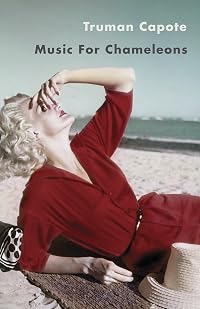
Music for Chameleons
by Truman Capote
On This Page
Description
In these gems of reportage Truman Capote takes true stories and real people and renders then with the stylistic brio we expect from great fiction. Here we encounter an exquisitely preserved Creole aristocrat sipping absinthe in her Martinique salon; an enigmatic killer who sends his victims announcements of their forthcoming demise; and a proper Connecticut householder with a ruinous obsession for a twelve-year-old girl he has never met. And we meet Capote himself, who, whether he is smoking show more with his cleaning lady or trading sexual gossip with Marilyn Monroe, remains one of the most elegant, malicious, yet compassionate writers to train his eye on the social fauna of our time. show lessTags
Recommendations





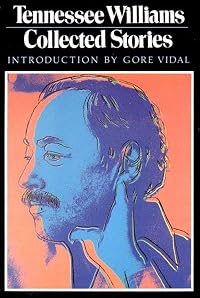
Member Recommendations
sweetiegherkin The writing styles aren't identical, but these are both lesser known works by well-known authors. They are both full of shorter works, especially a number of observational pieces drawn from the authors' own lives. Of course, with Plath that's a lot of English countryside / visiting neighbors type things, while with Capote it's interviewing convicted murderers and hobnobbing with celebrity pals. But both books give insight into the author's art and their particular writing style (poetic for Plath and journalistic for Capote).
Member Reviews
I'm going to go against most of the Goodreads' reviews I've seen. I only kept reading Music for Chameleons because it was by Truman Capote, and in the end, that is the only genius it had.
So, I did not like Handcarved Coffins; I just didn't buy it. Seemed suspiciously over the top. Turns out, I was right. In spite of his warning in the preface that he was writing some kind of new high art non-fiction (and weirdly disaffecting all his previous writing) doing so just didn't work for me. His interjecting himself seemed, well, lazy as a devise and that made it feel sadly apparent that he was not operating at his height. How could he be? I kept remembering his drugged out interview on Youtube and kept thinking it was that man that was writing show more this book. It was that man appearing in all the stories, the toast of the town Capote after In Cold Blood fame and the befuddled Capote after the Answered Prayers freeze out.
I did enjoy the titular piece. It was moody, evocative, and Capote as a character didn't seem out of place. I also enjoyed reading about his afternoon with Marilyn Monroe -- wasn't she already dead by the time this was published? -- and also the interview with Manson Family member and murderer Bobby Beausoleil. The Capote character wasn't silly like in the Pearl Bailey piece, which I eye-rolled through. Instead, he seemed genuine in those two stories, and his character seemed to serve a purpose. In The Beautiful Child it was to adore Monroe, like we all did, and to painfully illustrate how it couldn't ever be enough. In Then It All Came Down, Capote was our initial morbid curiosity, then, our real dumbfounded outrage.
Contrary to many GR reviewers, most of all I enjoyed the last piece. Odd since it was a conversation between TC and TC, the height of eye-roll. There were touches of unguardedness in its self-absorption. For a man who appeared outwardly to be much enamored with himself, the act of writing "I love you" TC to TC and back, betrayed something of a sad, Beautiful Child in him too. show less
So, I did not like Handcarved Coffins; I just didn't buy it. Seemed suspiciously over the top. Turns out, I was right. In spite of his warning in the preface that he was writing some kind of new high art non-fiction (and weirdly disaffecting all his previous writing) doing so just didn't work for me. His interjecting himself seemed, well, lazy as a devise and that made it feel sadly apparent that he was not operating at his height. How could he be? I kept remembering his drugged out interview on Youtube and kept thinking it was that man that was writing show more this book. It was that man appearing in all the stories, the toast of the town Capote after In Cold Blood fame and the befuddled Capote after the Answered Prayers freeze out.
I did enjoy the titular piece. It was moody, evocative, and Capote as a character didn't seem out of place. I also enjoyed reading about his afternoon with Marilyn Monroe -- wasn't she already dead by the time this was published? -- and also the interview with Manson Family member and murderer Bobby Beausoleil. The Capote character wasn't silly like in the Pearl Bailey piece, which I eye-rolled through. Instead, he seemed genuine in those two stories, and his character seemed to serve a purpose. In The Beautiful Child it was to adore Monroe, like we all did, and to painfully illustrate how it couldn't ever be enough. In Then It All Came Down, Capote was our initial morbid curiosity, then, our real dumbfounded outrage.
Contrary to many GR reviewers, most of all I enjoyed the last piece. Odd since it was a conversation between TC and TC, the height of eye-roll. There were touches of unguardedness in its self-absorption. For a man who appeared outwardly to be much enamored with himself, the act of writing "I love you" TC to TC and back, betrayed something of a sad, Beautiful Child in him too. show less
"Music for Chameleons" might be described as a compilation of literary B-sides, a collection of interviews, reportage, and fiction thrown together during the author's long decline that blurs the line between the straight-out fiction and verifiable fact. Still, if this is Capote at his most desultory and booze-addled, it only demonstrates how great a writer he really was. While alcohol flows freely in many of these stories, Capote's prose is still nearly impeccable, and some of the scenes he depicts here -- such as the Manson Family's Bobby Beausoleil, cool as a rock star in his prison cell, or a sad, flighty Marilyn Monroe visiting New York's old, run-down waterfront -- may stay with the reader a long time. Not everything works as well show more as it should, though. While "Handcarved Coffins" the book's longest piece will remind many of "In Cold Blood" the fact that it lacks a satisfying conclusion will probably frustrate many readers.
While Capote specialized in literary portraits, "Music for Chameleons," when taken together, really functions best as a portrait of Capote himself. He allows himself to be more of a presence here than in "In Cold Blood," and, while he likely expunged the least glamorous elements of his addictions from the text, what we end up with is fascinating in its own right. He comes off as poised and erudite, equally at home with movie stars and notable New Orleans eccentrics. Whatever personal demons he might have had, Capote was also one of those rare figures who knew seemingly all his era's most fascinating figures, and his undeniable talent for capturing their characters on paper is our gain. At one point, he tells Beausoleil that he'd interviewed Charles Manson, known both Sharon Tate and Roman Polanski socially, and had met most of the Manson's family's other victims as well. Amazingly enough, he then reveals that he met both Lee Harvey Oswald and John F. Kennedy years before their lives intersected so famously. "Music for Chameleons" might also be described as the reminiscences of the twentieth century's own attendant lord, and that is, in its way, a compliment. Recommended for fans of good reportage, good fiction, good prose, and material that might fit all three of these categories. show less
While Capote specialized in literary portraits, "Music for Chameleons," when taken together, really functions best as a portrait of Capote himself. He allows himself to be more of a presence here than in "In Cold Blood," and, while he likely expunged the least glamorous elements of his addictions from the text, what we end up with is fascinating in its own right. He comes off as poised and erudite, equally at home with movie stars and notable New Orleans eccentrics. Whatever personal demons he might have had, Capote was also one of those rare figures who knew seemingly all his era's most fascinating figures, and his undeniable talent for capturing their characters on paper is our gain. At one point, he tells Beausoleil that he'd interviewed Charles Manson, known both Sharon Tate and Roman Polanski socially, and had met most of the Manson's family's other victims as well. Amazingly enough, he then reveals that he met both Lee Harvey Oswald and John F. Kennedy years before their lives intersected so famously. "Music for Chameleons" might also be described as the reminiscences of the twentieth century's own attendant lord, and that is, in its way, a compliment. Recommended for fans of good reportage, good fiction, good prose, and material that might fit all three of these categories. show less
Capote en su etapa más confesional, más humana. Siempre deja al lector preguntándose cuánto de esto habrá vivido y cuánto se inventa. El recurso anecdótico le permite crear cuentos perfectamente redondos y conmovedores. Sobresaltan, deleitan e intrigan. No se puede pedir nada más.
Music for Chameleons contains a bunch of short story-length works and one novella-length one, which are all supposed to be nonfiction and "a continuation of Mr. Capote's concern with developing the artistic possibilities of journalism," according to the dust jacket. The shorter pieces in the first section of the book touch on a variety of issues from random misadventures to childhood memories to travel reflections. The second section is the novella-length Handcarved Coffins, which is subtitled "a nonfiction account of an American crime," even though there's been a lot of speculation about how much of this story was true versus how much was Capote's invention. The third part titled "Conversational Portraits" is interested in a number of show more gossip-like celebrity (and some non-celebrity) anecdotes.
In addition, the book contains a preface from Capote in which he talks a great deal about his literary career, noting highs and lows. He also talks about his experiment with the "nonfiction novel" quite a bit:
"For several years I had been increasingly drawn toward journalism as an art form in itself. I had two reasons. First, it didn't seem to me that anything truly innovative had occurred in prose writing, or in writing generally, since the 1920s; second, journalism as an art was almost virgin terrain, for the simple reason that very few literary artists ever wrote narrative journalism, and when they did, it took the form of travel essays or autobiography. ... I wanted to produce a journalistic novel, something on a large scale that would have the credibility of fact, the immediacy of film, the depth and freedom of prose, and the precision of poetry."
He also mentions how after writing his first "nonfiction novel," In Cold Blood, he realized what was missing from this work was his own presence and voice, a problem he corrects in Music for Chameleons
"Music for Chameleons," the first part of the book, contains six short stories on a wide range of topics. One of these stories, "Mojave," particularly seems like a piece of fiction, given that Capote does not play a role in it, and it is an intimate look at a day in a married couple's life. Even in the other pieces, Capote is presumably there as the unnamed narrator, but these could just as easily be works of fiction. These stories were a little bit tedious, in my opinion, and not my favorite examples of short stories - not much happens by way of plot or even theme; they read more like writing exercises on being observant. They are well written but not especially gripping.
Handcarved Coffins tells the story of Jake Pepper, a pseudonym used for an FBI agent, who is on a most peculiar case of multiple murders. There is apparently nothing that directly ties the murders together in terms of means or motivation, but each victim received a hand-carved coffin with their photograph in it through the mail before their death. Pepper eventually figures out who committed the murders and why, but he has no way of proving it. This novella (purportedly factual) is fascinating and page-turning; there's bizarre circumstances, lots of dread and suspense, and colorful characters. The 'unsolved' aspect of it leaves for a bit of an unsatisfying ending, but it's overall a good read. Personally, I approached it as fiction rather than worrying this far in the future about whether the details were or were not true. Quite frankly, it was too strange to seem real, although as they say "truth is stranger than fiction" sometimes.
Although Handcarved Coffins was affecting, "Conversational Portraits" was probably my favorite part of the book. Like the first part, it contains short stories that are observational in character, but I found these far more interesting than the earlier ones. There are seven stories altogether, in which Capote recounts conversations or events shared with his house cleaner, old school chum, celebrity pals, and more. Capote inserts himself even more so in these works, as he is an integral part to the dialogue and happenings, revealing details about himself and his subjects. The most interesting of these is "A Day's Work," where he follows his house cleaner for a day; "Then It All Came Down," in which he interviews a convicted murderer; "A Beautiful Child," when he and Marilyn Monroe have a lunch date after a funeral for a shared friend; and "Nocturnal Turnings," in which Capote interviews himself, forcing himself to confront some demons and hard truths. Of course, there is still controversy here; for instance, Robert Beausoleil, the interviewed prisoner, contests that Capote misrepresents their meeting, and other subjects, like Ms. Monroe, aren't alive to refute or confirm Capote's portraits. But there was something about the pacing, flow, and characterizations in these that made them fascinating reads.
All in all, this was a book that I'm glad I tackled, and one with plenty of fodder for discussion, especially given the whole issue of how much is truth and how much is Capote's imagination run wild with only a thread or two of fact remaining intact. That being said though, I don't think this book is for everyone. If you're not a fan of short stories or vaguely open-ended conclusions, this won't be for you. However, it's a must for Capote fans to get a better understanding of his art. show less
In addition, the book contains a preface from Capote in which he talks a great deal about his literary career, noting highs and lows. He also talks about his experiment with the "nonfiction novel" quite a bit:
"For several years I had been increasingly drawn toward journalism as an art form in itself. I had two reasons. First, it didn't seem to me that anything truly innovative had occurred in prose writing, or in writing generally, since the 1920s; second, journalism as an art was almost virgin terrain, for the simple reason that very few literary artists ever wrote narrative journalism, and when they did, it took the form of travel essays or autobiography. ... I wanted to produce a journalistic novel, something on a large scale that would have the credibility of fact, the immediacy of film, the depth and freedom of prose, and the precision of poetry."
He also mentions how after writing his first "nonfiction novel," In Cold Blood, he realized what was missing from this work was his own presence and voice, a problem he corrects in Music for Chameleons
"Music for Chameleons," the first part of the book, contains six short stories on a wide range of topics. One of these stories, "Mojave," particularly seems like a piece of fiction, given that Capote does not play a role in it, and it is an intimate look at a day in a married couple's life. Even in the other pieces, Capote is presumably there as the unnamed narrator, but these could just as easily be works of fiction. These stories were a little bit tedious, in my opinion, and not my favorite examples of short stories - not much happens by way of plot or even theme; they read more like writing exercises on being observant. They are well written but not especially gripping.
Handcarved Coffins tells the story of Jake Pepper, a pseudonym used for an FBI agent, who is on a most peculiar case of multiple murders. There is apparently nothing that directly ties the murders together in terms of means or motivation, but each victim received a hand-carved coffin with their photograph in it through the mail before their death. Pepper eventually figures out who committed the murders and why, but he has no way of proving it. This novella (purportedly factual) is fascinating and page-turning; there's bizarre circumstances, lots of dread and suspense, and colorful characters. The 'unsolved' aspect of it leaves for a bit of an unsatisfying ending, but it's overall a good read. Personally, I approached it as fiction rather than worrying this far in the future about whether the details were or were not true. Quite frankly, it was too strange to seem real, although as they say "truth is stranger than fiction" sometimes.
Although Handcarved Coffins was affecting, "Conversational Portraits" was probably my favorite part of the book. Like the first part, it contains short stories that are observational in character, but I found these far more interesting than the earlier ones. There are seven stories altogether, in which Capote recounts conversations or events shared with his house cleaner, old school chum, celebrity pals, and more. Capote inserts himself even more so in these works, as he is an integral part to the dialogue and happenings, revealing details about himself and his subjects. The most interesting of these is "A Day's Work," where he follows his house cleaner for a day; "Then It All Came Down," in which he interviews a convicted murderer; "A Beautiful Child," when he and Marilyn Monroe have a lunch date after a funeral for a shared friend; and "Nocturnal Turnings," in which Capote interviews himself, forcing himself to confront some demons and hard truths. Of course, there is still controversy here; for instance, Robert Beausoleil, the interviewed prisoner, contests that Capote misrepresents their meeting, and other subjects, like Ms. Monroe, aren't alive to refute or confirm Capote's portraits. But there was something about the pacing, flow, and characterizations in these that made them fascinating reads.
All in all, this was a book that I'm glad I tackled, and one with plenty of fodder for discussion, especially given the whole issue of how much is truth and how much is Capote's imagination run wild with only a thread or two of fact remaining intact. That being said though, I don't think this book is for everyone. If you're not a fan of short stories or vaguely open-ended conclusions, this won't be for you. However, it's a must for Capote fans to get a better understanding of his art. show less
Capote en su etapa de mayor madurez artística. Una prosa muy bien cuidada nos conduce con suavidad por todos estos relatos y textos autobiográficos que a veces resultan bastante íntimos. Este es otro Capote, muy distinto al que conocí en 'A sangre fría'. Todos los textos incluidos son de alta calidad y se disfrutan, pero el central, 'Ataúdes tallados a mano", es particularmente entretenido. Lo recomiendo.
Music for Chameleons. New writing is a somewhat uneven, but interesting collection of short fiction, or perhaps better say short prose. Truman Capote is most famous for his novel In cold blood which is often described as nonfiction. This collection of "new writing" contains a long prose text "Handcarved coffins", subtitles 'A nonfiction account of an American crime' which deploys the same technique. It is an exciting, and intriguing story. The most memorable other story in this collection is the title story "Music for Chameleons" for it's startling idea.
I picked this up some time last year, partly because I never read anything by the guy, and partly because I recalled a friend saying this was one of her favorite books. Capote definitely has a style, and it's on display here in this collection of non-fiction stories and conversations. At least, one assumes it's non-fiction; he says so, at any rate.
He did live a very varied life, so it's easy enough to accept the stories as true; the old woman with the cats in her freezer, being smuggled onto a plane by Pearl Bailey, etc. Some of the stories are definitely better than others, and the showpiece, Handcarved Coffins, was only all right, all around. Most of the "conversational portraits" in the third section of the book, except for the last show more one, were very well done, and even that one (a conversation with himself) wasn't that bad. The earlier ones didn't get into my head as much, I have to say.
His writing style does draw in the reader, though, and the decision to include himself in the stories probably was a good one; his influence on what's going on is a big key to the reactions of people around him. Not a great book, for me, but a good introduction to Capote, I s'pose. show less
He did live a very varied life, so it's easy enough to accept the stories as true; the old woman with the cats in her freezer, being smuggled onto a plane by Pearl Bailey, etc. Some of the stories are definitely better than others, and the showpiece, Handcarved Coffins, was only all right, all around. Most of the "conversational portraits" in the third section of the book, except for the last show more one, were very well done, and even that one (a conversation with himself) wasn't that bad. The earlier ones didn't get into my head as much, I have to say.
His writing style does draw in the reader, though, and the decision to include himself in the stories probably was a good one; his influence on what's going on is a big key to the reactions of people around him. Not a great book, for me, but a good introduction to Capote, I s'pose. show less
Members
- Recently Added By
Lists

Best of American Literature
146 works; 9 members

A Good Read (Radio 4)
221 works; 1 member

short stories / novella
23 works; 1 member

1980 great books
63 works; 1 member
Author Information

175+ Works 57,126 Members
Truman Capote, 1924 - 1984 Novelist and playwright Truman Streckfus Person was born in 1924 in New Orleans to a salesman and a 16-year-old beauty queen. His parents divorced when he was four years old and was then raised by relatives for a few years in Monroeville. His mother was remarried to a successful businessman, moved to New York, and Truman show more adopted his stepfather's surname. He attended Greenwich High School and never went to college. When he was 17, Capote's formal education ended when he was employed at The New Yorker magazine. He belived he did not need to go to college to be a writer, since he was writing seriously since age 11. Capote's first novel was "Other Voices, Other Rooms" (1948), which told the story of a boy growing up in the Deep South. "The Grass Harp" (1951) is about a young boy and his elderly cousin discovering that some compromise is necessary for people to live together in a community and was adapted to screen in 1996. The play "The House of Flowers" (1954) is a musical set in a West Indies bordello. Capote then wrote, "Breakfast at Tiffanys" (1958), which tells the story of how Holly Golightly goes to New York seeking happiness. Capote became preoccupied with journalism and, sparked by the murder of a wealthy family in Holcomb, Kansas, began interviewing the locals to recreate the lives of the murderers and their victims. The research and writing for this novel, "In Cold Blood" (1966), took six years for him to complete. Other works of Capote's include the classic "A Christmas Memory" (1966), which is an autobiographical account of a seven-year-old boy, his cousin, and an eccentric old lady, "Music for Chameleons" (1981), which is a collection of short pieces, interviews, stories and conversations that were published in several magazines, and "One Christmas" (1982). On August 26, 1984 in Los Angeles, Truman Capote died of liver disease complicated by phlebitis and multiple drug intoxication. Published after his death were "Conversations With Capote" (1985) and "Answered Prayers: The Untitled Novel" (1986). (Bowker Author Biography) show less
Some Editions
Awards and Honors
Distinctions
Series
Belongs to Publisher Series
Work Relationships
Common Knowledge
- Canonical title*
- Música para Camaleones
- Original title
- Music for Chameleons
- Original publication date
- 1980
- Dedication
- For Tennessee Williams
- First words
- She is tall and slender, perhaps seventy, silver-haired, soigne, neither black nor white, a pale golden rum color.
- Quotations
- A conversation is a dialogue, not a monologue. That's why there are so few good conversations: due to scarcity, two intelligent talkers seldom meet.
- Last words
- (Click to show. Warning: May contain spoilers.)TC and TC: Zzzzzzzzzzz
- Original language
- English US
*Some information comes from Common Knowledge in other languages. Click "Edit" for more information.
Classifications
Statistics
- Members
- 2,154
- Popularity
- 9,458
- Reviews
- 26
- Rating
- (3.94)
- Languages
- 13 — Catalan, Czech, Danish, Dutch, English, French, German, Hungarian, Italian, Polish, Portuguese, Spanish, Turkish
- Media
- Paper, Ebook
- ISBNs
- 53
- ASINs
- 24