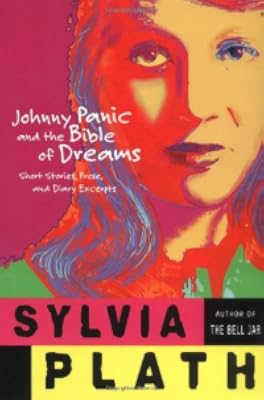
Johnny Panic and the Bible of Dreams: Short Stories, Prose, and Diary Excerpts
by Sylvia Plath 
On This Page
Description
A collection of short stories by the woman writer best known for her poetry.Tags
Recommendations

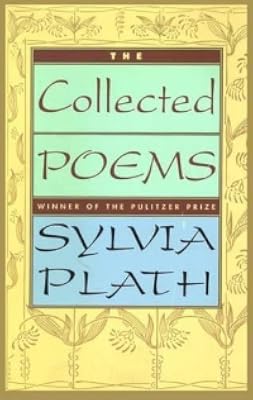
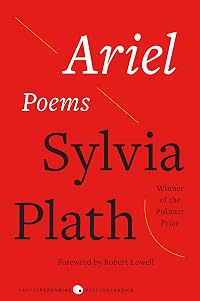

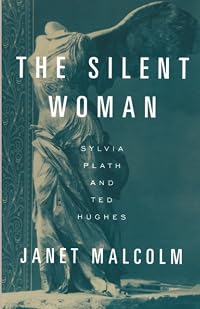
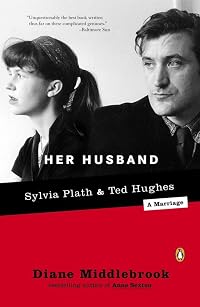




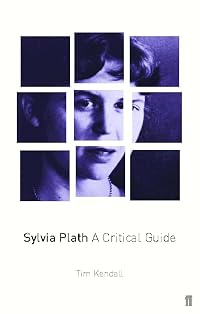
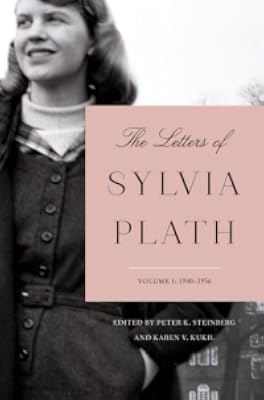
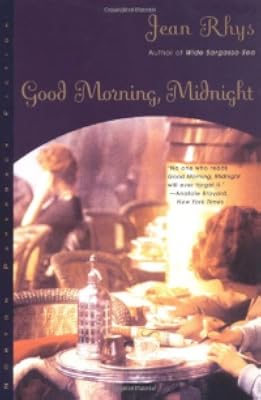

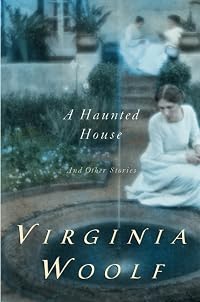
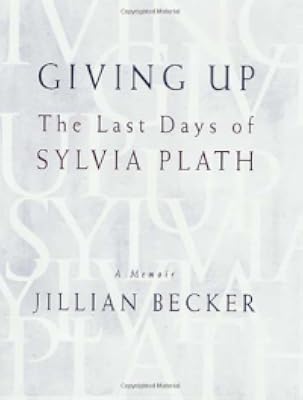
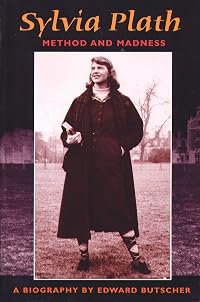

Member Recommendations

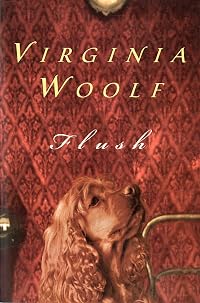
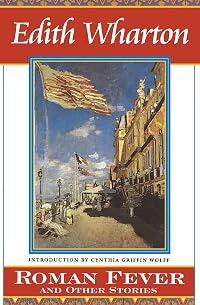
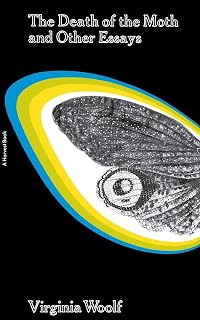
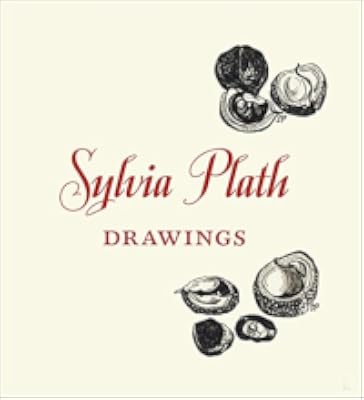
sweetiegherkin The writing styles aren't identical, but these are both lesser known works by well-known authors. They are both full of shorter works, especially a number of observational pieces drawn from the authors' own lives. Of course, with Plath that's a lot of English countryside / visiting neighbors type things, while with Capote it's interviewing convicted murderers and hobnobbing with celebrity pals. But both books give insight into the author's art and their particular writing style (poetic for Plath and journalistic for Capote).
20
Member Reviews
Although she is perhaps best known as a poet, Ted Hughes notes in the introduction to this book that Sylvia Plath once wrote, "For me, poetry is an evasion from the real job of writing prose.” This book contains short stories, journalist essays, and "diary entries" (actually more like writing exercises than "dear diary" jottings) that Plath worked on toward her goal of being a successful short story writer and freelance journalist. In total, the book contains 20 short stories, five journalistic essays, and a few journal fragments. They are listed in the book in reverse chronological order, which I found a somewhat odd decision as it doesn't show Plath's progress.
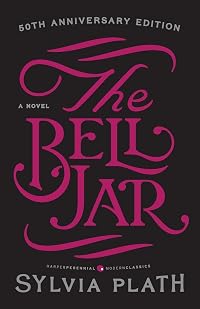
Because the book is in reverse chronological order, the stories at the show more beginning of the book deal more with events that were going on in Plath's life at the time (i.e., motherhood, marriage, the culture shock of living in England and the nostalgia for New England) while the stories later in the book (but earlier in her life) deal more with childhood, college, and her early mental breakdown. Here we see more of Plath's working with and dealing with the issues that are fictionalized again in The Bell Jar. For instance, in the story "In the Mountains," the main character Isobel goes to visit her medical school boyfriend who has needed to take some time out to rest at a sanatorium for his health. Readers of The Bell Jar will immediately see the similarity here with Esther's long-time boyfriend Buddy Willard, a medical student who becomes ill and stays at a sanatorium for some time. It was these later stories that interested me far more than the ones concerned about taking care of the baby and being jealous of any young girls around the husband, although all of the stories were good in their own way.
In general with the stories, it is evident that Plath definitely has fantastic powers in writing prose, particularly in her descriptions of people. I am the first to admit that I’m not a huge fan of short stories, mostly because of their terseness. I always feel like I am just getting into a character(s) or plot and then it ends. So when I say her stories end without the most satisfactory feeling, this is not a criticism of Plath per se as I feel her stories are no more abrupt than any other writers' short stories. Except the story "Stone Boy with Dolphin," which was bizarre and not well fleshed out, I enjoyed most of them. There were several everyday life type stories, but also some rather fantastical-leaning ones. A wry sense of humor accompanies many of them.
The essays and diary excerpts are interesting looks at everyday life. We see some of the elements of Plath’s prose in The Bell Jar here as well. There is both the beautiful, evocative language and the quiet, snarky humor. For instance, in a short essay titled "America! America!,” Plath talks about her public school years and singing patriotic songs: One high, fine song, "For purple mountain majesties above the fruited plain," always made the scampi-size poet in me weep. In those days I couldn't have told a fruited plain from a mountain majesty and confused God with George Washington (whose lamblike granny-face shone down at us also from the schoolroom wall between neat blinders of white curls), yet warbled, nevertheless, with my small, snotty compatriots "America, America! God shed His grace on thee, and crown thy good with brotherhood from sea to shining sea."
In the essays in particular, there’s lots of nostalgia for America and also lots of dealing with the new culture of living in England. However, one short (about one page) essay deals with the mechanics of writing. Called "Context," it is a bittersweet reflection on poetry and its relationship to current events. A particularly beautiful passage reflects: In a sense, these poems are deflections. I do not think they are an escape. For me, the real issues of our time are the issues of every time--the hurt and wonder of loving; making in all its forms--children, loaves of bread, paintings, buildings; and the conservation of life of all people in all places, the jeopardizing of which no abstract doubletalk of "peace" or "implacable foes" can excuse.
The diary entries are considerably the least interesting because they were never meant to be published in any form. They are reflections of Plath trying to get the details down, playing with words and descriptions. Still there's an element of Austen-like characterizations at time. Also, these are interesting to see Plath’s work at becoming a writer, a behind the scenes process you don't usually see. For instance, sometimes you see where a later story emerged from - i.e., the "Widow Mandaga" notes become the short story "That Widow Mandaga," a now fictionalized account of Plath and Hughes's hilariously quirky landlady while staying in Spain. In addition, "Cambridge Notes" shares some similarities with "Stone Boy with Dolphin" (notably, the statue of the boy with a dolphin).
Hughes notes in the introduction that Plath wrote in her journals about her despair of not being a good writer like people she admired and sought to imitate (for example, Frank O'Connor). He notes that she wrote, "I shall perish if I can write about no one but myself." What a sad note in her history as fans can attest both to the power of her own words (not imitations of others' writing) as well as the beauty and lure of her prose novel The Bell Jar, which was largely autobiographical. (Its success over the years negates her own comment that her work would not last unless she wrote about events and feelings outside her ken.) Reading the introduction also makes you feel that Hughes was a bad match for Plath as a husband. He speaks very coldly of his former wife, always referring to her as "Plath" and never "Sylvia" and himself as only her editor. He does not shrink back from criticizing the works contained with these pages, reserving words of approbation for only a handful of the works. No wonder this woman despaired in her journals that she would never be a good enough writer; it does not appear she got emotional support from her closest companion. But anyone who ventures past the introduction will find in these pages evidence of a fine writer, even in the notes jotted down to self about the interior colors of a neighbor’s house. show less
Because the book is in reverse chronological order, the stories at the show more beginning of the book deal more with events that were going on in Plath's life at the time (i.e., motherhood, marriage, the culture shock of living in England and the nostalgia for New England) while the stories later in the book (but earlier in her life) deal more with childhood, college, and her early mental breakdown. Here we see more of Plath's working with and dealing with the issues that are fictionalized again in The Bell Jar. For instance, in the story "In the Mountains," the main character Isobel goes to visit her medical school boyfriend who has needed to take some time out to rest at a sanatorium for his health. Readers of The Bell Jar will immediately see the similarity here with Esther's long-time boyfriend Buddy Willard, a medical student who becomes ill and stays at a sanatorium for some time. It was these later stories that interested me far more than the ones concerned about taking care of the baby and being jealous of any young girls around the husband, although all of the stories were good in their own way.
In general with the stories, it is evident that Plath definitely has fantastic powers in writing prose, particularly in her descriptions of people. I am the first to admit that I’m not a huge fan of short stories, mostly because of their terseness. I always feel like I am just getting into a character(s) or plot and then it ends. So when I say her stories end without the most satisfactory feeling, this is not a criticism of Plath per se as I feel her stories are no more abrupt than any other writers' short stories. Except the story "Stone Boy with Dolphin," which was bizarre and not well fleshed out, I enjoyed most of them. There were several everyday life type stories, but also some rather fantastical-leaning ones. A wry sense of humor accompanies many of them.
The essays and diary excerpts are interesting looks at everyday life. We see some of the elements of Plath’s prose in The Bell Jar here as well. There is both the beautiful, evocative language and the quiet, snarky humor. For instance, in a short essay titled "America! America!,” Plath talks about her public school years and singing patriotic songs: One high, fine song, "For purple mountain majesties above the fruited plain," always made the scampi-size poet in me weep. In those days I couldn't have told a fruited plain from a mountain majesty and confused God with George Washington (whose lamblike granny-face shone down at us also from the schoolroom wall between neat blinders of white curls), yet warbled, nevertheless, with my small, snotty compatriots "America, America! God shed His grace on thee, and crown thy good with brotherhood from sea to shining sea."
In the essays in particular, there’s lots of nostalgia for America and also lots of dealing with the new culture of living in England. However, one short (about one page) essay deals with the mechanics of writing. Called "Context," it is a bittersweet reflection on poetry and its relationship to current events. A particularly beautiful passage reflects: In a sense, these poems are deflections. I do not think they are an escape. For me, the real issues of our time are the issues of every time--the hurt and wonder of loving; making in all its forms--children, loaves of bread, paintings, buildings; and the conservation of life of all people in all places, the jeopardizing of which no abstract doubletalk of "peace" or "implacable foes" can excuse.
The diary entries are considerably the least interesting because they were never meant to be published in any form. They are reflections of Plath trying to get the details down, playing with words and descriptions. Still there's an element of Austen-like characterizations at time. Also, these are interesting to see Plath’s work at becoming a writer, a behind the scenes process you don't usually see. For instance, sometimes you see where a later story emerged from - i.e., the "Widow Mandaga" notes become the short story "That Widow Mandaga," a now fictionalized account of Plath and Hughes's hilariously quirky landlady while staying in Spain. In addition, "Cambridge Notes" shares some similarities with "Stone Boy with Dolphin" (notably, the statue of the boy with a dolphin).
Hughes notes in the introduction that Plath wrote in her journals about her despair of not being a good writer like people she admired and sought to imitate (for example, Frank O'Connor). He notes that she wrote, "I shall perish if I can write about no one but myself." What a sad note in her history as fans can attest both to the power of her own words (not imitations of others' writing) as well as the beauty and lure of her prose novel The Bell Jar, which was largely autobiographical. (Its success over the years negates her own comment that her work would not last unless she wrote about events and feelings outside her ken.) Reading the introduction also makes you feel that Hughes was a bad match for Plath as a husband. He speaks very coldly of his former wife, always referring to her as "Plath" and never "Sylvia" and himself as only her editor. He does not shrink back from criticizing the works contained with these pages, reserving words of approbation for only a handful of the works. No wonder this woman despaired in her journals that she would never be a good enough writer; it does not appear she got emotional support from her closest companion. But anyone who ventures past the introduction will find in these pages evidence of a fine writer, even in the notes jotted down to self about the interior colors of a neighbor’s house. show less
Johnny Panic & the Bible of Dreams
Johnny Panic is a short story written by Plath in 1958, five years before the Bell Jar. An unnamed (A) young woman works as a Psychoanalyst’s secretary. Whilst taking down the patient’s day to day hang-ups and worries - ‘trouble with mother, trouble with father, trouble with the bottle’, she transcribes patient’s dreams. The clinic is a modest one: those whose dreams are too horrific to bear are sent somewhere where cosy white walls might cushion a sudden fall, nevertheless A is privy to those whose dreams, though as cold and as heavy as a ‘lead coffin on the shoulder’, can keep from setting fire to themselves. At home A clandestinely compiles a volume of the dreams she collects from work, show more Johnny Panic’s Bible of Dreams.
A’s work in service of the dreams is the ritual and worship of Johnny Panic. The dreams, betrayed in the daylight shining panic of patient’s eyes, are cold bright slivers of unalloyed wretched truth. As if a dream were a poem you wrote in your sleep. Sylvia is entranced by their iridescence, galled at the doctors stroking and soothing of great works from the minds of their authors. She herself dreams of a shoreless lake swimming with primeval demons of the deep, ‘into this lake people’s minds run at night, brooks and gutter-trickles into one borderless reservoir. ‘I already see’, she says, ‘the surface of the lake swarming with snakes, dead bodies puffed as blowfish, human embryos bobbing around in laboratory bottles like so many unfinished messages from the great I Am.’
The dreams of the day-crowd at the clinic do not satiate A’s hungry cataloguing and in desperation she raids the records after-hours at the clinic, only to be discovered by the Clinic Director who leads her down into the depths of the hospital.
The story is regarded as one of Plath’s more successful attempts at short fiction, and indeed strikes some of the early notes of The Bell Jar. Esther Greenwood’s voice speaks in embryo in the mouth of the nameless narrator, (‘I begin to double-quickstep so he won’t think its me he’s hustling. ‘ You can’t fire me,’ I say calmly. ‘I quit’.) and Plath’s dazzling skill with metaphor and delicate power of description are here blossoming. But it is her absolute faith in the pure truth of pain, panic and despair, a faith exacted beautifully in the apocalyptical closing scene of the story, that is the most bewitching and fascinating in her writing. In any writing. show less
Johnny Panic is a short story written by Plath in 1958, five years before the Bell Jar. An unnamed (A) young woman works as a Psychoanalyst’s secretary. Whilst taking down the patient’s day to day hang-ups and worries - ‘trouble with mother, trouble with father, trouble with the bottle’, she transcribes patient’s dreams. The clinic is a modest one: those whose dreams are too horrific to bear are sent somewhere where cosy white walls might cushion a sudden fall, nevertheless A is privy to those whose dreams, though as cold and as heavy as a ‘lead coffin on the shoulder’, can keep from setting fire to themselves. At home A clandestinely compiles a volume of the dreams she collects from work, show more Johnny Panic’s Bible of Dreams.
A’s work in service of the dreams is the ritual and worship of Johnny Panic. The dreams, betrayed in the daylight shining panic of patient’s eyes, are cold bright slivers of unalloyed wretched truth. As if a dream were a poem you wrote in your sleep. Sylvia is entranced by their iridescence, galled at the doctors stroking and soothing of great works from the minds of their authors. She herself dreams of a shoreless lake swimming with primeval demons of the deep, ‘into this lake people’s minds run at night, brooks and gutter-trickles into one borderless reservoir. ‘I already see’, she says, ‘the surface of the lake swarming with snakes, dead bodies puffed as blowfish, human embryos bobbing around in laboratory bottles like so many unfinished messages from the great I Am.’
The dreams of the day-crowd at the clinic do not satiate A’s hungry cataloguing and in desperation she raids the records after-hours at the clinic, only to be discovered by the Clinic Director who leads her down into the depths of the hospital.
The story is regarded as one of Plath’s more successful attempts at short fiction, and indeed strikes some of the early notes of The Bell Jar. Esther Greenwood’s voice speaks in embryo in the mouth of the nameless narrator, (‘I begin to double-quickstep so he won’t think its me he’s hustling. ‘ You can’t fire me,’ I say calmly. ‘I quit’.) and Plath’s dazzling skill with metaphor and delicate power of description are here blossoming. But it is her absolute faith in the pure truth of pain, panic and despair, a faith exacted beautifully in the apocalyptical closing scene of the story, that is the most bewitching and fascinating in her writing. In any writing. show less
This is an excellent collection of Sylvia Plath's short stories. It would not be an exaggeration to say that no two of these stories are alike, but at the same time all of them collectively clearly demonstrate the full range of her tremendous story-telling talent.
I'm not a poetry reader, so I've never really read Plath's poems. But like any self-respecting depressed female teenager I read her memoir The Bell Jar. This collection doesn't contain any of her poetry either, its short stories & articles of varying strengths, along with notebook entries. Its interesting to see how some of her journal entries later became short stories, & I enjoyed this book a lot. There were a few dud stories, but even with those you can understand her ideas & as she never published any of these dud ones herself its likely she knew they weren't as strong as the others.
I'm not sure what the point was in including excerpts from her journals, particularly her Cambridge Notes. The essays and stories easily stand on their own. The stories are a mixed bag from the hopeful romantic "Day of Success" to the dark, disturbing title story "Sunday at the Mintons'" seemed the most representative of her poetical themes -- a woman whose life is overshadowed by a domineering man and the helplessness of such a life, yet the spirit is alive in the woman. Most were good stories although some were too dark for my taste.
Found this book in a used bookstore and very shortly thereafter found a CD single by Tears for Fears by the same name. Both are wonderful. The title short story takes one right into a 50s era sanitarium, with a powerul nurse and her "maculae" The other stories show her studied "magazine-vocabulary" to effect, but also show her disturbing slant to detail. I'm glad I bought this book when it was available.
I am not really trusting much of anything Ted Hughes edited. Will narrow my search from here on with unabridged, unedited works of Sylvia Plath. I do think she was not especially gifted in the prose department. Perhaps too mediated by her desire to be a big-time writer published in the popular mags of her day which turned out to be a rather short one, didn't it?
Members
- Recently Added By
Lists

Amanda's Guaranteed Books
110 works; 5 members

Books Purchased July-December 2016
81 works; 1 member
Author Information

133+ Works 55,990 Members
Sylvia Plath's best poetry was produced, tragically, as she pondered self-destruction---in her poems as well as her life---and she eventually committed suicide. She had an extraordinary impact on British as well as American poetry in the few years before her death, and affected many poets, particularly women, in the generation after. She is a show more confessional poet, influenced by the approach of Robert Lowell. Born in Boston, a graduate of Smith College, Plath attended Newnham College, Cambridge University, on a Fulbright Fellowship and married the British poet Ted Hughes. Of her first collection,The Colossus and Other Poems (1962), the Times Literary Supplement remarked, "Plath writes from phrase to phrase as well as with an eye on the larger architecture of the poem; each line, each sentence is put together with a good deal of care for the springy rhythm, the arresting image and---most of all, perhaps---the unusual word." Plath's second book of poetry, Ariel, written in 1962 in a last fever of passionate creative activity, was published posthumously in 1965 and explores dimensions of women's anger and sexuality in groundbreaking new ways. Plath's struggles with women's issues, in the days before the second wave of American feminism, became legendary in the 1970s, when a new generation of women readers and writers turned to her life as well as her work to understand the contradictory pressures of ambitious and talented women in the 1950s. The Bell Jar---first published under a pseudonym in 1963 and later issued under Plath's own name in England in 1966---is an autobiographical novel describing an ambitious young woman's efforts to become a "real New York writer" only to sink into mental illness and despair at her inability to operate within the narrow confines of traditional feminine expectations. Plath was posthumously awarded the Pulitzer Prize for poetry in 1982. In recent years, there have been a number of biographies and critical evaluations of Plath's work. (Bowker Author Biography) show less
Sylvia Plath has a Legacy Library. Legacy libraries are the personal libraries of famous readers, entered by LibraryThing members from the Legacy Libraries group.
Series
Belongs to Publisher Series
Work Relationships
Is contained in
Common Knowledge
- Canonical title*
- Paniikki-Johnny ja Uniraamattu : novelleja ja muita kirjoituksia
- Original title
- Johnny panic and the Bible of Dreams
- Original publication date
- 1977
- First words
- Every day from nine to five I sit at my desk facing the door of the office and type up other people's dreams.
- Last words
- (Click to show. Warning: May contain spoilers.)But her own hands hung listless and empty at her sides, like hands of wax, and she did not wave.
- Original language
- English
- Canonical DDC/MDS
- 818.5409
- Canonical LCC
- PS3566.L27
*Some information comes from Common Knowledge in other languages. Click "Edit" for more information.
Classifications
Statistics
- Members
- 1,649
- Popularity
- 13,700
- Reviews
- 12
- Rating
- (3.77)
- Languages
- 13 — Dutch, English, Finnish, French, German, Greek, Hungarian, Italian, Polish, Spanish, Swedish, Turkish, Portuguese (Portugal)
- Media
- Paper, Ebook
- ISBNs
- 48
- ASINs
- 11