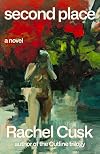
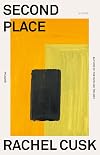
Second Place
by Rachel Cusk
On This Page
Description
A haunting fable of art, family, and fate from the author of the Outline trilogy.A woman invites a famous artist to use her guesthouse in the remote coastal landscape where she lives with her family. Powerfully drawn to his paintings, she believes his vision might penetrate the mystery at the center of her life. But as a long, dry summer sets in, his provocative presence itself becomes an enigma—and disrupts the calm of her secluded household.
Second Place, Rachel Cusk's electrifying new show more novel, is a study of female fate and male privilege, the geometries of human relationships, and the moral questions that animate our lives. It reminds us of art's capacity to uplift—and to destroy.
A Macmillan Audio production from Farrar, Straus and Giroux
. show less
Tags
Recommendations














Member Recommendations

Member Reviews
Rachel Cusk in the master of the monologue - but you have to be prepared for that to be the extent of the book. It is all told to one person, Jeffers, of whom we know almost nothing other than that he is a trusted confidante of the narrator M. You also have to realize you might be dealing with an unreliable narrator. She tells the events of a single summer - with some bits of personal history here and there to fill in the gaps, as well as a lot of self-analysis. She and her rock solid, reliable second husband Tony own property on the marshes (presumably England) that has two dwellings - their main home and the 'second place' a smaller cottage closer to the water that they lovingly restored and have rented out to various writers and show more artists over time. At a pivotal point in her life, M. discovers the artwork of L. and invites him to use their little hideaway for a retreat. After a few missteps, it finally comes to pass, but is disastrous in comparison to her ramped up expectations. He brings a woman with him, for starters, and is not in a good place professionally or personally. It quickly becomes a toxic set-up, not only for M and L but her family which includes Tony and her adult daughter Justine and her boyfriend Kurt. As spring changes to summer, M struggles to connect with L, but they have a weird push-pull relationship (not romantic or sexual, thankfully!) that does neither of them any favors. Lots of psychoanalysis, and then the action really takes off around page 100 when the visit takes a turn no one anticipated. Beautiful prose with a gem of observation about human nature or the arts on every page and a clever double meaning for the title, which come across without being heavy-handed. For a small book, it is a deep dive and requires a reflective mindset to engage with it. Luckily, I didn't bring it to the beach! But still worthwhile! show less
There is so much compressed into 180 pages, I hardly know where to begin to do justice. The main character "M" encounters the work of the artist "L" in a Paris gallery hours before departing on a train (to I forget where, somewhere in Europe) where she is followed from car to car by a leering man with a small child. M is in Paris on her own, taking a brief sabbatical from her marriage and small child, Justine. "L"s work connects her to a vision of what true freedom might be like. The combination of the paintings and the experience on the train propel her from passively accepting to actively demanding the freedom of choosing how to be in the world, but her decision destroys her marriage and for several years her own connection with her show more child.
Many years later M, married again, invites the artist L to come to where she lives now, by the marshes (somewhere like Norfolk) not far from the sea to stay in 'the second place' a formerly derelict cottage that she, with her second husband, Tony, have refurbished. M's marriage to Tony, is good, really good. (Really!) He farms and is grounded as a person. After delay (of years) L arrives with a young woman in tow. It is during the time we are still in, the first year of Covid. M's own daughter, now in her mid-twenties is home along with her German boyfriend Karl.
L's work served as a catalyst to M before and quickly it becomes apparent that L the person is also a catalyst. It's as much in him as in his work.
The spring is unusually warm and dry. L is elusive. M is frustrated. She hardly knows what she wants from him. Nothing. Everything. He avoids her.
Early on M says, "Why do we live so painfully in our fictions? Why do we suffer so, from the things we ourselves have invented?" Watching a bird she says, "Meanwhile I just sit staring straight ahead in front of me with nothing to do. That's all I've managed as far as freedom is concerned, to get rid of the people and things I don't like. After that there isn't all that much left!" and a little further on, "I find it difficult to meet my own needs. The sight of people getting what they want, jostling and demanding things, makes me decide I would rather go without."
About L's paintings she says, that they exude a sense of freedom, "this aura of male freedom belongs likewise to most representations of the world and of our human experience within it. and that, as women we grow accustomed to translating it into something we can recognize." -- "a case of borrowed finery."
Of clothes she says, "I was presumably dressed as I always am, in either black or white." "I like to wear soft, draping, shapeless clothes which I can add or remove in layers . . I have never understood clothes terribly well, and have found the element of choice especially unmanageable, so it was a great day for me when I realized . . . that by limiting the colours to black and white I need never think about aesthetics again."
The implication is, in a way, that a woman can only experience freedom by choosing to do empty out, to do and be nothing. Or, that is the route M has taken.
M writes movingly of being a mother. She writes of a time when her daughter was thirteen and asked her what were the limits of her obligations to her. She says, "I believe I am obliged to let you go," I said, once I'd thought about it, "but if that doesn't work out, I believe I am obliged to remain responsible for you forever."
of writing (she is a writer herself, very occasionally) "Some people write simply because they don't know how to live in the moment . . . and have to reconstruct it and live in it afterwards."
She writes too of some moments in her marriage with Tony when she realizes how differently they see and feel almost everything. When she explains to Tony of her misgivings about calling their cottage 'the second place' she says the term "pretty much summed up how I felt about myself and my life--that it had been a near miss, requiring just as much effort as victory always and forever somehow denied me, by a force that I could only describe as the force of pre-eminence. I could hever win, and the reason I couldn't seemed to lie within certain infallible laws of destiny that I was powerless--as the woman I was--to overcome." She goes on to say, "Tony listened to me, and I could tell he was slightly surprised by what I was saying . . and after a long time he said, "For me it doesn't mean that. It means parallel world. Alternative reality."
This woman may appear to do nothing, (you might find her annoying, but then you would find me annoying too) but what she does do is observe and think about the impossible and the forbidden: the possibility that art is both dangerous and completely pointless, to the likelihood that men, being men, even the best of them, cannot begin to comprehend what women's lives are made of, that the surest love for a woman is with her children.
At the very end, unnecessarily perhaps? Cusk reveals that the novel was inspired by the memoir of Mabel Mapes Dodge of D.H. Lawrence's time at her home in Taos. Jeffers, then, is Robinson Jeffers the poet. Not sure what I think about this. Does it add or subtract? I guess I'll have to read [Lorenzo in Taos] to decide. I am not a big Lawrence fan, but I have gleaned that he was just such a person as L, a force of nature.
Sorry this is so long, I am just stunned by Cusk's perceptiveness and courage about women, men, the human condition, art, you name it. ***** show less
Many years later M, married again, invites the artist L to come to where she lives now, by the marshes (somewhere like Norfolk) not far from the sea to stay in 'the second place' a formerly derelict cottage that she, with her second husband, Tony, have refurbished. M's marriage to Tony, is good, really good. (Really!) He farms and is grounded as a person. After delay (of years) L arrives with a young woman in tow. It is during the time we are still in, the first year of Covid. M's own daughter, now in her mid-twenties is home along with her German boyfriend Karl.
L's work served as a catalyst to M before and quickly it becomes apparent that L the person is also a catalyst. It's as much in him as in his work.
The spring is unusually warm and dry. L is elusive. M is frustrated. She hardly knows what she wants from him. Nothing. Everything. He avoids her.
Early on M says, "Why do we live so painfully in our fictions? Why do we suffer so, from the things we ourselves have invented?" Watching a bird she says, "Meanwhile I just sit staring straight ahead in front of me with nothing to do. That's all I've managed as far as freedom is concerned, to get rid of the people and things I don't like. After that there isn't all that much left!" and a little further on, "I find it difficult to meet my own needs. The sight of people getting what they want, jostling and demanding things, makes me decide I would rather go without."
About L's paintings she says, that they exude a sense of freedom, "this aura of male freedom belongs likewise to most representations of the world and of our human experience within it. and that, as women we grow accustomed to translating it into something we can recognize." -- "a case of borrowed finery."
Of clothes she says, "I was presumably dressed as I always am, in either black or white." "I like to wear soft, draping, shapeless clothes which I can add or remove in layers . . I have never understood clothes terribly well, and have found the element of choice especially unmanageable, so it was a great day for me when I realized . . . that by limiting the colours to black and white I need never think about aesthetics again."
The implication is, in a way, that a woman can only experience freedom by choosing to do empty out, to do and be nothing. Or, that is the route M has taken.
M writes movingly of being a mother. She writes of a time when her daughter was thirteen and asked her what were the limits of her obligations to her. She says, "I believe I am obliged to let you go," I said, once I'd thought about it, "but if that doesn't work out, I believe I am obliged to remain responsible for you forever."
of writing (she is a writer herself, very occasionally) "Some people write simply because they don't know how to live in the moment . . . and have to reconstruct it and live in it afterwards."
She writes too of some moments in her marriage with Tony when she realizes how differently they see and feel almost everything. When she explains to Tony of her misgivings about calling their cottage 'the second place' she says the term "pretty much summed up how I felt about myself and my life--that it had been a near miss, requiring just as much effort as victory always and forever somehow denied me, by a force that I could only describe as the force of pre-eminence. I could hever win, and the reason I couldn't seemed to lie within certain infallible laws of destiny that I was powerless--as the woman I was--to overcome." She goes on to say, "Tony listened to me, and I could tell he was slightly surprised by what I was saying . . and after a long time he said, "For me it doesn't mean that. It means parallel world. Alternative reality."
This woman may appear to do nothing, (you might find her annoying, but then you would find me annoying too) but what she does do is observe and think about the impossible and the forbidden: the possibility that art is both dangerous and completely pointless, to the likelihood that men, being men, even the best of them, cannot begin to comprehend what women's lives are made of, that the surest love for a woman is with her children.
At the very end, unnecessarily perhaps? Cusk reveals that the novel was inspired by the memoir of Mabel Mapes Dodge of D.H. Lawrence's time at her home in Taos. Jeffers, then, is Robinson Jeffers the poet. Not sure what I think about this. Does it add or subtract? I guess I'll have to read [Lorenzo in Taos] to decide. I am not a big Lawrence fan, but I have gleaned that he was just such a person as L, a force of nature.
Sorry this is so long, I am just stunned by Cusk's perceptiveness and courage about women, men, the human condition, art, you name it. ***** show less
A woman invites an acclaimed artist to stay in a cottage, on her property, which she fondly calls the “Second Place”. This mysterious and somewhat frightening man will begin to shed light on her life and her marriage, in unsettling ways. The writing here is beautiful without becoming heavy-handed and the author deftly keeps the narrative from sinking under it’s weighty subject matter. A great introduction to this Cusk's work.
Once at a dark point in her life, M stumbled upon a gallery exhibiting works by L. She was transfixed. L’s paintings were like a recognition of oneself, they knew her entirely. Years later when her circumstances had changed and she was living with her second husband, Tony, on a plot of land near the Norfolk marshes, she writes to L offering the use of their guest house, which she and Tony refer to as their “second place”, as a retreat, a studio, a refuge for as long as he might like to make use of it. At some point L takes M up on her offer. He arrives precipitously with an unannounced companion, a much younger woman named Brett, and takes up residence in M’s second place. L is not exactly as M imagined he would be. But what show more exactly was she expecting? It’s a question M asks herself as she writes about this period of her life to a correspondent named Jeffers.
Rachel Cusk’s epistolary novel is meandering and introspective. M is filled with self-doubt but also anger and a kind of wistfulness. Her guard is nearly always up, yet she allows herself to be nearly destroyed by L’s rejection of her sympathies. They are seemingly at loggerheads. But it becomes increasingly clear that M’s desperate desire for L’s acknowledgement threatens to undermine her relationship with Tony and with her adult daughter, Justine, who happens to also be staying with them that summer. And then, perhaps not surprisingly, there is the question of art. For both L and M (she is described as having written “little” books), the wellspring of artistic creation may be personal pain. Is it ever anything more than that? And how does M’s narrative drive, or compulsion, fit in with her conception of artistic truth? And hey, you might be wondering, who the heck is Jeffers?
Not all questions have answers here, not least the one about Jeffers, but M’s understandings and misapprehensions become rhythmically fascinating. She is remarkably opaque to herself, though perhaps not nearly so to her daughter and her husband. At some point you will get a niggle about just how much you want to trust her narrative account to Jeffers of these events and her reported thoughts and feelings.
I liked it. More than I thought I would. And it will keep me thinking for some time.
Recommended. show less
Rachel Cusk’s epistolary novel is meandering and introspective. M is filled with self-doubt but also anger and a kind of wistfulness. Her guard is nearly always up, yet she allows herself to be nearly destroyed by L’s rejection of her sympathies. They are seemingly at loggerheads. But it becomes increasingly clear that M’s desperate desire for L’s acknowledgement threatens to undermine her relationship with Tony and with her adult daughter, Justine, who happens to also be staying with them that summer. And then, perhaps not surprisingly, there is the question of art. For both L and M (she is described as having written “little” books), the wellspring of artistic creation may be personal pain. Is it ever anything more than that? And how does M’s narrative drive, or compulsion, fit in with her conception of artistic truth? And hey, you might be wondering, who the heck is Jeffers?
Not all questions have answers here, not least the one about Jeffers, but M’s understandings and misapprehensions become rhythmically fascinating. She is remarkably opaque to herself, though perhaps not nearly so to her daughter and her husband. At some point you will get a niggle about just how much you want to trust her narrative account to Jeffers of these events and her reported thoughts and feelings.
I liked it. More than I thought I would. And it will keep me thinking for some time.
Recommended. show less
Rachel Cusk’s darkly enigmatic novel Second Place describes the fraught relationship between a middle-aged woman writer (“M”) and a narcissistic, infantile male painter roughly her age or younger (“L”). The story begins years before the main action in Paris, where a youthful M encounters what she calls a “bloated, yellow-eyed devil” on a train and thereafter feels her life’s been contaminated by evil. The next day while wandering the streets of the city she happens upon a gallery where the works of a young artist who’s riding a wave of popularity are being exhibited. L’s work speaks to her in a way that acts as a salve for her experience on the train, and though her life at the time subsequently goes off the rails, show more she does not forget how L’s paintings helped her through. Decades later M is married to Tony, a nurturing, enterprising man very different from her hyper-critical first husband. Tony and M are living an idyll in a marshy coastal district. On their property are two dwellings: the proper house where she and Tony live and a guesthouse a short distance away through the trees that she calls the “second place.” M, not having forgotten how L helped her through a difficult period in her life, has written and invited him to stay with them in the second place. But L cannot immediately take up the offer, and the initial communication is followed by a bit of back and forth that leaves M uncertain if L will ever act on the invitation. In the meantime, M’s adult daughter Justine has arrived with boyfriend Kurt, and M puts them in the second place. But then L writes to say he is coming after all, and Justine and Kurt are forced to relocate to the main house. This sort of egocentric discourtesy is typical of L’s behaviour. Moreover, when he does finally show up, he’s brought with him, unannounced, a young woman, Brett—who, as it turns out, is much more civil and accommodating than her companion. The remainder of Second Place depicts a battle of wills. M simply wants to express gratitude by giving L a place to work in peace. But L seems resentful of M for reaching out to him and suspicious of her motives, as if he thinks her invitation implies that she expects them to forge an intimate connection. He responds to her generosity with hostility, keeping his distance from her, denigrating M in conversation, accusing her of being controlling and destructive. M narrates a brittle, incisive, psychologically devastating story of a problematic relationship in which the two parties never align. Paradoxically, the harder M strives to give L what she thinks he wants, the more defiant and disruptive he becomes. Cusk’s brief novel is in equal measures gripping and disturbing as it relates a taut cautionary tale illustrative of the saying be careful what you wish for. show less
M is a middle-aged writer of modest talent. She is introspective and deeply thoughtful, but also terribly insecure about who she is and what her place is in the world. As she was recovering from an abusive marriage some years ago, she was strongly affected by viewing the paintings of L. Now remarried to her second husband, M decides to invite L to stay and work in the guest house that she and Tony have on their homestead in a remote coastal community. M is hopeful that a visit from L will boost her flagging self-esteem and provide her with the answers to the nagging questions about what is lacking in her life. After initially refusing the invitation, L suddenly appears one day, but with his glamorous and much younger girlfriend in tow. show more Their unexpected arrival requires M’s daughter and her boyfriend to vacate the guest house—or ‘second place’ as M calls it—which adds considerable tension to the situation. Clearly, this visit is not going to be the spiritual renewal that M was hoping for.
So goes the basic story of Second Place, Rachel Cusk’s sparkling novel of male-female relationships, the role that art plays in nurturing our lives, the fraught way in which mothers and daughters interact, the cruelties that we sometimes inflict on one another, and a whole lot more. Written as a long letter to a poet friend, the book reads as a lengthy therapy session in which M works out her frustrations and disappointments with pretty much every aspect of her existence, but most of all her disillusionment with the man L actually is and how little solace he ultimately provides. Although the story itself is well plotted, the work really shines as a character study of at least two complex and very flawed people. And then, of course, there is Cusk’s prose, which is always closely observed and occasionally quite remarkable, starting with the delicious double entendre of the title: the guest house itself becomes an imposing presence in the tale and M clearly feels herself to be in second place as both an artist and a woman.
While Second Place struck me as being wholly original, it actually has an interesting heritage. As the author explains in a brief Afterword, the story was inspired by Lorenzo in Taos, art patron Mabel Dodge Luhan’s memoir of a tense visit that writer D. H. Lawrence and his wife made to her New Mexico estate in 1932 (which explains the M and the L as character names, by the way). Regardless of that connection, this was an emotionally evocative and highly satisfying book to read. It is not a long story in terms of page count, but the philosophical complexity that Cusk creates with her language demands a great deal of attention from the reader; I found myself highlighting many passages throughout the book containing some sentences that were simply stunning. All the more remarkable is how much I enjoyed this novel without actually liking any of the characters (except perhaps for Tony)! That must certainly be one way to define great writing. show less
So goes the basic story of Second Place, Rachel Cusk’s sparkling novel of male-female relationships, the role that art plays in nurturing our lives, the fraught way in which mothers and daughters interact, the cruelties that we sometimes inflict on one another, and a whole lot more. Written as a long letter to a poet friend, the book reads as a lengthy therapy session in which M works out her frustrations and disappointments with pretty much every aspect of her existence, but most of all her disillusionment with the man L actually is and how little solace he ultimately provides. Although the story itself is well plotted, the work really shines as a character study of at least two complex and very flawed people. And then, of course, there is Cusk’s prose, which is always closely observed and occasionally quite remarkable, starting with the delicious double entendre of the title: the guest house itself becomes an imposing presence in the tale and M clearly feels herself to be in second place as both an artist and a woman.
While Second Place struck me as being wholly original, it actually has an interesting heritage. As the author explains in a brief Afterword, the story was inspired by Lorenzo in Taos, art patron Mabel Dodge Luhan’s memoir of a tense visit that writer D. H. Lawrence and his wife made to her New Mexico estate in 1932 (which explains the M and the L as character names, by the way). Regardless of that connection, this was an emotionally evocative and highly satisfying book to read. It is not a long story in terms of page count, but the philosophical complexity that Cusk creates with her language demands a great deal of attention from the reader; I found myself highlighting many passages throughout the book containing some sentences that were simply stunning. All the more remarkable is how much I enjoyed this novel without actually liking any of the characters (except perhaps for Tony)! That must certainly be one way to define great writing. show less
“This is partly a story of will, and of the consequences of exerting it, you will notice… that everything I determined to happen happened, but not as I wanted it! This is the difference, I suppose, between an artist and an ordinary person: the artist can create outside himself the perfect replica of his own intentions. The rest of us just create a mess, or something hopelessly wooden, no matter how brilliantly we imagined it.
Narrator and protagonist M admires the artwork of famous artist L and invites him to stay in a guest cottage on her property. She lives in a marshy region near the coast. The book opens with M meeting “the Devil” on a train, and this encounter is the catalyst for her invitation to L. She envisions developing show more some type of (unspecified) relationship with him. At first, he spurns her invitation but eventually accepts. Much to M’s surprise, he arrives with a beautiful young woman. M lives in the main house with her second husband, Tony. Her adult daughter and her boyfriend are visiting.
The book is told in epistolary style, addressed to an individual named Jeffers (who plays no other role in the story). It is a character-driven book with little plot. The tone is dark. The writing is striking.
In addition to the literal “second place” (guest cottage), there are references to feeling inferior throughout the narrative. M is a writer but is overshadowed by L’s success as an artist. She feels second in beauty and attraction to the lovely Brett. She feels secondary to her ex-husband in their daughter’s affections. She feels that, as a woman in a creative field, she must overcome more hurdles than a man.
“I said to him that ‘second place’ pretty much summed up how I felt about myself and my life – that it had been a near miss, requiring just as much effort as victory but with that victory always and forever somehow denied me, by a force that I could only describe as the force of pre-eminence. I could never win, and the reason I couldn’t seemed to lie within certain infallible laws of destiny that I was powerless – as the woman I was – to overcome.”
We spend the majority of time in M’s head. She is writing to Jeffers almost as if talking to herself. What she imagines will happen when L comes to stay is not what actually happens. L is a narcissist. He comes across as a rather despicable person.
“I realised, hearing him talk, that he was without any fibre of morality or duty, not out of any conscious decision but more in the way of lacking an elemental sense. He simply couldn’t conceive of the notion of obligation.”
M is not the most admirable character either. She does not appreciate her husband, Tony, though he seems like the most stable and empathetic character in the book. It is a book for those who do not mind unlikeable characters. I found it is easy to admire the writing and the craft. show less
Narrator and protagonist M admires the artwork of famous artist L and invites him to stay in a guest cottage on her property. She lives in a marshy region near the coast. The book opens with M meeting “the Devil” on a train, and this encounter is the catalyst for her invitation to L. She envisions developing show more some type of (unspecified) relationship with him. At first, he spurns her invitation but eventually accepts. Much to M’s surprise, he arrives with a beautiful young woman. M lives in the main house with her second husband, Tony. Her adult daughter and her boyfriend are visiting.
The book is told in epistolary style, addressed to an individual named Jeffers (who plays no other role in the story). It is a character-driven book with little plot. The tone is dark. The writing is striking.
In addition to the literal “second place” (guest cottage), there are references to feeling inferior throughout the narrative. M is a writer but is overshadowed by L’s success as an artist. She feels second in beauty and attraction to the lovely Brett. She feels secondary to her ex-husband in their daughter’s affections. She feels that, as a woman in a creative field, she must overcome more hurdles than a man.
“I said to him that ‘second place’ pretty much summed up how I felt about myself and my life – that it had been a near miss, requiring just as much effort as victory but with that victory always and forever somehow denied me, by a force that I could only describe as the force of pre-eminence. I could never win, and the reason I couldn’t seemed to lie within certain infallible laws of destiny that I was powerless – as the woman I was – to overcome.”
We spend the majority of time in M’s head. She is writing to Jeffers almost as if talking to herself. What she imagines will happen when L comes to stay is not what actually happens. L is a narcissist. He comes across as a rather despicable person.
“I realised, hearing him talk, that he was without any fibre of morality or duty, not out of any conscious decision but more in the way of lacking an elemental sense. He simply couldn’t conceive of the notion of obligation.”
M is not the most admirable character either. She does not appreciate her husband, Tony, though he seems like the most stable and empathetic character in the book. It is a book for those who do not mind unlikeable characters. I found it is easy to admire the writing and the craft. show less
Members
- Recently Added By
Lists

Favourite Booker Prize contenders
73 works; 21 members
Booker Prize
491 works; 62 members

Top Five Books of 2022
736 works; 272 members

Anticipated 2021 Reads
231 works; 7 members

Books Read in 2022
5,226 works; 115 members

Books to Read
9 works; 1 member
Talk Discussions
Past Discussions
2021 Booker Prize Longlist: Second Place by Rachel Cusk in Booker Prize (January 2025)
Author Information

30+ Works 9,101 Members
Rachel Cusk was born on Feb 8, 1967 in Canada. She spent much of her childhood in Los Angeles and finished her education at St Mary's Convent, Cambridge. her education at St Mary's Convent, Cambridge. In 2003, Rachel Cusk was nominated by Granta magazine as one of 20 'Best of Young British Novelists'. That year she published The Lucky Ones (2003), show more her fourth novel, which was shortlisted for the Whitbread Novel Award. Since then she has published four more novels; her latest is Outline (2014). She has also written several non-fiction books. A Life's Work: On Becoming a Mother (2001) is a personal exploration of motherhood. The Last Supper: A Summer in Italy (2009) is a memoir about time in southern Italy. In 2015 she made the Baileys Women's Prize for Fiction shortlist with her title Outline. (Bowker Author Biography) show less
Awards and Honors
Awards
Distinctions
Notable Lists
Series
Belongs to Publisher Series
Gallimard, Folio (7315)
Common Knowledge
- Canonical title
- Second Place
- Original title
- Second Place
- Original publication date
- 2021
- First words
- I once told you, Jeffers, about the time I met the devil on a train leaving Paris, and about how after that meeting the evil that usually lies undisturbed beneath the surface of things rose up and disgorged itself over every ... (show all)part of life.
- Last words
- (Click to show. Warning: May contain spoilers.)This is a bad place.
L - Canonical DDC/MDS
- 823.914
- Canonical LCC
- PR6053.U825
Classifications
Statistics
- Members
- 763
- Popularity
- 36,854
- Reviews
- 38
- Rating
- (3.83)
- Languages
- 11 — Catalan, Dutch, English, Finnish, French, German, Italian, Portuguese (Portugal), Spanish, Swedish, Turkish
- Media
- Paper, Audiobook, Ebook
- ISBNs
- 32
- ASINs
- 5