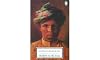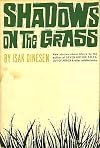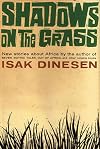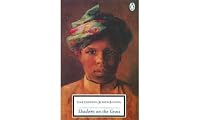
Shadows on the Grass
by Karen Blixen
On This Page
Description
Isak Dinesen takes up the absorbing story of her life in Kenya begun in the unforgettable Out of Africa, which she published under the name of Karen Blixen. With warmth and humanity these four stories illuminate her love both for the African people, their dignity and traditions, and for the beauty and wildness of the landscape. The first three were written in the 1950s and the last, 'Echoes from the Hills', was written especially for this volume in the summer of 1960 when the author was in show more her seventies. In all they provide a moving final chapter to her African reminiscences. show lessTags
Recommendations

















Member Reviews
A further memoir of Danish author Baroness Karen von Blixen-Finecke (1885–1962), written in the 1950s and 1960, this is almost an epilogue to her earlier book Out of Africa. It consists of four short stories, the first featuring her majestic Somali major-domo Farah Aden. The second story is about “Barua A Soldani” or a letter from a king, which she has received and is seen to have healing properties. The third story is about her attempts to act as a doctor for her people, and their fear of going to the hospital. The final story features the correspondence she has with her former servants after she leaves Africa. I liked Abdullahi Ahamed, the very bright child who’s education she sponsors, who goes on to become a judge.
There is a show more significant dose of imperialism and white saviour complex going on here, but I found this book more relatable than the first as it tells the stories of people and relationships, and gives more insight into her ongoing sadness and nostalgia over having been forced to have given up the farm and her life in Africa. show less
There is a show more significant dose of imperialism and white saviour complex going on here, but I found this book more relatable than the first as it tells the stories of people and relationships, and gives more insight into her ongoing sadness and nostalgia over having been forced to have given up the farm and her life in Africa. show less
Karen Blixen’s last book to be published before her death contains four short retrospective pieces about her time in Africa. ‘Farah’ is a portrait of her Somali major-domo, ‘Barua a Soldani’ and ‘The great gesture’ both refer to difficulties she had in matching the expectation from the local people that as a European she would be able to deal with all their medical problems, and ‘Echoes from the hills’ is about the pleasure she takes in being able to maintain indirect contact with some of the people who worked for her in Kenya, even thirty years after she returned to Denmark.
Obviously it’s all a bit dated in its attitudes to African people — Blixen clearly had a great deal of individual respect for the people who show more worked for her or lived near her farm in Kenya, but there are inevitably all kinds of underlying assumptions about the relationship between Africans and Europeans in a colonial country that we would now find — at best — somewhat patronising. That goes with the period when Blixen was living in Kenya and formed her ideas, of course, and we can’t really hold it against her, but we do have to be aware of it when we are reading. Similar things apply to her exaggerated respect for members of royal families and some of her comments about hunting wild animals. All in all it is still quite readable and atmospheric, despite those quibbles, and there are some rather fine bits of descriptive prose. Some odd passages of silliness too, of course, like the long digression in ‘Farah’ about how ‘creative Unity’ depends on the coming together of complementary pairs, male and female, black and white, master and servant, and so on… But definitely still worth a look. show less
Obviously it’s all a bit dated in its attitudes to African people — Blixen clearly had a great deal of individual respect for the people who show more worked for her or lived near her farm in Kenya, but there are inevitably all kinds of underlying assumptions about the relationship between Africans and Europeans in a colonial country that we would now find — at best — somewhat patronising. That goes with the period when Blixen was living in Kenya and formed her ideas, of course, and we can’t really hold it against her, but we do have to be aware of it when we are reading. Similar things apply to her exaggerated respect for members of royal families and some of her comments about hunting wild animals. All in all it is still quite readable and atmospheric, despite those quibbles, and there are some rather fine bits of descriptive prose. Some odd passages of silliness too, of course, like the long digression in ‘Farah’ about how ‘creative Unity’ depends on the coming together of complementary pairs, male and female, black and white, master and servant, and so on… But definitely still worth a look. show less
It’s a pity these four essays could not have been worked into a revised edition of Out of Africa, although revising a memoir is probably not to be encouraged, and these essays would have been difficult to incorporate as each is, in its way, an alternate ending. Still, the essays do lose something standing apart as they do here.
The book’s greatest value, very likely, is in what it reveals about the influence of her African experiences, and the influence of Islam, on her aesthetic.
Four stars if you are a fan; probably of two or three stars if you aren’t.
The book’s greatest value, very likely, is in what it reveals about the influence of her African experiences, and the influence of Islam, on her aesthetic.
Four stars if you are a fan; probably of two or three stars if you aren’t.
an addition to her Out of Africa, really should be read along with that one. See review of Out of Africa.
Author wrote this one 30 years after she left Kenya. Its the last book she wrote. She died shortly after its publication. It fills in the facts of what happened to the people that Karen wrote about in her book Out of Africa. We get more information about Farah, the Somali-born servant who acted as her chief of staff. He is depicted as fiercely arrogant and utterly loyal, and his death is one of the most moving and tragic moments in the author's writing. Other characters who figure prominently include Kamante, who goes blind, old Juma, who dies, and Abdullahi, Farah’s son, who ultimately prospers.
In this book, the author is show more reflective and self disclosing, admitting that the African experiences made her writing possible. We also learn more about Masai and Kikuyu culture and the introduction of Western technology and culture, all of which made them listless and turned their old lives into boredom. There is less on the exotic landscape and animals and more on human values and spiritual appreciation. Perhaps she was saying goodbye to her friends in Africa. The author died of malnutrition. She was unable to eat. Some speculate that she died of anorexia nervosa. show less
Author wrote this one 30 years after she left Kenya. Its the last book she wrote. She died shortly after its publication. It fills in the facts of what happened to the people that Karen wrote about in her book Out of Africa. We get more information about Farah, the Somali-born servant who acted as her chief of staff. He is depicted as fiercely arrogant and utterly loyal, and his death is one of the most moving and tragic moments in the author's writing. Other characters who figure prominently include Kamante, who goes blind, old Juma, who dies, and Abdullahi, Farah’s son, who ultimately prospers.
In this book, the author is show more reflective and self disclosing, admitting that the African experiences made her writing possible. We also learn more about Masai and Kikuyu culture and the introduction of Western technology and culture, all of which made them listless and turned their old lives into boredom. There is less on the exotic landscape and animals and more on human values and spiritual appreciation. Perhaps she was saying goodbye to her friends in Africa. The author died of malnutrition. She was unable to eat. Some speculate that she died of anorexia nervosa. show less
Not having read ''Out of Africa'', I started with this unbiased and even eager, only to become very disappointed after finishing it. I did not learn anything about Africa or its inhabitants, nor did this open any vistas or disclose the beauty of that continent. The personal musings surrounding some people of her household pretend to deliver insights about Somalian islam people and were elaborate but bleak. I did find, though, that the writer in fact is a silly old maid, bragging about her ability to cope with any situation, her healing powers and her encounters with famous people. This includes the King of Denmark (who hangs her gift of a lion's hide on a place of honour in his castle) and Albert Schweitzer. A complete waste of time, show more unfortunately. show less
Very much of its time, landed lady looks back fondly. This is begging for a novel treatment from the staff's perspective.
probably the weakest of Isak Dinesen's books - written and published near the end of her life it is more a weak collection of essays and ruminations that she thought she should have discussed more in earlier books than anything else. Certainly not a place to start one's reading of Karen Blixen/Isak Dinesen.
Members
- Recently Added By
Author Information

237+ Works 18,058 Members
Isak Dinesen was born Karen Christentze Dinesen in Rungsted, Denmark on April 17, 1885. She studied English at Oxford University and painting at the Academy of Fine Arts in Copenhagen. During her lifetime, she wrote plays, short stories, novels, poetry, and nonfiction works. Her career as a writer spanned from 1907 to 1962. She was published in show more Danish under the name of Karen Blixen and in English under the pseudonym of Isak Dinesen. Her short story collections include Seven Gothic Tales, Winter Tales, and Last Tales. Her nonfiction book, Out of Africa, was published in 1937 and was adapted into an Oscar-winning film starring Meryl Streep in 1985. She died of emaciation September 7, 1962. (Bowker Author Biography) show less

Isak Dinesen has a Legacy Library. Legacy libraries are the personal libraries of famous readers, entered by LibraryThing members from the Legacy Libraries group.
Some Editions
Awards and Honors
Awards
Distinctions
Notable Lists
Series
Belongs to Publisher Series
Work Relationships
Is contained in
Common Knowledge
- Canonical title*
- Schaduwen op het gras
- Original title
- Shadows on the Grass
- Original publication date
- 1960
- People/Characters
- Karen Blixen; Farah Aden
- Important places
- Africa; Denmark; East Africa; Europe; Kenya
*Some information comes from Common Knowledge in other languages. Click "Edit" for more information.
Classifications
Statistics
- Members
- 530
- Popularity
- 55,908
- Reviews
- 13
- Rating
- (3.46)
- Languages
- 13 — Danish, Dutch, English, Finnish, French, German, Hungarian, Icelandic, Italian, Japanese, Norwegian (Bokmål), Spanish, Swedish
- Media
- Paper, Audiobook, Ebook
- ISBNs
- 36
- ASINs
- 23