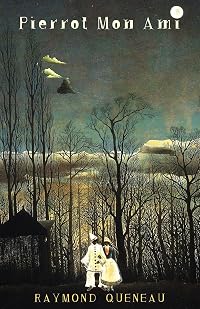
Pierrot Mon Ami
by Raymond Queneau
On This Page
Description
Pierrot Mon Ami, considered by many to be one of Raymond Queneau's finest achievements, is a quirky coming-of-age novel concerning a young man's initiation into a world filled with deceit, fraud, and manipulation. From his short-lived job at a Paris amusement park where he helps to raise women's skirts to the delight of an unruly audience, to his frustrated and unsuccessful love of Yvonne, to his failed assignment to care for the tomb of the shadowy Prince Luigi of Poldevia, Pierrot stumbles show more about, nearly immune to the effects of duplicity.This "innocent" implies how his story, at almost every turn, undermines, upsets, and plays upon our expectations, leaving us with more questions than answers, and doing so in a gloriously skewed style (admirably re-created by Barbara Wright, Queneau's principle translator). show lessTags
Recommendations












Member Reviews
His mind contained nothing but a mental, light, and almost luminous mist, like the fog on a beautiful morning, nothing but a flight of anonymous midges.
I'm interested in mist. Not the mist rising up off the moors in the seeping light of dawn, though I do like that, too. What I'm talking about is the mist in people's minds. I've found references to this mist in many of my recent reads. Maybe it's like how once you become aware of something, find it the first time, you start seeing it everywhere. This happens with birding. One develops 'nemesis' birds that remain elusive for months or even years, but then after finally catching a first glimpse of this bird, it begins to regularly show up in one's field of vision. I have made myself open show more to and aware of the idea of mist and it now envelops me. But this is just an aside.
Raymond Queneau influenced modern French literature like no other writer: surrealism, OuLiPo, he touched it all. He was a fantastic writer. He wrote sentences whose construction and turns of phrase awe me, literally leaving me with my mouth hanging open. His command of language is staggering. I kept a list of words I didn't know. Of course this is a translation from the French, and Barbara Wright has mad translating skills. I still couldn't find some of these words. Queneau was known for making them up. I guess Wright just left those untranslated.
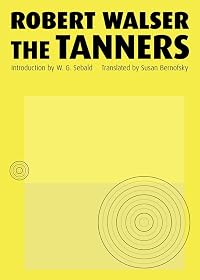
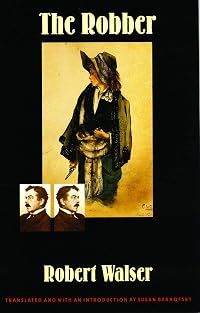
Pierrot's head is full of mist. At one point, he retorts to his irksome interlocutor, “I'm no more of a moron than the next person.” He confesses to being caught thinking about nothing on more than one occasion. Having just read The Tanners, I saw some similarity to Simon, and in fact Pierrot is very much like a Robert Walser character. He is a wanderer letting the world happen to him, and yet he is reluctant to get too involved in anything. His nature is to keep things at arm's length. His small world is peopled with drifters, hustlers, and self-absorbed flakes. Queneau's prose is crisp and his dialogue snaps, peppered with healthy doses of keen French wit. The plot is taut even in its unreliability and the pacing zips along (which can't really be said for Walser).
Pierrot loves Yvonne but she is a flake. She consistently fails to recognize him when they keep running into each other in strange locales. While this is humorous, it also makes one sad for Pierrot, who loves Yvonne so blindly and innocently. But she is a Mean Girl type, and he is sort of the nerdy nice guy.
Some lines in this novel put a catch in my throat. Like when Pierrot is out walking late, pining a bit for Yvonne, and a cat crossing the street “was often grey,” despite Robert Smith's assertion that “all cats are grey,” presumably at all times. But Smith's song was inspired by Mervyn Peake's Gormenghast novels, not Queneau's Pierrot, so I let it slide.
This book can be read as a mystery, a study of individuality, a celebration of life's absurdity and coincidental wonders, or in myriad other ways. Queneau was a genius, and he buried a lot in here to ruminate on. I look forward to reading more of his adventures. show less
One of those books that makes me wish I could read the native language. This translation felt very alive (as far as I could inexpertly tell), preserving Queneau's joy of words and language play. Queaneau’s self awareness and surrealism and sheer playfulness is simply exhilarating.
romanzo in lingua originale
Aug 31, 2015Italian
Ratings
Members
- Recently Added By
Author Information

175+ Works 9,872 Members
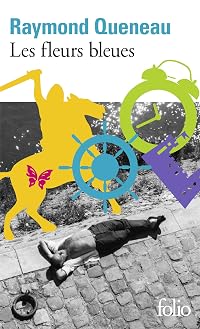
This French author of treatises on mathematics and other scholarly works has made his reputation writing comic novels. Raymond Queneau (through one of his characters) once defined humor as "an attempt to purge lofty feelings of all the baloney." Roger Shattuck interprets his philosophy: "Life is of course absurd and it is ludicrous to take it show more seriously; only the comic is serious." Life is so serious to Queneau that only laughter makes it bearable. He has written a play, screenplays, poetry, numerous articles, and many novels, the first of which, Le Chiendent (The Bark Tree), was published in 1933. In Exercises in Style (1947) he tells a simple anecdote 99 different ways. According to some critics, The Blue Flowers (1965) represents Queneau at his best. Its jokes, puns, double-entendres, deceptions, wild events, tricky correspondences, and bawdy language make it a feast of comic riches. The influence of Charlie Chaplin, as well as James Joyce is detectable in Queneau's fiction. (Bowker Author Biography) show less
Some Editions
Series
Belongs to Publisher Series
Common Knowledge
- Canonical title
- Pierrot Mon Ami
- Original title
- Pierrot mon ami
- Alternate titles*
- Mein Freund Pierrot
- Original publication date
- 1942
- People/Characters
- Pierrot; Tortose; Petit-Pouce; Paradis; Madame Tortose
- Important places
- Paris, France; France
- First words*
- – Nimm doch die Brille ab, sagte Tortose zu Pierrot, nimm doch die Brille ab, wenn du aussehen willst wie einer vom Bau.
- Original language
- French
*Some information comes from Common Knowledge in other languages. Click "Edit" for more information.
Classifications
Statistics
- Members
- 404
- Popularity
- 77,124
- Reviews
- 3
- Rating
- (3.95)
- Languages
- 10 — Dutch, English, French, German, Italian, Japanese, Polish, Serbian, Spanish, Swedish
- Media
- Paper, Audiobook, Ebook
- ISBNs
- 17
- ASINs
- 14