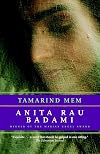
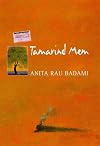
Tamarind Mem
by Anita Rau Badami
On This Page
Description
Set in the railway colonies of India, Tamarind Woman tells a sweeping story of two generations of women. Kamini, an overachiever, lives in a self-imposed exile in Canada. Her mother, Saroja, nicknamed Tamarind Woman due to her sour tongue, is trapped by the customs of traditional Indian life. When Saroja informs her daughter that she has sold their house and is going on a journey across India alone by train, both women are plunged into the past, confronting their dreams and disappointments show more as well as their long-held secrets. At the center of both their lives is Kamini's elusive father, an officer for the India Railway System. Often away from home working on the railroads, he is unaware of the secrets of his own household. He doesn't know that his wife disappears for days at a time, leaving Kamini and her favored younger sister in the care of their superstitious servant. Nor does he know the gossip surrounding his wife and the local mechanic. Nothing, however, escapes Kamini's notice. Only now, living in Canada, is she able to make sense of the eccentric family she's left behind. Only now, with her children grown and her husband long deceased, is Saroja able to make peace with her past. Lyrical, compassionate, and wise, Tamarind Woman is a powerful novel about family, memory, and the traditions that tear us apart and bring us together. show lessTags
Recommendations



















Member Reviews
Badami's first novel is a remarkable achievement. While not as complex and multi-layered as [The Hero's Walk], it is a fascinating two-part look at life in India first from the perspective of a modern young woman now living in Canada, and then from the perspective of her widowed mother, who has decided to take an indefinite railway journey late in her life to explore the country her railway officer husband would never share with her. As she travels, she tells her life story to strangers on the train, and we learn her version of some of the same events earlier narrated by her daughter. Neither woman seems to understand the other very well; they have unresolved conflicts between them, and yet they both have the same basic goal -- to live show more on their own terms, without being bound by someone else's notions of what is right and proper.
Review written in July, 2009 show less
Review written in July, 2009 show less
"I was never sure about Ma's feelings for me. Her love, I felt sometimes, was like the waves in the sea, the ebb and flow left me reaching out hungrily." (Pt 1)
Tamarind Mem is a mother-daughter story told alternately by Kamini, Soraja’s daughter, in the first half of the novel; and by Soraja in the second half. Kamini was born in India just before independence, but is living in Calgary as she tells her story – having left India many years earlier. Kamini remembers vividly the sharp abruptness that was her mother; and she longs, even as an adult, for Soraja’s affection. She cannot, of course, understand how Soraja has come to be “Tamarind Mem” – so named by her servants for her acid tongue.
Soraja’s narrative unfolds show more chronologically. She recalls a young life that was comfortably predictable, surrounded as she was by a protective, familiar circle of family and friends. Soraja longed to be a doctor, a PhD. But her plans were thwarted, for an Indian woman in her teenage years was destined to marry – it was the end goal dictated by her culture. Against her wishes, a marriage is arranged for her to a Railway man, with whom she will be “scrawled all over the country, little trails here and there, moving, moving all the time, and never in one fixed direction." (Pt 2) Married to a man she doesn’t know, much less love, a man who does not even “see” her, Soraja becomes a mem-sahib, a good Brahmin wife – and, understandably, “Tamarind Mem.”
Badami is a wonderful Indo-Canadian storyteller, achingly real in her portrayal of characters in conflict with cultures and with one another. Her novel, Tell It to the Trees, is also excellent. Highly recommended.
"I marry a man who is already old, who fulfills his obligation to society by aquiring a wife. I am merely a symbol of that duty completed." (Pt 2) show less
Tamarind Mem is a mother-daughter story told alternately by Kamini, Soraja’s daughter, in the first half of the novel; and by Soraja in the second half. Kamini was born in India just before independence, but is living in Calgary as she tells her story – having left India many years earlier. Kamini remembers vividly the sharp abruptness that was her mother; and she longs, even as an adult, for Soraja’s affection. She cannot, of course, understand how Soraja has come to be “Tamarind Mem” – so named by her servants for her acid tongue.
Soraja’s narrative unfolds show more chronologically. She recalls a young life that was comfortably predictable, surrounded as she was by a protective, familiar circle of family and friends. Soraja longed to be a doctor, a PhD. But her plans were thwarted, for an Indian woman in her teenage years was destined to marry – it was the end goal dictated by her culture. Against her wishes, a marriage is arranged for her to a Railway man, with whom she will be “scrawled all over the country, little trails here and there, moving, moving all the time, and never in one fixed direction." (Pt 2) Married to a man she doesn’t know, much less love, a man who does not even “see” her, Soraja becomes a mem-sahib, a good Brahmin wife – and, understandably, “Tamarind Mem.”
Badami is a wonderful Indo-Canadian storyteller, achingly real in her portrayal of characters in conflict with cultures and with one another. Her novel, Tell It to the Trees, is also excellent. Highly recommended.
"I marry a man who is already old, who fulfills his obligation to society by aquiring a wife. I am merely a symbol of that duty completed." (Pt 2) show less
This follows Kamini (first half) and her mother Saroja (second half) through their lives (primarily) in India. At the start of the book, we know that Kaamini is now in Calgary, Alberta, Canada. As she grew up, she wanted to get away from her mother, but she still tries to keep in touch with her, though her mother still often tends to snap at her now-adult daughter.
This is pretty slow. There are a lot of characters and it took a while to figure out who was who (in the first half), then we had to start over with many of them, as we backed up to Saroja’s life to learn the new characters in her life from when she was younger, as well. I’m rating it ok, but I liked this author’s other books (that I’ve read) better.
This is pretty slow. There are a lot of characters and it took a while to figure out who was who (in the first half), then we had to start over with many of them, as we backed up to Saroja’s life to learn the new characters in her life from when she was younger, as well. I’m rating it ok, but I liked this author’s other books (that I’ve read) better.
As most people take for granted, memories are triggered by the faintest occurences. There is the distinct smell, for instance, that suddenly takes youu right back to your grandmother's closets or your uncle's work shop - and just like that everything becomes almost photographic in how you remember certain instances, even though you have not thought about them for twenty years. How quickly we are seduced by nostalgia...But how true are these memories of ours? They might not be false, but they are certainly highly subjective. But does that matter?
This colorful novel tackles the perception of memories in quite a clever way. The first half of the book is the narrative of Kamini, a daughter who reminisce about her past growing up in India. show more Through her we get a feel for the culture, sounds, smell and a certain mood of a bygone era that is often romanticized (right after Independence). Furthermore, we get a peak into the relationships among the family members, the servants and the school teachers.
Early on, there is a distinct strain between Kamini and her mother, Saroja. She loves her and yearns for her affection; however, she resents her and her "irrrational" moods. The father is distant, even when he is home from his railroad work. Her superstitious ayah, Linda, is quite an interesting person - Kamini is scared of her tales of ghosts and bad spirits, yet she feels safe in her company. The author has eloquently captured the mind of a girl - her growing-up angst, her lack of understanding the happenings in her midst, and the invincability typical of her age.
In the second half of the book, the author switches the narrative to the mother, and we get her side of the story. How do her memories compare to those of her daughter? It is an intriguing account!!! We follow her from childhood being prepared for an arranged marriage to widowhood reflecting back on her life and making plans for her independant years ahead.
I highly recommend the book - it is a sumptious and warm read.
This first-time author has avoided the trap of spelling it all out and leaves her readers the option of reading essential information between the lines. I did wish there was a map included in the book though. The family moves around to various parts of India since they belong to the railroad, and unless you are familier with Indian geography, it is too easy to get lost in the names.
I am looking forward to reading more from Anita Rau Badami! show less
This colorful novel tackles the perception of memories in quite a clever way. The first half of the book is the narrative of Kamini, a daughter who reminisce about her past growing up in India. show more Through her we get a feel for the culture, sounds, smell and a certain mood of a bygone era that is often romanticized (right after Independence). Furthermore, we get a peak into the relationships among the family members, the servants and the school teachers.
Early on, there is a distinct strain between Kamini and her mother, Saroja. She loves her and yearns for her affection; however, she resents her and her "irrrational" moods. The father is distant, even when he is home from his railroad work. Her superstitious ayah, Linda, is quite an interesting person - Kamini is scared of her tales of ghosts and bad spirits, yet she feels safe in her company. The author has eloquently captured the mind of a girl - her growing-up angst, her lack of understanding the happenings in her midst, and the invincability typical of her age.
In the second half of the book, the author switches the narrative to the mother, and we get her side of the story. How do her memories compare to those of her daughter? It is an intriguing account!!! We follow her from childhood being prepared for an arranged marriage to widowhood reflecting back on her life and making plans for her independant years ahead.
I highly recommend the book - it is a sumptious and warm read.
This first-time author has avoided the trap of spelling it all out and leaves her readers the option of reading essential information between the lines. I did wish there was a map included in the book though. The family moves around to various parts of India since they belong to the railroad, and unless you are familier with Indian geography, it is too easy to get lost in the names.
I am looking forward to reading more from Anita Rau Badami! show less
Ratings
Members
- Recently Added By
Author Information

10+ Works 1,307 Members
Awards and Honors
Notable Lists
Common Knowledge
- Original publication date
- 1997
- People/Characters
- Kamini; Saroja
- Important places
- India; Calgary, Alberta, Canada; Alberta, Canada
- Dedication
- For My Parents, Nalini and Rama Krishna Rau
- First words
- I called my mother every Sunday from the silence of my basement apartment, reluctant to tell her how I yearned to get away from this freezing cold city where even the traffic sounds were muffled by the snow.
- Last words
- (Click to show. Warning: May contain spoilers.)If my companions are awake, I will smile farewell. Otherwise, I shall slip away, leaving them with memories of an old story-teller, a weaver of myths.
Classifications
Statistics
- Members
- 347
- Popularity
- 91,565
- Reviews
- 4
- Rating
- (3.55)
- Languages
- English, German
- Media
- Paper, Audiobook, Ebook
- ISBNs
- 14
- UPCs
- 1
- ASINs
- 3