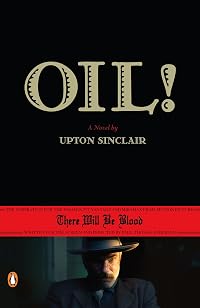
Oil!
by Upton Sinclair
On This Page
Description
"Oil!" is Nobel Prize-winner Upton Sinclair's brilliant satirical take on the American oil industry. The early portions of the book formed the basis for the Oscar-winning film "They Will Be Blood." Based on historical events, including the Teapot Dome Scandal (a bribery allegation about improper leasing of federal oil fields that involved U.S. President Warren G. Harding), "Oil!" is a powerful social and political satire featuring a classic tug-of-war between generations: self-made oil show more tycoon - John Arnold Ross - and his son, James Jr. (nicknamed "Bunny"). The father wants to continue to build the family's fortune while the son grows more and more concerned with the lives and well-being of the workers. Along the way, we meet shady Senators, labor organizers, Soviet agents, oil magnates and a full cast of characters that bring this breathtaking book to life. Originally banned for it's controversial and powerful message, "Oil!" is presented here in its original and unabridged format. show lessTags
Recommendations












Member Recommendations

Member Reviews
A broad, sweeping, socially conscious epic set in the midst a fictionalized version of southern California. The oil boom of Los Angeles and the corruption of the Harding administration are squished right in to the same tight window of years as the first World War. The main character, 'Bunny' Ross, is the scion of an new money oil tycoon who progressively wakes up to the plight of common labor and the evils of capitalism; his conscious heading in one direction, his social obligations in the other. Bunny is the only member of the business aristocracy that ever attempts to act on his growing self consciousness, but most often he does so tepidly.
Sinclair wrote Oil! in a target rich environment. College athletics, prohibition, politics, law show more enforcement, war, media and propaganda, capitalism, individualism, conservatism, social expectations, economics, the judicial system, education, religion and more are all on the table for lambasting. Though, in the end, the vast majority of these problems congeal to one main point: the rich and the poor playing supposedly the same game but with decidedly different rules. I wish Sinclair had a more surgical approach to his critiques, because as it stands Oil! does spread itself too thin. The Jungle is probably the superior Sinclair novel for this reason alone. If unabashed polemics aren't your speed, I'd steer clear.
For all of its didactic focus on socialism, Oil! did occasionally manage to move me emotionally with its character portrayals. Partially because of just how long the reader spends with Bunny, I truly felt the conflict within his soul. Even though Bunny is totally removed from the struggles and violence that he abhors, Sinclair is still unrelenting in his uniquely ugly picture of the 1920's oil business. Sinclair also has this dry, black sarcasm that creeps around in the underbelly of the text. Had Sinclair wanted to write a more prose rich work, I think he could've done so, considering how strong the opening scene was. A shame he didn't though.
Yes, it's much too long, and yes, it can get boring. Oil! certainly creaks around on its aging joints, and if we were living a world completely devoid of the problems that Sinclair highlighted, I might be more tempted to write it off as a work of its time. Unfortunately, that's not the case. In much the same way as they were in the 20's, Communism and Socialism remain the boogeyman dug out of the grave whenever a progressive policy is suggested. The tycoons of oil, railroad, and property have extended to conglomerates in nearly every facet of the economy. Wealth inequality is peaking. Labor unions are uncommon and often toothless in the face of these gargantuan corporations. It's as if the Harding administration never left office, and as such I can't help but be drawn into Sinclair's story. show less
Sinclair wrote Oil! in a target rich environment. College athletics, prohibition, politics, law show more enforcement, war, media and propaganda, capitalism, individualism, conservatism, social expectations, economics, the judicial system, education, religion and more are all on the table for lambasting. Though, in the end, the vast majority of these problems congeal to one main point: the rich and the poor playing supposedly the same game but with decidedly different rules. I wish Sinclair had a more surgical approach to his critiques, because as it stands Oil! does spread itself too thin. The Jungle is probably the superior Sinclair novel for this reason alone. If unabashed polemics aren't your speed, I'd steer clear.
For all of its didactic focus on socialism, Oil! did occasionally manage to move me emotionally with its character portrayals. Partially because of just how long the reader spends with Bunny, I truly felt the conflict within his soul. Even though Bunny is totally removed from the struggles and violence that he abhors, Sinclair is still unrelenting in his uniquely ugly picture of the 1920's oil business. Sinclair also has this dry, black sarcasm that creeps around in the underbelly of the text. Had Sinclair wanted to write a more prose rich work, I think he could've done so, considering how strong the opening scene was. A shame he didn't though.
Yes, it's much too long, and yes, it can get boring. Oil! certainly creaks around on its aging joints, and if we were living a world completely devoid of the problems that Sinclair highlighted, I might be more tempted to write it off as a work of its time. Unfortunately, that's not the case. In much the same way as they were in the 20's, Communism and Socialism remain the boogeyman dug out of the grave whenever a progressive policy is suggested. The tycoons of oil, railroad, and property have extended to conglomerates in nearly every facet of the economy. Wealth inequality is peaking. Labor unions are uncommon and often toothless in the face of these gargantuan corporations. It's as if the Harding administration never left office, and as such I can't help but be drawn into Sinclair's story. show less
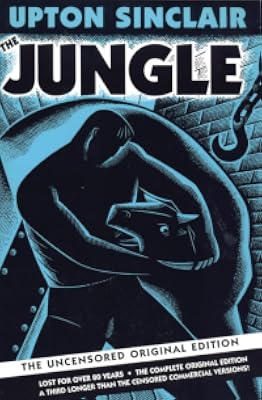
The Jungle will always be Sinclair's most acclaimed work, and rightly so given its impact, but I believe that Oil! has just as much relevance to contemporary life, if not more so, and deserves to be as well-known as its more venerable sibling even if it did not spur the same reforms of the oil industry that The Jungle did for food preparation and handling. I was spurred to read it after a rewatch of Paul Thomas Anderson's There Will Be Blood, and the novel is so different from, and more complex than, the film adaptation that they probably should not be considered strictly related. Anderson's film is a small, close study, with Daniel Day-Lewis' oil tycoon patriarch a cryptic, amoral madman, whereas Sinclair's sprawling epic of ambition show more and capitalism has the son as its vastly subtler and more complex protagonist, arguing for and against several political philosophies against the backdrop of World War 1, the Teapot Dome scandal, evangelical religious revivalism, the film industry, and the generally explosive growth of Southern California. As always with books vs movie questions, one should decide how much the snappier running time and enhanced aesthetic experience of a film outweighs the greater richness and depth of a novel, but there is so much great stuff in Oil! that isn't the film that it deserves to be experienced as its own masterwork, particularly its exploration of how internal leftist debates interact with public opinion and the forces of big business.
In fairness to Anderson, ones of Sinclair's weaknesses as an author is that it can be difficult to tell his digressions from his details, which is probably why the movie really only uses the plot from about the first 100 pages and then does its own thing. The very first chapter is a lengthy, floridly overwritten dramatization of J. Arnold Ross Sr. and Jr. driving into California to investigate some oil leases, but the story picks up rapidly and Senior, a small-time oilman, begins gradually making it big through smart investments and some cunning. He's a tough negotiator, and not averse to greasing the palms of public officials when necessary, but he's not at all like his movie depiction; he's always fair to his workers and generally supportive though skeptical of his son's ideological meanderings. His son, nicknamed Bunny, is the real main character, and over the course of the book he loyally defends his father's line of work to the various leftists and socialists he encounters as he gets continually more and more involved in the world of radical politics, especially after he meets Paul Watkins, a tough-minded worker, and his brother Eli, a religious charlatan (both played by Paul Dano in the movie). Like any good class traitor, Bunny feels guilty about the increasing wealth and privilege he accumulates as his father's business continues to expand, but that doesn't stop him from dating actresses and "reluctantly" enjoying the F. Scott Fitzgerald high society lifestyle while at the same time attempting to use his wealth for good. Eventually the brutal repression of socialists and anarchists after World War 1 in the Palmer Raids leads to Paul's being beaten to death at the hands of the authorities, and the novel ends with a solemn resignation at the unstoppable power of the impersonal capitalist juggernaut.
What's interesting is that the novel is for the most part quite nuanced and almost sympathetic in its explorations of industry and power. The Jungle, written 20 years before, was much more stridently anti-capitalist, but Oil! portrays the the struggle between large businesses and small for market share with real enthusiasm, and Sinclair openly admires the mix of guile, dedication, and vision it takes for an entrepreneur to grow from a small operator to a major political player. Ross and his operation in "Beach City" is an only barely fictionalized depiction of the real-life Edward Doheny's development of Huntington Beach in Orange County, and Sinclair's melancholy illustration of all levels of government as corrupt, feckless, and reactionary fits into a long tradition of California-as-American-microcosm, like in Chinatown, Who Framed Roger Rabbit?, etc. At various points Bunny attempts to stand up to Vernon Roscoe, his father's much more ruthless business partner and the bad cop of capitalism to his father's good cop, and Roscoe's powerful defenses of the inexorable logic of capitalism are right in line with the famous monologues in Wall Street, Other People's Money, etc. By the end of the book the triumph of capitalism is taken as practically unavoidable, but at many points the characters are given room to portray this as an actual good thing, which Sinclair did not do in The Jungle. The oil industry has many casualties over the course of the novel, but Sinclair leaves it up to the reader to picture what if anything would change under a socialist system. With the hindsight of a hundred years, we can see that real-life socialist countries don't seem to have discovered a clearly superior method for resource extraction, but that doesn't make the imperial cruelty of the oil barons at the incredibly modest demands of the workers for simple wage increases any easier to swallow.
It's notable that all of the radicals Bunny encounters are well-meaning but ultimately doomed, whether by pointless factionalism, naivete, or government hostility via strike-breaking and state-sanctioned brutality. Sinclair spends a good deal of time on how the cannibalistic disputes between the various flavors of socialists, communists, anarchists, and leftists were unavoidable but ultimately meaningless, as the real powers operated with impunity on a plane far above them, and one does not have to think very hard to see how the equivalent forces of oligarchy ensure that the same system operates today. I was reminded of Steinbeck's In Dubious Battle, set a decade later, and how how liberal reformers in the FDR administration defused much of this kind of radical pressure with pro-union policy as part of the New Deal, but Sinclair can't bring himself to write anything close to the redemptive ending that Steinbeck was so fond of, and Paul's ultimate death at the hands of an anti-union goon squad is nothing but a fatalistic reminder of the power of unchecked greed. Even worse, Eli is able to cynically use his brother's death to advance his immense evangelist movement, making one long for the violent comeuppance Anderson gave him in the film. And even though Bunny and his new wife Rachel dedicate his inheritance to establishing institutions of reform, Sinclair doesn't have any illusions that they will matter greatly; all of the antagonists (and even Bunny's father) not only escape any consequences for their corruption in the Teapot Dome scandal, they successfully install Coolidge as president in a landslide.
Since this is historical fiction, it's easy to take the gloomy irrelevance of the American socialist movement as inevitable (though it is curious that Eugene Debs' surprisingly successful campaigns for president go unmentioned during the discussions about the viability of electoralism), I think the book raises a lot of excellent questions about how leftists should proceed when history is in motion. It goes without saying that none of the warmongering, nativist, plutocratic, petroleum-obsessed, reactionary impulses on display in the novel have left the American political landscape, yet it remains to be seen whether the current resurgence of socialism in the US is authentic or permanent. Oil! vastly improves on There Will Be Blood in its understand of how systems are far more powerful than individual men and women, and though Sinclair's own experience with electoral politics - he ran for governor of California less than a decade after Oil! was published and was crushed - does not provide a particularly inspiring example of how to challenge entrenched interests, perhaps now that even greater challenges like climate change are no longer quite so ignorable, a politics of kindness will be more successful now than it was back in his era. show less
In fairness to Anderson, ones of Sinclair's weaknesses as an author is that it can be difficult to tell his digressions from his details, which is probably why the movie really only uses the plot from about the first 100 pages and then does its own thing. The very first chapter is a lengthy, floridly overwritten dramatization of J. Arnold Ross Sr. and Jr. driving into California to investigate some oil leases, but the story picks up rapidly and Senior, a small-time oilman, begins gradually making it big through smart investments and some cunning. He's a tough negotiator, and not averse to greasing the palms of public officials when necessary, but he's not at all like his movie depiction; he's always fair to his workers and generally supportive though skeptical of his son's ideological meanderings. His son, nicknamed Bunny, is the real main character, and over the course of the book he loyally defends his father's line of work to the various leftists and socialists he encounters as he gets continually more and more involved in the world of radical politics, especially after he meets Paul Watkins, a tough-minded worker, and his brother Eli, a religious charlatan (both played by Paul Dano in the movie). Like any good class traitor, Bunny feels guilty about the increasing wealth and privilege he accumulates as his father's business continues to expand, but that doesn't stop him from dating actresses and "reluctantly" enjoying the F. Scott Fitzgerald high society lifestyle while at the same time attempting to use his wealth for good. Eventually the brutal repression of socialists and anarchists after World War 1 in the Palmer Raids leads to Paul's being beaten to death at the hands of the authorities, and the novel ends with a solemn resignation at the unstoppable power of the impersonal capitalist juggernaut.
What's interesting is that the novel is for the most part quite nuanced and almost sympathetic in its explorations of industry and power. The Jungle, written 20 years before, was much more stridently anti-capitalist, but Oil! portrays the the struggle between large businesses and small for market share with real enthusiasm, and Sinclair openly admires the mix of guile, dedication, and vision it takes for an entrepreneur to grow from a small operator to a major political player. Ross and his operation in "Beach City" is an only barely fictionalized depiction of the real-life Edward Doheny's development of Huntington Beach in Orange County, and Sinclair's melancholy illustration of all levels of government as corrupt, feckless, and reactionary fits into a long tradition of California-as-American-microcosm, like in Chinatown, Who Framed Roger Rabbit?, etc. At various points Bunny attempts to stand up to Vernon Roscoe, his father's much more ruthless business partner and the bad cop of capitalism to his father's good cop, and Roscoe's powerful defenses of the inexorable logic of capitalism are right in line with the famous monologues in Wall Street, Other People's Money, etc. By the end of the book the triumph of capitalism is taken as practically unavoidable, but at many points the characters are given room to portray this as an actual good thing, which Sinclair did not do in The Jungle. The oil industry has many casualties over the course of the novel, but Sinclair leaves it up to the reader to picture what if anything would change under a socialist system. With the hindsight of a hundred years, we can see that real-life socialist countries don't seem to have discovered a clearly superior method for resource extraction, but that doesn't make the imperial cruelty of the oil barons at the incredibly modest demands of the workers for simple wage increases any easier to swallow.
It's notable that all of the radicals Bunny encounters are well-meaning but ultimately doomed, whether by pointless factionalism, naivete, or government hostility via strike-breaking and state-sanctioned brutality. Sinclair spends a good deal of time on how the cannibalistic disputes between the various flavors of socialists, communists, anarchists, and leftists were unavoidable but ultimately meaningless, as the real powers operated with impunity on a plane far above them, and one does not have to think very hard to see how the equivalent forces of oligarchy ensure that the same system operates today. I was reminded of Steinbeck's In Dubious Battle, set a decade later, and how how liberal reformers in the FDR administration defused much of this kind of radical pressure with pro-union policy as part of the New Deal, but Sinclair can't bring himself to write anything close to the redemptive ending that Steinbeck was so fond of, and Paul's ultimate death at the hands of an anti-union goon squad is nothing but a fatalistic reminder of the power of unchecked greed. Even worse, Eli is able to cynically use his brother's death to advance his immense evangelist movement, making one long for the violent comeuppance Anderson gave him in the film. And even though Bunny and his new wife Rachel dedicate his inheritance to establishing institutions of reform, Sinclair doesn't have any illusions that they will matter greatly; all of the antagonists (and even Bunny's father) not only escape any consequences for their corruption in the Teapot Dome scandal, they successfully install Coolidge as president in a landslide.
Since this is historical fiction, it's easy to take the gloomy irrelevance of the American socialist movement as inevitable (though it is curious that Eugene Debs' surprisingly successful campaigns for president go unmentioned during the discussions about the viability of electoralism), I think the book raises a lot of excellent questions about how leftists should proceed when history is in motion. It goes without saying that none of the warmongering, nativist, plutocratic, petroleum-obsessed, reactionary impulses on display in the novel have left the American political landscape, yet it remains to be seen whether the current resurgence of socialism in the US is authentic or permanent. Oil! vastly improves on There Will Be Blood in its understand of how systems are far more powerful than individual men and women, and though Sinclair's own experience with electoral politics - he ran for governor of California less than a decade after Oil! was published and was crushed - does not provide a particularly inspiring example of how to challenge entrenched interests, perhaps now that even greater challenges like climate change are no longer quite so ignorable, a politics of kindness will be more successful now than it was back in his era. show less
A pretty good read on the oil industry in California from the early part of the 20th century and the concurrent development of labor movement around that industry. Broadly, the story focuses on broad themes of avarice and class consciousness but it is also a coming of age story for J. Arnold Ross Jr. (aka: Bunny).
As seems appropriate for a coming of age novel, change is a pervasive element. Two people in particular are important catalysts of change for Bunny, both of whom present as father figures. There is J. Arnold Ross Sr. (the capitalist oil tycoon) and Paul Watkins (the honest man turned Bolshevik). Both father figures are themselves the products of change, one yielding a capitalist and one a radical labor organizer. The processes show more of change are quite different, however. For Arnold Sr. the change is from learning the game of capitalism and bribery and politics where the promise is that one can become a skilled capitalist and still be fair and honest. For Paul, the change is radicalization, of being subjected to the deprivations and humiliations from being the means to another person's ends and being alienated from the products of his labor but seeing the potential for radical reconfiguration through collective action. The promise is to change into a place where it is possible to see clearly a better future and to develop the wherewithal to bring down the system around you to build a new one under a new moral order. Both of these anticipated ends are enticing but ultimately delusional; although, I think that Sinclair treats the end of the enlightened labor organizer with more sincerity.
The core metaphor of change, however, is symbolized in oil itself, which changes from the violence of cracking and extracting it from the earth to the distillation process where pressure, temperature, and the addition of adjuncts causes state changes and refinements. At each stage there is a kind of volatility to be managed. The dual nature of oil as a lubricant and a combustible that is capable of being something useful and destructive is evident. Metaphorically, oil symbolizes a system that contains contradictions: the capitalists who require labor and the laborers who require capital.
In this kind of a system, Bunny never really had a chance. The whole time, I found myself exasperated with him as someone whose principles didn't match his actions. On the one hand, he was taken by the plight of the working class and the rights of workers to organize and have some meaningful way of changing the conditions of their lives. At the same time, Bunny also liked his dad's money and seemed willing to believe that his dad's path toward becoming a fair and honest capitalist was the exception rather than the rule. It must be a lot easier to be a voice of radical change and workers' rights when you have no need to worry about housing, food ... or a job. And the ending of the book (no spoilers) doesn't change my mind about Bunny. Given another two hundred pages and two years on the trajectory set up in those final pages, we might have seen a change but not by the time the book closes.
I'm not sure that I was supposed to leave the book with this much pessimism, but I did. I couldn't help but notice the scene toward the end when Paul is in a state of semi-consciousness and speaking in Russian and no one can understand him. It is like speaking in tongues, paralleling his own father's actions as an apostolic baptist, speaking the jabber of archangels. At that moment, his brother Eli (the evangelist and faith healer) comes back and claims to have understood Paul lucidly giving a confession and reconciling with God. show less
As seems appropriate for a coming of age novel, change is a pervasive element. Two people in particular are important catalysts of change for Bunny, both of whom present as father figures. There is J. Arnold Ross Sr. (the capitalist oil tycoon) and Paul Watkins (the honest man turned Bolshevik). Both father figures are themselves the products of change, one yielding a capitalist and one a radical labor organizer. The processes show more of change are quite different, however. For Arnold Sr. the change is from learning the game of capitalism and bribery and politics where the promise is that one can become a skilled capitalist and still be fair and honest. For Paul, the change is radicalization, of being subjected to the deprivations and humiliations from being the means to another person's ends and being alienated from the products of his labor but seeing the potential for radical reconfiguration through collective action. The promise is to change into a place where it is possible to see clearly a better future and to develop the wherewithal to bring down the system around you to build a new one under a new moral order. Both of these anticipated ends are enticing but ultimately delusional; although, I think that Sinclair treats the end of the enlightened labor organizer with more sincerity.
The core metaphor of change, however, is symbolized in oil itself, which changes from the violence of cracking and extracting it from the earth to the distillation process where pressure, temperature, and the addition of adjuncts causes state changes and refinements. At each stage there is a kind of volatility to be managed. The dual nature of oil as a lubricant and a combustible that is capable of being something useful and destructive is evident. Metaphorically, oil symbolizes a system that contains contradictions: the capitalists who require labor and the laborers who require capital.
In this kind of a system, Bunny never really had a chance. The whole time, I found myself exasperated with him as someone whose principles didn't match his actions. On the one hand, he was taken by the plight of the working class and the rights of workers to organize and have some meaningful way of changing the conditions of their lives. At the same time, Bunny also liked his dad's money and seemed willing to believe that his dad's path toward becoming a fair and honest capitalist was the exception rather than the rule. It must be a lot easier to be a voice of radical change and workers' rights when you have no need to worry about housing, food ... or a job. And the ending of the book (no spoilers) doesn't change my mind about Bunny. Given another two hundred pages and two years on the trajectory set up in those final pages, we might have seen a change but not by the time the book closes.
I'm not sure that I was supposed to leave the book with this much pessimism, but I did. I couldn't help but notice the scene toward the end when Paul is in a state of semi-consciousness and speaking in Russian and no one can understand him. It is like speaking in tongues, paralleling his own father's actions as an apostolic baptist, speaking the jabber of archangels. At that moment, his brother Eli (the evangelist and faith healer) comes back and claims to have understood Paul lucidly giving a confession and reconciling with God. show less
Read it as though Sinclair was ambivalent to Communism and you get a nuanced look at a naïf; Dad becomes the tragic hero.
I couldn't help but look this up after seeing the trailer for the upcoming movice, There Will Be Blood. I'm not usually one to rush out and read the book before seeing the movie, but I'm glad I did since they're two completely different stories.
Although there definitely seemed to be an agenda on Sinclair's part to sell Socialism, the line between fudging fact and telling an accurate story is for the most part obvious. His fictional second-hand account of the Russian revolution is specious at best, but the account of the failed American Socialist movement turned out to be more accurate (and fascinating) upon fact-checking. Also the insights into the American oil industry, the biology of monopoly, and the ensuing manipulation of the show more American government were enlightening to say the least, though the specifics of Hardin's election drift into historically questionable, but plausible, allegations.
The main character turned out to be a human paragon, which in a strictly fictional narrative would be annoying, served to ground the overall outlook with regards to the social issues surrounding him. show less
Although there definitely seemed to be an agenda on Sinclair's part to sell Socialism, the line between fudging fact and telling an accurate story is for the most part obvious. His fictional second-hand account of the Russian revolution is specious at best, but the account of the failed American Socialist movement turned out to be more accurate (and fascinating) upon fact-checking. Also the insights into the American oil industry, the biology of monopoly, and the ensuing manipulation of the show more American government were enlightening to say the least, though the specifics of Hardin's election drift into historically questionable, but plausible, allegations.
The main character turned out to be a human paragon, which in a strictly fictional narrative would be annoying, served to ground the overall outlook with regards to the social issues surrounding him. show less
Overall a pretty interesting book, focused on the period of American history from the outbreak of World War I to the end of the Harding administration, particularly in relation to the Red Scare and the labor movement. Sinclair's ideological slant, though at times painfully naive, does lend freshness; when the characters encounter actual historical events, they aren't the usual ones. His characters rarely rise above the level of propaganda, but Sinclair has a gift for storytelling that makes the story work. Dull, preachy expositions are balanced by occasional bursts of true eloquence (such as a beautifully written death scene juxtaposed with a post-election party). I didn't love this book, but I found it interesting, well worth a first read.
The usual preachy fiction from Sinclair, in wihch he manages to take on the oil industry and the over the top evangelists at the same time, in his usual turgid prose. This book creates some memorable and interesting characters, but is too long by half.
Members
- Recently Added By
Lists

Books Read in 2023
5,638 works; 147 members

Best Books of 1926-1935
403 works; 10 members

The Art of Manliness' 100+ Books Every Man Should Read
108 works; 2 members

Books in Riverdale
123 works; 3 members

Geology - Fiction
13 works; 2 members
Author Information

246+ Works 22,075 Members
Upton Sinclair, a lifelong vigorous socialist, first became well known with a powerful muckraking novel, The Jungle, in 1906. Refused by five publishers and finally published by Sinclair himself, it became an immediate bestseller, and inspired a government investigation of the Chicago stockyards, which led to much reform. In 1967 he was invited by show more President Lyndon Johnson to "witness the signing of the Wholesome Meat Act, which will gradually plug loopholes left by the first Federal meat inspection law" (N.Y. Times), a law Sinclair had helped to bring about. Newspapers, colleges, schools, churches, and industries have all been the subject of a Sinclair attack, analyzing and exposing their evils. Sinclair was not really a novelist, but a fearless and indefatigable journalist-crusader. All his early books are propaganda for his social reforms. When regular publishers boycotted his work, he published himself, usually at a financial loss. His 80 or so books have been translated into 47 languages, and his sales abroad, especially in the former Soviet Union, have been enormous. (Bowker Author Biography) show less
Awards and Honors
Series
Belongs to Publisher Series
Work Relationships
Has the adaptation
Common Knowledge
- Canonical title*
- Petroleum
- Original title
- Oil: a Novel
- Original publication date
- 1927; 1935 (Nederlandse vertaling) (Nederlandse vertaling)
- People/Characters
- J. Arnold Ross; Bunny Ross; Bertie Ross; Paul Watkins; Ruth Watkins; Eli Watkins (show all 11); Daniel Washington Irving; Rachel Menzies; Viola Tracy; Annabelle Ames; Vernon Roscoe
- Important places
- Angel City, California, USA; Beach City, California, USA; Southern Pacific University; Paradise, California, USA
- Related movies
- There Will Be Blood (2007 | IMDb)
- First words
- The road ran, smooth and flawless, precisely fourteen feet wide, the edges trimmed as if by shears, a ribbon of grey concrete, rolled out over the valley by a giant hand.
- Quotations
- They talked about their play, just as solemnly as if it had been work: tennis tournaments, golf tournaments, polo matches—all sorts of complicated ways of hitting a little ball about a field!
- Last words
- (Click to show. Warning: May contain spoilers.)There will be other girls with bare brown legs running over those hills, and they may grow up to be happier women, if men can find some way to chain the black and cruel demon which killed Ruth Watkins and her brother -- yes, and Dad also: an evil Power which roams the earth, crippling the bodies of men and women, and luring the nations to destruction by visions of unearned wealth, and the opportunity to enslave and exploit labor.
- Original language
- English
- Disambiguation notice
- This work was written by Upton Sinclair, not Sinclair Lewis. If this is your copy, you might want to correct the author to have it associate correctly with the other copies of this work. Thank you.
*Some information comes from Common Knowledge in other languages. Click "Edit" for more information.
Classifications
Statistics
- Members
- 1,586
- Popularity
- 14,427
- Reviews
- 29
- Rating
- (3.56)
- Languages
- 12 — Czech, Dutch, English, Esperanto, French, German, Greek, Hungarian, Norwegian (Bokmål), Spanish, Swedish, Turkish
- Media
- Paper, Audiobook, Ebook
- ISBNs
- 44
- ASINs
- 25