On This Page
Description
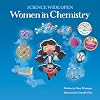
Jump into the awesomeness of chemistry! Discover the power of curiosity and resilience along with the women who have blazed a trail in the world of science. From ancient times to modern day, the exciting story of chemistry is sure to inspire the scientist in everyone.Tags
Recommendations











Member Reviews
This is a nice primer about chemistry for elementary age children. It includes features of women, starting with Cleopatra, on how they impacted the field of chemistry. It delves into the roots of chemistry such as atoms, neutrons, the periodic table, basic chemistry equipment, etc. The illustrations are helpful to bring the concepts to life and guiding the reader through understanding science. The book ends by reminding the reader, hopefully young kids, they are already chemists and scientists.
 This review was written for LibraryThing Early Reviewers.
This picture book focuses on five lesser known women from all over the world who have advanced science: Marie-Anne Paulze Lavoisier, Dawn Shaughnessy, Rosalind Franklin, to name some of the women. One of the strengths is precisely this international focus; it is good that children learn about scientists from all over the world. The fact that these women are not widely known is another plus. Girls can see that there are more women in science than Madame Curie. It's organized in a Q & A format, which the young readers will like.
The target age group is seven to ten years, but I think it is more suited to the older half of this age group. Some of the discoveries and machines used seem complex for seven-year-olds.
The illustrations are show more colorful although maybe a bit cartoonish. Still, that may attract younger readers.
I read the Spanish version, and I assume some of the typos and missing accents will be fixed in the final version. show less
The target age group is seven to ten years, but I think it is more suited to the older half of this age group. Some of the discoveries and machines used seem complex for seven-year-olds.
The illustrations are show more colorful although maybe a bit cartoonish. Still, that may attract younger readers.
I read the Spanish version, and I assume some of the typos and missing accents will be fixed in the final version. show less
This review was written for LibraryThing Early Reviewers.Women in Chemistry is a great primer for Chemistry and science in general but had the added value of acknowledging the contributions of several women who's work was crucial to scientific advancement. It is a fun back and forth conversation style work that does a good job using simple language to explain complex ideas. The artwork is fantastic. For those looking for more information on the scientists in the book, there is a nice bibliography and recommended reads section. I only wish it were a bit longer as there is a lot to cover here and I'd be interested to hear more! Still, a nice read to both acknowledge the importance of women in science and to explain chemistry.
This review was written for LibraryThing Early Reviewers.Reviewed by my 11 year old daughter: This book is great! It was fun to read and it taught me more about chemistry. I thought the drawings were good, too! I like that the girl is asking questions’amd they’re being answered in the book. I did think that the author could have explained some things a bit more: for instance, when the author talks about DNA and how it makes a copy of itself, I wondered, “Why does it make a copy of itself?” Otherwise, I enjoyed this book.
This review was written for LibraryThing Early Reviewers.A charming little book, basically an introduction to concepts in chemistry through the lens of a "question and answer" session. Different areas of chemistry are personified through a variety of historical and modern chemists, all women. At no point does the book act as if women in the sciences were unusual; in fact, if it had used men instead, it would have been the duplicate of many a young reader's science book.
The art is engaging, and the content simple without being patronizing. It's a book I would happily make available to a child of any gender.
(I read the Spanish language translation, which had a few spelling or accent errors. I noted that there was no translator listed, meaning that it was probably translated via a contract show more translation service. My copy was an advance copy, so hopefully this will be caught and corrected in the final edition.) show less
The art is engaging, and the content simple without being patronizing. It's a book I would happily make available to a child of any gender.
(I read the Spanish language translation, which had a few spelling or accent errors. I noted that there was no translator listed, meaning that it was probably translated via a contract show more translation service. My copy was an advance copy, so hopefully this will be caught and corrected in the final edition.) show less
This review was written for LibraryThing Early Reviewers.This book is perfect for young girls to learn more about Chemistry, not only what happens in our bodies (sugar/glucose) but also on Earth. I also liked that it introduces 5 lesser known scientists and their contributions to science. I have the Spanish version and can't wait to get this into the hands of my students that can read this with their parents who always want to read books in Spanish together with their daughters! Thank you for the opportunity to read and share this great book through the early reviewers program!
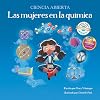
This review was written for LibraryThing Early Reviewers."Ciencia Abierta: Las Mujeres en la Química" is an illustrated picture book intended for children ages seven through ten. It is the second book in the "Ciencia Abierta" series.
The book covers topics such as alchemy, particles, elements, DNA, neurology, and scientific instruments. Each topic is afforded a nice two page spread and a two paragraphs of text. Interspersed throughout these topics are brief descriptions of how female scientists impacted the chemistry: including Marie-Anne Paulze Lavoisier, Dawn Shaughnessy, Rosalind Franklin, and Ada Yonath.
One problem with this book might be the amount of text. Although the information presented is basic enough, it will be difficult for a parent and child, or teacher and class, to read show more this in one sitting. On many of the spreads, there is simply too much information and text.
The illustrations are delightful. The book is girl-positive and presents the idea that scientific progress has depended on and will depend on women.
It includes a glossary, but no table of contents and no index. show less
The book covers topics such as alchemy, particles, elements, DNA, neurology, and scientific instruments. Each topic is afforded a nice two page spread and a two paragraphs of text. Interspersed throughout these topics are brief descriptions of how female scientists impacted the chemistry: including Marie-Anne Paulze Lavoisier, Dawn Shaughnessy, Rosalind Franklin, and Ada Yonath.
One problem with this book might be the amount of text. Although the information presented is basic enough, it will be difficult for a parent and child, or teacher and class, to read show more this in one sitting. On many of the spreads, there is simply too much information and text.
The illustrations are delightful. The book is girl-positive and presents the idea that scientific progress has depended on and will depend on women.
It includes a glossary, but no table of contents and no index. show less
This review was written for LibraryThing Early Reviewers.Members
- Recently Added By
Author Information

10 Works 315 Members
All Editions
Series

Common Knowledge
- Canonical title
- Women in Chemistry
Classifications
Statistics
- Members
- 48
- Popularity
- 623,793
- Reviews
- 17
- Rating
- (3.78)
- Languages
- English, Spanish
- Media
- Paper, Ebook
- ISBNs
- 5
- ASINs
- 1