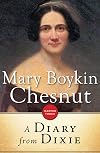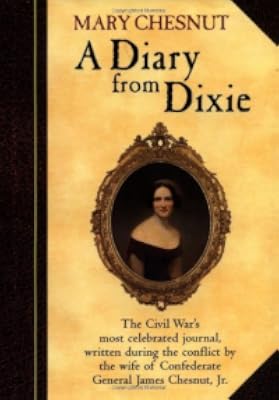
A Diary From Dixie
by Mary Boykin Chesnut
On This Page
Description
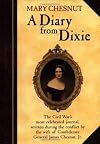
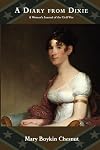
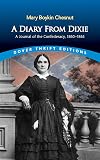
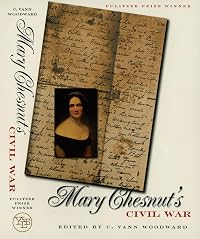
Born into Southern aristocracy, Mary Boykin Chesnut (1823-86) married a rising star of the political scene who ultimately served as an aide to Confederate President Jefferson Davis. As a prominent hostess and popular guest in the highest circles of Confederate society, Chesnut possessed an insider's perspective on many of the Civil War's major events, which she recorded in vivid journal entries. Her diary recounts the social life that struggled to continue in the midst of war, the grim show more economic conditions that resulted from blockaded ports as well as how people's spirits rose and fell with each victory and defeat. Hailed by William Styron as "a great epic drama of our greatest national tragedy," Chesnut's annotated diary won the Pulitzer Prize for History in 1982 and served as a primary source for Ken Burns's celebrated Civil War documentary. This edition of the compelling narrative features photos and engravings from the original publication. show lessTags
Recommendations

















Member Reviews
The author was a friend and admirer of Jefferson Davis on the eve of the Civil War, but was great enough as a conscious person to realize her admiration was abused. This is a personal diary of a Southern Lady. She also recognized that the white men were not really fighting for "state's rights", but for enslavement of Africans, from which they drew their "black harems".
This single diary pretty much gives The Lie to the propaganda which Southern plutocrats dispensed to the poor white males upon which they depend for their political support, then and to this day. Poor white male Southerners are poor, ignorant, and kept that way.
In writing about the actual events in her life and privy to the rulers of the South, Ms Chesnut has done a great show more service. Her diary should be studied by the Tea Party to sober them up. show less
This single diary pretty much gives The Lie to the propaganda which Southern plutocrats dispensed to the poor white males upon which they depend for their political support, then and to this day. Poor white male Southerners are poor, ignorant, and kept that way.
In writing about the actual events in her life and privy to the rulers of the South, Ms Chesnut has done a great show more service. Her diary should be studied by the Tea Party to sober them up. show less
I picked this book up because when I was younger, someone told me how interesting it was to read a firsthand account of what the Civil War was like. While I appreciated reading all the details and plans about the war and getting an insight into the opinions and thoughts of the Confederates, I wasn’t very impressed by this book. It’s rather boring, mostly because Chesnut is so disconnected from the true atrocities of the war and comes across as very superficial and arrogant without having any real substance about her.
The other problem is that this book is said to be heavily edited so as not to contain anything that would be unflattering to the Confederates, which is entirely ridiculous to me. It most likely would have been much more show more interesting if it contained everything, but it really just talks about inflation, traveling from one city to another, and the parties the higher up Confederates threw for each other.
Overall, I could see using snippets of this to supplement a civil war lesson in a class, but it’s not worth reading the diary in its entirety.
Also posted on Purple People Readers. show less
The other problem is that this book is said to be heavily edited so as not to contain anything that would be unflattering to the Confederates, which is entirely ridiculous to me. It most likely would have been much more show more interesting if it contained everything, but it really just talks about inflation, traveling from one city to another, and the parties the higher up Confederates threw for each other.
Overall, I could see using snippets of this to supplement a civil war lesson in a class, but it’s not worth reading the diary in its entirety.
Also posted on Purple People Readers. show less
What a fascinating memoir by a woman who lived in the South during the turmoil of the Civil War. We are given insight into how the progress of the War was perceived by Southerners. Chestnut was close friends with Jefferson Davis and his wife, General Hood, Custis Lee and other notables of the Southern leadership. Because of her friendship with the President Davis, she seemed to overlook his weaknesses and defends him against all critics. She also chronicles the infighting amongst the Confederate leadership and although she doesn't seem to recognize it herself, the downside of the Confederacy's insistence on state's rights. Boykin is very clear from the beginning of her diary that she thinks slavery is over no matter who wins the war show more because it is unsustainable. However, her view of the Africans, as she calls them, is condescending and once the Proclamation is issued by Lincoln, she thinks the slaves are just waiting to steal her valuables and flee to the Yankee side even though there is amble evidence from her experience with her own servants that this is not occurring. To her credit, there are moments in the Diary that she mentions having read earlier portions of it and realizing that she was wrong in her conclusions about the leadership of certain officers or individuals. There are also moments that we are permitted to see the strains the War has wrought on her marriage; however there are also moments when we see she & her husband have a warm, passionate relationship. A truly inside look at the Civil War from a the Civilian side. show less
This was an excellent example of journal writing. She was an interesting woman who had interesting friends. She wrote about the Civil War from the secession to the carpetbaggers, not as an historian, but as a person living there and how it all affected her each day. She had a lively wit, which made for good reading. I was most interested to hear about all the issues from someone living in the South. This is a must read if you are going to say you know anything about the people and events of the Civil War.
This book was very good. I am an avid reader and among my interest is first hand accounts of the civil war. Mary Chestnut does a good job through the words in her diary presenting an account of the war from inside the circles of the Confederate's presidency. She expresses how slavery was truly represented during the war for both sides showing that the north and south didn't differ much in their sentiments about slavery. She showed many cases of inhuman behavior and generosity from both sides. It supports a common analogy about the civil war being a war about state's rights. But after saying all of this, one has to realize that the book is bastardized from a southern prospective, regardless of how that is altered from modern day reality.
One of the most interesting journals of the Civil War. A woman who was well-educated, extremely candid, sharp-tongued, and informed.
Members
- Recently Added By
Lists

THE WAR ROOM
813 works; 24 members
Author Information

11+ Works 2,036 Members
Some Editions
Awards and Honors
Awards
Common Knowledge
- Original publication date
- 1905
- People/Characters
- Mary Boykin Chesnut; James Chesnut, Jr.; Jefferson Davis
- Important places
- USA; Richmond, Virginia, USA; Virginia, USA; Charleston, South Carolina, USA; Montgomery, Alabama, USA; Camden, South Carolina, USA (show all 12); Fauquier White Sulpher Springs, Virginia, USA; Columbia, South Carolina, USA; Flat Rock, North Carolina, USA; Portland, Alabama, USA; Lincolnton, North Carolina, USA; Chester, South Carolina, USA
- First words
- Charleston, S.C., November 8, 1860 - Yesterday on the train, just before we reached Fernandina, a woman called out: "That settles the hash." Tanny touched me on the shoulder and said: "Lincoln's elected." "How do you know?" ... (show all)"The man over there has a telegram."
- Last words
- (Click to show. Warning: May contain spoilers.)August 2d. - Dr. Boykin and John Witherspoon were talking of a nation in mourning, of blood poured out like rain on the battlefields--for what? "Never let me hear that the blood of the brave has been shed in vain! No; it sends a cry down through all time."
Classifications
- Genres
- History, Nonfiction, Biography & Memoir, General Nonfiction
- DDC/MDS
- 973.782 — History & geography History of North America United States Civil War Era (1857-1865) Personal narratives, vindications, secret service Personal narratives, southern side
- LCC
- E487 .C52 — History of the United States United States Civil War period, 1861-1865 The Civil War, 1861-1865 Confederate States of America
- BISAC
Statistics
- Members
- 698
- Popularity
- 40,781
- Reviews
- 7
- Rating
- (3.83)
- Languages
- English
- Media
- Paper, Audiobook, Ebook
- ISBNs
- 26
- ASINs
- 20