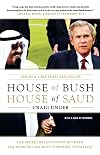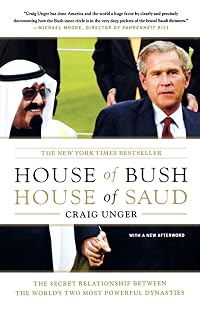
House of Bush, House of Saud: The Secret Relationship Between the World's Two Most Powerful Dynasties
by Craig Unger
On This Page
Description
News breaking and controversial -- an award-winning investigative journalist uncovers the thirty-year relationship between the Bush family and the House of Saud and explains its impact on American foreign policy, business, and national security. House of Bush, House of Saud begins with a politically explosive question: How is it that two days after 9/11, when U.S. air traffic was tightly restricted, 140 Saudis, many immediate kin to Osama Bin Laden, were permitted to leave the country show more without being questioned by U.S. intelligence? The answer lies in a hidden relationship that began in the 1970s, when the oil-rich House of Saud began courting American politicians in a bid for military protection, influence, and investment opportunity. With the Bush family, the Saudis hit a gusher -- direct access to presidents Reagan, George H.W. Bush, and George W. Bush. To trace the amazing weave of Saud- Bush connections, Unger interviewed three former directors of the CIA, top Saudi and Israeli intelligence officials, and more than one hundred other sources. His access to major players is unparalleled and often exclusive -- including executives at the Carlyle Group, the giant investment firm where the House of Bush and the House of Saud each has a major stake. Like Bob Woodward's The Veil, Unger's House of Bush, House of Saud features unprecedented reportage; like Michael Moore's Dude, Where's My Country? Unger's book offers a political counter-narrative to official explanations; this deeply sourced account has already been cited by Senators Hillary Rodham Clinton and Charles Schumer, and sets 9/11, the two Gulf Wars, and the ongoing Middle East crisis in a new context: What really happened when America's most powerful political family became seduced by its Saudi counterparts? show lessTags
Recommendations








Member Reviews
Here is the damming expose of how business interests of the Bush family, other Republicans and corporatists with the Saudis influence their policy decisions to the detriment of the American people. All the stories have been told before but Unger builds up a good record of evidence over thirty years without wagging an accusatory finger in the manner of Greg Palast. He’s also good at pointing out the disturbing behavior of non-Bushies in regards to the Saudis to offer some balance (ex-Carter National Security Advisor Zbigniew Brzezinzki started the plan to support Afghani Islamists against the Soviets a tact happily embellished by Reagan/Bush – p. 98), and makes it clear when certain claims cannot be substantiated. All very scary show more stuff, especially since xenophobic America-is-#1 types are ironically very likely to reelect Bush this fall. The most interesting thing I learned in this book is how Bin Laden appealed to the House of Saud to allow him to rally Islamic support and lead the battle to liberate Kuwait from the hated Sadaam Hussein in 1990 (al-Qaeda-Sadaam links indeed!).
“Thanks to such warm relations with the media, Bush repeatedly turned his liabilities into assets. A poor public speaker who made one verbal gaffe after another, Bush played the self-deprecating common man under fire by the know-it-all intellectuals. Intimate with the Wise Men of Washington since childhood, scion to one of the greatest political dynasties in American history, Bush was even able to sell himself as an outsider to power.” (p. 197)
“Few in the United States liked to admit it, but by switching the venue of America’s response to 9/11 to Iraq, the United States may have inadvertently played directly into Al Qaeda’s and Osama bin Laden’s hands. More than twenty years earlier, bin Laden had gone to Afghanistan to lure another superpower into a land war inside a Muslim country. America’s Cold Warriors had cackled with glee when the Soviets took the bait, and the long and brutal war that ensued helped lead to the demise of the Soviet empire. In the mountains of Afghanistan, Osama bin Laden had learned that he and his band of impassioned warriors could defeat a superpower in a guerilla war.” (p. 278) show less
“Thanks to such warm relations with the media, Bush repeatedly turned his liabilities into assets. A poor public speaker who made one verbal gaffe after another, Bush played the self-deprecating common man under fire by the know-it-all intellectuals. Intimate with the Wise Men of Washington since childhood, scion to one of the greatest political dynasties in American history, Bush was even able to sell himself as an outsider to power.” (p. 197)
“Few in the United States liked to admit it, but by switching the venue of America’s response to 9/11 to Iraq, the United States may have inadvertently played directly into Al Qaeda’s and Osama bin Laden’s hands. More than twenty years earlier, bin Laden had gone to Afghanistan to lure another superpower into a land war inside a Muslim country. America’s Cold Warriors had cackled with glee when the Soviets took the bait, and the long and brutal war that ensued helped lead to the demise of the Soviet empire. In the mountains of Afghanistan, Osama bin Laden had learned that he and his band of impassioned warriors could defeat a superpower in a guerilla war.” (p. 278) show less
Everyone, of whatever political persuasion or economic class, should read books like House of Bush House of Saud by Craig Unger (Scribner, 2004). To me it brought home five insights of which I was either unaware or only vaguely conscious: (1) the complex and long-standing relationships between despotic rulers in foreign countries and prominent USAmerican family or corporate groups, like the ruling Saudis and the Bush family conglomerate; (2) the dominance of global corporations, not simply in business, but in government, as for example the BCCI (Bank of Credit and Commerce International), Halliburton Corporation, or the Carlyle Group; (3) the extent to which secrecy and undercover operations prevail in international relations and show more corporate finances; (4) the threat of the partnership of an affluent (ruling) elite, like the Saudis, and an authoritarian, fundamentalist religious leadership, like the Wahhabis; and (5) the rationalization of elitists to justify their power and control.
The book begins with a chapter, “The Great Escape,” on the arrangements made to provide chartered jet planes for bin Laden family members and Saudi leaders immediately after 9/11/2001—when, as you will recall, all such flights were grounded. Perhaps such arrangements were well justified. The point is there has never been a public statement explaining such a justification, and agencies proven to have been involved still deny their involvement. Such a mysterious reluctance to be candid causes one to ask, Why?
Let me quote just a few statements from the next few chapters that were new and revealing to me when I first read this book upon its publication in 2004:
“Throughout the entire Reagan-Bush era, the United States publicly denounced Iraq’s use of chemical weapons, but secretly it supported Saddam. . . . Beginning in 1984, the Centers for Disease Control began providing Saddam’s Iraq with biological materials—including viruses, retroviruses, bacteria, fungi, and even tissue that was infected with bubonic plague. Among the materials that were sent were several types of West Nile virus and plague-infected mouse tissue smears.” (p. 68) All this was motivated by a desire to protect Saudi powers from Iranian incursions. (cf. p. 66)
“To understand BCCI, it is helpful to think of the institution as something other than merely a bank. Time [magazine] once described it as ‘a vast, stateless, multinational corporation that deploys its own intelligence agency, complete with a paramilitary wing and enforcement units known collectively as the Black Network.’. . . Meanwhile, the bank created a template with which to finance covert operations all over the world for an international network of terror.” (p. 78)
“The ascendancy of the House of Saud’s power dates to 1747 [or thereabouts], when the Arab clan of al-Saud established a rudimentary government in league with the family of Ibn Abd al Wahhab, the prophet of Wahhabism.” (p. 84) Henceforth, the oil-rich, luxury-loving, globe-trotting Saudis have maintained their power by their alliance with the Wahhabis, who control the poor but devout masses, and by their (somewhat superficial) observance of Islamic virtues.
There are many such revelations in the book, too complex to summarize in a brief review. There are documented accounts of the Saudi ruling family’s financial rescue and support of the Bush family, of the Carlyle Group’s profiting immensely through its relationships with the US government (including representatives of both political parties), of Osama bin Laden’s break with the Saudi ruling elite because of their immorality, public hypocrisy, and clandestine relationships with the US and, indirectly, Saddam Hussein.
Many of these details were new to me, and revolting. However, it was my reading of the undercurrents that proved most provocative and most disturbing.
Every culture has its elite. To be quite honest, most folks would prefer to be governed—indeed, controlled—by an elite IF they were able to define that elite. Our founding fathers shared this fear of the masses and the felt need for an enlightened elite. Hence, they had the president chosen by “electors,” not the people; the Senate was given equal power with the House of Representatives (some would argue more), and until the reform effort led by William Jennings Bryan, senators were elected by their state legislatures, not directly by the people; they withheld voting rights from women, youths of fighting age, and African American slaves. That was one way to define and to empower an elite; our government is a republic, not a democracy. One might argue that that is as it should be.
The problem now is how the elite is defined (in global, corporate, financial terms); how it maintains control over the masses (media manipulation, alliances with religious fundamentalists, a comfortable materialism, a subtle imperialism with world-wide military establishments, and covert operations and adamant secrecy, at home as well as abroad); and how ill educated and apathetic USAmericans are. It could be argued that we are ill-informed because we prefer to be ill-informed. We are easily manipulated because we like being manipulated. We submit to the control of this new elite either because we feel that we are a part of the corporate elite, or hope to be. Or because we feel we are a part of a moral/religious elite. Each branch of this new elite is brazenly using the other to reach its goals: high profits and executive salaries, on the one hand, or governmental opposition to abortion, evolution, and gay marriage on he other.
The most interesting aspect of Unger’s House of Bush House of Saud is not the connection of a would-be Bush dynasty with the Saudi dynasty, but rather the movement of the economic and religious elites in the United States toward the kind of alliance the Saudis have with the Wahhabis in Saudi Arabia. Unger concludes, “Never before has an American president been so closely tied to a foreign power that harbors and supports our country’s mortal enemies.” I would add, Never has an American president so carefully imitated or attempted to implement a power structure characteristic of a despotic foreign regime: the House of Bush and the House of Saud. show less
The book begins with a chapter, “The Great Escape,” on the arrangements made to provide chartered jet planes for bin Laden family members and Saudi leaders immediately after 9/11/2001—when, as you will recall, all such flights were grounded. Perhaps such arrangements were well justified. The point is there has never been a public statement explaining such a justification, and agencies proven to have been involved still deny their involvement. Such a mysterious reluctance to be candid causes one to ask, Why?
Let me quote just a few statements from the next few chapters that were new and revealing to me when I first read this book upon its publication in 2004:
“Throughout the entire Reagan-Bush era, the United States publicly denounced Iraq’s use of chemical weapons, but secretly it supported Saddam. . . . Beginning in 1984, the Centers for Disease Control began providing Saddam’s Iraq with biological materials—including viruses, retroviruses, bacteria, fungi, and even tissue that was infected with bubonic plague. Among the materials that were sent were several types of West Nile virus and plague-infected mouse tissue smears.” (p. 68) All this was motivated by a desire to protect Saudi powers from Iranian incursions. (cf. p. 66)
“To understand BCCI, it is helpful to think of the institution as something other than merely a bank. Time [magazine] once described it as ‘a vast, stateless, multinational corporation that deploys its own intelligence agency, complete with a paramilitary wing and enforcement units known collectively as the Black Network.’. . . Meanwhile, the bank created a template with which to finance covert operations all over the world for an international network of terror.” (p. 78)
“The ascendancy of the House of Saud’s power dates to 1747 [or thereabouts], when the Arab clan of al-Saud established a rudimentary government in league with the family of Ibn Abd al Wahhab, the prophet of Wahhabism.” (p. 84) Henceforth, the oil-rich, luxury-loving, globe-trotting Saudis have maintained their power by their alliance with the Wahhabis, who control the poor but devout masses, and by their (somewhat superficial) observance of Islamic virtues.
There are many such revelations in the book, too complex to summarize in a brief review. There are documented accounts of the Saudi ruling family’s financial rescue and support of the Bush family, of the Carlyle Group’s profiting immensely through its relationships with the US government (including representatives of both political parties), of Osama bin Laden’s break with the Saudi ruling elite because of their immorality, public hypocrisy, and clandestine relationships with the US and, indirectly, Saddam Hussein.
Many of these details were new to me, and revolting. However, it was my reading of the undercurrents that proved most provocative and most disturbing.
Every culture has its elite. To be quite honest, most folks would prefer to be governed—indeed, controlled—by an elite IF they were able to define that elite. Our founding fathers shared this fear of the masses and the felt need for an enlightened elite. Hence, they had the president chosen by “electors,” not the people; the Senate was given equal power with the House of Representatives (some would argue more), and until the reform effort led by William Jennings Bryan, senators were elected by their state legislatures, not directly by the people; they withheld voting rights from women, youths of fighting age, and African American slaves. That was one way to define and to empower an elite; our government is a republic, not a democracy. One might argue that that is as it should be.
The problem now is how the elite is defined (in global, corporate, financial terms); how it maintains control over the masses (media manipulation, alliances with religious fundamentalists, a comfortable materialism, a subtle imperialism with world-wide military establishments, and covert operations and adamant secrecy, at home as well as abroad); and how ill educated and apathetic USAmericans are. It could be argued that we are ill-informed because we prefer to be ill-informed. We are easily manipulated because we like being manipulated. We submit to the control of this new elite either because we feel that we are a part of the corporate elite, or hope to be. Or because we feel we are a part of a moral/religious elite. Each branch of this new elite is brazenly using the other to reach its goals: high profits and executive salaries, on the one hand, or governmental opposition to abortion, evolution, and gay marriage on he other.
The most interesting aspect of Unger’s House of Bush House of Saud is not the connection of a would-be Bush dynasty with the Saudi dynasty, but rather the movement of the economic and religious elites in the United States toward the kind of alliance the Saudis have with the Wahhabis in Saudi Arabia. Unger concludes, “Never before has an American president been so closely tied to a foreign power that harbors and supports our country’s mortal enemies.” I would add, Never has an American president so carefully imitated or attempted to implement a power structure characteristic of a despotic foreign regime: the House of Bush and the House of Saud. show less
A good book about the relationship between many high-ups in the Republican party and the royal family of Saudi Arabia and the Bin Laden family who own a large construction company. An unexpected star in the book is actually Bluegrass Airport. On 9/11 many rich Saudis, members of the royal family, Bin Laden's family, etc. were in Lexington, KY buying horses. While the rest of national airspace was closed, someone high up in the U.S. gov't authorized the evacuation of Saudis from around the country. They flew first to Lexington, then got on a big 747 and flew away, eventually to Saudi Arabia. Some of these folks would have been worth interrogating, particularly those related to Bin Laden, and others who had ties to the bombers.
The book is show more sad because it shows how we're so tied into Saudi Arabia that we'll never be able to fully fight terrorism (see my previous posts on this subject). show less
The book is show more sad because it shows how we're so tied into Saudi Arabia that we'll never be able to fully fight terrorism (see my previous posts on this subject). show less
In one sense, I wanted to read it to find out what the connections were/are. In another, I struggled to read it because it felt very dry and segued off into areas that didn't really interest me.
This book both frightens and angers me. It also has further inspired me to watch the current Bush and do everything in my power to make sure that no further Bushes or friends of Bush win the presidency. The family is power hungry, greedy, and dangerous.
The book reveals just how closely the ties are between the U.S. and the Islamic dictatorship of Saudi Arabia. The one key criticism of the work is that Ungar wants to postulate that the connection is between the two houses: Bush and Saud. He is incorrect on this point. The intimate relationship is between the interests of the respective countries. It will matter little who is in the White House unless U.S. energy policy changes significantly. Most likely the Saudis will continue to drain the resources of the U.S. to do their bidding.
Barack Obama, for example, has agreed that the Saudis can continue to kill Americans. The 9/11 Families received the sharp end of the stick as the U.S. government supports the Saudis against Americans. The show more Justice Department is supporting the Saudi royal family's bid to be removed from a 9/11 lawsuit.
The families of victims have accused the royal family of financially backing terror groups that carried out the 2001 attack.
Their complaint alleges that the Kingdom of Saudi Arabia, the Saudi High Commission for Relief to Bosnia and Herzegovina (SHC), and four Saudi Princes (acting in both official and personal capacities) made donations to charitable organizations with the knowledge that those organizations were diverting funds to al Qaeda, and that a fifth Saudi prince knowingly provided banking and financial services to Osama bin Laden and al Qaeda.
A lawsuit, Federal Insurance Co. v. Kingdom Of Saudi Arabia, was initiated in 2003 by a consortium of insurance companies seeking to recover more than $300 billion for losses incurred by the 9/11 attacks.
The Saudi princes cited in the claims were:
* Prince Salman bin Abdulaziz al-Saud, president of SHC, who was warned in 2000 of his organization's ties to al Qaeda (pp. 7, 10, 255-6, 258, 265-9, 297) ;
In addition to Unger, in his 2003 book Why America Slept, author Gerald Posner claimed that Prince Ahmed bin Salman had had ties to al-Qaeda and had advance knowledge of the September 11, 2001 attacks on the United States.
* Crown Prince Sultan bin Abdulaziz al-Saud, the designated successor to King Abdullah, who received warnings as early as 1994 that some Muslim charitable groups were fronts for al Qaeda (pp. 168, 176, 219, 235, 242-4, 287-8, 293);
* Prince Naif bin Abdulaziz al-Saud, who as Saudi Minister of the Interior monitors and controls the charities operating in Saudi Arabia (pp. 87, 89, 182-3, 263, 288);
* Prince Turki al-Faisal bin Abdulaziz al-Saud, who was the director of the Kingdom's Department of General Intelligence ("DGI") until August 2001 (pp. 266, 268); and,
* Prince Mohamed al Faisal al Saud (p. 288) , who unlike the other princes named is not a government official but a bank manager alleged to have knowingly provided material sponsorship to international terrorism.
"I find this reprehensible," Kristen Breitweiser, a leader of the Sept. 11 families, told The New York Times.
Bush-Obama have covered up allegations of Saudi involvement. show less
Barack Obama, for example, has agreed that the Saudis can continue to kill Americans. The 9/11 Families received the sharp end of the stick as the U.S. government supports the Saudis against Americans. The show more Justice Department is supporting the Saudi royal family's bid to be removed from a 9/11 lawsuit.
The families of victims have accused the royal family of financially backing terror groups that carried out the 2001 attack.
Their complaint alleges that the Kingdom of Saudi Arabia, the Saudi High Commission for Relief to Bosnia and Herzegovina (SHC), and four Saudi Princes (acting in both official and personal capacities) made donations to charitable organizations with the knowledge that those organizations were diverting funds to al Qaeda, and that a fifth Saudi prince knowingly provided banking and financial services to Osama bin Laden and al Qaeda.
A lawsuit, Federal Insurance Co. v. Kingdom Of Saudi Arabia, was initiated in 2003 by a consortium of insurance companies seeking to recover more than $300 billion for losses incurred by the 9/11 attacks.
The Saudi princes cited in the claims were:
* Prince Salman bin Abdulaziz al-Saud, president of SHC, who was warned in 2000 of his organization's ties to al Qaeda (pp. 7, 10, 255-6, 258, 265-9, 297) ;
In addition to Unger, in his 2003 book Why America Slept, author Gerald Posner claimed that Prince Ahmed bin Salman had had ties to al-Qaeda and had advance knowledge of the September 11, 2001 attacks on the United States.
* Crown Prince Sultan bin Abdulaziz al-Saud, the designated successor to King Abdullah, who received warnings as early as 1994 that some Muslim charitable groups were fronts for al Qaeda (pp. 168, 176, 219, 235, 242-4, 287-8, 293);
* Prince Naif bin Abdulaziz al-Saud, who as Saudi Minister of the Interior monitors and controls the charities operating in Saudi Arabia (pp. 87, 89, 182-3, 263, 288);
* Prince Turki al-Faisal bin Abdulaziz al-Saud, who was the director of the Kingdom's Department of General Intelligence ("DGI") until August 2001 (pp. 266, 268); and,
* Prince Mohamed al Faisal al Saud (p. 288) , who unlike the other princes named is not a government official but a bank manager alleged to have knowingly provided material sponsorship to international terrorism.
"I find this reprehensible," Kristen Breitweiser, a leader of the Sept. 11 families, told The New York Times.
Bush-Obama have covered up allegations of Saudi involvement. show less
On 5 CDs, 6 hours long
Members
- Recently Added By
Lists

Lost History
13 works; 2 members
Author Information

12 Works 1,184 Members
Craig Unger is an American journalist and writer, based in New York City. He is a graduate of Harvard University. His career includes former deputy editor of The New York Observer and former editor-in-chief of Boston Magazine. His work has been published in Vanity Fair, New York Magazine, Esquire, The New Republic, The New Yorker, and other show more publications. He has appeared as an analyst on MSNBC, CNN, the ABC Radio Network, and other broadcast outlets. He is the author of Blue Blood; House of Bush, House of Saud; The Fall of the House of Bush; American Armageddon; Boss Rove; When Women Win (with co-author Ellen Malcolm); and House of Trump, House of Putin. (Bowker Author Biography) show less
Awards and Honors
Distinctions
Common Knowledge
- Canonical title
- House of Bush, House of Saud: The Secret Relationship Between the World's Two Most Powerful Dynasties
- Original title
- House of Bush, House of Saud: The Secret Relationship Between the World's Two Most Powerful Dynasties
- Original publication date
- 2004
- People/Characters
- George H. W. Bush; George W. Bush; Ronald Reagan; Bandar bin Sultan bin Abdul Aziz; James A. Baker III; James Bath (show all 24); Osama bin Laden; Dick Cheney; Richard Clarke; Jimmy Carter; Bill Clinton; Condoleezza Rice; Frank Carlucci; Donald Rumsfeld; Abdullah bin Abdul Aziz; Admed bin Salman; Abdullah Taha Bakhsh; Fahd of Saudi Arabia (Fahd bin Abdul Aziz); Haifa bint Faisal; Khalid Bin Mahfouz; Salem bin Laden; Sami Al-Arian; Grover Norquist; Abu Zubaydah
- Important places
- Houston, Texas, USA; Riyadh, Saudi Arabia; Iraq; Washington, D.C., USA
- Important events
- September 11 Attacks; Gulf War, 1990-1991; Afghan War
- Dedication
- To my mother
- First words
- It was the second Wednesday in September 2001, and for Brian Cortez, a desperately ill twenty-one-year-old man in Seattle, Washington, the day he had long waited for.
- Quotations
- The United States had helped build Iraq into the strongest military force in the Middle East. Little did Bush and the Saudis dream that they would soon be at war with the man they had helped create.
Brzezinski and the Reagan-Bush administration were right about the extraordinary value of supporting the mujahideen. But they had resolved the past by endangering the future. They vastly underestimated the price America would... (show all) pay in the long run. Thanks to the United States, Osama bin Laden had learned an important lesson: mujahideen warriors fighting for Islam could bring a superpower to its knees. - Last words
- (Click to show. Warning: May contain spoilers.)Meanwhile, as the 2004 presidential campaign gets under way, President Bush has assiduously cultivated an image as an indomitable commander-in-chief who remains unassailable on the issue of national security-an image that is belied by one incontrovertible fact: Never before has an American president been so closely tied to a foreign power that harbors and supports our country's mortal enemies.
- Blurbers
- Conason, Joe
- Original language
- English
Classifications
- Genres
- Nonfiction, General Nonfiction, Politics and Government, History
- DDC/MDS
- 327.730538 — Society, government, & culture Political science International Relations: Spies North America United States U.S.-Asian Relations
- LCC
- E902 .U54 — History of the United States George W. Bush's administrations, 2001-2009
- BISAC
Statistics
- Members
- 593
- Popularity
- 49,460
- Reviews
- 7
- Rating
- (3.59)
- Languages
- 6 — Dutch, English, German, Italian, Japanese, Spanish
- Media
- Paper, Audiobook, Ebook
- ISBNs
- 25
- ASINs
- 6