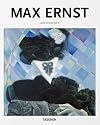
Max Ernst (Basic Art)
by Ulrich Bischoff
On This Page
Description
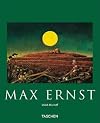
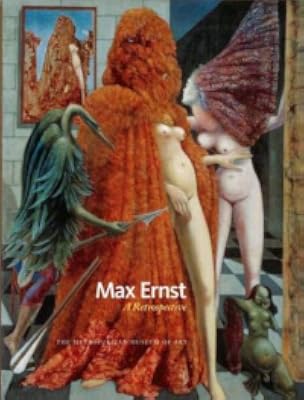
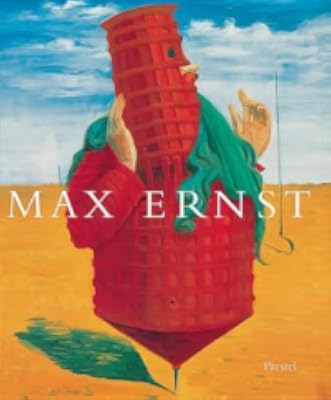
With unparalleled artistic originality Max Ernst (1891-1976) transformed everything he touched. By pushing the boundaries and breaking loose from the confined view of the culture of his time, he became one of the most important figures of Dadaism and Surrealism. Driven by the counter-reaction to the horrors of World War I, he became a pioneer of the Dada movement. The closing of the famed Dada exhibit in Cologne for 'obscenity' led Ernst to spend the rest of his life in Paris, where he came show more in contact with the Surrealists.Above all, Ernst stands out for his varied style and technique, having produced an oeuvre that reaches from paintings, drawings, and sculpture, across texts and stage settings to collage novels and the development of his own 'frottage' technique. During World War II, Ernst, like many of his colleagues, became an 'undesirable foreigner' and was forced to emigrate; however, he returned to France after the war. Continuing a career that spanned decades, in 1954 he received the Grand Prize for Painting at the Biennial in Venice.This book is a journey through magic, vividness, and fantasy. It is a gateway into the intricate mind and world of Max Ernst. show lessTags
Recommendations












Member Reviews
The Eye of Silence
Max Ernst: Beyond Painting. Ninety pages of artistic dynamite with an extended essay by art historian Ulrich Bischoff. Part of the Taschen series with dozens of pages filled with Max Ernst art, the majority in color, this volume offers a solid foundation for anyone interested in the artist’s life and work. Below are a number of direct quotes from the essay along with my comments:
“Max Ernst, who grew up in a petty bourgeois home in the Rhineland experienced art and culture either as an occupation for affluent citizens on Sundays and holidays, or as the dry object of investigation in the hands of art history professors.” ----------- His stuffy home in a small German town was simply the outermost shell, and a thin show more shell at that; what is critically important is how, even at a young age, Max Ernst possessed an imagination on fire with vision and a boundless sense of freedom, as in, for example, "Oedipus Rex, 1922."
“Ernst’s main means of escape was to make use of objects having little to do with art and to employ an absolutely new technique.” ---------- That’s “objects having little to do with art” from a coarse, conventional perspective, that is, objects men and women stuck in lackluster, petty categories would never remotely consider as part of art. However, for one of the most dynamic creators of the 20th century, everything he came in contact with, large and small, no matter how mundane or commonplace, as if base metal in an alchemist’s laboratory, could be worked and transformed into artistic gold. Case in Point: "Fruit of a Long Experience."
“The young student was interested in obscure fields of study and had a predilection for all kinds of strange, offbeat topics. His attempt to break away, which was mainly made possible by his use of chance and the unconscious, was a successful one.” --------- Ha! “Offbeat” and “strange” are relative terms. For an artistic imagination on fire, working within the confines of any approach blocking off the power of chance, accident, unforeseen possibilities or the bizarre is judged as so much stuffy prattle. Below; "The Murdering Airplane"
“Like a magician, Max Ernst the artist transformed whatever he touched, whether sacred or profane.” ---------- I couldn’t imagine an artist having more disregard for his own tradition and culture, even when that tradition and culture touches on elements of the sacred, than his painting “Young Virgin Spanking the Infant Jesus In Front of Three Witnesses.”
“Throughout the whole of Max Ernst’s works, hands play an important part. For the deaf, they are the main means of communication and since his father was a teacher of the deaf, Max Ernst was confronted with sign language from an early age.” ---------- How about that – watching his father teach sign language made a profound impact on young Max. Such attention to the delicacy of hand and fingers can be seen in his “At the First Clear Word.”
“His search for a technical means of avoiding a direct application of paint runs through his entire work, as do his efforts to carry out the picture itself and its subject with elements non-related to art. . . . In “Paris Dream” he used a wire comb to scrape two-thirds of a circle into the final surface of beige-grey paint, revealing a layer of blue below.” ---------- What I particularly enjoy about this painting is the contrast between the bold colors set out in a checkerboard grid across three mountains and the pale lightness of the upper half, the circle (actually many circles within circles) having echoes of an astrologer’s symbol for sun.
“The methods Max Ernst developed to stay “beyond” the classical way of painting taught at art schools have had an enormous influence on international art: collage, assemblage, montage, grattage, and decalcomania are techniques which he either developed himself or made us of in such a way that they soon became acceptable to both art schools and society alike.” ---------- The mark of a great artist is to leave the field you work in expanded and renewed. By my eye, the two works below are examples of the profound influence Max Ernst has had on the visual arts: “Europe after the Rain II” and “Capricorn.” Capricorn has a special appeal since Max appears with his honey!
Photo of the Artist as a Young Man -- Max Ernst (1891-1976) show less
The Eye of Silence
Max Ernst: Beyond Painting. Ninety pages of artistic dynamite with an extended essay by art historian Ulrich Bischoff. Part of the Taschen series with dozens of pages filled with Max Ernst art, the majority in color, this volume offers a solid foundation for anyone interested in the artist’s life and work. Below are a number of direct quotes from the essay along with my comments:
“Max Ernst, who grew up in a petty bourgeois home in the Rhineland experienced art and culture either as an occupation for affluent citizens on Sundays and holidays, or as the dry object of investigation in the hands of art history professors.” ----------- His stuffy home in a small German town was simply the outermost shell, and a thin show more shell at that; what is critically important is how, even at a young age, Max Ernst possessed an imagination on fire with vision and a boundless sense of freedom, as in, for example, "Oedipus Rex, 1922."
“Ernst’s main means of escape was to make use of objects having little to do with art and to employ an absolutely new technique.” ---------- That’s “objects having little to do with art” from a coarse, conventional perspective, that is, objects men and women stuck in lackluster, petty categories would never remotely consider as part of art. However, for one of the most dynamic creators of the 20th century, everything he came in contact with, large and small, no matter how mundane or commonplace, as if base metal in an alchemist’s laboratory, could be worked and transformed into artistic gold. Case in Point: "Fruit of a Long Experience."
“The young student was interested in obscure fields of study and had a predilection for all kinds of strange, offbeat topics. His attempt to break away, which was mainly made possible by his use of chance and the unconscious, was a successful one.” --------- Ha! “Offbeat” and “strange” are relative terms. For an artistic imagination on fire, working within the confines of any approach blocking off the power of chance, accident, unforeseen possibilities or the bizarre is judged as so much stuffy prattle. Below; "The Murdering Airplane"
“Like a magician, Max Ernst the artist transformed whatever he touched, whether sacred or profane.” ---------- I couldn’t imagine an artist having more disregard for his own tradition and culture, even when that tradition and culture touches on elements of the sacred, than his painting “Young Virgin Spanking the Infant Jesus In Front of Three Witnesses.”
“Throughout the whole of Max Ernst’s works, hands play an important part. For the deaf, they are the main means of communication and since his father was a teacher of the deaf, Max Ernst was confronted with sign language from an early age.” ---------- How about that – watching his father teach sign language made a profound impact on young Max. Such attention to the delicacy of hand and fingers can be seen in his “At the First Clear Word.”
“His search for a technical means of avoiding a direct application of paint runs through his entire work, as do his efforts to carry out the picture itself and its subject with elements non-related to art. . . . In “Paris Dream” he used a wire comb to scrape two-thirds of a circle into the final surface of beige-grey paint, revealing a layer of blue below.” ---------- What I particularly enjoy about this painting is the contrast between the bold colors set out in a checkerboard grid across three mountains and the pale lightness of the upper half, the circle (actually many circles within circles) having echoes of an astrologer’s symbol for sun.
“The methods Max Ernst developed to stay “beyond” the classical way of painting taught at art schools have had an enormous influence on international art: collage, assemblage, montage, grattage, and decalcomania are techniques which he either developed himself or made us of in such a way that they soon became acceptable to both art schools and society alike.” ---------- The mark of a great artist is to leave the field you work in expanded and renewed. By my eye, the two works below are examples of the profound influence Max Ernst has had on the visual arts: “Europe after the Rain II” and “Capricorn.” Capricorn has a special appeal since Max appears with his honey!
Photo of the Artist as a Young Man -- Max Ernst (1891-1976) show less
Another great entry in Taschen's Basic Art series. Max Ernst was an amazing artist, and this slim volume does a great job of introducing the man, his life, and a great selection of photographic reproductions of his work. While the reproductions are necessarily small, they are still high-quality and full of wonder. For the price, this is probably about the best introduction to this great artist that you're likely to find.
Max Ernst (1891-1996) ist eine der wichtigsten Figuren des Dadaismus und Surrealismus. Als Student in Bonn fühlte er sich zur Dada-Bewegung hingezogen, die als Gegenreaktion auf das Massenschlachten des Ersten Weltkriegs entstanden war.
Die Schließung der berühmten Dada-Ausstellung in Köln wegen "Obszönität" veranlasste Ernst, den Rest seines Lebens in Paris zu verbringen, wo er mit den Surrealisten in Kontakt kam. Ernst zeichnet sich vor allem durch seine stilistische und technische Vielfalt aus und hat ein Oeuvre geschaffen, das von Gemälden, Zeichnungen und Skulpturen über Texte und Bühnenbilder bis hin zu Collage-Romanen und der Entwicklung einer eigenen "Frottage"-Technik reicht.
Im Zweiten Weltkrieg wurde Ernst, wie viele show more seiner Kollegen, zum "unerwünschten Ausländer" und musste emigrieren; nach dem Krieg kehrte er jedoch in seine Wahlheimat zurück. Nach dem Krieg kehrte er jedoch in seine Wahlheimat zurück. 1954 erhielt er den Großen Preis für Malerei auf der Biennale in Venedig, und in den 1960er Jahren wurde sein Werk mit großen Retrospektiven gewürdigt. show less
Die Schließung der berühmten Dada-Ausstellung in Köln wegen "Obszönität" veranlasste Ernst, den Rest seines Lebens in Paris zu verbringen, wo er mit den Surrealisten in Kontakt kam. Ernst zeichnet sich vor allem durch seine stilistische und technische Vielfalt aus und hat ein Oeuvre geschaffen, das von Gemälden, Zeichnungen und Skulpturen über Texte und Bühnenbilder bis hin zu Collage-Romanen und der Entwicklung einer eigenen "Frottage"-Technik reicht.
Im Zweiten Weltkrieg wurde Ernst, wie viele show more seiner Kollegen, zum "unerwünschten Ausländer" und musste emigrieren; nach dem Krieg kehrte er jedoch in seine Wahlheimat zurück. Nach dem Krieg kehrte er jedoch in seine Wahlheimat zurück. 1954 erhielt er den Großen Preis für Malerei auf der Biennale in Venedig, und in den 1960er Jahren wurde sein Werk mit großen Retrospektiven gewürdigt. show less
May 14, 2020 (Edited)German
Ratings
Members
- Recently Added By
Author Information
Some Editions
Common Knowledge
- Canonical title*
- Max Ernst
- Alternate titles
- Max Ernst, 1891-1976: Beyond Painting
- Original publication date
- 1991
- People/Characters
- Max Ernst
- First words
- Facts in the life of Max Ernst are seldom to be relied upon.
- Last words
- (Click to show. Warning: May contain spoilers.)Through the changes resulting from such carefully guided "coincidences", Max Ernst gave both himself and us, the beholders of his work, the chance to discover new surprises in his work again and again.
*Some information comes from Common Knowledge in other languages. Click "Edit" for more information.
Classifications
Statistics
- Members
- 201
- Popularity
- 162,874
- Reviews
- 4
- Rating
- (3.91)
- Languages
- 6 — English, French, German, Italian, Portuguese, Spanish
- Media
- Paper
- ISBNs
- 16
- ASINs
- 1