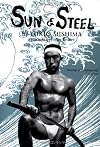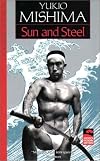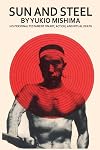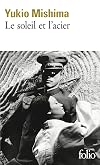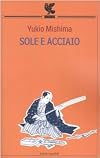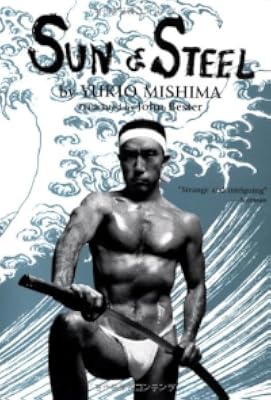
Sun and Steel
by Yukio Mishima
On This Page
Description
In this fascinating document, one of Japan's best known-and controversial-writers created what might be termed a new literary form. It is new because it combines elements of many existing types of writing, yet in the end fits into none of them. At one level, it may be read as an account of how a puny, bookish boy discovered the importance of his own physical being; the "sun and steel" of the title are themselves symbols respectively of the cult of the open air and the weights used in show more bodybuilding. At another level, it is a discussion by a major novelist of the relation between action and art, and his own highly polished art in particular. More personally, it is an account of one individual's search for identity and self-integration. Or again, the work could be seen as a demonstration of how an intensely individual preoccupation can be developed into a profound philosophy of life. All these elements are woven together by Mishima's complex yet polished and supple style. The confession and the self-analysis, the philosophy and the poetry combine in the end to create something that is in itself perfect and self-sufficient. It is a piece of literature that is as carefully fashioned as Mishima's novels, and at the same time provides an indispensable key to the understanding of them as art. The road Mishima took to salvation is a highly personal one. Yet here, ultimately, one detects the unmistakable tones of a self, transcending the particular and attaining to a poetic vision of the universal. The book is therefore a moving document, and is highly significant as a pointer to the future development of one of the most interesting novelists of modern times. show lessTags
Recommendations








Member Recommendations
Member Reviews
Vos leés este libro y decís "ajá, interesante. Un poco nazi, pero interesante cómo reelabora con pasión ese dualismo entre la intelectualidad y el cuerpo (quizá demasiaaaaada pasión)", hasta que por fin decís "esto solo puede terminar de una manera: con un intento de golpe de Estado seguido de seppuku".
This was a strange book, in so many ways.
I think I never come across someone that is so full of words that he just puts them out there in incredible volume, in a way that you can see what author kinda wants to say, but it is always out of the reach. I would not say it is incoherent, it is is just .... overflowing.
Without going much into the minutiae of the book (this needs to be read to be believed), entire work is about author finding his link to the others, to the world around him. It starts with author getting engaged with the world of ideas, of words but without any concrete physical manifestations. This of course gives rise to incredible anxiety and some very disturbing obsession with death. When author finally finds sort of an show more exhaust vent in physical training he starts to see how his inner, spiritual life is just one side of the coin. Through physical exercise and duress he soon moves one step ahead and after huge leaps in growth, figures out that no matter what one does the ultimate fate is death, demise. Mind can aspire to so much, but body will always bring it within realistic borders. But then he figures out that soul inspires body that then acts as a link with others - world around and society in general - as a conduit through which author can reach out to the spirit of the world around him. And this then completes his growth as a human being. Yes, there is pain and loss in the world but this just builds the human being to be stronger and more connected (as author says once one is linked to others there is no way back). And for author this is a way true human, as he says true warrior because entire life is struggle with ones self, with ones environment, should evolve.
All of the author's discoveries come from the experiences of a very lonely person, someone who first builds his inner world and then reaches out through physical and then societal growth. While this is nothing more than confirmation of the old saying mens sana in corpore sano I find it interesting that his path of evolving into man of action and thought is slightly different from what is usually depicted in martial arts movies where apprentice first builds strong body and then develops a strong mind. With author path was absolute opposite.
Very interesting , but man what a heavy, verbose way of expressing ones thoughts. show less
I think I never come across someone that is so full of words that he just puts them out there in incredible volume, in a way that you can see what author kinda wants to say, but it is always out of the reach. I would not say it is incoherent, it is is just .... overflowing.
Without going much into the minutiae of the book (this needs to be read to be believed), entire work is about author finding his link to the others, to the world around him. It starts with author getting engaged with the world of ideas, of words but without any concrete physical manifestations. This of course gives rise to incredible anxiety and some very disturbing obsession with death. When author finally finds sort of an show more exhaust vent in physical training he starts to see how his inner, spiritual life is just one side of the coin. Through physical exercise and duress he soon moves one step ahead and after huge leaps in growth, figures out that no matter what one does the ultimate fate is death, demise. Mind can aspire to so much, but body will always bring it within realistic borders. But then he figures out that soul inspires body that then acts as a link with others - world around and society in general - as a conduit through which author can reach out to the spirit of the world around him. And this then completes his growth as a human being. Yes, there is pain and loss in the world but this just builds the human being to be stronger and more connected (as author says once one is linked to others there is no way back). And for author this is a way true human, as he says true warrior because entire life is struggle with ones self, with ones environment, should evolve.
All of the author's discoveries come from the experiences of a very lonely person, someone who first builds his inner world and then reaches out through physical and then societal growth. While this is nothing more than confirmation of the old saying mens sana in corpore sano I find it interesting that his path of evolving into man of action and thought is slightly different from what is usually depicted in martial arts movies where apprentice first builds strong body and then develops a strong mind. With author path was absolute opposite.
Very interesting , but man what a heavy, verbose way of expressing ones thoughts. show less
Yukio Mishima is a polarizing figure. A strong advocate for Japanese nationalism, Mishima records here his transformation from a bookish grade-schooler to a physical culturist, triggered by a trip to Greece where he encountered the real and concrete example of early Greek aesthetics in the form of architecture and statuary. To Mishima, the physical development of the individual was a way to express national identity and embody Japanese heritage and agency.
Mishima on his way towards ascension; you can watch him as he climbs. A heavily complex, superhuman-esque essay on aesthetics and nihilism, on synthesis of pen and sword. It is the key to his life and art, a must-read for whomever wants to understand the author's behavior and grounding philosophy. Mishima, who said to have been inspired by Nietzsche along others clearly overcame the German philosopher, perhaps recovering the key to experience true and pure existence.
Lectura obligatoria para quienes busquen conocer algo más sobre Mishima y sus ideas. Complemento ideal para su ensayo [b: La ética del samurái en el Japón moderno]; el cual recomiendo leer primero, ya que es bastante menos denso. Y es que de a ratos se vuelve un poco demasiado intrincado en su metafísica de la vigorexia.
Por otro lado, el epílogo sobre su experiencia en un caza F-104 es simplemente delicioso.
Por otro lado, el epílogo sobre su experiencia en un caza F-104 es simplemente delicioso.
Clearly this man had great depth of feeling. Perhaps it is the translation but it is difficult to follow. I would give it only two stars, but I admire his conviction. This is a suicide note which he hoped might spark a revolt.
Get another version of this book. This a cheap, quick, money-grab. The quality of this book is low. It has multiple spelling mistakes, incorrect translations, and the publisher address is just a yahoo email address.
As for the book and mishima, I wanted this book in order to get a cumulative cheat-sheet of mishima's books. When I was reading, I couldn't help think mishima is a man whom is still under the effects of japanese propoganda. Japanese propaganda was effective enough to convince its people to commit suicide for the hive. Mishima elevates those whom commit suicide as the most admirable and what every should aspire to be. This guy drank the kool-aid.
As for the book and mishima, I wanted this book in order to get a cumulative cheat-sheet of mishima's books. When I was reading, I couldn't help think mishima is a man whom is still under the effects of japanese propoganda. Japanese propaganda was effective enough to convince its people to commit suicide for the hive. Mishima elevates those whom commit suicide as the most admirable and what every should aspire to be. This guy drank the kool-aid.
Members
- Recently Added By
Published Reviews
ThingScore 58
In addition to exploring the beliefs that underlie much of Mishima's work, "Sun and Steel" stands as a devastating portrait of an extraordinary mind.
added by GYKM
"'Sun and Steel's' power is that it is a book one must experience step by step, led as if by a monk, or by a great film master, from inner tissue to outer and back again, along his way."
added by GYKM
"After writing something like that, the only thing for you to do is die."
added by GYKM
Lists

Stuff from Bard
70 works; 1 member

Books for Birute
39 works; 1 member

NTS Book Channel
316 works; 1 member
Author Information

275+ Works 27,242 Members
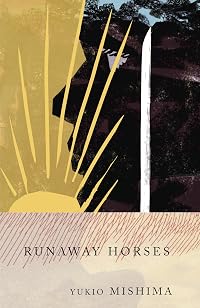
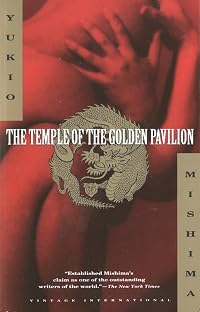
Yukio Mishima, the pseudonym for Hiraoka Kimitake, was born in Tokyo in 1925. His work covers many styles: poetry, essays, modern Kabuki ja Noh drama, and novels. Among his masterpieces are The Temple of the Golden Pavilion, and the four-volume novel Sea of Fertility, which outlines the Japanese experience in the 20th century. Each of the four show more volumes in this series has a distinct title--Spring Snow, Runaway Horses, The Temple of Dawn, and Five Signs of a God's Decay--and they were published over a six-year period, from 1965-1970. Mishima's plays include Tenth Day Chrysanthemum, and the Kabuki piece The Moon Like a Drawn Bow. Although Mishima was been nominated three times for the Nobel Prize for Literature, he never received it. Nevertheless, he is considered by many critics as one of the most important Japanese novelists of the 20th century. Yukio Mishima died by his own hand in 1970, committing seppuku (ritual disembowelment). (Bowker Author Biography) show less
Series
Belongs to Publisher Series
Work Relationships
Is contained in
Common Knowledge
- Canonical title
- Sun and Steel
- Original title
- 太陽と鉄
- Original publication date
- 1970
- People/Characters
- Ouroboros
- Related movies
- Mishima: A Life in Four Chapters (1985 | IMDb)
- First words
- Of late, I have come to sense within myself an accumulation of all kinds of things that cannot find adequate expression via an objective artistic form such as the novel.
- Quotations
- In the average person, I imagine, the body precedes language. In my case, words came first...
The brain was no longer protected by unyielding bone, but had become permeable, like a sponge floating on water. The inner world and the outer world had invaded each other, had become completely interchangeable.
Everything that comes into our minds even for the briefest of moments, exists. Even though it may not exist at this actual moment, it has existed somewhere in the past, or will exist at some time in the future. - Last words
- (Click to show. Warning: May contain spoilers.)To punish me for not believing in myself / Or for believing too much; / Too eager to know where lay my allegiance / Or vainly assuming that already I knew all; / For wanting to fly off / To the unknown / Or the known; / Both of them a single, blue speck of an idea?
Classifications
- Genre
- Biography & Memoir
- DDC/MDS
- 813 — Literature & rhetoric American literature in English American fiction in English
- LCC
- PL833 .I7 .T313 — Language and Literature Languages and literatures of Eastern Asia, Africa, Oceania Languages of Eastern Asia, Africa, Oceania Japanese language and literature Japanese literature Individual authors and works
- BISAC
Statistics
- Members
- 705
- Popularity
- 40,571
- Reviews
- 9
- Rating
- (3.46)
- Languages
- 9 — English, French, German, Italian, Japanese, Portuguese, Russian, Spanish, Swedish
- Media
- Paper, Audiobook, Ebook
- ISBNs
- 29
- UPCs
- 1
- ASINs
- 15