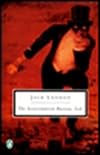
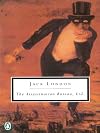
The Assassination Bureau, Ltd.
by Jack London
On This Page
Description
London's suspense thriller focuses on the fine distinction between state- justified murder and criminal violence in the Assassination Bureau--an organization whose mandate is to rid the state of all its enemies. For more than seventy years, Penguin has been the leading publisher of classic literature in the English-speaking world. With more than 1,700 titles, Penguin Classics represents a global bookshelf of the best works throughout history and across genres and disciplines. Readers trust show more the series to provide authoritative texts enhanced by introductions and notes by distinguished scholars and contemporary authors, as well as up-to-date translations by award-winning translators. show lessTags
Recommendations




















Member Recommendations
Member Reviews
Murder is messy, and deeply unglamorous. It usually involves something like a bloke in a mismatched track suit holding a grudge and a bloodied hammer in a pub car park.
Assassination though, that’s a rather different story and, in this case, rather a good one.
Jack London’s portrayal of assassination is a stylish affair. Set in early twentieth century America it has it all; a trans-continental chase featuring steam trains and ocean liners, fine dining, gentlemen, a lady, quite a lot of violence both implied and explicit, and a profound sense that the author thinks that it probably would be a good idea if an organisation such as the Assassination Bureau actually existed.
For The Assassination Bureau Ltd., assassination is an art. More show more than that, assassination, if practiced perfectly, can be a social service. The assassins of the Assassination Bureau Ltd. have practiced their craft and are perfectionists. If a client comes to them and wants a target assassinated, then the Bureau will conduct its own discreet enquiries and only if convinced that the assassination is socially and morally justified will it act.
This purpose is set out in the first few pages of the book. If you have the money, you can approach the Bureau to have somebody killed.
So it is that rather unpleasant types are done away with (apparently in a variety of styles, business clients prefer to have their enemies disposed of in a discreet fashion, whilst anarchist groups prefer something a little more ‘red’), as those too frightened to bloody their own hands hand over a sizeable wad of cash. The services of the Bureau do not come cheap. The Assassination Bureau, it is clear, is very much a luxury service.
Ivan Dragamiloff, Chief of the Bureau, is convinced of its moral rightness, as are those assassins, skilled craftsmen all, who deliver the service. Indeed, a sizeable chunk of the novel is given over to the debate about the rightness, or otherwise, of a select, secretive and unaccountable body of men engineering social change, to the benefit of their bank balance, by bullet and bomb.
The opening pages are fascinating enough, a secret society of assassins, moral ambiguity and a Chief of an organisation who has the decency to run the Bureau from a book lined study with a deaf-mute servant. Things step up a gear though when the fabulously named Winter Hill discovers the existence of the Bureau, meets with the Chief and, after successfully convincing the Chief of the moral wrongness of the organisation, pays for the Chief himself to be assassinated, by his own organisation.
Bound by the strict moral code that allows the assassins to do their work with an easy conscience, the Bureau set about trying to assassinate the Chief, himself a master assassin.
The pace is relentless, letting up only for occasional truces that usually involve a spot of fine dining followed by mayhem. The narrative stays with Hill and the chase is played out in a series of telegrams he receives as the members of the Bureau try, and fail, to assassinate their own Chief. As a narrative device, it’s a compelling, interesting way of building suspense. Then, as the chase moves into high gear and the protagonists come together for a series of confrontations building towards the climax, the narrative becomes more conventional, even if the subject matter does not.
Moral certainties are examined in some detail in the book. Of course there is the whole ‘is it right to kill a bad person’ question which kickstarts the plot with the same instant results as slippering a fox, but other questions arise too, such as just who is in a position to judge who is bad? The victims of the Bureau include thugs and bent policemen and corrupt politicians, but also respected businessmen, beloved family men, who happen to, at some point in their past, have had a ruinous effect on the lives of others. One can reform oneself, but one cannot escape the past.
An outstanding read and a romantic vision of a bygone age when value really was put on personal service, even if it was of a type you would rather have avoided. show less
Assassination though, that’s a rather different story and, in this case, rather a good one.
Jack London’s portrayal of assassination is a stylish affair. Set in early twentieth century America it has it all; a trans-continental chase featuring steam trains and ocean liners, fine dining, gentlemen, a lady, quite a lot of violence both implied and explicit, and a profound sense that the author thinks that it probably would be a good idea if an organisation such as the Assassination Bureau actually existed.
For The Assassination Bureau Ltd., assassination is an art. More show more than that, assassination, if practiced perfectly, can be a social service. The assassins of the Assassination Bureau Ltd. have practiced their craft and are perfectionists. If a client comes to them and wants a target assassinated, then the Bureau will conduct its own discreet enquiries and only if convinced that the assassination is socially and morally justified will it act.
This purpose is set out in the first few pages of the book. If you have the money, you can approach the Bureau to have somebody killed.
So it is that rather unpleasant types are done away with (apparently in a variety of styles, business clients prefer to have their enemies disposed of in a discreet fashion, whilst anarchist groups prefer something a little more ‘red’), as those too frightened to bloody their own hands hand over a sizeable wad of cash. The services of the Bureau do not come cheap. The Assassination Bureau, it is clear, is very much a luxury service.
Ivan Dragamiloff, Chief of the Bureau, is convinced of its moral rightness, as are those assassins, skilled craftsmen all, who deliver the service. Indeed, a sizeable chunk of the novel is given over to the debate about the rightness, or otherwise, of a select, secretive and unaccountable body of men engineering social change, to the benefit of their bank balance, by bullet and bomb.
The opening pages are fascinating enough, a secret society of assassins, moral ambiguity and a Chief of an organisation who has the decency to run the Bureau from a book lined study with a deaf-mute servant. Things step up a gear though when the fabulously named Winter Hill discovers the existence of the Bureau, meets with the Chief and, after successfully convincing the Chief of the moral wrongness of the organisation, pays for the Chief himself to be assassinated, by his own organisation.
Bound by the strict moral code that allows the assassins to do their work with an easy conscience, the Bureau set about trying to assassinate the Chief, himself a master assassin.
The pace is relentless, letting up only for occasional truces that usually involve a spot of fine dining followed by mayhem. The narrative stays with Hill and the chase is played out in a series of telegrams he receives as the members of the Bureau try, and fail, to assassinate their own Chief. As a narrative device, it’s a compelling, interesting way of building suspense. Then, as the chase moves into high gear and the protagonists come together for a series of confrontations building towards the climax, the narrative becomes more conventional, even if the subject matter does not.
Moral certainties are examined in some detail in the book. Of course there is the whole ‘is it right to kill a bad person’ question which kickstarts the plot with the same instant results as slippering a fox, but other questions arise too, such as just who is in a position to judge who is bad? The victims of the Bureau include thugs and bent policemen and corrupt politicians, but also respected businessmen, beloved family men, who happen to, at some point in their past, have had a ruinous effect on the lives of others. One can reform oneself, but one cannot escape the past.
An outstanding read and a romantic vision of a bygone age when value really was put on personal service, even if it was of a type you would rather have avoided. show less
Review first posted at BookLikes:
http://brokentune.booklikes.com/post/804739/the-assassination-bureau
“You know it is our rule never to fill an order until we are satisfied that it is socially justifiable,” Dragomiloff observed quietly.
The Assassination Bureau is an organisation hired killers managed by the enigmatic Dragomiloff, but they do not just kill anyone for money. Oh, no. Their credo is that the killing must benefit society. And Dragomiloff and his madmen go to quite some lengths to ensure the background checks on their victims are thorough. However, one day, a client manages to convince Dragomiloff that he takes exception to one of their projects and hires The Assassination Bureau to assassinate Dragomiloff because of his show more mistake - the unjustifiable killing of a previous victim. And so the hunt begins...
When I thought of Jack London, I thought of Call of the Wild, White Fang and of the short stories about hobos traveling the country jumping from one railway to another that we read in eight grade English Lit class.
The very last story I would have associated Jack London with is The Assassination Bureau, which prior to reading I only knew as a film starring Oliver Reed and Diana Rigg. Having seen the film, I always thought of The Assassination Bureau being set in Europe in the 60s. I can't remember whether the film contained this or whether my memory just associates it with this setting because of the actors, but this is the image I get. So, it was quite a shock when I read that the actual book was set in the US in 1911.
I mean to think of 1910/11, years before the Russian Revolution, still years before the Great War even, and have a story that defies the social and philosophical boundaries which seemed to have enveloped most of the western world - it is just astounding. show less
http://brokentune.booklikes.com/post/804739/the-assassination-bureau
“You know it is our rule never to fill an order until we are satisfied that it is socially justifiable,” Dragomiloff observed quietly.
The Assassination Bureau is an organisation hired killers managed by the enigmatic Dragomiloff, but they do not just kill anyone for money. Oh, no. Their credo is that the killing must benefit society. And Dragomiloff and his madmen go to quite some lengths to ensure the background checks on their victims are thorough. However, one day, a client manages to convince Dragomiloff that he takes exception to one of their projects and hires The Assassination Bureau to assassinate Dragomiloff because of his show more mistake - the unjustifiable killing of a previous victim. And so the hunt begins...
When I thought of Jack London, I thought of Call of the Wild, White Fang and of the short stories about hobos traveling the country jumping from one railway to another that we read in eight grade English Lit class.
The very last story I would have associated Jack London with is The Assassination Bureau, which prior to reading I only knew as a film starring Oliver Reed and Diana Rigg. Having seen the film, I always thought of The Assassination Bureau being set in Europe in the 60s. I can't remember whether the film contained this or whether my memory just associates it with this setting because of the actors, but this is the image I get. So, it was quite a shock when I read that the actual book was set in the US in 1911.
I mean to think of 1910/11, years before the Russian Revolution, still years before the Great War even, and have a story that defies the social and philosophical boundaries which seemed to have enveloped most of the western world - it is just astounding. show less
I don't know a lot about philosophy, so this would probably be philosophy 101 for those who do, but I enjoyed the ongoing debate about ethics throughout the book. It's quite a morbid book (just look at the title & concept), yet also fun with a bit of a joie de vivre attitude. I will give you a George R.R. Martin type warning: don't get too attached to particular characters!
The book did have a note at the end telling how far London got in writing the book, as well as showing his notes for the remainder of the story. While Fish got the transition & tone correct (I hadn't noticed when it changed from one author to another), he apparently deviated quite a bit from London's original plans for the story. I felt that the sections by Fish, show more including the ending, fit the story well. Hardcore London fans might be disappointed that Fish didn't more closely follow London's original plans. I guess that's up to the individual reader, but I think the story stands well as is.
I know The Call of the Wild, White Fang and Other Stories is often assigned reading for high schoolers. It might be fun to trade it out for this lesser-known London book some of the time. There are plenty of discussion themes & ideas, as well as the conversation that can be had about the author's intent vs. having another author finish the story (differently) decades later. As I classified Poe's only novel The Narrative of Arthur Gordon Pym of Nantucket and Related Tales a 'lost' American classic, so will I classify this story as another 'lost' American classic. Worth reading. show less
The book did have a note at the end telling how far London got in writing the book, as well as showing his notes for the remainder of the story. While Fish got the transition & tone correct (I hadn't noticed when it changed from one author to another), he apparently deviated quite a bit from London's original plans for the story. I felt that the sections by Fish, show more including the ending, fit the story well. Hardcore London fans might be disappointed that Fish didn't more closely follow London's original plans. I guess that's up to the individual reader, but I think the story stands well as is.
I know The Call of the Wild, White Fang and Other Stories is often assigned reading for high schoolers. It might be fun to trade it out for this lesser-known London book some of the time. There are plenty of discussion themes & ideas, as well as the conversation that can be had about the author's intent vs. having another author finish the story (differently) decades later. As I classified Poe's only novel The Narrative of Arthur Gordon Pym of Nantucket and Related Tales a 'lost' American classic, so will I classify this story as another 'lost' American classic. Worth reading. show less
Jack London's unfinished novel, finished by another. The premise is just fabulous; the leader of a gang of assassins-for-hire is hired to have himself assassinated by his own employees...chaos ensues, along with much philosphising and humour.
The moral enigma at the centre of the story is (weirdly) reminiscent of that faced by Gawain when he has to go to the Green Chapel - and in my mind the solution is the same, too.
The tone of the novel is uniform to such an extent that I did not notice the transition from London's own work to that of the person who finished the novel. Both authors were on top form for this one, which could be said to be in the same vein as The Sea-wolf, but with tongue stuck firmly in cheek.
The moral enigma at the centre of the story is (weirdly) reminiscent of that faced by Gawain when he has to go to the Green Chapel - and in my mind the solution is the same, too.
The tone of the novel is uniform to such an extent that I did not notice the transition from London's own work to that of the person who finished the novel. Both authors were on top form for this one, which could be said to be in the same vein as The Sea-wolf, but with tongue stuck firmly in cheek.
Left unfinished at the time of London's death in 1916, this "thriller" - for lack of a better word - was completed by Robert L. Fish and published in 1963. Some say that this book eerily foreshadowed the conspiracy theories that abound regarding the assassination of President Kennedy that occurred later that same year. My first impression upon reading this story was one of surprise. Having only previously read The Call of the Wild, this one, filled with philosophical, moralistic and socialistic ideals was a bit unexpected. The story definitely has a dated quality to it, and some of the finer details don't work very well upon examination, but I get the impression that London chose to write this story more as a vehicle to communicate his show more ideals than as a mere work of cloak and dagger vigilantism fiction. To that end, it does stand up to the test of time and rings as true today as it probably would have back at the start of the 20th century when London was writing it. If you are going to read it, don't expect to be blown away by the plot, the dialogue or the characters. The plot has some good bits but after a while, I could see how the 'game' was going to play out, just not the fine details on how it was going to get to its final conclusion. I found the characters to be rather flat and prone to repeating their lines and behaving rather 'lunatic' to choose London's own term to describe the majority of them. It is an okay piece of thriller story but I think it might readers will get more out of the story if they read it as a manifesto of sorts: London's manifesto against a social machine of such perfect creation that it can only be destroyed by destroying it creator.
The copy I read included an indication at the end of the story as to where London had stopped writing and Fish had picked up the story to complete it. It also contained some of London's story notes and a possible ending written by Charmain London, Jack's second wife. To give Fish credit, he managed to take London's unfinished manuscript and carried on with London's writing style, giving the story a cohesive flow to it. It appears, based on London's story notes that Fish deviated from London's proposed story arc. While I will never be able to compare London's ending to Fish's, I am not sure I would have appreciated the ending that London was proposing. I really did not like the ending written by Charmain, either, although it was more in fitting with the story as London had envisioned.
Overall, an interesting story that tends to find itself veering away from the chase at hand to delve into high brow theoretical discussions of morals and philosophy with statements like this one:
The following quote sums things up beautifully:
The copy I read included an indication at the end of the story as to where London had stopped writing and Fish had picked up the story to complete it. It also contained some of London's story notes and a possible ending written by Charmain London, Jack's second wife. To give Fish credit, he managed to take London's unfinished manuscript and carried on with London's writing style, giving the story a cohesive flow to it. It appears, based on London's story notes that Fish deviated from London's proposed story arc. While I will never be able to compare London's ending to Fish's, I am not sure I would have appreciated the ending that London was proposing. I really did not like the ending written by Charmain, either, although it was more in fitting with the story as London had envisioned.
Overall, an interesting story that tends to find itself veering away from the chase at hand to delve into high brow theoretical discussions of morals and philosophy with statements like this one:
"The world is founded on morality. Without morality the world would perish. There is a righteousness in the elements themselves. Destroy morality and you would destroy gravitation. The very rocks would fly apart. The whole sidereal system would fume into the unthinkableness of chaos."
The following quote sums things up beautifully:
"It is the chaos of super-thinking," she said helplessly. "It is ethics gone mad."show less
Ivan Dragomilov runs a well-put-together business, organized to perfection, taking in ample profits and, to his mind, improving the world. Ivan Dragomilov is the creator of the Assassination Bureau. Clients pay fees to shuffle someone off this mortal coil, but it is only done after the Bureau itself ascertains the morality of the situation. Things get a little hairy then, when a young philosopher comes in and sets a fee on Dragomilov's head and then goes about proving the kill to be, in fact, a right.
It's an interesting story--not an action novel, by any means. London provides you with well enough action to keep things moving, but he does not shy away from talking. Which he would have been wrong to do, given the philosophical nature of show more not only the bureau, but each character placed within the story. There are hardly any pages lacking extended conversations, and with the assassins themselves being highly educated middle-class men, they tend to get sidetracked. It reminded me of an open discussion in a lecture hall, with kind an polite people decrying other's inadvertant missteps, offering their own and participating in an honest give and take. At the same time, there are people being murdered right and left, and the reader is asked to realize that these seemingly sane people sitting around debating the moral center or lack thereof of the universe are the men that go out and kill people.
The main reason we see little of the action is that we are following not Dragomilov but Winter Hall, the young man who proved the Bureau's wrongness but became good friends with its leader in the process, and Grunya, Dragomilov's niece and Hall's love, when she is with him. Hall sets out to follow his new friend, hoping to dissuade the man's fervent belief that he must now die by the hands of the bureau or at least protect him until the year is over and he is released from the contract. Grunya does not know everything at first, but sets out to find and protect her uncle from the foreboding and mysterious company.
Anyway. I liked the book. It's a little heavy at times, but it reminded me somewhat of The Man Who Was Thursday [Chesterton], where it's like a game of madness run by these clean, polite madmen who seem as though the could pass a pleasant conversation on the sidewalk with you. Weird.
Sidenote--it's not just by Jack London. He actually never finished it. It was finished by Robert L. Fish going from London's notes. Personally, I did not notice the change. But I'm not exactly the most aware person. You know? show less
It's an interesting story--not an action novel, by any means. London provides you with well enough action to keep things moving, but he does not shy away from talking. Which he would have been wrong to do, given the philosophical nature of show more not only the bureau, but each character placed within the story. There are hardly any pages lacking extended conversations, and with the assassins themselves being highly educated middle-class men, they tend to get sidetracked. It reminded me of an open discussion in a lecture hall, with kind an polite people decrying other's inadvertant missteps, offering their own and participating in an honest give and take. At the same time, there are people being murdered right and left, and the reader is asked to realize that these seemingly sane people sitting around debating the moral center or lack thereof of the universe are the men that go out and kill people.
The main reason we see little of the action is that we are following not Dragomilov but Winter Hall, the young man who proved the Bureau's wrongness but became good friends with its leader in the process, and Grunya, Dragomilov's niece and Hall's love, when she is with him. Hall sets out to follow his new friend, hoping to dissuade the man's fervent belief that he must now die by the hands of the bureau or at least protect him until the year is over and he is released from the contract. Grunya does not know everything at first, but sets out to find and protect her uncle from the foreboding and mysterious company.
Anyway. I liked the book. It's a little heavy at times, but it reminded me somewhat of The Man Who Was Thursday [Chesterton], where it's like a game of madness run by these clean, polite madmen who seem as though the could pass a pleasant conversation on the sidewalk with you. Weird.
Sidenote--it's not just by Jack London. He actually never finished it. It was finished by Robert L. Fish going from London's notes. Personally, I did not notice the change. But I'm not exactly the most aware person. You know? show less
This little novelette is a fun – but also challenging – piece of work. Is it Jack London’s best work? No. Far from it. But it was sufficiently stimulating to get me to go back and read his short story “To Build a Fire” – which I consider to be one of the finest in American literature, and which I first read over thirty years ago.
Whatever you may think of the conceit of this story – and there are many here who question it, and who also suggest that the story falls flat at the end (which I quite disagree with) – I can’t help but be impressed by London’s command, given the brevity of his formal education, of some major ethical and metaphysical concepts. These are naturally and fluently brought out in the several show more discussions among the members of the Assassination Bureau, Ltd. – the eponymous title of this novelette.
Does The Assassination Bureau, Ltd. move a reader in the same way that “To Build a Fire,” White Fang or The Call of the Wild might? No. Certainly not. But the swan’s song work of a writer of Jack London’s stature – not to mention Robert L. Fish’s work in completing the story – are certainly worth an adventurous reader’s attention.
RRB
Brooklyn, NY, U.S.A.
07/06/14 show less
Whatever you may think of the conceit of this story – and there are many here who question it, and who also suggest that the story falls flat at the end (which I quite disagree with) – I can’t help but be impressed by London’s command, given the brevity of his formal education, of some major ethical and metaphysical concepts. These are naturally and fluently brought out in the several show more discussions among the members of the Assassination Bureau, Ltd. – the eponymous title of this novelette.
Does The Assassination Bureau, Ltd. move a reader in the same way that “To Build a Fire,” White Fang or The Call of the Wild might? No. Certainly not. But the swan’s song work of a writer of Jack London’s stature – not to mention Robert L. Fish’s work in completing the story – are certainly worth an adventurous reader’s attention.
RRB
Brooklyn, NY, U.S.A.
07/06/14 show less
Members
- Recently Added By
Author Information

1,809+ Works 82,070 Members
One of the pioneers of 20th century American literature, Jack London specialized in tales of adventure inspired by his own experiences. London was born in San Francisco in 1876. At 14, he quit school and became an "oyster pirate," robbing oyster beds to sell his booty to the bars and restaurants in Oakland. Later, he turned on his pirate show more associates and joined the local Fish Patrol, resulting in some hair-raising waterfront battles. Other youthful activities included sailing on a seal-hunting ship, traveling the United States as a railroad tramp, a jail term for vagrancy and a hazardous winter in the Klondike during the 1897 gold rush. Those experiences converted him to socialism, as he educated himself through prolific reading and began to write fiction. After a struggling apprenticeship, London hit literary paydirt by combining memories of his adventures with Darwinian and Spencerian evolutionary theory, the Nietzchean concept of the "superman" and a Kipling-influenced narrative style. "The Son of the Wolf"(1900) was his first popular success, followed by 'The Call of the Wild" (1903), "The Sea-Wolf" (1904) and "White Fang" (1906). He also wrote nonfiction, including reportage of the Russo-Japanese War and Mexican revolution, as well as "The Cruise of the Snark" (1911), an account of an eventful South Pacific sea voyage with his wife, Charmian, and a rather motley crew. London's body broke down prematurely from his rugged lifestyle and hard drinking, and he died of uremic poisoning - possibly helped along by a morphine overdose - at his California ranch in 1916. Though his massive output is uneven, his best works - particularly "The Call of the Wild" and "White Fang" - have endured because of their rich subject matter and vigorous prose. (Bowker Author Biography) show less
All Editions
Some Editions
Awards and Honors
Distinctions
Series
Belongs to Publisher Series
Work Relationships
Common Knowledge
- Canonical title
- The Assassination Bureau, Ltd.
- Original title
- The Assassination Bureau, Ltd.
- Original publication date
- 1963
- Related movies
- The Assassination Bureau (1969 | IMDb)
- First words
- He was a handsome man, with large liquid-black eyes, an olive complexion that was laid upon a skin clear, clean, and of surpassing smoothness of texture, and with a mop of curly black hair that invited fondling—in short, th... (show all)e kind of a man that women like to look upon, and also, the kind of a man who is quite thoroughly aware of this insinuative quality of his looks.
- Last words
- (Click to show. Warning: May contain spoilers.)"No, my darling. You were not wrong."
- Publisher's editor
- Symons, Julian
Classifications
Statistics
- Members
- 368
- Popularity
- 85,697
- Reviews
- 12
- Rating
- (3.41)
- Languages
- 10 — Dutch, English, Finnish, French, German, Greek, Hungarian, Italian, Norwegian (Bokmål), Spanish
- Media
- Paper, Audiobook, Ebook
- ISBNs
- 34
- ASINs
- 17