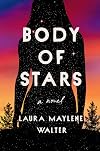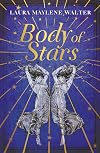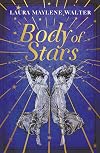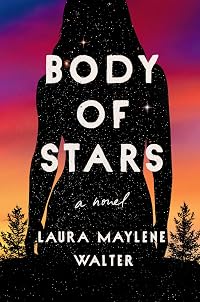
Body of Stars
by Laura Maylene Walter
On This Page
Description
"From debut novelist Laura Maylene Walter, a bold and dazzling exploration of fate and female agency in a world very similar to our own--except that the markings on women's bodies reveal the future"--Tags
Recommendations











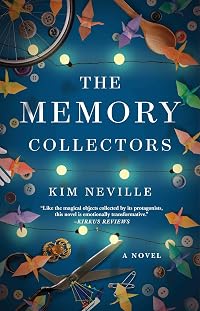






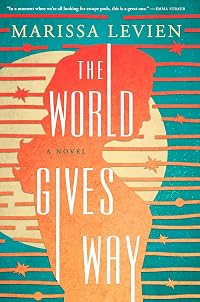
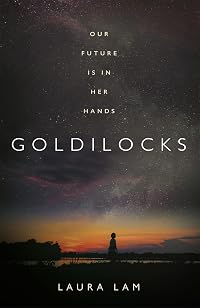


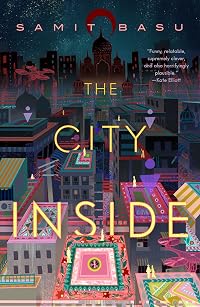

















Member Recommendations

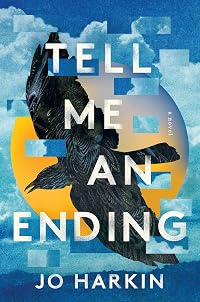
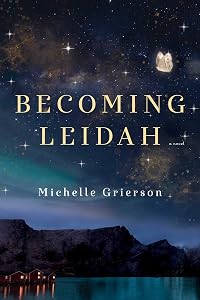
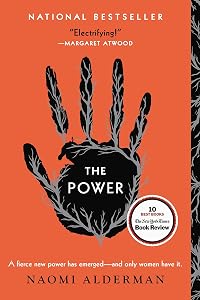
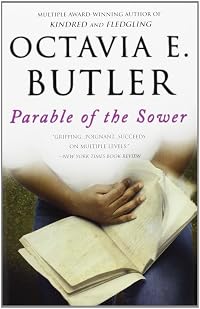
JenniferRobb Both books explore an alternate reality where women have a role and resistance movements arise to work against that role.
Member Reviews
Celeste was born with a set of markings on her body that can be interpreted to tell her future. Like every other girl her age, she is waiting for her changeling period to usher her into adulthood and a new set of markings that will detail her life and that of those around her. However, when it happens, Celeste finds herself wishing that she could go back to her girlhood markings, the markings that did not predict the destruction of her family as she knows it. What will she do with this information? Does she have a hope of changing it?
Walter has created an eerily similar world where patriarchy and rape culture run rampant. No female is entitled to her own body. It is seen merely a tool for everyone else to look at or enjoy, with those show more that eschew participating in the tradition being othered by society. Not only does the author create an engrossing story, but she also makes the reader reflect on novel's the parallels to modern day America. I loved Body of Stars and only docked a star because Walter seemed to open a few storylines that were not wrapped up. Does this mean a sequel is in the works? I hope so! show less
Walter has created an eerily similar world where patriarchy and rape culture run rampant. No female is entitled to her own body. It is seen merely a tool for everyone else to look at or enjoy, with those show more that eschew participating in the tradition being othered by society. Not only does the author create an engrossing story, but she also makes the reader reflect on novel's the parallels to modern day America. I loved Body of Stars and only docked a star because Walter seemed to open a few storylines that were not wrapped up. Does this mean a sequel is in the works? I hope so! show less
A Dystopia That Blames the Victim
In Laura Maylene Walter’s inventive dystopian parallel world, young women bear the full brunt of sexual abuse that includes pedophilic rape. In this world, mole patterns on women loosely predict the future, burden enough, as protagonist Celeste discovers. But also when they reach maturity, transitioning from girls to women, they acquire a radiant magnetism that proves nearly irresistible to men. It falls on these young women, really still girls, to protect their chastity from gangs that kidnap them and offer them up to older men. When this happens, society ostracizes them, the victims, cutting them off from higher education, good jobs, and the like. They, and even their families, bear the full brunt of show more this brutal act committed against them.
If that sounds familiar, it should, because in essence women in this world face a similar fate. In the fictional Body of Stars, we can feel enraged by the suffering of these women, an emotion quite often missing from this world’s outrages. One only has to witness the treatment visited upon rape victims and women who protest their harassment to see the truth in this.
Over the past couple of years, several novels pointedly focusing on how society oppresses and controls women have appeared, emphasizing the fact in extremis. Some are very good, among them Red Clocks (abortion prohibition, personhood amendment), Gather the Daughters (religious cult incest), and The Mercies (religious and societal control), and some not quite as good, among them Blue Ticket (absolute control) and Vox (silencing). While imaginative and concentrating how society often ignores, disbelieves, or blames the victims of rape, Body of Stars as a novel falls somewhere between the very good and the others. This novel would have benefited from a bit of pruning, along with somewhat more spirited prose. Most of all, though, for all the time invested in traveling through Celeste’s world experiencing her tribulations and following her and her brother Miles’ efforts to redress the situation, it ends flatly. It’s one of those novels where readers will want a little more, but nonetheless an interesting debut that might promise better things to come. show less
In Laura Maylene Walter’s inventive dystopian parallel world, young women bear the full brunt of sexual abuse that includes pedophilic rape. In this world, mole patterns on women loosely predict the future, burden enough, as protagonist Celeste discovers. But also when they reach maturity, transitioning from girls to women, they acquire a radiant magnetism that proves nearly irresistible to men. It falls on these young women, really still girls, to protect their chastity from gangs that kidnap them and offer them up to older men. When this happens, society ostracizes them, the victims, cutting them off from higher education, good jobs, and the like. They, and even their families, bear the full brunt of show more this brutal act committed against them.
If that sounds familiar, it should, because in essence women in this world face a similar fate. In the fictional Body of Stars, we can feel enraged by the suffering of these women, an emotion quite often missing from this world’s outrages. One only has to witness the treatment visited upon rape victims and women who protest their harassment to see the truth in this.
Over the past couple of years, several novels pointedly focusing on how society oppresses and controls women have appeared, emphasizing the fact in extremis. Some are very good, among them Red Clocks (abortion prohibition, personhood amendment), Gather the Daughters (religious cult incest), and The Mercies (religious and societal control), and some not quite as good, among them Blue Ticket (absolute control) and Vox (silencing). While imaginative and concentrating how society often ignores, disbelieves, or blames the victims of rape, Body of Stars as a novel falls somewhere between the very good and the others. This novel would have benefited from a bit of pruning, along with somewhat more spirited prose. Most of all, though, for all the time invested in traveling through Celeste’s world experiencing her tribulations and following her and her brother Miles’ efforts to redress the situation, it ends flatly. It’s one of those novels where readers will want a little more, but nonetheless an interesting debut that might promise better things to come. show less
just because a society believes in & accepts fate, forces greater than the material, it can still strip individual agency & dignity. you'd think that in such a world, nurturing the spirit would be tantamount -- how could you not when the proof of such energy is right there, literally printed, visible, on women's bodies? but the social power structure of this world, as with the real world, is designed to control by subduing. this aspect of the novel broke my heart the most, as someone who wishes so hard for proof of the mysterious in my own life. imagine living with such proof, but because of your society, it's not uplifting, fulfilling, but a burden? worse than a burden, it's just another cog of the day-to-day, until [unless] it becomes show more Danger, then it's your ruin.
Celeste narrates from a point in the future, & hints that it is a future greatly changed from what she expected at the time the events of the novel take place. you never get more than hints in the end, which left me just a bit dissatisfied.
overall an enjoyable, thought-provoking novel. show less
Celeste narrates from a point in the future, & hints that it is a future greatly changed from what she expected at the time the events of the novel take place. you never get more than hints in the end, which left me just a bit dissatisfied.
overall an enjoyable, thought-provoking novel. show less
Imagine you are a woman in the universe of this book, wherefrom the moment you're born you have markings on your skin that tell your future. Then, around the age of 16 you undergo a process of change into your adult person and you get more detailed markings, that set your future in stone. You are also overwhelmingly attractive for that short period of time, which can lead you to your doom.
It is a privilege to know, the characters tend to believe, and men who do not have this privilege are obsessed with knowing. They reserve the right to read the markings of their family members in order to learn more about themselves. They also get strangely attracted to all the changelings and that is when many girls are abducted, their future ruined. show more Because it is only their fault for allowing it to happen.
The setup for this novel was genius. What a great way to explore female agency and objectivization of the female body. But, the delivery was not great. The characters remained superficial, there were some plot holes and strange deus ex-machina solutions. More importantly, I didn't care much for the characters as there was not much depth to them. This book is centred around its message, but whenever the message is so strong, I prefer seeing more substance in the actual novel. show less
It is a privilege to know, the characters tend to believe, and men who do not have this privilege are obsessed with knowing. They reserve the right to read the markings of their family members in order to learn more about themselves. They also get strangely attracted to all the changelings and that is when many girls are abducted, their future ruined. show more Because it is only their fault for allowing it to happen.
The setup for this novel was genius. What a great way to explore female agency and objectivization of the female body. But, the delivery was not great. The characters remained superficial, there were some plot holes and strange deus ex-machina solutions. More importantly, I didn't care much for the characters as there was not much depth to them. This book is centred around its message, but whenever the message is so strong, I prefer seeing more substance in the actual novel. show less
A Dystopia That Blames the Victim
In Laura Maylene Walter’s inventive dystopian parallel world, young women bear the full brunt of sexual abuse that includes pedophilic rape. In this world, mole patterns on women loosely predict the future, burden enough, as protagonist Celeste discovers. But also when they reach maturity, transitioning from girls to women, they acquire a radiant magnetism that proves nearly irresistible to men. It falls on these young women, really still girls, to protect their chastity from gangs that kidnap them and offer them up to older men. When this happens, society ostracizes them, the victims, cutting them off from higher education, good jobs, and the like. They, and even their families, bear the full brunt of show more this brutal act committed against them.
If that sounds familiar, it should, because in essence women in this world face a similar fate. In the fictional Body of Stars, we can feel enraged by the suffering of these women, an emotion quite often missing from this world’s outrages. One only has to witness the treatment visited upon rape victims and women who protest their harassment to see the truth in this.
Over the past couple of years, several novels pointedly focusing on how society oppresses and controls women have appeared, emphasizing the fact in extremis. Some are very good, among them Red Clocks (abortion prohibition, personhood amendment), Gather the Daughters (religious cult incest), and The Mercies (religious and societal control), and some not quite as good, among them Blue Ticket (absolute control) and Vox (silencing). While imaginative and concentrating how society often ignores, disbelieves, or blames the victims of rape, Body of Stars as a novel falls somewhere between the very good and the others. This novel would have benefited from a bit of pruning, along with somewhat more spirited prose. Most of all, though, for all the time invested in traveling through Celeste’s world experiencing her tribulations and following her and her brother Miles’ efforts to redress the situation, it ends flatly. It’s one of those novels where readers will want a little more, but nonetheless an interesting debut that might promise better things to come. show less
In Laura Maylene Walter’s inventive dystopian parallel world, young women bear the full brunt of sexual abuse that includes pedophilic rape. In this world, mole patterns on women loosely predict the future, burden enough, as protagonist Celeste discovers. But also when they reach maturity, transitioning from girls to women, they acquire a radiant magnetism that proves nearly irresistible to men. It falls on these young women, really still girls, to protect their chastity from gangs that kidnap them and offer them up to older men. When this happens, society ostracizes them, the victims, cutting them off from higher education, good jobs, and the like. They, and even their families, bear the full brunt of show more this brutal act committed against them.
If that sounds familiar, it should, because in essence women in this world face a similar fate. In the fictional Body of Stars, we can feel enraged by the suffering of these women, an emotion quite often missing from this world’s outrages. One only has to witness the treatment visited upon rape victims and women who protest their harassment to see the truth in this.
Over the past couple of years, several novels pointedly focusing on how society oppresses and controls women have appeared, emphasizing the fact in extremis. Some are very good, among them Red Clocks (abortion prohibition, personhood amendment), Gather the Daughters (religious cult incest), and The Mercies (religious and societal control), and some not quite as good, among them Blue Ticket (absolute control) and Vox (silencing). While imaginative and concentrating how society often ignores, disbelieves, or blames the victims of rape, Body of Stars as a novel falls somewhere between the very good and the others. This novel would have benefited from a bit of pruning, along with somewhat more spirited prose. Most of all, though, for all the time invested in traveling through Celeste’s world experiencing her tribulations and following her and her brother Miles’ efforts to redress the situation, it ends flatly. It’s one of those novels where readers will want a little more, but nonetheless an interesting debut that might promise better things to come. show less
This is an imaginative story of a world that seems quite realistic except that females know their destiny because of the markings on their bodies. Imagine if a mole here or there on you predicted your future with certainty: career, marriage, family, health. At a certain time in their teens, girls would become women and their permanent markings would be revealed. During the few weeks surrounding this dramatic event, girls' senses would be heightened, as would males' responses to them, putting them in extreme danger. Celeste and her brother Miles anxiously awaited her passage, and when it happened their world turned upside down. At one point Celeste considers the possibility of a world where women do not know their fate, and imagines only show more that they must feel rudderless and lost. Thought-provoking indeed. show less
3.5-4.0 stars.
While I don't necessarily agree with the worldview this novel creates, I did think the author did a good job of world building--so much so that at one point, early in the book, I wondered if there was a place in a non-US country where something like the book "Mapping the Future" existed and was practiced.
Some of the plot seemed a bit predictable--Celeste being "lost" for one. Other parts of the plot surprised me: Cassandra and Marie remaining Celeste's friends after she was returned, for example. I was glad that we got to see Celeste find a meaning for her life, but I did wish for a more hopeful ending.
I'm afraid I definitely don't agree that the future is the future (set in stone) and that it can't be changed--well, show more except the we'll all eventually die part of the future--it seems to me that if you're prewarned about something (being abducted perhaps) that there would be ways to try to change that (taking more care--even if it's to the point of being locked in during the changeling time and shortly after).
Disclosure: Over 10 years ago, this author and I were members of the same writers' group. If I remember correctly, our time in the group together was not very long--I believe she was moving on from the fiction group shortly after I joined the group as a member. We do live in the same general geographic area so occasionally we might attend the same event, but we haven't kept in close touch since that writers' group. show less
While I don't necessarily agree with the worldview this novel creates, I did think the author did a good job of world building--so much so that at one point, early in the book, I wondered if there was a place in a non-US country where something like the book "Mapping the Future" existed and was practiced.
Some of the plot seemed a bit predictable--Celeste being "lost" for one. Other parts of the plot surprised me: Cassandra and Marie remaining Celeste's friends after she was returned, for example. I was glad that we got to see Celeste find a meaning for her life, but I did wish for a more hopeful ending.
I'm afraid I definitely don't agree that the future is the future (set in stone) and that it can't be changed--well, show more except the we'll all eventually die part of the future--it seems to me that if you're prewarned about something (being abducted perhaps) that there would be ways to try to change that (taking more care--even if it's to the point of being locked in during the changeling time and shortly after).
Disclosure: Over 10 years ago, this author and I were members of the same writers' group. If I remember correctly, our time in the group together was not very long--I believe she was moving on from the fiction group shortly after I joined the group as a member. We do live in the same general geographic area so occasionally we might attend the same event, but we haven't kept in close touch since that writers' group. show less
Members
- Recently Added By
Lists

Anticipated 2021 Reads
231 works; 7 members

Feminism
167 works; 4 members
Author Information
1+ Work 102 Members
Awards and Honors
Awards
Common Knowledge
Classifications
Statistics
- Members
- 102
- Popularity
- 316,684
- Reviews
- 9
- Rating
- (3.71)
- Languages
- English
- Media
- Paper, Audiobook, Ebook
- ISBNs
- 9
- ASINs
- 1