67 Members (4.50)
On This Page
Description
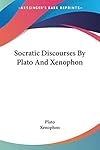
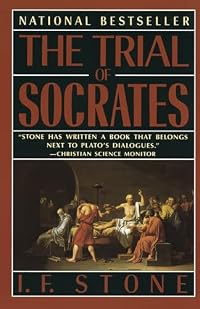
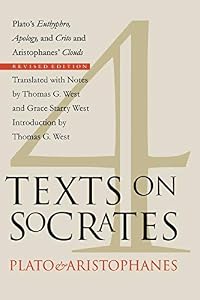
This collection of Socratic discourses brings together the works of several philosophers who were influenced by the teachings of Socrates. Through their dialogues, readers gain insights into the philosophical concepts of ethics, virtue, and morality. This work has been selected by scholars as being culturally important, and is part of the knowledge base of civilization as we know it. This work is in the "public domain in the United States of America, and possibly other nations. Within the show more United States, you may freely copy and distribute this work, as no entity (individual or corporate) has a copyright on the body of the work. Scholars believe, and we concur, that this work is important enough to be preserved, reproduced, and made generally available to the public. We appreciate your support of the preservation process, and thank you for being an important part of keeping this knowledge alive and relevant. show lessTags
Recommendations



















Member Reviews
Members
- Recently Added By
Author Information

2,711+ Works 100,287 Members
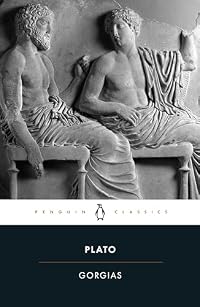
Plato was born c. 427 B.C. in Athens, Greece, to an aristocratic family very much involved in political government. Pericles, famous ruler of Athens during its golden age, was Plato's stepfather. Plato was well educated and studied under Socrates, with whom he developed a close friendship. When Socrates was publically executed in 399 B.C., Plato show more finally distanced himself from a career in Athenian politics, instead becoming one of the greatest philosophers of Western civilization. Plato extended Socrates's inquiries to his students, one of the most famous being Aristotle. Plato's The Republic is an enduring work, discussing justice, the importance of education, and the qualities needed for rulers to succeed. Plato felt governors must be philosophers so they may govern wisely and effectively. Plato founded the Academy, an educational institution dedicated to pursuing philosophic truth. The Academy lasted well into the 6th century A.D., and is the model for all western universities. Its formation is along the lines Plato laid out in The Republic. Many of Plato's essays and writings survive to this day. Plato died in 347 B.C. at the age of 80. (Bowker Author Biography) show less

718+ Works 10,519 Members
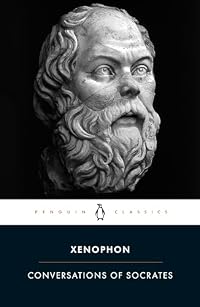
Xenophon's life and personality is better known to us, perhaps, than that of any other Greek who lived before Alexander the Great. Much of his considerable output of historical writing and essays is frankly or implicitly autobiographical. He reveals himself as one of those many Athenians and other Greeks who turned to autocratic political models, show more including admiration of Persia, after the excesses of the Athenian democracy led to disaster in the Peloponnesian War. He also reveals himself as much more than a literary man and a critic of his times. A gentleman adventurer and something of a professional soldier, he followed in turn the philosopher Socrates, the Persian prince Cyrus the Younger, and the Spartan king Agesilaus, all of whom he wrote about with an air of close personal knowledge. His works include the autobiographical Anabasis, an account of his service with a mercenary Greek army that marched from Mesopotamia to the Black Sea after the defeat and death of the younger Cyrus. It provides the most detailed single perspective on the military practices and military mentality of Xenophon's age. His Hellenica, by contrast, is an impersonal continuation to the end of the Peloponnesian War of the work of Thucydides and a patchy memoir that concentrates on Sparta's fortunes until the definitive end of its power in 362 b.c. Xenophon's other major works are the Cyropaedia and the rambling Socratic dialogues known as the Memorabilia. The Cyropaedia is a fictional idealization of the career of Cyrus the Great, the only great conqueror known to the Greeks before Alexander. Often regarded merely as a novel, it is a species of a priori historical reconstruction. A retrojection of the military science and political values of the day into a largely unknown Persia of the past, it is intended to explain Cyrus's success on rational principles. The Memorabilia and the Socratic Apology that comes down with them contain nothing of philosophical value but are thought by some scholars to offer a possible corrective to Plato's altogether too Platonic Socrates. Xenophon had a conventional and second-rate mind, but he is a valuable resource because of his mediocrity. He enables us to make contact with an ordinary intellect from a world that often seems dominated by geniuses. (Bowker Author Biography) show less
Some Editions
Series
Belongs to Publisher Series
Everyman's Library (457)
Classifications
- Genres
- Philosophy, Nonfiction, History
- DDC/MDS
- 183 — Philosophy and Psychology Ancient, medieval & eastern philosophy Sophistic, Socratic, related Greek philosophies
- LCC
- AC1 .E8 — General Works Collections. Series. Collected works Collections. Series. Collected works Collections of monographs, essays, etc. American and English
- BISAC
Statistics
- Members
- 67
- Popularity
- 463,963
- Rating
- (4.50)
- Languages
- English
- Media
- Paper, Ebook
- ISBNs
- 3
- ASINs
- 16