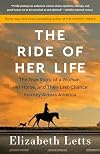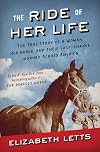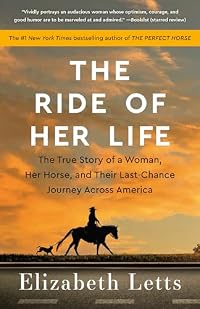
The Ride of Her Life: The True Story of a Woman, Her Horse, and Their Last-Chance Journey Across America
by Elizabeth Letts
On This Page
Description
NATIONAL BESTSELLER • The triumphant true story of a woman who rode her horse across America in the 1950s, fulfilling her dying wish to see the Pacific Ocean, from the #1 New York Times bestselling author of The Perfect Horse and The Eighty-Dollar Champion“The gift Elizabeth Letts has is that she makes you feel you are the one taking this trip. This is a book we can enjoy always but especially need now.”—Elizabeth Berg, author of The Story of Arthur Truluv
In 1954, show more sixty-three-year-old Maine farmer Annie Wilkins embarked on an impossible journey. She had no money and no family, she had just lost her farm, and her doctor had given her only two years to live. But Annie wanted to see the Pacific Ocean before she died. She ignored her doctor’s advice to move into the county charity home. Instead, she bought a cast-off brown gelding named Tarzan, donned men’s dungarees, and headed south in mid-November, hoping to beat the snow. Annie had little idea what to expect beyond her rural crossroads; she didn’t even have a map. But she did have her ex-racehorse, her faithful mutt, and her own unfailing belief that Americans would treat a stranger with kindness.
Annie, Tarzan, and her dog, Depeche Toi, rode straight into a world transformed by the rapid construction of modern highways. Between 1954 and 1956, the three travelers pushed through blizzards, forded rivers, climbed mountains, and clung to the narrow shoulder as cars whipped by them at terrifying speeds. Annie rode more than four thousand miles, through America’s big cities and small towns. Along the way, she met ordinary people and celebrities—from Andrew Wyeth (who sketched Tarzan) to Art Linkletter and Groucho Marx. She received many offers—a permanent home at a riding stable in New Jersey, a job at a gas station in rural Kentucky, even a marriage proposal from a Wyoming rancher. In a decade when car ownership nearly tripled, when television’s influence was expanding fast, when homeowners began locking their doors, Annie and her four-footed companions inspired an outpouring of neighborliness in a rapidly changing world. show less
Tags
Recommendations




















Member Recommendations

cbl_tn Faced with the loss of their farm home and Moth's newly-diagnosed degenerative brain disease, Moth and Raynor Winn set out to walk the 630-mile south coast path. Sixty years earlier, Maine farmer Annie Wilkins made a journey on horseback from Maine to California under similar circumstances. Both are stories of resilience.
Member Reviews
This true story of feisty 62-year-old Maine woman who embarked on a horseback journey to California in 1954 tells the remarkable tale of Annie Wilkins, whose hardscrabble life on a remote farm was snatched away by a combination of bad weather, bad luck, bad harvest, and failing health. Unable to pay the taxes on the land that had been in her family for generations, and faced with the medical opinion that she had less than two years left to live, her options were few.
The one she chose was one no one could have seen coming -- she took the few dollars she could scrape together, bought a nondescript ex-riding-stable horse and set out for California, taking only what she could carry and accompanied by a pup of questionable lineage but show more charming personality.
Author Elizabeth Letts has re-told this remarkable story, based on Wilkins' own book about the journey, but enhanced by additional research into Wilkins' life and adding the perspective of 67 years.
The point of the book is not merely that this uneducated, unsophisticated woman, who seems to have had little comprehension of the true scale of the task she had set for herself, and even lacked decent maps to plan the trip, survived and succeeded. Equally important is that the journey occurred at a time in American history when the legacy of the wandering rider was not just disappearing but was being rendered impossible by the onset of the superhighway; more importantly, the era of easy hospitality for itinerant travelers was being replaced by caution, suspicion, and even hostility.
It seems utterly unbelievable that Wilkins could ride up a country lane, knock on the door of a strange farmhouse, and ask for a night's shelter in the barn for her animals and herself -- and almost always receive not only that, but an invitation to dinner and a layover if weather or health issues seemed to call for it.
Local -- and eventually, national -- news outlets picked up on the story, and during the later stages of the journey, Wilkins was often made the guest of whatever local Chamber of Commerce or booster organization saw the opportunity to get exposure for their community. Wilkins rode in the Cheyenne Frontier Days parade and appeared on national television with 1950s talk-show superstar Art Linkletter.
But she remained to the last just what she had always been -- a plainspoken, independent woman determined to make her own way. Her remarkable story is a look not only at the strength of the human spirit, but at an America that was vanishing even as she rode through it. show less
The one she chose was one no one could have seen coming -- she took the few dollars she could scrape together, bought a nondescript ex-riding-stable horse and set out for California, taking only what she could carry and accompanied by a pup of questionable lineage but show more charming personality.
Author Elizabeth Letts has re-told this remarkable story, based on Wilkins' own book about the journey, but enhanced by additional research into Wilkins' life and adding the perspective of 67 years.
The point of the book is not merely that this uneducated, unsophisticated woman, who seems to have had little comprehension of the true scale of the task she had set for herself, and even lacked decent maps to plan the trip, survived and succeeded. Equally important is that the journey occurred at a time in American history when the legacy of the wandering rider was not just disappearing but was being rendered impossible by the onset of the superhighway; more importantly, the era of easy hospitality for itinerant travelers was being replaced by caution, suspicion, and even hostility.
It seems utterly unbelievable that Wilkins could ride up a country lane, knock on the door of a strange farmhouse, and ask for a night's shelter in the barn for her animals and herself -- and almost always receive not only that, but an invitation to dinner and a layover if weather or health issues seemed to call for it.
Local -- and eventually, national -- news outlets picked up on the story, and during the later stages of the journey, Wilkins was often made the guest of whatever local Chamber of Commerce or booster organization saw the opportunity to get exposure for their community. Wilkins rode in the Cheyenne Frontier Days parade and appeared on national television with 1950s talk-show superstar Art Linkletter.
But she remained to the last just what she had always been -- a plainspoken, independent woman determined to make her own way. Her remarkable story is a look not only at the strength of the human spirit, but at an America that was vanishing even as she rode through it. show less
I received an advance copy of this book from the publisher via NetGalley.
Before this book, I'd never heard of Annie Wilkins and her incredible journey across America in the mi-1950s. What a story! What a woman! Annie was a stout woman in her early 60s, a long-time resident of Maine. With her family farm lost to back taxes and a doctor pronouncing her with a few years left to live, Annie resolved to fulfill a lifelong wish and dip her toes in the Pacific Ocean in Southern California. She couldn't drive, though. Instead, she bought a sturdy older horse named Tarzan, and with her little dog Depeche Toi, she set off for California.
Thing is, Annie had no idea the immensity of her task. She didn't think places south of Maine really got that show more cold. She didn't know how to get to California either, really--just to go south and west. She wasn't stupid, though--that she had only a 6th grade education was a simple fact for women of her time. She worked her way cross-country, relying on the kindness of strangers and the whims of the weather. Her haphazard route took her past New York City and Philadelphia, through Memphis and Little Rock, up through Cheyenne and Boise. Yes, her route to Southern California took her far north, where the Rockies, Cascades, and Sierras took her by surprise. She has close scrapes all along the way--truly, this is an intense read. You can't help but love Annie and her tenacity, exasperating as her ignorance is at times.
This book has incredible depth. You learn about Annie, a woman born in the 19th century who triumphs as the 'last of the saddle tramps.' You learn about America in the 1950s on a unique, intimate level, as a woman and her horse must navigate a world increasingly rules by cars. You learn about the kindness of people in that period--which I don't feel would be evident these days, not at all.
To me, this was a five-star book. The one shame in reading this as a galley is that it didn't yet include maps, though there were placeholders for them. Readers of the complete version will benefit from those illustrations. show less
Before this book, I'd never heard of Annie Wilkins and her incredible journey across America in the mi-1950s. What a story! What a woman! Annie was a stout woman in her early 60s, a long-time resident of Maine. With her family farm lost to back taxes and a doctor pronouncing her with a few years left to live, Annie resolved to fulfill a lifelong wish and dip her toes in the Pacific Ocean in Southern California. She couldn't drive, though. Instead, she bought a sturdy older horse named Tarzan, and with her little dog Depeche Toi, she set off for California.
Thing is, Annie had no idea the immensity of her task. She didn't think places south of Maine really got that show more cold. She didn't know how to get to California either, really--just to go south and west. She wasn't stupid, though--that she had only a 6th grade education was a simple fact for women of her time. She worked her way cross-country, relying on the kindness of strangers and the whims of the weather. Her haphazard route took her past New York City and Philadelphia, through Memphis and Little Rock, up through Cheyenne and Boise. Yes, her route to Southern California took her far north, where the Rockies, Cascades, and Sierras took her by surprise. She has close scrapes all along the way--truly, this is an intense read. You can't help but love Annie and her tenacity, exasperating as her ignorance is at times.
This book has incredible depth. You learn about Annie, a woman born in the 19th century who triumphs as the 'last of the saddle tramps.' You learn about America in the 1950s on a unique, intimate level, as a woman and her horse must navigate a world increasingly rules by cars. You learn about the kindness of people in that period--which I don't feel would be evident these days, not at all.
To me, this was a five-star book. The one shame in reading this as a galley is that it didn't yet include maps, though there were placeholders for them. Readers of the complete version will benefit from those illustrations. show less
 This review was written for LibraryThing Early Reviewers.
This book is officially one of my all-time favorites. While it is nonfiction, it reads like a novel. Letts did extensive research, and it shows. I cannot say enough good things about this book.
In 1954, Annie Wilkins, 63-years old, was about to lose her home in Minot, Maine since she could not pay the back taxes. No money, no family, and her medical condition was such that she had been told she only had two years to live. So, she bought an older horse, loaded her belongings onto it and set out for California with her dog. She wanted to see the Pacific Ocean before she died. At that time there were no printed maps so she could plot her entire trip, so she took it state by state, not always taking the shortest route. She pushed through show more blizzards, flash floods, desert heat. As the modern interstate highways were just beginning to be built, the three travelers often had to share the road with speeding cars and trucks. There were times I was not sure she would make it to her destination.
The best part of the book for me was the relationship between her four-legged traveling companions: her little dog Depeche Toi, her horse Tarzan, and later the addition of Rex, a Tennessee walker. Their personalities were as well developed as the human characters in most books. I loved them!
I learned quite a bit of history along her journey: the origin of our interstate highway system, the early days of medical insurance (used as an incentive to get workers), the birth of the TV Western, the two great migrations to the West, how local jails were receptive to allowing travelers to spend the night in a cell, and Art Linkletter’s connection to Annie. Some may find that boring, but it is written in such a way that it flowed easily with the story.
Annie could not have made the journey without the kindness of strangers along the way. People allowed her to stay in their homes, bedded her animals, gave her food and medical help. I have to admit to feeling a bit nostalgic for an innocent America that no longer exists. She became a celebrity and was interviewed by the media all along her route. She took on the distinction of being the “last saddle tramp.” Annie truly had the wanderlust. Annie kept diaries along the way and the letters she received. These documents were used in the author’s research.
Overall, this book stole my heart. If you love adventure or love sweet animals, you should read this book. show less
In 1954, Annie Wilkins, 63-years old, was about to lose her home in Minot, Maine since she could not pay the back taxes. No money, no family, and her medical condition was such that she had been told she only had two years to live. So, she bought an older horse, loaded her belongings onto it and set out for California with her dog. She wanted to see the Pacific Ocean before she died. At that time there were no printed maps so she could plot her entire trip, so she took it state by state, not always taking the shortest route. She pushed through show more blizzards, flash floods, desert heat. As the modern interstate highways were just beginning to be built, the three travelers often had to share the road with speeding cars and trucks. There were times I was not sure she would make it to her destination.
The best part of the book for me was the relationship between her four-legged traveling companions: her little dog Depeche Toi, her horse Tarzan, and later the addition of Rex, a Tennessee walker. Their personalities were as well developed as the human characters in most books. I loved them!
I learned quite a bit of history along her journey: the origin of our interstate highway system, the early days of medical insurance (used as an incentive to get workers), the birth of the TV Western, the two great migrations to the West, how local jails were receptive to allowing travelers to spend the night in a cell, and Art Linkletter’s connection to Annie. Some may find that boring, but it is written in such a way that it flowed easily with the story.
Annie could not have made the journey without the kindness of strangers along the way. People allowed her to stay in their homes, bedded her animals, gave her food and medical help. I have to admit to feeling a bit nostalgic for an innocent America that no longer exists. She became a celebrity and was interviewed by the media all along her route. She took on the distinction of being the “last saddle tramp.” Annie truly had the wanderlust. Annie kept diaries along the way and the letters she received. These documents were used in the author’s research.
Overall, this book stole my heart. If you love adventure or love sweet animals, you should read this book. show less
The Ride of Her Life - Letts
4 stars
It’s actually a much longer title. The Ride of Her Life:The True Story of a Woman, Her Horse, and Their Last Chance Journey Across America. It is a true story, a biography with a thorough index of sources. The woman was called Annie Wilkins. She was 63 years old and in poor health. She’d just lost her farm to back taxes. Her horse was called Tarzan. They did, in fact, ride across America in 1954, with a little dog. His name was Depeche Toi. Annie Wilkins started her ride from Maine in early November of 1954.
The book begins on January 1,1954, at the Rose Parade where NBC is set up for the first color broadcast of the parade. It was an unlikely beginning given that Annie Wilkins was living in hard show more scrabble poverty without electricity, let alone a television. It was also an inspired beginning. In a few paragraphs the author captured the lure of sunny California and the severe contrast of Annie’s experience compared to mainstream America in the rapidly changing 1950’s. As Letts relates Annie’s journey, she continues to provide historical and demographic context that never failed to interest me.
Much to my surprise, Annie never failed to interest me. I’d never heard of her, but apparently she attracted a great deal of attention over the 18 months that she was traveling. Her cross country trek made her into something like a real life Harold Fry. At first, she became a news item in local papers. As interest grew the national papers picked up her story. She gave interviews on local television and radio broadcasts. By the time she reached California, she had prearranged appearances with Art Linklater and on Groucho Marx’s You Bet Your Life. show.
Annie’s ride began two years before I was born, but I could still appreciate the mid-20th century nostalgia of her story. I enjoyed the people that she met along the way. So many of them were also exceptionally interesting women. Annie could so easily have ended up in the county charity home as her doctor suggested. Instead she did something that seemed insane. Mission accomplished, she returned to Maine and lived 20 years longer than her doctor had predicted. It makes a very good story. show less
4 stars
It’s actually a much longer title. The Ride of Her Life:The True Story of a Woman, Her Horse, and Their Last Chance Journey Across America. It is a true story, a biography with a thorough index of sources. The woman was called Annie Wilkins. She was 63 years old and in poor health. She’d just lost her farm to back taxes. Her horse was called Tarzan. They did, in fact, ride across America in 1954, with a little dog. His name was Depeche Toi. Annie Wilkins started her ride from Maine in early November of 1954.
The book begins on January 1,1954, at the Rose Parade where NBC is set up for the first color broadcast of the parade. It was an unlikely beginning given that Annie Wilkins was living in hard show more scrabble poverty without electricity, let alone a television. It was also an inspired beginning. In a few paragraphs the author captured the lure of sunny California and the severe contrast of Annie’s experience compared to mainstream America in the rapidly changing 1950’s. As Letts relates Annie’s journey, she continues to provide historical and demographic context that never failed to interest me.
Much to my surprise, Annie never failed to interest me. I’d never heard of her, but apparently she attracted a great deal of attention over the 18 months that she was traveling. Her cross country trek made her into something like a real life Harold Fry. At first, she became a news item in local papers. As interest grew the national papers picked up her story. She gave interviews on local television and radio broadcasts. By the time she reached California, she had prearranged appearances with Art Linklater and on Groucho Marx’s You Bet Your Life. show.
Annie’s ride began two years before I was born, but I could still appreciate the mid-20th century nostalgia of her story. I enjoyed the people that she met along the way. So many of them were also exceptionally interesting women. Annie could so easily have ended up in the county charity home as her doctor suggested. Instead she did something that seemed insane. Mission accomplished, she returned to Maine and lived 20 years longer than her doctor had predicted. It makes a very good story. show less
Disclaimer: ARC via a giveaway on Librarything.
Even today, a woman crossing America on a horse with just a dog for company would be a story. Jackass Annie - or Annie Wilkins to be more exact, did this in the 1950s. She wanted to see California before she died.
Elizabeth Letts’ new installment in history of the horse world book (look, I just made that up. It isn’t an official series, but it should be because she is one of the authors who writes it) is about Annie Wilkins’s trip. It isn’t a biography, more like a travel biography - a history of a trip.
Letts does give the reader some backstory about Wilkins – her family’s history in Maine as well as what few personal details seem to be available. But the bulk of the book is show more about Wilkins’ journey across America with her horse (which becomes horses at a point) Tarzan and her dog Depeche Toi. And as much as she can, she gives the reader brief biographies of the animals as well.
In part, Wilkins seems a product of her time. She was able to do what she did because of the time period. It is difficult to imagine people today being so welcoming to a stranger, even with news coverage. (I type this from the city where the roving robot got destroyed). Additionally, because of her race and sex, she had less to fear from the police. In fact, one of the most interesting facets of the book is the fact that police stations were used as overnight stops or rooms for people. It should also be noted that Letts does address the difference in traveling that whites and African Americans would face at that time.
Wilkins’ travel wasn’t done as a form of protest or even a money-making grab, but simply because she wanted to and didn’t have many choices left to her after the loss of her land. It’s true that the trip did give her a degree of fame and that while she left with little money, she was helped along the way by strangers, some of whom have their own fascinating stories.
In all honesty, this is not, perhaps, the most exciting book to read. You know the outcome before you even pick up. It is too Lets’ credit that her prose makes reading the story a pleasure. This is also true of how the chapters are designed, making the book easy to dip in and out of.
There are people who are going to undoubtedly ask, why does the story merit a book. Here’s why. We live in a society that writes women off when they reach 50, at the very least. Letts’ book about a sixty plus year old woman taking herself across country is important because not only does it challenge us to be a kinder society, but also to realize that older people, in particular older women, still have much to offer. show less
Even today, a woman crossing America on a horse with just a dog for company would be a story. Jackass Annie - or Annie Wilkins to be more exact, did this in the 1950s. She wanted to see California before she died.
Elizabeth Letts’ new installment in history of the horse world book (look, I just made that up. It isn’t an official series, but it should be because she is one of the authors who writes it) is about Annie Wilkins’s trip. It isn’t a biography, more like a travel biography - a history of a trip.
Letts does give the reader some backstory about Wilkins – her family’s history in Maine as well as what few personal details seem to be available. But the bulk of the book is show more about Wilkins’ journey across America with her horse (which becomes horses at a point) Tarzan and her dog Depeche Toi. And as much as she can, she gives the reader brief biographies of the animals as well.
In part, Wilkins seems a product of her time. She was able to do what she did because of the time period. It is difficult to imagine people today being so welcoming to a stranger, even with news coverage. (I type this from the city where the roving robot got destroyed). Additionally, because of her race and sex, she had less to fear from the police. In fact, one of the most interesting facets of the book is the fact that police stations were used as overnight stops or rooms for people. It should also be noted that Letts does address the difference in traveling that whites and African Americans would face at that time.
Wilkins’ travel wasn’t done as a form of protest or even a money-making grab, but simply because she wanted to and didn’t have many choices left to her after the loss of her land. It’s true that the trip did give her a degree of fame and that while she left with little money, she was helped along the way by strangers, some of whom have their own fascinating stories.
In all honesty, this is not, perhaps, the most exciting book to read. You know the outcome before you even pick up. It is too Lets’ credit that her prose makes reading the story a pleasure. This is also true of how the chapters are designed, making the book easy to dip in and out of.
There are people who are going to undoubtedly ask, why does the story merit a book. Here’s why. We live in a society that writes women off when they reach 50, at the very least. Letts’ book about a sixty plus year old woman taking herself across country is important because not only does it challenge us to be a kinder society, but also to realize that older people, in particular older women, still have much to offer. show less
This review was written for LibraryThing Early Reviewers.When a doctor tells Annie Wilkins, a poor Maine farmer in her early 60s, that she has only a couple of years at most to live, she has a choice to make. She can either take the place the doctor offered her in the county home, or she can strike out on her own for the place she’s always wanted to see – California and the Pacific Ocean. Annie finds herself a sturdy Morgan horse and, with her dog Depeche Toi, she sets off for California. In November. The trio meet many kind strangers along the way, while Annie’s health gradually improves throughout the journey.
The author captures the mood of a vanishing era. Annie’s cross-country journey began in 1954, less than two years before President Eisenhower signed the legislation creating show more the U.S. interstate system. The author is occasionally a little too heavy on the trivia, straying too far from the central narrative. Letts appears to rely heavily on Annie’s book about her journey. As much as I liked reading about Annie’s journey in this book, I would have preferred to read the account in her own words. Sadly, Annie’s book is out of print. show less
The author captures the mood of a vanishing era. Annie’s cross-country journey began in 1954, less than two years before President Eisenhower signed the legislation creating show more the U.S. interstate system. The author is occasionally a little too heavy on the trivia, straying too far from the central narrative. Letts appears to rely heavily on Annie’s book about her journey. As much as I liked reading about Annie’s journey in this book, I would have preferred to read the account in her own words. Sadly, Annie’s book is out of print. show less
I didn’t love this book. In fact, I barely liked it. I had trouble with the clunky and trite writing, the huge segments of parroted researched facts of US history inserted within the narrative, and the naivete of Annie Wilkins, the 63-year-old woman who decides to travel from Maine to California in 1954-56. It’s a unique road trip, as Annie travels on horseback, all of her possessions tied to her newly purchased horse, and with only her little dog for company.
Inserting US history into Annie’s story was intended to give perspective to the period, the culture and attitudes of the time. But it took me out of the story, slowed down any dramatic issues, and these segments were often overly wordy and dry. While some of the facts were show more interesting, they sometimes rambled and were not always necessary. For instance, I had trouble being patient while reading about the invention of Lincoln logs. (Did this really belong in Annie’s story?). And if you’re going to go to all the trouble to research and describe the toy that was a 1950s children’s favorite, at least give credit to the inventor by mentioning his name, instead of only referring to him as “Frank Lloyd Wright’s son.” His name - John Lloyd Wright - is in Wikipedia, for Pete’s sake! (There you go, John).
The maps printed in the book for the reader would have been more useful if they were at the beginning of each segment and showed Annie’s path from the start of that area along to the next, instead of ending her path when the chapter is just beginning to tell where she’s going.
And speaking of maps – who goes on a cross-country trip, on a horse – without a plan, without a real map (from beginning to end of trip), without geographical knowledge of each area i.e. mountains, weather, rivers (snow, floods, heat), and with barely any cash? Well, this is a true story, so we know Annie did this, and survived on the kindness of strangers. Good for her. And one point the author is making is that in the mid-1950s people treated “saddle tramps” more generously than they would today.
Another of the author’s messages was that Annie “had the courage to take her destiny into her own hands.” I felt that she was extremely lucky, as so many times she (or her horses/dog) barely escaped tragic consequences due to her carelessness, ignorance, or stubbornness. Now I’m not rating the book based on the actual behavior of Annie. My annoyance with her grew as I read about her adventures and her decisions along the route.
Nonetheless, this could have been a much better book. Editing the trite writing, focusing on Annie and reducing the US history information, organizing the information including regular maps showing Annie’s routes. And with all that research there must have been photos available, as the author mentions how many newspapers and magazines covered Annie’s travels. And there are plenty of internet resources.
One thing I can praise the book for is the index. Yay! If you want to go back and look up Lincoln logs (for instance), the Rose Parade, the various states she rode through and many of the people Annie met on her trek, or even all the times her dog Depeche Toi is mentioned, it’s quite the resource. show less
Inserting US history into Annie’s story was intended to give perspective to the period, the culture and attitudes of the time. But it took me out of the story, slowed down any dramatic issues, and these segments were often overly wordy and dry. While some of the facts were show more interesting, they sometimes rambled and were not always necessary. For instance, I had trouble being patient while reading about the invention of Lincoln logs. (Did this really belong in Annie’s story?). And if you’re going to go to all the trouble to research and describe the toy that was a 1950s children’s favorite, at least give credit to the inventor by mentioning his name, instead of only referring to him as “Frank Lloyd Wright’s son.” His name - John Lloyd Wright - is in Wikipedia, for Pete’s sake! (There you go, John).
The maps printed in the book for the reader would have been more useful if they were at the beginning of each segment and showed Annie’s path from the start of that area along to the next, instead of ending her path when the chapter is just beginning to tell where she’s going.
And speaking of maps – who goes on a cross-country trip, on a horse – without a plan, without a real map (from beginning to end of trip), without geographical knowledge of each area i.e. mountains, weather, rivers (snow, floods, heat), and with barely any cash? Well, this is a true story, so we know Annie did this, and survived on the kindness of strangers. Good for her. And one point the author is making is that in the mid-1950s people treated “saddle tramps” more generously than they would today.
Another of the author’s messages was that Annie “had the courage to take her destiny into her own hands.” I felt that she was extremely lucky, as so many times she (or her horses/dog) barely escaped tragic consequences due to her carelessness, ignorance, or stubbornness. Now I’m not rating the book based on the actual behavior of Annie. My annoyance with her grew as I read about her adventures and her decisions along the route.
Nonetheless, this could have been a much better book. Editing the trite writing, focusing on Annie and reducing the US history information, organizing the information including regular maps showing Annie’s routes. And with all that research there must have been photos available, as the author mentions how many newspapers and magazines covered Annie’s travels. And there are plenty of internet resources.
One thing I can praise the book for is the index. Yay! If you want to go back and look up Lincoln logs (for instance), the Rose Parade, the various states she rode through and many of the people Annie met on her trek, or even all the times her dog Depeche Toi is mentioned, it’s quite the resource. show less
Members
- Recently Added By
Lists

Top Five Books of 2025
950 works; 302 members
Author Information

14 Works 2,503 Members
Awards and Honors
Notable Lists
Classifications
Statistics
- Members
- 500
- Popularity
- 60,056
- Reviews
- 41
- Rating
- (4.17)
- Languages
- English
- Media
- Paper, Audiobook, Ebook
- ISBNs
- 7
- ASINs
- 2