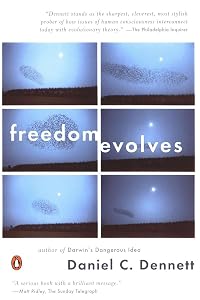
Freedom Evolves
by Daniel C. Dennett
On This Page
Description
"Four billion years ago, there was no freedom on our planet, because there was no life. What kinds of freedom have evolved since the origin of life? Can there be freedom and free will in a deterministic world? If you are free, are you responsible for being free, or just lucky?" "In Freedom Evolves, Daniel C. Dennett, the author of Darwin's Dangerous Idea and Consciousness Explained, sets out to answer these questions, showing how we, alone among the animals, have evolved minds that give us show more free will and morality. In a series of strikingly original arguments drawing on evolutionary biology, cognitive neuroscience, economics, and philosophy, he demonstrates that if we accept Darwin's reasoning, we can build from the simplest life forms all the way up to the best and deepest human thoughts on questions of morality and meaning, ethics and freedom."--Jacket. show lessTags
Recommendations
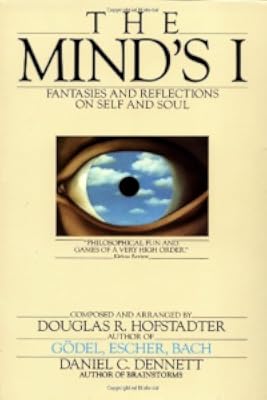
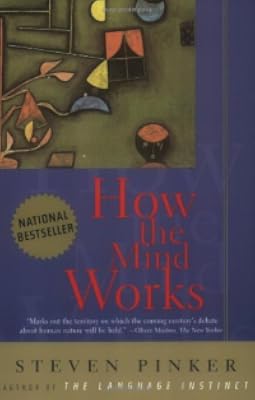
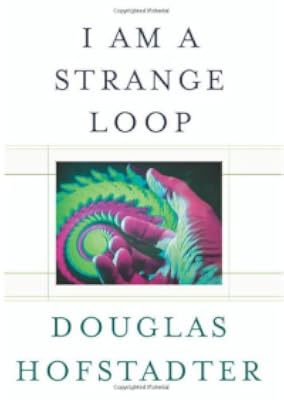
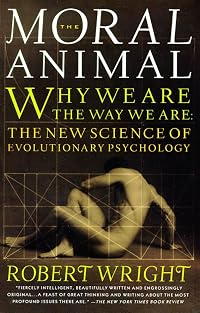

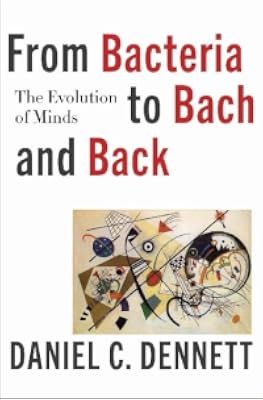
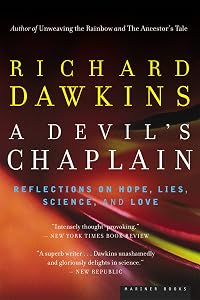
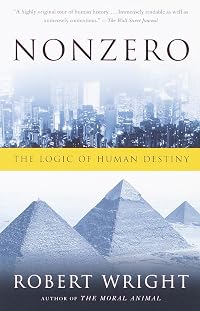
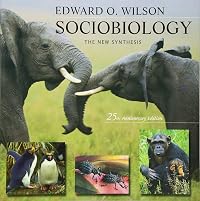
Member Recommendations
Member Reviews
I was interested in this book because of the hypocritical inconsistency exhibited by many secular types who, reasonably enough, deny the existence of "God" but bristle at the prospect that we all live in a completely determined universe. They (and I include myself here) reflexively feel that while science rightly treats the entirety of the natural world as subject to the same universal (deterministic) laws, they must preserve an idea of human free will as an exception to the laws of physics, in exactly the same way that theists allow for intervention by "God". As Dennett puts it, this indeterminism insists that human beings are little godlets, or miracle workers, able to defy the otherwise universal laws of physics. Dennett understands show more that we want to believe that we are always "able to choose otherwise" in a given situation because, if we're not, there seems to be no basis for moral responsibility: praise and blame only make sense in relation to free choices, and why care about anything if we can never deserve praise or blame for whatever good or bad we do? His thesis, in short, is that it is unnecessary to invoke miraculous powers to solve this apparent problem. Thanks to natural selection, humans have more freedom than has ever existed in the history of the universe. Although this freedom is not exempt from the physical laws governing every particle in the universe, and is hence determined, it is only determined in the same sense that a coin toss is determined. That is to say our choices are determined by so many intervening variables that no observer can possibly know their outcomes. Dennett's view is that in the important sense of everyday life, humans make free choices. The key distinction here is between the physical level, the fundamental variables that determine the outcome of the coin toss, versus the design level, what agents are actually able to observe and experience. The latter is what matters to all of us, and the observable operation and evolution of freedom on that level--in our everyday experience--gives us a sufficient (Dennett argues, more well-founded) basis for moral responsibility.
All of this makes pretty good sense to me, despite my ingrained aversion to determinism. My only problem with Dennett, and I am still mulling whether I think it taints his whole philosophical outlook, is that he is utterly uncritical of his own implicit mainstream views of technological progress (which he presumes even now to be an inevitable, unstoppable impulse of human culture) and the state (which he presumes to be the only solution to organizing human society). He reaffirms these positions in his pejorative use of the terms "anarchy" and "Luddites" and in his praise of "civilization". "Science" is his main affinity, and those very institutions are prerequisite for its existence. It should not be a surprise then that they aren't in question here. What remains to be answered for me is, what is the benefit of a scientific deterministic worldview when we have concluded that the state system and the technological progress that created it (and that it demonstrably perpetuates in return) were not, are not, and cannot be desirable? Early in the book, (with none of his characteristic well-reasoned argument) Dennett parodies postmodern critics of science who characterize it as "just another in a long line of myths". But he proves himself, disappointingly, to be an equally simple-minded partisan of "science"; he sees history and the future going in only one direction, that of more elaborate guns, memes, and steel for which our "freedom" is evolving to help us to be prepared. The book leaves me more worried about the possibilities of a future with more science than about the question of my own free will. Personally, I hope that imperialistic science eventually becomes a detour, albeit an informative one, from which a freer, wiser humanity was able to return, instead of the dead end of absolute control which is its inexorable instinct. show less
All of this makes pretty good sense to me, despite my ingrained aversion to determinism. My only problem with Dennett, and I am still mulling whether I think it taints his whole philosophical outlook, is that he is utterly uncritical of his own implicit mainstream views of technological progress (which he presumes even now to be an inevitable, unstoppable impulse of human culture) and the state (which he presumes to be the only solution to organizing human society). He reaffirms these positions in his pejorative use of the terms "anarchy" and "Luddites" and in his praise of "civilization". "Science" is his main affinity, and those very institutions are prerequisite for its existence. It should not be a surprise then that they aren't in question here. What remains to be answered for me is, what is the benefit of a scientific deterministic worldview when we have concluded that the state system and the technological progress that created it (and that it demonstrably perpetuates in return) were not, are not, and cannot be desirable? Early in the book, (with none of his characteristic well-reasoned argument) Dennett parodies postmodern critics of science who characterize it as "just another in a long line of myths". But he proves himself, disappointingly, to be an equally simple-minded partisan of "science"; he sees history and the future going in only one direction, that of more elaborate guns, memes, and steel for which our "freedom" is evolving to help us to be prepared. The book leaves me more worried about the possibilities of a future with more science than about the question of my own free will. Personally, I hope that imperialistic science eventually becomes a detour, albeit an informative one, from which a freer, wiser humanity was able to return, instead of the dead end of absolute control which is its inexorable instinct. show less
This was a second helping of Dennett for me--I picked it up immediately after having finished Consciousness Explained, which was fantastic. On its heels, Freedom Evolves was a decided, albeit mild, disappointment. Why? Because Dennett skips the question that prompted me (and probably most others) to buy his book: how can free will be compatible with physical determinism?
This question is the subject of only two of the book's ten chapters, and Dennett's answer is just a matter of sophistry and slippery wordplay. What is not unavoidable, he says, is not inevitable. But even in a deterministic world, some things are avoided. Therefore not all things are unavoidable. Therefore not all things are inevitable. Q.E.D. I was hoping for a better show more reason to agree with him on this matter.
Dennett's reasons for punting become clear later on: the existence of free will is actually not his primary concern in this book. What he really wants to show is not that free will is compatible with determinism, but rather that moral responsibility is compatible with determinism, and admittedly, I found his argument persuasive on this point. But Dennett does such a poor job of showing that free will itself is a coherent concept, that the real lesson of the book seems to be that moral responsibility does not depend upon free will.
Dennett is at his best here when he's criticizing the extremists on either side of the debate, the "hard determinists" who think that determinism precludes ethics (meaning no guilt, shame, or punishment), and the "libertarians," some of whom have spilled a lot of ink arguing that quantum physics makes free will coherent. (It doesn't). I sympathize with Dennett's project, insofar as he tries to stake out tenable middle ground. I just don't think that the ground Dennett stakes out is as tenable as he thinks it is. show less
This question is the subject of only two of the book's ten chapters, and Dennett's answer is just a matter of sophistry and slippery wordplay. What is not unavoidable, he says, is not inevitable. But even in a deterministic world, some things are avoided. Therefore not all things are unavoidable. Therefore not all things are inevitable. Q.E.D. I was hoping for a better show more reason to agree with him on this matter.
Dennett's reasons for punting become clear later on: the existence of free will is actually not his primary concern in this book. What he really wants to show is not that free will is compatible with determinism, but rather that moral responsibility is compatible with determinism, and admittedly, I found his argument persuasive on this point. But Dennett does such a poor job of showing that free will itself is a coherent concept, that the real lesson of the book seems to be that moral responsibility does not depend upon free will.
Dennett is at his best here when he's criticizing the extremists on either side of the debate, the "hard determinists" who think that determinism precludes ethics (meaning no guilt, shame, or punishment), and the "libertarians," some of whom have spilled a lot of ink arguing that quantum physics makes free will coherent. (It doesn't). I sympathize with Dennett's project, insofar as he tries to stake out tenable middle ground. I just don't think that the ground Dennett stakes out is as tenable as he thinks it is. show less
Daniel Dennett is not a man to shy from grand philosophical pronouncements. Having declared the book closed on the Mind debate in "Consciousness Explained" (others are still offering odds) and having found beyond reasonable doubt for the Botanist in the case of Darwin vs. God in "Darwin's Dangerous Idea", Daniel Dennett now purports to settle the third of the great metaphysical questions: Do we have free will? Not only that, indeed, but he purports - I think - to have found a method for achieving moral objectivity while he was at it. Good show, that man!
Yes, I'm being a little ironic. But, for the most part, I'm a buyer: Dennett's books are certainly fascinating, and in large part compelling, and this one is no exception.
Just as there show more are similar strands between Consciousness Explained and Darwin's Dangerous Idea, there are some very familiar concepts here - old hands will recognise Conway's life world, the Prisoner's Dilemma, and Benjamin Libet's experiment which (seemed to) describe a "missing 300ms" between neural activity and consciousness of it - to the point where you might think to skip a few pages altogether.
This would be a mistake, however, for a reason which nicely complements Dennett's own "multiple drafts" theory of consciousness: repeated examination of the same ideas, in a new context, and with the benefit of a refined explanation, affords the reader new perspectives, and enhances comprehension of this book, but also the earlier ones. In the case of Libet's experiment, Dennett is much more compelling in his counterarguments than in Consciousness Explained - the revised draft gives a better view of the point.
What is so pleasing about all three books are the consistency of thoughts and ideas between them across what are at first glance disparate lines of inquiry - the unifying meta-theory here is Darwin's - applied in quite different (but clearly related) contexts. Dennett extends the application of his arguments to some economic and quasi-political situations - everyday life, to you and me, where these questions actually matter - and gets mostly the right results. (It never fails to amaze me how highly intelligent, extremely well educated, university professors in social sciences fail to grasp even the basic tenets of economic theory, so it is a welcome sign that one of their number might do, especially one who once publicly struggled with the Laffer curve)
I have two, related, complaints about Freedom Evolves. Of all the metaphysical conundrums, Free Will is - and ought to be - the least interesting, and most prone to catcalls from those in the cheap seats who think philosophy is wishy-washy, head-up-posterior, nonsense.
Where consciousness has profound practical implications for our understanding of the world and how to live in it (not least in the field of AI); and whether God exists or not has profound implications for our sense of morality, the free will debate has neither feature: we all think we are free to choose; as a brute fact either we are or we're not: but either way, we can't change it (if we're not free, then we aren't free to change to be free; if we are free, we're not free to decide not to be). Whatever the answer is, it can't make any difference to the way we live out our lives, since whether we're free to choose begs the very question we're asking.
That said, Dennett's Darwinian-influenced arguments are compelling in support of the case for free will.
What isn't so compelling is the small part of the book in which he allows metaphysics to tip over into ethics. For the second book in a row, Dennett has made some unwelcome noises about sketching out some sort of theory of moral objectivity. He doesn't dwell on it, as such, but it is definitely there: writing elliptically, I think Dennett attempts to make a case for a sort of Moral Objectivism to be derived from evolution. He says, as his book draws to a close:
"The philosopher's problem is to negotiate the transition from `is' to `ought', or more precisely to show how we might go beyond the `merely historical' fact that certain customs and policies have had, as a matter of fact, widespread societal endorsement, and get all the way to norms that command assent in all rational agents. Successful instances of this move are known. Bootstrapping has worked in the past, and it can work here as well. We don't need a skyhook."
I find this paragraph utterly baffling. It arrives so unannounced, and is so totally at odds with the very spirit and sense of everything else in Daniel Dennett's Darwin-influenced meta-theory, I just can't see what on earth possessed him to write it. What conceivable role could "norms commanding asset in all rational agents" in the gloriously unpredictable topography of the evolutionary journey possibly have?
Dennett compares this to the process of obtaining a (virtually) perfect straightedge over centuries by continually refining our technique for making straighter and straighter straightedges - apparently missing the point that in the case of the straightedge there is an immutable, single, unmistakable, universally understood abstract concept of a "perfectly straight line" which the manufactured straightedge is aiming to achieve; as such, it could scarcely be different to describing norms generally agreed amongst poorly defined (and constantly mutating) communities of individuals which have been developed unsystematically over time in reaction to drastically shifting environmental and societal factors to regulate the behaviour of a community which itself is moving randomly through design space (i.e., evolving).
Now, since when is transforming "is" to "ought" the philosopher's problem? Isn't the philosopher's job done when we can look at this wonderful model derived from Darwin's work, and say: Look, mum, no homunculus! No intelligent designer! No rules!
Having knocked off the three main metaphyiscal conundrums, you wonder what might be next on the agenda - "Right and Wrong: Finally Sorted" perhaps? show less
Yes, I'm being a little ironic. But, for the most part, I'm a buyer: Dennett's books are certainly fascinating, and in large part compelling, and this one is no exception.
Just as there show more are similar strands between Consciousness Explained and Darwin's Dangerous Idea, there are some very familiar concepts here - old hands will recognise Conway's life world, the Prisoner's Dilemma, and Benjamin Libet's experiment which (seemed to) describe a "missing 300ms" between neural activity and consciousness of it - to the point where you might think to skip a few pages altogether.
This would be a mistake, however, for a reason which nicely complements Dennett's own "multiple drafts" theory of consciousness: repeated examination of the same ideas, in a new context, and with the benefit of a refined explanation, affords the reader new perspectives, and enhances comprehension of this book, but also the earlier ones. In the case of Libet's experiment, Dennett is much more compelling in his counterarguments than in Consciousness Explained - the revised draft gives a better view of the point.
What is so pleasing about all three books are the consistency of thoughts and ideas between them across what are at first glance disparate lines of inquiry - the unifying meta-theory here is Darwin's - applied in quite different (but clearly related) contexts. Dennett extends the application of his arguments to some economic and quasi-political situations - everyday life, to you and me, where these questions actually matter - and gets mostly the right results. (It never fails to amaze me how highly intelligent, extremely well educated, university professors in social sciences fail to grasp even the basic tenets of economic theory, so it is a welcome sign that one of their number might do, especially one who once publicly struggled with the Laffer curve)
I have two, related, complaints about Freedom Evolves. Of all the metaphysical conundrums, Free Will is - and ought to be - the least interesting, and most prone to catcalls from those in the cheap seats who think philosophy is wishy-washy, head-up-posterior, nonsense.
Where consciousness has profound practical implications for our understanding of the world and how to live in it (not least in the field of AI); and whether God exists or not has profound implications for our sense of morality, the free will debate has neither feature: we all think we are free to choose; as a brute fact either we are or we're not: but either way, we can't change it (if we're not free, then we aren't free to change to be free; if we are free, we're not free to decide not to be). Whatever the answer is, it can't make any difference to the way we live out our lives, since whether we're free to choose begs the very question we're asking.
That said, Dennett's Darwinian-influenced arguments are compelling in support of the case for free will.
What isn't so compelling is the small part of the book in which he allows metaphysics to tip over into ethics. For the second book in a row, Dennett has made some unwelcome noises about sketching out some sort of theory of moral objectivity. He doesn't dwell on it, as such, but it is definitely there: writing elliptically, I think Dennett attempts to make a case for a sort of Moral Objectivism to be derived from evolution. He says, as his book draws to a close:
"The philosopher's problem is to negotiate the transition from `is' to `ought', or more precisely to show how we might go beyond the `merely historical' fact that certain customs and policies have had, as a matter of fact, widespread societal endorsement, and get all the way to norms that command assent in all rational agents. Successful instances of this move are known. Bootstrapping has worked in the past, and it can work here as well. We don't need a skyhook."
I find this paragraph utterly baffling. It arrives so unannounced, and is so totally at odds with the very spirit and sense of everything else in Daniel Dennett's Darwin-influenced meta-theory, I just can't see what on earth possessed him to write it. What conceivable role could "norms commanding asset in all rational agents" in the gloriously unpredictable topography of the evolutionary journey possibly have?
Dennett compares this to the process of obtaining a (virtually) perfect straightedge over centuries by continually refining our technique for making straighter and straighter straightedges - apparently missing the point that in the case of the straightedge there is an immutable, single, unmistakable, universally understood abstract concept of a "perfectly straight line" which the manufactured straightedge is aiming to achieve; as such, it could scarcely be different to describing norms generally agreed amongst poorly defined (and constantly mutating) communities of individuals which have been developed unsystematically over time in reaction to drastically shifting environmental and societal factors to regulate the behaviour of a community which itself is moving randomly through design space (i.e., evolving).
Now, since when is transforming "is" to "ought" the philosopher's problem? Isn't the philosopher's job done when we can look at this wonderful model derived from Darwin's work, and say: Look, mum, no homunculus! No intelligent designer! No rules!
Having knocked off the three main metaphyiscal conundrums, you wonder what might be next on the agenda - "Right and Wrong: Finally Sorted" perhaps? show less
Supposedly dumbed down a bit for people who are not professional philosophers, but it was still pretty hard going for me. I suspect that its presence on New Scientist's bestseller list was due mostly to the fame of the author. Certainly I have no doubts about what he is trying to prove: Free will, to the extent that the term means anything, has arisen through natural selection; the fact that materialism, and possibly determinism, is correct does not have the dire moral implications that the magic-and-mysticism crowd imagines it does.
Is free will an unscientific concept? Does evolution theory prove that we are all "really" just automatons? The answer (says Dennett) is NO, and in this book, he explains his reasoning. This is a book I periodically re-read, both becuase it is rich in information and analysis and because many of the ideas are a bit counterintuitive. I highly recommend this to anyone who wants to get beyond the basics of evolutionary thought.
Dennett is one of my favourite writers: he is a brilliant thinker and witty writer who takes on big topics. And yet, and yet.
I found Consciousness Explained a real eye-opener, and Sweet Dreams an enjoyable dessert. And maybe if I'd read them in another order Freedom Evolves would be up there with Consciousness Explained in my rankings. But it isn't because Dennett's wit and repartee is also a bit long-winded, and a bit self-indulgent.
This is a long book to make a simple point - that determinism is compatible with free will. It's an important point, and one I agree with, but I was convinced after 50 pages and found decreasing returns over the remaining 250 or so pages.
So - a good read by a fine thinker and writer. But I do wish he could show more be briefer. show less
I found Consciousness Explained a real eye-opener, and Sweet Dreams an enjoyable dessert. And maybe if I'd read them in another order Freedom Evolves would be up there with Consciousness Explained in my rankings. But it isn't because Dennett's wit and repartee is also a bit long-winded, and a bit self-indulgent.
This is a long book to make a simple point - that determinism is compatible with free will. It's an important point, and one I agree with, but I was convinced after 50 pages and found decreasing returns over the remaining 250 or so pages.
So - a good read by a fine thinker and writer. But I do wish he could show more be briefer. show less
Only three stars because it took me so long to get through it. Some interesting ideas, but I feel a lot of the objections he spends answering (like Kane) is answered better by LessWrong.com, such as determinism and free will. If things are deterministic, it doesn't mean you don't have free will. In order for someone to determine what you would do, they would need to simulate you, and it would be "you" making the decision. You are still determining your choice. Another way of looking at it, if your actions aren't determined by the laws of physics, how could they be determined by you?
Members
- Recently Added By
Published Reviews
ThingScore 100
Daniel Dennett has charted a new and welcome course between free will and scientific determinism in Freedom Evolves, says Mary Midgley
added by mikeg2
Lists

Falling for Science
56 works; 3 members
Author Information

44+ Works 17,451 Members
Daniel C. Dennett is a University Professor and Austin B. Fletcher Professor of Philosophy at Tufts University and the author of numerous books including Intuition Pumps and Other Tools for Thinking, Breaking the Spell, Darwin's Dangerous Idea, and Consciousness Explained.
Awards and Honors
Awards
Common Knowledge
- Canonical title*
- La evolución de la libertad
- Original title
- Freedom Evolves
- Original publication date
- 2003
- Dedication
- For my family:
Susan, Peter, Andrea, Nathan, and Brandon - First words
- (Preface)
How Long have I been working on this book?
One widespread tradition has it that we human beings are responsible agents, captains of our fate, because what we really are are souls, immaterial and immortal clumps of Godstuff that inhabit and control our ma... (show all)terial bodies rather like spectral puppeteers. - Blurbers
- Rorty, Richard; Calvin, William H.; McCarthy, John
- Original language
- English
*Some information comes from Common Knowledge in other languages. Click "Edit" for more information.
Classifications
Statistics
- Members
- 1,541
- Popularity
- 14,928
- Reviews
- 19
- Rating
- (3.76)
- Languages
- 7 — Dutch, English, French, Italian, Portuguese, Spanish, Turkish
- Media
- Paper, Audiobook, Ebook
- ISBNs
- 13
- ASINs
- 8