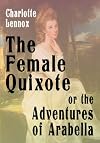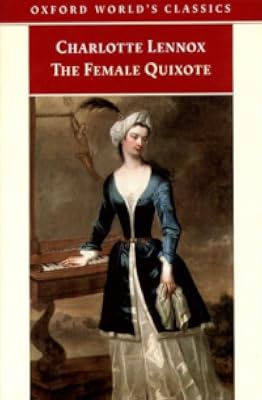
The Female Quixote
by Charlotte Lennox
On This Page
Description
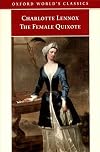
The Female Quixote completely inverts the adventures of Don Quixote. While the latter mistook himself for the hero of a Romance, Arabella believes she is the fair maiden. She believes she can fell a hero with one look and that any number of lovers would be happy to suffer on her behalf..
Tags
Recommendations












Member Recommendations
Member Reviews
Charlotte Lennox (1729-1804) was one of Jane Austen’s earliest influences. Unlike most other women writers of the period, Lennox had to earn her own living, and after getting her start with poetry turned to writing novels. The Female Quixote, her second, both satirized the popular chivalric romances of the era, and presented a strong female protagonist who knew her mind and could hold her own in fierce debate.
Arabella had an extremely sheltered childhood, and after her father’s death was taken into her uncle’s guardianship. His son, Glanville, stood to inherit by marrying Arabella, and preferred courting her to forcing what was essentially an arranged marriage. Meanwhile, Arabella enters society at the age of 17, extremely naive show more but over-confident. She spent considerable time reading chivalric romances, which she believed to be accurate historical accounts and routinely cited these sources when discussing current affairs. Despite her strange behavior, Glanville was quite taken with Arabella, and she develops affection for him, too. But of course events conspire against their courtship, including the arrival of Sir George, a young rake who feigns courtship with Glanville’s sister in order to get closer to Arabella. Arabella is eventually made to understand truth vs. fiction, and like most romance novels, everything turns out all right in the end albeit with an ending that is rushed and not very satisfying.
Lennox’s writing is very witty, with frequent asides to the reader acknowledging how ridiculous Arabella is. In her book, Jane Austen’s Bookshelf, Rebecca Romney points out how Arabella’s obsession with the romance genre mirrors that of Catherine in Northanger Abbey. She also acknowledged The Female Quixote’s abrupt conclusion, noting that Lennox would have preferred to write an additional third volume but was under time pressure from her publisher; the need for income won out. show less
Arabella had an extremely sheltered childhood, and after her father’s death was taken into her uncle’s guardianship. His son, Glanville, stood to inherit by marrying Arabella, and preferred courting her to forcing what was essentially an arranged marriage. Meanwhile, Arabella enters society at the age of 17, extremely naive show more but over-confident. She spent considerable time reading chivalric romances, which she believed to be accurate historical accounts and routinely cited these sources when discussing current affairs. Despite her strange behavior, Glanville was quite taken with Arabella, and she develops affection for him, too. But of course events conspire against their courtship, including the arrival of Sir George, a young rake who feigns courtship with Glanville’s sister in order to get closer to Arabella. Arabella is eventually made to understand truth vs. fiction, and like most romance novels, everything turns out all right in the end albeit with an ending that is rushed and not very satisfying.
Lennox’s writing is very witty, with frequent asides to the reader acknowledging how ridiculous Arabella is. In her book, Jane Austen’s Bookshelf, Rebecca Romney points out how Arabella’s obsession with the romance genre mirrors that of Catherine in Northanger Abbey. She also acknowledged The Female Quixote’s abrupt conclusion, noting that Lennox would have preferred to write an additional third volume but was under time pressure from her publisher; the need for income won out. show less
This novel was written in the 1750s and is a satire of Don Quixote. The main character, Arabella, is a beautiful, charming, wealthy woman who unfortunately grows up very isolated and therefore reads too many French historical romances about ancient Greece and Rome which she believes in completely. This leads to many humorous situations as she is courted by her cousin who her father intends for her to marry. I really enjoyed the first third of the book, but after a while the humor started to be the same over and over and got a little old. All the men in the book think she's crazy but don't care because she's beautiful and wealthy. I think this is worth reading, especially as an example of women writing in the 1700s. It's genuinely funny show more and entertaining. It was also obviously an example to Jane Austen's Northanger Abbey, a book I love. show less
This is a highly amusing and clever book, a clear jab at the inadequacy of female education in the author's time (18th century) but it is hard going in places. Arabella grows up in her father's remote castle and reads nothing but popular French romantic novels. It is a poor substitute for an education and this becomes obvious when her father dies and she must deal with real life decisions. Amusing, but still Arabella is a very tiresome character ...
For its time, this is a pretty readable and engaging bit of writing that isn’t overlong and makes clever use of wry humour as it takes a dig at romance novels and their effect on particularly feminine fantasies. It’s kind of like an 18th century version of Cold Comfort Farm.
Arabella is the protagonist who falls under the spell of the masses of romantic literature she plunders from her father’s library. In this, Lennox was parodying the spell that Don Quixote falls under from books of chivalry that turn his brain.
For me, the ludicrous situations that Arabella ends up in as a result of her delusions were as humorous as that of the Don. Through this, Lennox is also able to comment on the influence of literature, just as Cervantes was show more able to comment on the social mores of his day.
For this, Lennox deserves (and received at the time) great credit, particularly as the 18th century wasn’t the easiest period of literary history for a woman to get herself published.
The plot is well complicated by the fact that, on his deathbed, Arabella’s father insists that the only way to come into her full inheritance is to marry her stable, well balanced and affectionate cousin Glanville. However, his normality is a far cry from her fantasies and this provides for many of the crises throughout the novel.
It all ends reasonably enough though with Arabella regaining her senses and predictably marrying her suitor, but it’s a fairly engaging ride along the way. show less
Arabella is the protagonist who falls under the spell of the masses of romantic literature she plunders from her father’s library. In this, Lennox was parodying the spell that Don Quixote falls under from books of chivalry that turn his brain.
For me, the ludicrous situations that Arabella ends up in as a result of her delusions were as humorous as that of the Don. Through this, Lennox is also able to comment on the influence of literature, just as Cervantes was show more able to comment on the social mores of his day.
For this, Lennox deserves (and received at the time) great credit, particularly as the 18th century wasn’t the easiest period of literary history for a woman to get herself published.
The plot is well complicated by the fact that, on his deathbed, Arabella’s father insists that the only way to come into her full inheritance is to marry her stable, well balanced and affectionate cousin Glanville. However, his normality is a far cry from her fantasies and this provides for many of the crises throughout the novel.
It all ends reasonably enough though with Arabella regaining her senses and predictably marrying her suitor, but it’s a fairly engaging ride along the way. show less
Charlotte Lennox's "The Female Quixote, or The Aventures of Arabella" is a somewhat amusing tale of a woman who lets her romantic notions rule the day with disastrous results.
The heroine of the novel, Arabella, has lived a reclusive life and has been fed a steady diet of romantic French novels, which she comes to believe are factual illustrations of love. When she comes of age to marry, she mistakenly believes that most men are out to steal her away and ravish her. Her ardent suitor Glanville is apparently the most patient man on the planet and willing to put up with this since Arabella is pretty.
I liked the book overall-- at times it felt a little tedious. It was hard to believe anyone would be interested Arabella because she was so show more completely idiotic at times. I found the book got more amusing as it went on (perhaps because I was finally getting used to the style it was written in.) Glad I read this one (though I liked Jane Austen's "Northanger Abbey" which has a similar premise a lot better.) show less
The heroine of the novel, Arabella, has lived a reclusive life and has been fed a steady diet of romantic French novels, which she comes to believe are factual illustrations of love. When she comes of age to marry, she mistakenly believes that most men are out to steal her away and ravish her. Her ardent suitor Glanville is apparently the most patient man on the planet and willing to put up with this since Arabella is pretty.
I liked the book overall-- at times it felt a little tedious. It was hard to believe anyone would be interested Arabella because she was so show more completely idiotic at times. I found the book got more amusing as it went on (perhaps because I was finally getting used to the style it was written in.) Glad I read this one (though I liked Jane Austen's "Northanger Abbey" which has a similar premise a lot better.) show less
Arabella is the daughter of a reclusive nobleman who, cut off from the outside world, learns about society and social expectations by reading the romances and romantic histories in her deceased mother's library. Comic antics ensue when she is courted by a young man, who finds himself subjected to a series of baffling rules that seem perfectly natural to Arabella, but have the unfortunate side effect of making her look like a complete lunatic in the context of "real" society.
This is an extremely funny and accessible 18th-century novel that had me laughing out loud at several points. Inevitably, the joke of Arabella's skewed perceptions gets a little old over the course of a novel more than 300 pages long, but not enough to detract much show more from the enjoyment it provides. show less
This is an extremely funny and accessible 18th-century novel that had me laughing out loud at several points. Inevitably, the joke of Arabella's skewed perceptions gets a little old over the course of a novel more than 300 pages long, but not enough to detract much show more from the enjoyment it provides. show less
The plot is well summarized in other reviews here. I would add that overall this was entertaining, though the pacing was a bit odd. There was a section in book two with interminable examples of what the French heroines would do and the ending conversion was too quick, but for pure enjoyment, in some ways this was better than Don Quixote because fewer people got hurt and the bathroom humor was absent. Its overall quality and scope does not match Don Quixote, as its intent was smaller. The best part of the book happened in Arabella's seclusion in the country.
As a whole this was fairly simple book, but for a novel from the 1700's I was impressed. It comments that there is a distinction between absurd novels and good fiction. The modern show more challenge then is for an individual reader to find the "good" fiction, and we have quite a bit more to sort through than Arabella did! An additional truth applicable to modern life is that one cannot disappear from the world, it continually intrudes. I would recommend this book to those who enjoyed Don Quixote or have an interest in the phenomenon of reclusiveness / separation from community life. show less
As a whole this was fairly simple book, but for a novel from the 1700's I was impressed. It comments that there is a distinction between absurd novels and good fiction. The modern show more challenge then is for an individual reader to find the "good" fiction, and we have quite a bit more to sort through than Arabella did! An additional truth applicable to modern life is that one cannot disappear from the world, it continually intrudes. I would recommend this book to those who enjoyed Don Quixote or have an interest in the phenomenon of reclusiveness / separation from community life. show less
Members
- Recently Added By
Published Reviews
ThingScore 75
Upon the whole, I do very earnestly recommend it, as a most extraordinary and most excellent Performance.
added by MMcM
Lists

1001 Books You Must Read Before You Die
1,448 works; 1,132 members

Best Books about Readers
23 works; 14 members

Female Protagonist
1,056 works; 57 members

18th Century
42 works; 10 members

1,001 BYMRBYD Concensus
723 works; 27 members

Books Featured in Jane Austen's Bookshelf
37 works; 7 members
Reading LIst
648 works; 1 member
Talk Discussions
Past Discussions
Group Read, September 2013: The Female Quixote in 1001 Books to read before you die (September 2013)
Author Information

18+ Works 1,013 Members
Some Editions
Awards and Honors
Series
Belongs to Publisher Series
Work Relationships
Contains
Was inspired by
Inspired
Common Knowledge
- Canonical title
- The Female Quixote
- Original title
- The Female Quixote; or, The Adventures of Arabella
- Original publication date
- 1752
- People/Characters
- Arabella; Charles Glanville; Charlotte Glanville; George Bellmour
- Important places
- England, UK; Bath, Somerset, England, UK
- Original language*
- Engels
*Some information comes from Common Knowledge in other languages. Click "Edit" for more information.
Classifications
Statistics
- Members
- 915
- Popularity
- 29,247
- Reviews
- 9
- Rating
- (3.51)
- Languages
- English, German, Italian, Spanish
- Media
- Paper, Audiobook, Ebook
- ISBNs
- 46
- ASINs
- 12