On This Page
Description
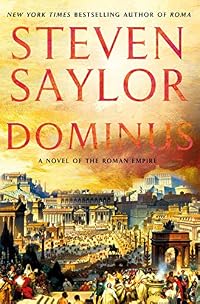
"Following his international bestsellers Roma and Empire, Steven Saylor continues his saga of the greatest, most storied empire in history from the eternal city at the very center of it all. A.D. 165: The empire of Rome has reached its pinnacle. Universal peace-the Pax Roma-reigns from Britannia to Egypt, from Gaul to Greece. Marcus Aurelius, as much a philosopher as he is an emperor, oversees a golden age in the city of Rome. The ancient Pinarius family and their workshop of artisans show more embellish the richest and greatest city on earth with gilded statues and towering marble monuments. Art and reason flourish. But history does not stand still. The years to come bring wars, plagues, fires, and famines. The best emperors in history are succeeded by some of the worst. Barbarians descend in endless waves, eventually appearing before the gates of Rome itself. The military seizes power and sells the throne to the highest bidder. Chaos engulfs the empire. Through it all, the Pinarius family endures, thanks in no small part to the protective powers of the fascinum, a talisman older than Rome itself, a mystical heirloom handed down through countless generations. But an even greater upheaval is yet to come. On the fringes of society, troublesome cultists disseminate dangerous and seditious ideas. They insist that everyone in the world should worship only one god, their god. They call themselves Christians. Some emperors deal with the Christians with toleration, others with bloody persecution. Then one emperor does the unthinkable. He becomes a Christian himself. His name is Constantine, and the revolution he sets in motion will change the world forever. Spanning 160 years and seven generations, teeming with some of ancient Rome's most vivid figures, Saylor's epic brings to vivid life some of the most tumultuous and consequential chapters of human history, events which reverberate still"-- show lessTags
Recommendations






Member Reviews
Another great read by Saylor. While I agree with the reviewers who note the Pinarii family characters all seem like the same person, I still found this book a great read. That’s because the main character in this book is not any of the family members, but Rome itself. Saylor aptly traces the change from the zenith of the empire under Hadrian and the “5 good emperors”, through the crisis of the 3rd century and the emergence of Christian Rome. Saylor brings that change to life in a compelling fashion, and makes you understand all that was lost (and the very little that was gained) by this transition. The ending was a real kicker and I checked to see if the newspaper article was real - it is! He even has a setup for the next novel show more should he so choose. Would love to see his take on Julian. This is a good opportunity to recommend Gore Vidal’s historical novel about that emperor.
Three more comments:
1. All of Saylor’s books have some over the top camp, which makes them a lot of fun. This book was his most restrained in that area and maybe that’s why some readers felt it a bit too tame.
2. He had a real bone to pick with Constantine “the great” and perhaps he over did it (just a bit) in his portrayal of him as a ruthless asshole.
3. the historical coincidences in this book really strained the limits of the genre, but hey, not that much more than Saylor usually does, show less
Three more comments:
1. All of Saylor’s books have some over the top camp, which makes them a lot of fun. This book was his most restrained in that area and maybe that’s why some readers felt it a bit too tame.
2. He had a real bone to pick with Constantine “the great” and perhaps he over did it (just a bit) in his portrayal of him as a ruthless asshole.
3. the historical coincidences in this book really strained the limits of the genre, but hey, not that much more than Saylor usually does, show less
I knew this would be a great book and I read slowly to savor it. I loved it. Not knowing much about Roman history, Dominus gave me the basics on the last 150 years of the empire. I knew there were alot of minor emperors toward the end of Rome's primacy but was not aware of how many there were. There were dozens of emperors who were in power only a few weeks or months. Constantine is the last emperor featured. I thought it was interesting how he moved toward Christianity. I had always thought that Constantine accepted this faith tradition quickly but Dominus shows that Constantine had a gradual acceptance of it and that it was made because Constantine could see the political advantages of accepting Christianity. Dominus paints a show more different picture of how early Christians were perceived by non-Christians. I guess if you are raised to believe that multiple gods are necessary to achieve success, believing that god is just one person was a large stretch for them to make. Another interesting fact is how the arguments among the Christians over doctrinal matters were perceived by the Romans. Infighting was seen as a weakness of the religion. Conversely, there were no fights over the peculiarities of the Roman gods. I don't understand why the Romans did not see that the emperors' worship of the gods forced them to worship the gods likewise. They just followed what the emperors' were doing.
I was surprised by the level of insanity displayed by the emperors. We read about their need for monuments of themselves. What struck me was that they needed to destroy the monuments of their predecessors. Why? No one cared about earlier emperors, only the current one. Most of them loved violence and thought too highly of themselves, believing that because they were emperor that they were more skilled at fighting than gladiators. Another unusual aspect to these emperors was the need to deify their deceased children. The Senate was responsible for voting on their deification, which they did only to protect themselves from a raging emperor. This all seems like craziness to my modern way of thinking.
After finishing the book I googled the Pinarius family. I discovered that this was a historical family with 1,000 years of recorded history. Since the novel ends with Constantine requesting that the family move with him to Constantinople, I wonder what happened to them while living there. Surely there must be a record of them there but I did not find any.
Dominus is a fantastic novel. It would be nice if there was another book in this series but I understand that it is a trilogy and one that ends with Dominus. show less
I was surprised by the level of insanity displayed by the emperors. We read about their need for monuments of themselves. What struck me was that they needed to destroy the monuments of their predecessors. Why? No one cared about earlier emperors, only the current one. Most of them loved violence and thought too highly of themselves, believing that because they were emperor that they were more skilled at fighting than gladiators. Another unusual aspect to these emperors was the need to deify their deceased children. The Senate was responsible for voting on their deification, which they did only to protect themselves from a raging emperor. This all seems like craziness to my modern way of thinking.
After finishing the book I googled the Pinarius family. I discovered that this was a historical family with 1,000 years of recorded history. Since the novel ends with Constantine requesting that the family move with him to Constantinople, I wonder what happened to them while living there. Surely there must be a record of them there but I did not find any.
Dominus is a fantastic novel. It would be nice if there was another book in this series but I understand that it is a trilogy and one that ends with Dominus. show less
Very engrossing family history of seven generations of a Roman family from Marcus Aurelius through
Constantine. This senatorial family runs a workshop of artisans involved in building monuments, sculpture, architecture of all kinds. I lived Roman history through their eyes. Sometimes there were "info-dumps", perhaps interesting to those not knowing much about that history. We met the emperors and their personalities. Constantine came across as a cruel person. I got insight into some of the lesser-known emperors, such as Philip the Arab or the Gordians, for example.
Very highly recommended.
Constantine. This senatorial family runs a workshop of artisans involved in building monuments, sculpture, architecture of all kinds. I lived Roman history through their eyes. Sometimes there were "info-dumps", perhaps interesting to those not knowing much about that history. We met the emperors and their personalities. Constantine came across as a cruel person. I got insight into some of the lesser-known emperors, such as Philip the Arab or the Gordians, for example.
Very highly recommended.
Steven Saylor gives us yet another brilliant peek into the window that is ancient Rome. Third of a trilogy, he helps us travel through time and gain insight into the rulers - from Marcus Aurelius to that of Constantine. Having the benefit of Saylor’s obviously massive effort at ploughing through the sources, doing research at UC Berkeley and UT Austin, we come away with an intimate understanding of that period, but also insight into the personalities of its emperors and other key players. Along the way we gain access to the bathhouses, the temples and the inner sanctums. This unique perspective is afforded us by the book’s Pinarius family and their brushings up against the city’s movers and shakers over the years. It is through show more this family that we too experience the assassinations, the intrigue, the brutal purges and the plagues that beset Rome. This is a fascinating portrait of a city in transition. show less
“Dominus” is the concluding volume of Steven Saylor’s sprawling Roman history that began with Roma and continued with Empire. Here, we follow the fortunes of the Pinarii clan, now largely known as builders and sculptors, during the period of AD 165 and the reign of Marcus Aurelius to AD 325, when Constantine takes over the empire, converts to Christianity and begins his massive project to create a New Rome in what becomes Constantinople. Throughout this 160 year period, the Pinarii are once again close to power, able to observe the changes at first hand and comment on it all. As with the previous two novels, there is a lot of gore and cruelty depicted, but the overall effect is to come away with a fairly comprehensive knowledge of show more ancient history, more or less. I read all three books back-to-back and would perhaps caution other readers against doing so, simply because after a while the constant plagues, fires, assassinations and invasions all become rather repetitive - but then, that’s history for you! Recommended. show less
This novel serves in my opinion like a fun way to learn about topics in Roman history, despite the conspicuous gaps in narrative. The fast pace of the book serves as a pro and a con, as being quick-paced means that it kept my attention, and focused on important events rather than mulling on small matters at length; however, this meant that the main character, the patriarch of the Pinarii which changed roles many a time, could phase out of existence with the turn of a page, just as you begin to think you know him. The only reason this is not more of an issue for the reader is a downside in itself- the patriarchs rarely have distinguishing personalities and goals, and almost all aspire, and succeed, to be exact replicas of their fathers show more before them. show less
This novel covers over a century of Roman history in order to explain the changes not only in empire’s elite, but in citizenry and Rome itself. It reads like several short stories cobbled together and it seems unfocused. From start to end it felt disjointed, and, somehow disappointing.
The book is well written just not well plotted. Saylor manages, through his research, to bring the times alive while at the same time jumping from story to story without settling on a single place in time to fully engage his readers.
If you like epic novels, then this is the book for you. If you prefer your historical novels to be focused on one point in time or on one character or family, you’ll probably want to pass on this book.
My thanks to St. show more Martin’s Press and Edelweiss for an eARC. show less
The book is well written just not well plotted. Saylor manages, through his research, to bring the times alive while at the same time jumping from story to story without settling on a single place in time to fully engage his readers.
If you like epic novels, then this is the book for you. If you prefer your historical novels to be focused on one point in time or on one character or family, you’ll probably want to pass on this book.
My thanks to St. show more Martin’s Press and Edelweiss for an eARC. show less
Members
- Recently Added By
Lists

Top Five Books of 2021
604 works; 181 members

Violette's Best Historical Fiction 2021
10 works; 1 member

al.vick-wishlist-next-in-series
111 works; 1 member
Author Information

61+ Works 13,595 Members
Steven Saylor (born March 23, 1956) is an American author of historical novels. He is a graduate of the University of Texas at Austin, where he studied history and Classics. Although he also has written novels about Texas history, Saylor's best-known work is his Roma Sub Rosa series, set in ancient Rome. The novels' hero is a detective named show more Gordianus the Finder, active during the time of Sulla, Cicero, Julius Caesar, and Cleopatra. He divides his time residing in California and texas. (Bowker Author Biography) show less
Series

Common Knowledge
- Canonical title
- Dominus: A Novel of the Roman Empire
- Original title
- Dominus: A Novel of the Roman Empire
- Alternate titles
- Dominus
- Original publication date
- 2021
- People/Characters
- Marcus Aurelius; Lucius Pinarius; Commodus
- Important places
- Rome, Italy
- Epigraph
- Artemis Gods may not
cut athwart
a mortal's fate.
Hippolytus Then are the gods
no greater than mere men?
Artemis Sometimes less great.
-H.D., Hippolytus Temporizes, ... (show all)Act I
Even gods make mistakes.
-Appollonius of Rhodes
Argonautica 4.817
(Richard Hunter translation) - Dedication
- To all the readers over the years who have chosen one of my books to read, including this one
- First words
- I am afraid our daughter might die... These words of his wife rang in the ears of Lucius Pinarius as he stepped inside the Senate House, holding the hand of his four-year-old son.
- Last words
- (Click to show. Warning: May contain spoilers.)Perhaps, under different circumstances, a descendant would reclaim it, and the fascinum would be worn again in a future generation.
- Original language
- English
Classifications
Statistics
- Members
- 94
- Popularity
- 340,653
- Reviews
- 9
- Rating
- (4.09)
- Languages
- English, Hungarian, Portuguese
- Media
- Paper, Audiobook, Ebook
- ISBNs
- 9
- ASINs
- 2