On This Page
Description
One summer evening in 1808, Sobran Jodeau stumbles through his family's vineyard in Burgundy, filled with wine and love sorrows. As Sobran sways in a drunken swoon, an angel appears out of nowhere to catch him.Once he gets over his shock, Sobran decides that Xas, the male angel, is his guardian sent to counsel him on everything from marriage to wine production. But Xas turns out to be far more mysterious than angelic. Compelling and erotic, The Vintner's Luck is a decidedly unorthodox love show more story, one that presents angels as fierce and beautiful as Milton's, and a vision of Heaven, Hell, and th show lessTags
Recommendations


















Member Recommendations
Member Reviews
Summary: On a midsummer's night in 1808, young Sobran Jodeau steals two bottles of his father's newly-pressed wine and heads out to drink away his heartbreak in the moonlit vinyard. When he falls in his drunken state, an angel appears and catches him. The angel, Xas, makes Sobran promise to return to the hill on the same night in a year, saying that at that time they will toast Sobran's marriage. Xas is right - Sobran does marry - and Sobran decides that Xas is his own guardian angel. As they continue to meet, once a year at midsummer, their friendship begins to grow, and while Sobran tells Xas about his life, he also slowly learns the truth about Xas. For Xas is actually a fallen angel, and his story will test Sobran's strength, show more courage, and love, and will shake everything Sobran thought he knew about God, the earth, Heaven, and Hell.
Review: I'm finding it hard to summarize, or even discuss this book, because in so many ways it is unlike any other book that I've ever read. And, that simple fact - the unlikeness - is part of what makes it so beautiful and complete, given this book's views on originals versus copies, comparisons and similarities.
It is not a easy book to get into, that's for certain. It's not exactly that it was difficult to read - although Knox's writing is complex enough that it did require my full attention. Rather, it felt like the book kept me at arm's distance for a long time. The structure of one short chapter for every year of Sobran's life made it hard to really properly feel the passing of time, and the tight focus of the story on Sobran and Xas's meetings, especially in the early chapters where both characters were still reserved, made it hard to find an emotional connection at first. But there is a well of emotion lingering under the surface, and while I never managed to feel particularly close to either of the main characters, this book still managed to pack a powerful punch.
I think a lot of the beauty of of this book comes not from its characters or its story, but from the clarity and strength of its vision. Knox's versions of Heaven and Hell are unlike any others I've seen, although they rival Anne Rice's in their texture and scope. (I'm particularly enamored of the difference between Heaven and Hell's libraries - the one containing only destroyed originals, and the other only things that were copied - and of the implications thereof.) Knox does a superb job of conveying the terror and the wonder of her religious landscapes, and of their representatives, and she's equally adept at evoking sun-baked and moonswept Burgundian hillsides, and at blending a little of that terror and wonder into the mundane.
So, while The Vintner's Luck is not an easy book to describe, and it's not an easy book to read, it was definitely worth my time, and is the sort of book that I can tell will stick in my head long after others have faded. 4.5 out of 5 stars.
Recommendation: Although the tone's fairly different, I think people who enjoyed Anne Rice's Memnoch the Devil, or other similar "theological" fiction should definitely give The Vintner's Luck a try. Not everyone is going to get along with Knox's writing style, but for those who do, it's a pretty unforgettable journey. show less
Review: I'm finding it hard to summarize, or even discuss this book, because in so many ways it is unlike any other book that I've ever read. And, that simple fact - the unlikeness - is part of what makes it so beautiful and complete, given this book's views on originals versus copies, comparisons and similarities.
It is not a easy book to get into, that's for certain. It's not exactly that it was difficult to read - although Knox's writing is complex enough that it did require my full attention. Rather, it felt like the book kept me at arm's distance for a long time. The structure of one short chapter for every year of Sobran's life made it hard to really properly feel the passing of time, and the tight focus of the story on Sobran and Xas's meetings, especially in the early chapters where both characters were still reserved, made it hard to find an emotional connection at first. But there is a well of emotion lingering under the surface, and while I never managed to feel particularly close to either of the main characters, this book still managed to pack a powerful punch.
I think a lot of the beauty of of this book comes not from its characters or its story, but from the clarity and strength of its vision. Knox's versions of Heaven and Hell are unlike any others I've seen, although they rival Anne Rice's in their texture and scope. (I'm particularly enamored of the difference between Heaven and Hell's libraries - the one containing only destroyed originals, and the other only things that were copied - and of the implications thereof.) Knox does a superb job of conveying the terror and the wonder of her religious landscapes, and of their representatives, and she's equally adept at evoking sun-baked and moonswept Burgundian hillsides, and at blending a little of that terror and wonder into the mundane.
So, while The Vintner's Luck is not an easy book to describe, and it's not an easy book to read, it was definitely worth my time, and is the sort of book that I can tell will stick in my head long after others have faded. 4.5 out of 5 stars.
Recommendation: Although the tone's fairly different, I think people who enjoyed Anne Rice's Memnoch the Devil, or other similar "theological" fiction should definitely give The Vintner's Luck a try. Not everyone is going to get along with Knox's writing style, but for those who do, it's a pretty unforgettable journey. show less
In 1808 Sobran is 18, an apprenticed vinter on his father's small vineyard which he will one day inherit. On a night just after mid summer Sobran is refused permission to propose marrige to a local girl, so walks up to the vineyard's ridge with a bottle of wine to drink away his troubles. Xas is already there, and on first seeing him Sobran faints, only to wake in the arms of the angel. After a night spent sharing wine and conversation, Xas and Sobran agree to meet again on the same night the following year. As the years pass Sobran and Xas develop a close friendship, and The Vinter's Luck eventually grows into a love story.
The story of Sobran and Xas' enduring relationship and the love they develop is a wonderful one. Xas and Sobran show more are quite reserved characters, so engaging with them can be a little difficult, but the understated way in which their story is told manages to emphasise the depth of their bond and the growth they both undergo. A new dimension is added with the arrival of Aurora who, for the period setting, is a fascinating woman - intelligent, capable, courageous, strong-willed.
Through Sobran and Aurora, Xas learns what it means to be human, while they begin to understand what life could be on 'the other side'. And in between are all the trials and triumphs of life, love and family.
Knox's writing is simple and elegant, conveying vivid imagery and a strong sense of place while also expressing interesting theological ideas. She also has a lovely turn of phrase. The structure of one chapter per year keeps the pace of the story moving along, and makes it very difficult to put this book down. I think much of the power of The Vinter's Luck comes from the subtlety of the writing and characterisation.
This is a beautiful, compelling story that will stay with me for quite some time. show less
The story of Sobran and Xas' enduring relationship and the love they develop is a wonderful one. Xas and Sobran show more are quite reserved characters, so engaging with them can be a little difficult, but the understated way in which their story is told manages to emphasise the depth of their bond and the growth they both undergo. A new dimension is added with the arrival of Aurora who, for the period setting, is a fascinating woman - intelligent, capable, courageous, strong-willed.
Through Sobran and Aurora, Xas learns what it means to be human, while they begin to understand what life could be on 'the other side'. And in between are all the trials and triumphs of life, love and family.
Knox's writing is simple and elegant, conveying vivid imagery and a strong sense of place while also expressing interesting theological ideas. She also has a lovely turn of phrase. The structure of one chapter per year keeps the pace of the story moving along, and makes it very difficult to put this book down. I think much of the power of The Vinter's Luck comes from the subtlety of the writing and characterisation.
This is a beautiful, compelling story that will stay with me for quite some time. show less
"You fainted and I caught you. It was the first time I'd supported a human. You had such heavy bones. I put myself between you and gravity. Impossible."
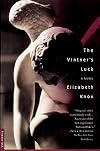
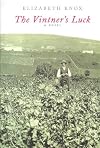
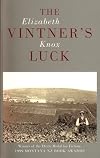
This book had completely passed me by. I had never even heard of the author, and it was not until a friend returned from a year of travelling in South America, that a copy was placed in my hands, with the most heartfelt of recommendations. The cover of my copy (right) did not exactly inspire me, but once I read the first page, I was well and truly engrossed.
The Vintner's Luck is a tale of the divine. But it is also the most human tale I could possible imagine reading. Opening in a French vineyard in 1808, our story follows Sobran, a young man poised on the precipe of manhood, heartbroken show more at being refused permission to marry the woman he loved. Taking solace in the vineyard with freshly bottled wine, the young Sobran meets a creature who will change his life forever. This particular vintner's "luck" is an angel, one whom agrees to meet Sobran on the same day each year, throughout the man's lifetime. And thus begins the most electrifying, and heartbreaking of relationships.
I could not leave my bed yesterday until I had finished this wonderful novel. That often happens to me when I get gripped by a tale, especially one with such neat, short sections, where it is impossible not to move on to the next! Today I found myself flicking through the book again, savouring some of the more beautiful passages, reminding myself of events and characters that moved me. Xas is so beautifully described, curious about and becoming lost in a world he does not truly understand, and emotions he could not possibly expect. Sobran is so painfully human, capable of overwhelming emotion, and of making all too credible mistakes. And do not let us forget the women in this story, the passionate and possible insane Celeste, and the intelligent and courageous Aurora.
Writing this review, I have found it a struggle to put into words how I feel about this story, so I shall turn to one of my favourite bloggers, Memory, who puts it perfectly..." the book crashed into me...one of those stories that sneaks up on you. You're reading along, utterly convinced that the novel is beautiful without being moving, when suddenly you realize that it's now part of your life. It's in you, and it's going to be with you forever." Through Memory's review I have now discovered that there is a sequel, or rather a continuation of one character's story, and I shall certainly be hunting it down. And Knox it seems has several other novels available, though it is hard to imagine anything that could be more beautiful than this glorious tale.
The friendship between Xas and Sobran is incredibly moving. Though much of the tale describes the divine; referring throughout to God, Lucifer, heaven and hell, it is truly grounded in humanity. Following Sobran's mortal life, we get a glimpse of how it may appear to an immortal, while following the struggle of this one man, in his relationships, with his family, and with the ever-present vineyard itself. For do not forget, this is a tale of that wonderful delight...wine, which permeates even the annual meetings between the man and the angel.
Elizabeth Knox's writing is a joy to read. Simple, but elegant, her descriptions invoke images of the divine, while continually grounding them with all that is human. You can almost taste the wine, feel the gentle midsummer evening sun of your skin, smell the freshly crushed grapes, hear the flutter of feathered wings. There are so many passages I would like to quote, many of which could spoil events that occur, so I will leave you with these few...
"Sobran fell against a warm, firm pillow of muscle. He lay braced by a wing, pure sinew and bone under a cushion of feathers, complicated and accommodating against his side, hip, legs, the pinions split around his ankle. The angel was breathing steadily, and smelled of snow. Sobran's terror was so great that he was calm, a serenity like that a missionary priest had reported having felt when he found himself briefly in the jaws of a lion. There was an interval of warm silence; then Sobran saw that the moon was higher and felt that his pulse and the angel's were walking apace."
"I've learned too much abuout unhappiness. I have it now, a permanent condition, like deafness. When I go out and watch the creamy surf pour into the cove Ican't hear it - I'm not here to hear - or something is crushing the sense out of me all the time. I love you [...], but I'm not coming near you until I stop wanting to burn away this pain with pain."
"I hate the connective tissue in a story. I think of the time I've spend silent or speaking secretively and it seems impossible to me to describe even a short journey, for every step depends on other earlier steps and my whys and wherefores are as infinitesminal as atoms in the scent trails we leave in the air - negligible, not evidence, but there."
"He was exhausted, but love was never finished, it had its rights, it had the right of prophecy."
p.s. this title has now been made into a film. show less
This book had completely passed me by. I had never even heard of the author, and it was not until a friend returned from a year of travelling in South America, that a copy was placed in my hands, with the most heartfelt of recommendations. The cover of my copy (right) did not exactly inspire me, but once I read the first page, I was well and truly engrossed.
The Vintner's Luck is a tale of the divine. But it is also the most human tale I could possible imagine reading. Opening in a French vineyard in 1808, our story follows Sobran, a young man poised on the precipe of manhood, heartbroken show more at being refused permission to marry the woman he loved. Taking solace in the vineyard with freshly bottled wine, the young Sobran meets a creature who will change his life forever. This particular vintner's "luck" is an angel, one whom agrees to meet Sobran on the same day each year, throughout the man's lifetime. And thus begins the most electrifying, and heartbreaking of relationships.
I could not leave my bed yesterday until I had finished this wonderful novel. That often happens to me when I get gripped by a tale, especially one with such neat, short sections, where it is impossible not to move on to the next! Today I found myself flicking through the book again, savouring some of the more beautiful passages, reminding myself of events and characters that moved me. Xas is so beautifully described, curious about and becoming lost in a world he does not truly understand, and emotions he could not possibly expect. Sobran is so painfully human, capable of overwhelming emotion, and of making all too credible mistakes. And do not let us forget the women in this story, the passionate and possible insane Celeste, and the intelligent and courageous Aurora.
Writing this review, I have found it a struggle to put into words how I feel about this story, so I shall turn to one of my favourite bloggers, Memory, who puts it perfectly..." the book crashed into me...one of those stories that sneaks up on you. You're reading along, utterly convinced that the novel is beautiful without being moving, when suddenly you realize that it's now part of your life. It's in you, and it's going to be with you forever." Through Memory's review I have now discovered that there is a sequel, or rather a continuation of one character's story, and I shall certainly be hunting it down. And Knox it seems has several other novels available, though it is hard to imagine anything that could be more beautiful than this glorious tale.
The friendship between Xas and Sobran is incredibly moving. Though much of the tale describes the divine; referring throughout to God, Lucifer, heaven and hell, it is truly grounded in humanity. Following Sobran's mortal life, we get a glimpse of how it may appear to an immortal, while following the struggle of this one man, in his relationships, with his family, and with the ever-present vineyard itself. For do not forget, this is a tale of that wonderful delight...wine, which permeates even the annual meetings between the man and the angel.
Elizabeth Knox's writing is a joy to read. Simple, but elegant, her descriptions invoke images of the divine, while continually grounding them with all that is human. You can almost taste the wine, feel the gentle midsummer evening sun of your skin, smell the freshly crushed grapes, hear the flutter of feathered wings. There are so many passages I would like to quote, many of which could spoil events that occur, so I will leave you with these few...
"Sobran fell against a warm, firm pillow of muscle. He lay braced by a wing, pure sinew and bone under a cushion of feathers, complicated and accommodating against his side, hip, legs, the pinions split around his ankle. The angel was breathing steadily, and smelled of snow. Sobran's terror was so great that he was calm, a serenity like that a missionary priest had reported having felt when he found himself briefly in the jaws of a lion. There was an interval of warm silence; then Sobran saw that the moon was higher and felt that his pulse and the angel's were walking apace."
"I've learned too much abuout unhappiness. I have it now, a permanent condition, like deafness. When I go out and watch the creamy surf pour into the cove Ican't hear it - I'm not here to hear - or something is crushing the sense out of me all the time. I love you [...], but I'm not coming near you until I stop wanting to burn away this pain with pain."
"I hate the connective tissue in a story. I think of the time I've spend silent or speaking secretively and it seems impossible to me to describe even a short journey, for every step depends on other earlier steps and my whys and wherefores are as infinitesminal as atoms in the scent trails we leave in the air - negligible, not evidence, but there."
"He was exhausted, but love was never finished, it had its rights, it had the right of prophecy."
p.s. this title has now been made into a film. show less
This was a good book to read while I was in an intense, introverted, world-go-away mood. Following the adult life of vintner Sobran Jodeau, the narrative has a structure not unlike a good, multi-course meal. At a young age, Sobran meets an angel, Xas, at midsummer. From that moment, readers get the snippets of life lived in anticipation, fear, or shame of many midsummer meetings thereafter, always with the ticking clock of Sobran's mortality echoing in the background.
Filled with both the pettiness and greatness of people, it's very much a book about living in-and-of the world, the pitfalls and joys of being who one is instead of who one's community or conscience would have one be. Xas must contend with what God and Lucifer have in mind show more for him, and Sobran must live up to his family, his responsibilities, and his faith.
The ending very nearly broke my heart. show less
Filled with both the pettiness and greatness of people, it's very much a book about living in-and-of the world, the pitfalls and joys of being who one is instead of who one's community or conscience would have one be. Xas must contend with what God and Lucifer have in mind show more for him, and Sobran must live up to his family, his responsibilities, and his faith.
The ending very nearly broke my heart. show less
Sobran Jodeau is an eighteen year old boy who is finding himself unlucky in love. Deciding to drink away his troubles one clear summer night, Sobran drunkenly stumbles and falls upon the hill by his home next to the family's vineyard and is unexpectedly caught and set upright by an angel. To Sobran, an apprentice vintner, the discovery of an angel is full of delight and wonder, and soon the angel, named Xas, is giving Sobran advice about all the elements of his life, large and small. As the two begin to share secrets about their respective lives, Sobran finds that Xas is a patient and understanding creature able to discuss many topics of both practical and spiritual nature. Sobran and Xas feel that there is much to learn from one show more another and much to share, so they decide to meet once a year on the hill near Sobran's cottage. As Sobran ages like the fine wines he creates, he marries, fathers children, goes off to war and deals with tragedy. Xas shares his friend's joys and heartbreaks, gently advising and shaping him along his path. Spanning 55 years of Sobran's adult life, Xas becomes a vital part of Sobran's history, weaving himself into the tapestry of Sobran's past and future. But Xas has a story as well, and as he marks the years with Sobran, he begins to reveal the intrigues of his unusual journey from Heaven and his travails on Earth. Unexpectedly moving and singularly unique, The Vintner's Luck is the story of the touching relationship between an average man and an extraordinary angel.
I was so glad to be able to read another book by an author that hails from New Zealand after having read The Bone People by Keri Hulme. Though the two book were very different, I think that there were a few similarities. One of the things that seemed common to both books was the lack of embellishment in the writing style. Although both books were plenty descriptive, it seemed that both authors preferred to keep things simple and left the language largely unadorned. The effect made the narrative blunt and abrupt and put the majority of the focus on the characters and what they were going through. It was a technique that I haven't seen used a lot, but I felt that in the case of this book, it was successful.
There were a lot of large issues tackled in this story. Who is God, and is He really who we think He is? What is God's responsibility towards His creations? And how much of a say do we really have over the lives we live? All of these things were cleverly folded up into the narrative and probed by Xas and Sobran as they met for their yearly summit on the hill. The book asks some big questions and gives you something to think about as Sobran grows from a wild youth into a careworn old man, with the immortal Xas trekking his way from Heaven to Hell and everywhere in between. I wouldn't exactly say that this book is framed from any particular religious standpoint because it really takes a lot of the notions about God and flips them on their heads. Instead I would say that this book examines God from a spiritual perspective, where all the roles are reversed and some new and interesting ideas are brought forth. One of the things I asked myself while reading this book was weather or not the God being described in this book was a force of good or one of ambivalence. I was forced to conclude that God as portrayed by Elizabeth Knox was, to some degree, uninterested in most of His creations that had not attained perfection and was constantly striving to distill the perfect person or set of persons. Though I don't adhere to this belief system, it was interesting to play what-if with the book and get to see things from a different perspective.
I did have a hard time with the characterization in the book. Aside from a handful of people, most of the characters seemed interchangeable. A lot of them were not even physically described, and for the most part, they all had the same narrative voice. I got lost by the fact that the book was populated with people that I couldn't identify, and due to their insubstantial renderings I sometimes had a hard time even remembering who was who. I debated with myself whether the author may have done this on purpose in order to make other characters stand out in more relief or whether this was one of the legitimate flaws of the book. After thinking about this for awhile, I am forced to admit that I think it was definitely the latter. I can only conclude that the author had trouble fleshing out the people that surrounded her main characters.
I was surprised by the plot and the places that the narrative of this book took me. From Heaven to Hell, from discourses on God to discourses on Lucifer, from forbidden and strange love affairs to murder, there was a lot going on here. I think that one of the reasons I responded so positively to the book was because of the oddness of the story. There was no way that I could pin down what was going to happen next, no way to discover just what the author was next going to do, and this not only excited me but kept me engrossed deeply in the story's clutches. I found myself wondering where it would all go and wondering what would next happen to the beloved angel that I had come to know. I think that Xas was the best part of the book and found myself immersed in his life, his heartaches and his hurts. Though the other protagonists that he shared the spotlight with were interesting, I had most of my attention settled comfortably on him throughout the tale and felt that getting the chance to see things through his eyes was very refreshing and interesting to me.
I will admit that I think parts of this book went over my head. Some of the religious allegories and symbolism were not easy to pick out, and I know I had a difficult time identifying the unifying themes of the book; but all in all, I would have to classify this book as a rich and rewarding read. Though the characters and writing were at times sparingly described, I found that there were a lot of thoughtful moments in this book and I really got caught up in the story of the angel and what he came to mean in the life of an everyday man. If you are the type of reader who is looking for a literary read with a complex and involving plot, I would definitely say this is the book for you. A great book that will definitely stretch your mind and engender some thought provoking discussions. Recommended! show less
I was so glad to be able to read another book by an author that hails from New Zealand after having read The Bone People by Keri Hulme. Though the two book were very different, I think that there were a few similarities. One of the things that seemed common to both books was the lack of embellishment in the writing style. Although both books were plenty descriptive, it seemed that both authors preferred to keep things simple and left the language largely unadorned. The effect made the narrative blunt and abrupt and put the majority of the focus on the characters and what they were going through. It was a technique that I haven't seen used a lot, but I felt that in the case of this book, it was successful.
There were a lot of large issues tackled in this story. Who is God, and is He really who we think He is? What is God's responsibility towards His creations? And how much of a say do we really have over the lives we live? All of these things were cleverly folded up into the narrative and probed by Xas and Sobran as they met for their yearly summit on the hill. The book asks some big questions and gives you something to think about as Sobran grows from a wild youth into a careworn old man, with the immortal Xas trekking his way from Heaven to Hell and everywhere in between. I wouldn't exactly say that this book is framed from any particular religious standpoint because it really takes a lot of the notions about God and flips them on their heads. Instead I would say that this book examines God from a spiritual perspective, where all the roles are reversed and some new and interesting ideas are brought forth. One of the things I asked myself while reading this book was weather or not the God being described in this book was a force of good or one of ambivalence. I was forced to conclude that God as portrayed by Elizabeth Knox was, to some degree, uninterested in most of His creations that had not attained perfection and was constantly striving to distill the perfect person or set of persons. Though I don't adhere to this belief system, it was interesting to play what-if with the book and get to see things from a different perspective.
I did have a hard time with the characterization in the book. Aside from a handful of people, most of the characters seemed interchangeable. A lot of them were not even physically described, and for the most part, they all had the same narrative voice. I got lost by the fact that the book was populated with people that I couldn't identify, and due to their insubstantial renderings I sometimes had a hard time even remembering who was who. I debated with myself whether the author may have done this on purpose in order to make other characters stand out in more relief or whether this was one of the legitimate flaws of the book. After thinking about this for awhile, I am forced to admit that I think it was definitely the latter. I can only conclude that the author had trouble fleshing out the people that surrounded her main characters.
I was surprised by the plot and the places that the narrative of this book took me. From Heaven to Hell, from discourses on God to discourses on Lucifer, from forbidden and strange love affairs to murder, there was a lot going on here. I think that one of the reasons I responded so positively to the book was because of the oddness of the story. There was no way that I could pin down what was going to happen next, no way to discover just what the author was next going to do, and this not only excited me but kept me engrossed deeply in the story's clutches. I found myself wondering where it would all go and wondering what would next happen to the beloved angel that I had come to know. I think that Xas was the best part of the book and found myself immersed in his life, his heartaches and his hurts. Though the other protagonists that he shared the spotlight with were interesting, I had most of my attention settled comfortably on him throughout the tale and felt that getting the chance to see things through his eyes was very refreshing and interesting to me.
I will admit that I think parts of this book went over my head. Some of the religious allegories and symbolism were not easy to pick out, and I know I had a difficult time identifying the unifying themes of the book; but all in all, I would have to classify this book as a rich and rewarding read. Though the characters and writing were at times sparingly described, I found that there were a lot of thoughtful moments in this book and I really got caught up in the story of the angel and what he came to mean in the life of an everyday man. If you are the type of reader who is looking for a literary read with a complex and involving plot, I would definitely say this is the book for you. A great book that will definitely stretch your mind and engender some thought provoking discussions. Recommended! show less
Set in 18th century Burgundy , France 'The Vintner's Luck' tells the story of a vintner Sobran Jodeau and an angel called Xas. From their first meeting and then every year on the anniversary we follow their story and the complex relationship between this man and angel which takes them on a lifetime journey of self discovery.
Written in lyrical prose and full of extraordinary characters this is brimming with original ideas that had me thinking deeply about my own philosophy on God, angels, heaven and hell. Knox has an astonishing gift of language and imagery. A memorable novel where I found myself reading passages several times over to savour the words and wishing the moment would never come when I would have to turn to the final page.
Written in lyrical prose and full of extraordinary characters this is brimming with original ideas that had me thinking deeply about my own philosophy on God, angels, heaven and hell. Knox has an astonishing gift of language and imagery. A memorable novel where I found myself reading passages several times over to savour the words and wishing the moment would never come when I would have to turn to the final page.
All told, The Vintner’s Luck confers a rather unique but quite beautiful slant on the term “guardian angel”.
Further to that: this achingly glorious tale, like the wines alluded to throughout, embodies an intense and powerful expression - a singular interpretation - of spirituality and religious faith many labour a lifetime to grasp. A bona fide attempt to explain the inexplicable, to clarify the controversial, this sweeping epic elicited a profound response in me, impacting deep into my very bones.
This is a story of appetite: of yearning and passion, of violence and depravity, of faith and trust; and of the many kinds of love. The premise is quite simple, despite the mysticism – in Burgundy, in 1808, Sobran Jodeau, 18 years old show more and the eldest son of the vintner of Clos Jodeau, begins a life-long association with the angel, Xas; whom he meets one night under the cherry trees in the vineyard, where he has gone, with two of the latest-bottled friand, to drown his youthful sorrows. Instead, he finds his distress dissembled and himself, for reasons perhaps unfathomable to both, committed to an annual assignation with this beautiful unearthly creature. The ensuing relationship is, however, quite complex; what follows is an intricate account of the next 55 years of Sobran’s life, each chapter (be it one short paragraph or many pages) correlating to each consecutive year, and cunningly associated with a vintage of wine. But like the pressing of the annual crop of grapes, the product is often unpredictable; subsequent outcomes as rich and fulfilling as a finely-aged wine, at other times as bitter and acrid as only this beverage, and life, can yield.
What a potent and evocative tale this is! There is a lyrical timbre to the writing of this work pointedly derived from the seasonal trappings of a vintner’s life in this small village in the Napoleonic era; dissonance emerging at particular intervals from unanticipated happenstance - bewildering in their oddness, amazing in their convolution, but sharply intuitive in their display of reality, and of truth. Amongst, at times, quite crude and vulgar portrayals are contrasting remarkably-inventive descriptors – of heaven and hell, of celestial creatures with indestructible bodies, and of their wings - superbly redolent in their imagery! Can you not taste and smell the snow? Are you not in awe of these feathery appendages? And are you not taken aback, on occasions, by the droll commentary from this angel, by the notable humanity of this inhuman being…and distressed with the resultant pain? There is a full cast of gorgeously-drawn characters in this riveting tale, all fascinating and all worthy of note; but none quite so diverting, quite as intriguing as this otherworldly spirit – how not?
Truly exquisite, this is a challenging but non–judgemental chronicle – and undoubtedly a polarising one at that! Though not readily discernible in its underlying theme some inkling may be afforded from the book’s epigraph, and in its final words. Mother Nature is a force few can, or should, reckon with – her laws impossible to thwart, no matter one’s inception or divinity. Food for thought at the very least…
A veritable feast to my mind!
(Aug 16, 2009) show less
Further to that: this achingly glorious tale, like the wines alluded to throughout, embodies an intense and powerful expression - a singular interpretation - of spirituality and religious faith many labour a lifetime to grasp. A bona fide attempt to explain the inexplicable, to clarify the controversial, this sweeping epic elicited a profound response in me, impacting deep into my very bones.
This is a story of appetite: of yearning and passion, of violence and depravity, of faith and trust; and of the many kinds of love. The premise is quite simple, despite the mysticism – in Burgundy, in 1808, Sobran Jodeau, 18 years old show more and the eldest son of the vintner of Clos Jodeau, begins a life-long association with the angel, Xas; whom he meets one night under the cherry trees in the vineyard, where he has gone, with two of the latest-bottled friand, to drown his youthful sorrows. Instead, he finds his distress dissembled and himself, for reasons perhaps unfathomable to both, committed to an annual assignation with this beautiful unearthly creature. The ensuing relationship is, however, quite complex; what follows is an intricate account of the next 55 years of Sobran’s life, each chapter (be it one short paragraph or many pages) correlating to each consecutive year, and cunningly associated with a vintage of wine. But like the pressing of the annual crop of grapes, the product is often unpredictable; subsequent outcomes as rich and fulfilling as a finely-aged wine, at other times as bitter and acrid as only this beverage, and life, can yield.
What a potent and evocative tale this is! There is a lyrical timbre to the writing of this work pointedly derived from the seasonal trappings of a vintner’s life in this small village in the Napoleonic era; dissonance emerging at particular intervals from unanticipated happenstance - bewildering in their oddness, amazing in their convolution, but sharply intuitive in their display of reality, and of truth. Amongst, at times, quite crude and vulgar portrayals are contrasting remarkably-inventive descriptors – of heaven and hell, of celestial creatures with indestructible bodies, and of their wings - superbly redolent in their imagery! Can you not taste and smell the snow? Are you not in awe of these feathery appendages? And are you not taken aback, on occasions, by the droll commentary from this angel, by the notable humanity of this inhuman being…and distressed with the resultant pain? There is a full cast of gorgeously-drawn characters in this riveting tale, all fascinating and all worthy of note; but none quite so diverting, quite as intriguing as this otherworldly spirit – how not?
Truly exquisite, this is a challenging but non–judgemental chronicle – and undoubtedly a polarising one at that! Though not readily discernible in its underlying theme some inkling may be afforded from the book’s epigraph, and in its final words. Mother Nature is a force few can, or should, reckon with – her laws impossible to thwart, no matter one’s inception or divinity. Food for thought at the very least…
A veritable feast to my mind!
(Aug 16, 2009) show less
Members
- Recently Added By
Lists

Recommend the 20 best books you've read in the last five years
2,168 works; 606 members

Best Fantasy Novels
821 works; 361 members

20th Century Literature
1,161 works; 55 members

Favorite Literary Love Stories
182 works; 100 members

Summer Reads 2014
207 works; 69 members

Nonhuman Protagonists
235 works; 34 members

LGBTQ+ Speculative Fiction
819 works; 50 members
Speculative Fiction to Read
706 works; 32 members

Good LGBT fiction for LGBT folk and friends
537 works; 54 members

A Novel Cure
742 works; 23 members

Used books to buy next
565 works; 1 member

Myth (Reuse and Retelling)
188 works; 24 members

Books We Discovered On LibraryThing
530 works; 130 members

Books Read in 1999
15 works; 1 member

Top Five Books of 2025
950 works; 302 members
Talk Discussions
Past Discussions
ANZAC Author Reading Challenge- March 2015- Michelle De Krester and Elizabeth Knox in 75 Books Challenge for 2015 (March 2015)
Author Information

24+ Works 3,937 Members
Elizabeth Knox is the author of thirteen novels, three novellas, and a collection of essays. The Vintner¿s Luck, won the Deutz Medal for Fiction in the 1999 Montana New Zealand Book Awards, and the Tasmania Pacific Region Prize, and is published in thirteen languages. Dreamhunter, won the 2006 Esther Glen Medal. Dreamhunter¿s sequel Dreamquake, show more 2007, was a Michael L Printz Honor book for 2008 and, in the same year, was named an ALA, a CCBC, Booklist, and New York Library best book. A collection of essays, The Love School won the biography and memoir section of the New Zealand Post book awards in 2009. Mortal Fire won a NZ Post Children¿s book award and was a finalist in the LA Times Book Awards. Elizabeth¿s last book is horror/science fiction, Wake. Elizabeth is an Arts Foundation Laureate and was made an Officer of the New Zealand Order of Merit in 2002. She lives in Wellington with her husband, Fergus Barrowman, and her son, Jack. (Bowker Author Biography) show less
Awards and Honors
Awards
Notable Lists
Series

Work Relationships
Has the adaptation
Common Knowledge
- Original publication date
- 1998; 2014-11-01
- People/Characters
- Xas; Sobran Jodeau; Aurora de Valday; Lucifer
- Important places
- Burgundy, France; Hell; Heaven
- Important events
- Napoleonic Wars
- Related movies
- The Vintner's Luck (2009 | IMDb)
- Epigraph
- Could a stone escape from the laws of gravity? Impossible.
Impossible for evil to form an alliance with good.
Comte de Lautreamont - First words
- A week after midsummer, when the festival fires were cold, and decent people were in bed an hour after sunset, not lying dry-mouthed in dark rooms at midday, a young man named Sobran Jodeau stole two of the freshly bottled wi... (show all)nes to baptise the first real sorrow of his life.
- Last words
- (Click to show. Warning: May contain spoilers.)Impossible.
- Blurbers
- Vidimos, Robin; Tedhams, David; Eder, Richard
- Disambiguation notice
- This is the book. Do not combine with the movie.
Classifications
- Genres
- Fiction and Literature, General Fiction, LGBTQ+, Fantasy, Historical Fiction, Romance
- DDC/MDS
- 823.914 — Literature & rhetoric English & Old English literatures English fiction 1900- 1901-1999 1945-1999
- LCC
- PR9639.3 .K57 .V5 — Language and Literature English English Literature English literature: Provincial, local, etc.
- BISAC
Statistics
- Members
- 937
- Popularity
- 28,278
- Reviews
- 31
- Rating
- (4.01)
- Languages
- 6 — Dutch, English, French, German, Norwegian, Spanish
- Media
- Paper, Audiobook, Ebook
- ISBNs
- 23
- ASINs
- 5