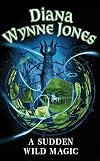
A Sudden Wild Magic
by Diana Wynne Jones
On This Page
Description
For aeons the mages of Arth, a neighbouring universe, have been looting Earth of ideas, innovations and technologies, all the while manipulating events and creating devastating catastrophes for their own edification. Now this brazen piracy is threatening Earth with total extinction. It is up to the Ring, a secret society of witches and warlocks dedicated to the continuance and well-being of mankind, to fight the virtuous, unbendingly traditional stronghold of Arth with an arsenal of show more psychological sabotage, internal dissension -- and kamikaze sex . . . show lessTags
Recommendations









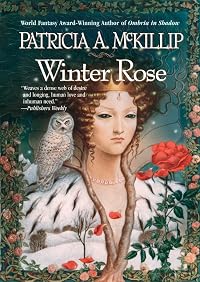
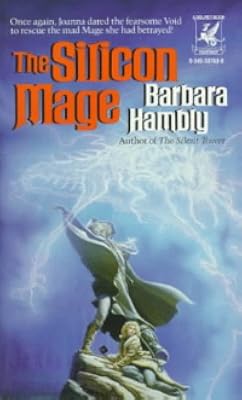
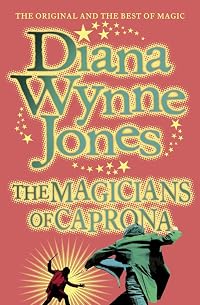

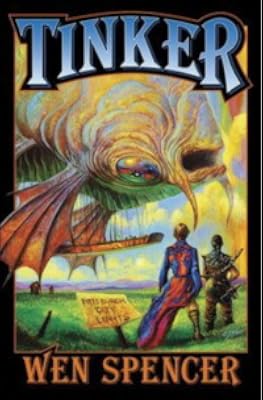





Member Recommendations
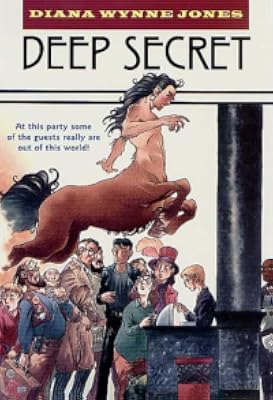
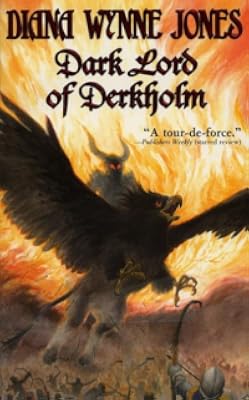
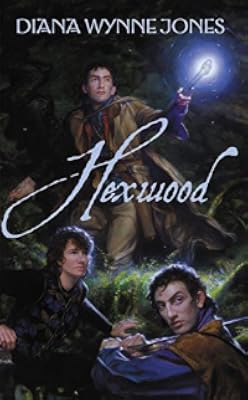
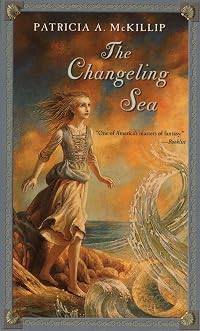
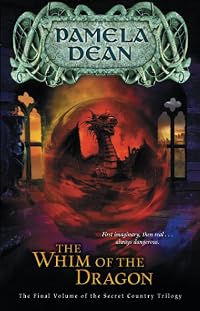
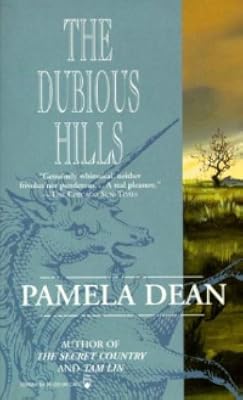
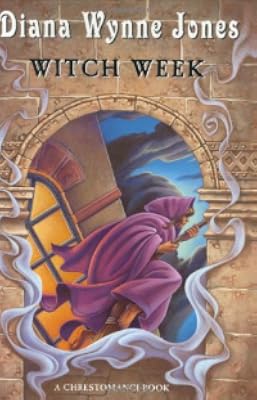
allisongryski These two books share a certain cheeky darkness and both have fantastic eccentric characters and wildly inventive plots.
30
Member Reviews
Magic is mostly ideas -- they're the strongest thing there is!
-- Gladys, X/2
The fantasies of Diana Wynne Jones are the epitome of wild magic, as other commentators have previously noted. You can guess what 'wild magic' is -- uncontrolled flights of powerful fancy spiralling off in unexpected directions, or some such will-o'-the-wisp definition -- and virtually every writing of this much missed author is replete with it. A novel entitled A Sudden Wild Magic is naturally going to include rather a lot of it.
The novel's premise is easily summarised. A neighbouring universe has been harvesting ideas and inventions from our world without our knowledge -- not such a fantastic notion these days -- but has also been experimentally interfering show more with our lives, introducing global warming and epidemics for example to see how we cope with disasters on this scale. A UK-based group of magical guardians decide to infiltrate a crack team of female adepts, their mission being to disrupt this covert action conducted by male mages by introducing magical viruses; the novel switches back and forth from Earth to this parallel world as it follows the ups and downs of this team and those monitoring progress. Being a Diana Wynne Jones fantasy things are not always as they seem, however.
It's almost pointless to outline the intricacies of the plot narrative in a straightforward review: there is so much going on, so many strands, such a varied cast, so many distinctive individuals. It's a novel of its time, of course: issues current in the 1990s have assumed different perspectives a quarter of a century later -- AIDS-HIV and global warming, for example -- and we might baulk at their semi-humorous treatment both from a retrospective viewpoint and because they are matters warranting serious consideration. But it can be argued that humour used as a means of drawing attention to the misuse of power -- from issues concerning exploitation and gender to technology used irresponsibly and child abuse -- deserves its place in fiction.
Instead then of discussing the narrative's twists and turns, I want here to indicate some of the ways the author's own wild magic operates, how she takes ideas from here and there and allows them to follow their own courses.
The floating citadel or entity that is pirating Earth's intellectual resources is initially called Laputa-Blish. The reasons for this are many. First, it's called Blish because at least one of the protagonists has evidently read James Blish's series of novels called Cities in Flight. But it's also called Laputa from Gulliver's Travels, where the flying island freely travels above the greater island of Balnibarbi. But there are more ramifications: the island's name is derived from the Spanish la puta -- which means prostitute or whore -- from which DWJ has taken the idea that the team of female adepts will use what she calls 'kamikaze sex' to upset the machinations of the brotherhood of mages.
You've now gathered that A Sudden Wild Magic is not a fantasy aimed at her usual audience of younger fans. "Usually I write [speculative fiction] for children," she wrote in an article,¹ "but recently I wrote a novel specifically for adults. this was something I had long wanted to do -- really ever since I discovered that quite as many adults read my books as children do." But in penning this fiction, clearly happy to introduce what may have been regarded as slightly risqué humour, she found that she was breaking some unwritten rules about writing fantasy for adults. Thankfully she decided to disregard them in this case.
There are two strong female leads in these pages. The first is Zillah Green, an unmarried mother with a toddler called Marcus. She's part of some intricate relationships which it's too complex to relate here (they involve a Mark and a Marceny). Zillah is blessed, or maybe cursed, with that sudden wild magic, a talent that gives her great (if rather unpredictable) power but also causes her to be lost and confused. It may be significant that Zillah, a name that first appears in Genesis 4 -- where she is the mother of Tubal Cain, the first metalworker -- means 'shadow' in Hebrew: that shadowy aspect may have been what allows Zillah to be constantly overlooked as someone either not present or else insignificant. She does, however, have a significant part to play throughout the narrative.
The other woman with a key role is Dr Gladys Naismith, a professor emeritus of theology. When we first meet her she appears as a dotty old woman with a penchant for cats, living in a cottage in the Herefordshire countryside. It soon becomes clear though that she is a powerful adept, and also good at reading people. Perhaps her surname is indicative of her abilities, for there is a widespread belief around the world that metalworking is a kind of magic and artificers such as blacksmiths are ipso facto magicians. In such ways does Jones match her characters to their personalities and talents.
Gladys also leads us to another complex of relationships in the novel: Welsh connections and Arthurian allusions, themes which the author frequently includes in her work. Gladys, a form of Gwladys, is related to Welsh gwlad, meaning 'land', 'realm' or 'countryside'-- perhaps it originally meant a queen or princess, just as gwledig meant 'ruler'. This Gladys also shares her name with a Dark Age queen, daughter of the king of what was Breconshire and wife of another king of what was to become Monmouthshire. Both of these ancient Welsh polities are contiguous with Herefordshire in England; so what I believe Jones is suggesting is that the fictional Gladys inhabits a kind of no-man's-land between two realms -- what's conventionally called the Welsh Marches -- making her precisely the sort of person ideally placed to effect communication and movement between both.
We can see that there is method in her madness, a kind of labyrinthine logic to Jones' own wild magic. In Earth's parallel world, the floating island Laputa-Blish is actually called Arth. As well as almost having the same letters as Earth, Arth reminds us of the name Arthur, and I'm sure this is no coincidence. In Welsh tradition Gwladys is abducted by King Gwynllyw from her father King Brychan, and war between the two rulers is only prevented by the intervention of King Arthur, their overlord. In A Sudden Wild Magic the unnamed king of this alternative world attempts to reconcile the ruling mage of Arth with Gladys Naismith. While not an exact parallel there are enough similarities to suggest some crossover; while Arth itself is a kind of hybrid of a Celtic monastery and Camelot-like citadel.
Elsewhere on this parallel world we encounter a Pentarchy under that king, consisting of Orthe, Frinjen, Trenjen, Corriarden and Leathe. Students of British history will remember the concept of the Heptarchy -- which is how Victorians referred to the seven Anglo-Saxon kingdoms as existed before the Norman conquest -- and will see how Jones has adapted it for her purposes. I've had fun trying to winkle out the origins of the names of the five kingdoms but I won't bore you with them here, only to suggest that the mythical Greek river Lethe, associated with a goddess, produced forgetfulness and oblivion, a rather apt association for the Leathe of the Pentarchy.
(I must add a thought I had after completing this review: this is a Trojan Horse story, is it not? The Celestial Omnibus the Earth-based magicians use to infiltrate the citadel of Arth is no less than an example of "Greeks bearing gifts" into the heart of the enemy state. In addition, the Marceny/Mark/Marcus characters may owe their origin to the Welsh word march which means … horse. It makes me wonder whether Marceny’s intended sacrifice of Marcus, Mark's son, was also related to the Trojan War: after all, it was intended that the innocent Iphigenia was to be sacrificed to Artemis so the Greeks could sail to Troy.)
Finally, in exploring the imaginative wellsprings of this novel, I want to briefly discuss the varieties of humans on this world. There are those who are termed gualdians, slightly fey-like people with large eyes who have a propensity for wild magic. I've little doubt that Jones derived this term from Welsh gwyllt, which by now you won't be surprised to learn means ... 'wild'. Then there are the centaurs, half horse, half man (and they do seem to all be male in this story). Jones was to bring centaurs back in Deep Secret (1997), a hybrid from classical myth and an introduced species in her otherwise insular worlds. C S Lewis, one of her lecturers at Oxford, famously started his first Narnia book "with a vision of a faun walking in the snow beside an old fashioned streetlight".² As she wrote of this series, "I marvelled and learned from it." Maybe centaurs are a nod to Lewis's faun.
Now, to the crux of the matter: is this a good story? Because, as she wrote in her essay 'Two Kinds of Writing?', despite the hidden assumptions about writing for adults (as opposed to writing for children), "when all is said and done, it is telling a good story, and telling it well, that is the point of both kinds of writing." Well, here are my criteria for judging narrative: Am I engaged when I read it? Do I enjoy the way the story is told? And do I identify in some way or sympathise with the main protagonists?
Firstly, I admit I'm biased: I am predisposed to be engaged with a Diana Wynne Jones novel because I've enjoyed so many in the past and found them satisfying on so many levels.
Now, as to whether I enjoyed the way this particular story is told, I'm not entirely convinced. In her essay she writes, as an established children's author, about assuming "that writing for adults gave me more freedom, for instance, in the way I could tell the story." She could write episodically, for example, or imply that adults could have sex; she could include "a lot of guilt, a lot of pleasure ... and an awful lot of whoopee at some point when enough people relaxed enough." She adds that in the story "two-thirds die, two get badly victimized, one falls into a clinical depression, one gets blackmailed, everyone's judgement goes askew, and one woman runs away and nearly gets her small child killed."
I don't have any problems with all this. I don't even have a problem with her editor's belief that "It's all so nice." No, what I find marginally disappointing is the way that, having brought all her main characters through various vicissitudes she does what she often does in her children's fiction and wraps the action up just we've just started investing in them. In other words, just when we want to know how they feel, react, plan the rest of their lives or whatever, down comes the curtain. It's almost as if she'd lost interest in them, though I'm sure that would never truly be the case.
Perhaps I'm expecting more than this novel is offering. Quite probably the key to it all (and indicative of the author's basic approach) is the observation by the character Roz (VI/4): "It likes fun -- the citadel, I mean. Can't you feel? People keep repressing it, and it's just sort of itching for something to enjoy." Fun. Enjoyment. That's really what this fiction is looking out for. If, as Gladys says, magic is ideas, then sudden wild magic puts the fun into those ideas.
Finally, did I find the lead roles sympathetic? If I'd read this a few years ago, I perhaps would have identified more with Zillah, irresponsible, creative and impulsive as she was. Now, somewhat older though not necessarily wiser, I find I sway towards Gladys, an authoritative figure who is good at reading people, cultivates dottiness while being as sharp as a pin when it suits her. I sometimes wish I was more like her; at least I have the dottiness.
____________
¹ 'Two Kinds of Writing?' (1991), republished in Diana Wynne Jones, Reflections: On the Magic of Writing. Greenwillow Books 2012, 33-43
² 'Reading C. S. Lewis's Narnia' in Reflections, 47-50
https://wp.me/s2oNj1-sudden show less
-- Gladys, X/2
The fantasies of Diana Wynne Jones are the epitome of wild magic, as other commentators have previously noted. You can guess what 'wild magic' is -- uncontrolled flights of powerful fancy spiralling off in unexpected directions, or some such will-o'-the-wisp definition -- and virtually every writing of this much missed author is replete with it. A novel entitled A Sudden Wild Magic is naturally going to include rather a lot of it.
The novel's premise is easily summarised. A neighbouring universe has been harvesting ideas and inventions from our world without our knowledge -- not such a fantastic notion these days -- but has also been experimentally interfering show more with our lives, introducing global warming and epidemics for example to see how we cope with disasters on this scale. A UK-based group of magical guardians decide to infiltrate a crack team of female adepts, their mission being to disrupt this covert action conducted by male mages by introducing magical viruses; the novel switches back and forth from Earth to this parallel world as it follows the ups and downs of this team and those monitoring progress. Being a Diana Wynne Jones fantasy things are not always as they seem, however.
It's almost pointless to outline the intricacies of the plot narrative in a straightforward review: there is so much going on, so many strands, such a varied cast, so many distinctive individuals. It's a novel of its time, of course: issues current in the 1990s have assumed different perspectives a quarter of a century later -- AIDS-HIV and global warming, for example -- and we might baulk at their semi-humorous treatment both from a retrospective viewpoint and because they are matters warranting serious consideration. But it can be argued that humour used as a means of drawing attention to the misuse of power -- from issues concerning exploitation and gender to technology used irresponsibly and child abuse -- deserves its place in fiction.
Instead then of discussing the narrative's twists and turns, I want here to indicate some of the ways the author's own wild magic operates, how she takes ideas from here and there and allows them to follow their own courses.
The floating citadel or entity that is pirating Earth's intellectual resources is initially called Laputa-Blish. The reasons for this are many. First, it's called Blish because at least one of the protagonists has evidently read James Blish's series of novels called Cities in Flight. But it's also called Laputa from Gulliver's Travels, where the flying island freely travels above the greater island of Balnibarbi. But there are more ramifications: the island's name is derived from the Spanish la puta -- which means prostitute or whore -- from which DWJ has taken the idea that the team of female adepts will use what she calls 'kamikaze sex' to upset the machinations of the brotherhood of mages.
You've now gathered that A Sudden Wild Magic is not a fantasy aimed at her usual audience of younger fans. "Usually I write [speculative fiction] for children," she wrote in an article,¹ "but recently I wrote a novel specifically for adults. this was something I had long wanted to do -- really ever since I discovered that quite as many adults read my books as children do." But in penning this fiction, clearly happy to introduce what may have been regarded as slightly risqué humour, she found that she was breaking some unwritten rules about writing fantasy for adults. Thankfully she decided to disregard them in this case.
There are two strong female leads in these pages. The first is Zillah Green, an unmarried mother with a toddler called Marcus. She's part of some intricate relationships which it's too complex to relate here (they involve a Mark and a Marceny). Zillah is blessed, or maybe cursed, with that sudden wild magic, a talent that gives her great (if rather unpredictable) power but also causes her to be lost and confused. It may be significant that Zillah, a name that first appears in Genesis 4 -- where she is the mother of Tubal Cain, the first metalworker -- means 'shadow' in Hebrew: that shadowy aspect may have been what allows Zillah to be constantly overlooked as someone either not present or else insignificant. She does, however, have a significant part to play throughout the narrative.
The other woman with a key role is Dr Gladys Naismith, a professor emeritus of theology. When we first meet her she appears as a dotty old woman with a penchant for cats, living in a cottage in the Herefordshire countryside. It soon becomes clear though that she is a powerful adept, and also good at reading people. Perhaps her surname is indicative of her abilities, for there is a widespread belief around the world that metalworking is a kind of magic and artificers such as blacksmiths are ipso facto magicians. In such ways does Jones match her characters to their personalities and talents.
Gladys also leads us to another complex of relationships in the novel: Welsh connections and Arthurian allusions, themes which the author frequently includes in her work. Gladys, a form of Gwladys, is related to Welsh gwlad, meaning 'land', 'realm' or 'countryside'-- perhaps it originally meant a queen or princess, just as gwledig meant 'ruler'. This Gladys also shares her name with a Dark Age queen, daughter of the king of what was Breconshire and wife of another king of what was to become Monmouthshire. Both of these ancient Welsh polities are contiguous with Herefordshire in England; so what I believe Jones is suggesting is that the fictional Gladys inhabits a kind of no-man's-land between two realms -- what's conventionally called the Welsh Marches -- making her precisely the sort of person ideally placed to effect communication and movement between both.
We can see that there is method in her madness, a kind of labyrinthine logic to Jones' own wild magic. In Earth's parallel world, the floating island Laputa-Blish is actually called Arth. As well as almost having the same letters as Earth, Arth reminds us of the name Arthur, and I'm sure this is no coincidence. In Welsh tradition Gwladys is abducted by King Gwynllyw from her father King Brychan, and war between the two rulers is only prevented by the intervention of King Arthur, their overlord. In A Sudden Wild Magic the unnamed king of this alternative world attempts to reconcile the ruling mage of Arth with Gladys Naismith. While not an exact parallel there are enough similarities to suggest some crossover; while Arth itself is a kind of hybrid of a Celtic monastery and Camelot-like citadel.
Elsewhere on this parallel world we encounter a Pentarchy under that king, consisting of Orthe, Frinjen, Trenjen, Corriarden and Leathe. Students of British history will remember the concept of the Heptarchy -- which is how Victorians referred to the seven Anglo-Saxon kingdoms as existed before the Norman conquest -- and will see how Jones has adapted it for her purposes. I've had fun trying to winkle out the origins of the names of the five kingdoms but I won't bore you with them here, only to suggest that the mythical Greek river Lethe, associated with a goddess, produced forgetfulness and oblivion, a rather apt association for the Leathe of the Pentarchy.
(I must add a thought I had after completing this review: this is a Trojan Horse story, is it not? The Celestial Omnibus the Earth-based magicians use to infiltrate the citadel of Arth is no less than an example of "Greeks bearing gifts" into the heart of the enemy state. In addition, the Marceny/Mark/Marcus characters may owe their origin to the Welsh word march which means … horse. It makes me wonder whether Marceny’s intended sacrifice of Marcus, Mark's son, was also related to the Trojan War: after all, it was intended that the innocent Iphigenia was to be sacrificed to Artemis so the Greeks could sail to Troy.)
Finally, in exploring the imaginative wellsprings of this novel, I want to briefly discuss the varieties of humans on this world. There are those who are termed gualdians, slightly fey-like people with large eyes who have a propensity for wild magic. I've little doubt that Jones derived this term from Welsh gwyllt, which by now you won't be surprised to learn means ... 'wild'. Then there are the centaurs, half horse, half man (and they do seem to all be male in this story). Jones was to bring centaurs back in Deep Secret (1997), a hybrid from classical myth and an introduced species in her otherwise insular worlds. C S Lewis, one of her lecturers at Oxford, famously started his first Narnia book "with a vision of a faun walking in the snow beside an old fashioned streetlight".² As she wrote of this series, "I marvelled and learned from it." Maybe centaurs are a nod to Lewis's faun.
Now, to the crux of the matter: is this a good story? Because, as she wrote in her essay 'Two Kinds of Writing?', despite the hidden assumptions about writing for adults (as opposed to writing for children), "when all is said and done, it is telling a good story, and telling it well, that is the point of both kinds of writing." Well, here are my criteria for judging narrative: Am I engaged when I read it? Do I enjoy the way the story is told? And do I identify in some way or sympathise with the main protagonists?
Firstly, I admit I'm biased: I am predisposed to be engaged with a Diana Wynne Jones novel because I've enjoyed so many in the past and found them satisfying on so many levels.
Now, as to whether I enjoyed the way this particular story is told, I'm not entirely convinced. In her essay she writes, as an established children's author, about assuming "that writing for adults gave me more freedom, for instance, in the way I could tell the story." She could write episodically, for example, or imply that adults could have sex; she could include "a lot of guilt, a lot of pleasure ... and an awful lot of whoopee at some point when enough people relaxed enough." She adds that in the story "two-thirds die, two get badly victimized, one falls into a clinical depression, one gets blackmailed, everyone's judgement goes askew, and one woman runs away and nearly gets her small child killed."
I don't have any problems with all this. I don't even have a problem with her editor's belief that "It's all so nice." No, what I find marginally disappointing is the way that, having brought all her main characters through various vicissitudes she does what she often does in her children's fiction and wraps the action up just we've just started investing in them. In other words, just when we want to know how they feel, react, plan the rest of their lives or whatever, down comes the curtain. It's almost as if she'd lost interest in them, though I'm sure that would never truly be the case.
Perhaps I'm expecting more than this novel is offering. Quite probably the key to it all (and indicative of the author's basic approach) is the observation by the character Roz (VI/4): "It likes fun -- the citadel, I mean. Can't you feel? People keep repressing it, and it's just sort of itching for something to enjoy." Fun. Enjoyment. That's really what this fiction is looking out for. If, as Gladys says, magic is ideas, then sudden wild magic puts the fun into those ideas.
Finally, did I find the lead roles sympathetic? If I'd read this a few years ago, I perhaps would have identified more with Zillah, irresponsible, creative and impulsive as she was. Now, somewhat older though not necessarily wiser, I find I sway towards Gladys, an authoritative figure who is good at reading people, cultivates dottiness while being as sharp as a pin when it suits her. I sometimes wish I was more like her; at least I have the dottiness.
____________
¹ 'Two Kinds of Writing?' (1991), republished in Diana Wynne Jones, Reflections: On the Magic of Writing. Greenwillow Books 2012, 33-43
² 'Reading C. S. Lewis's Narnia' in Reflections, 47-50
https://wp.me/s2oNj1-sudden show less
Jones brings her typical flair for magic, characterization, and drama to play in this densely detailed story. She tells of a group of magicians on Earth who discover that another world has been using and manipulating them (to disasterous effect) and vow revenge. What they don't bargain for is the fact that the two worlds are directly linked, and the ongoing manipulations by the alien world are an accident. The alien world has its own problems (from sexism to the extreme control of magic), so the cast of hilarious (and odd) characters must find a way to work things out for the betterment of both worlds.
This author writes such crotchety annoying female characters I can't help but see her as the Claire Denis of fiction: all about the lissomly pretty or charmingly offbeat or otherwise special young men of which there are no lack in this story.
Don't you sometimes get cross at authors who annoy and engage you at the same time?
Don't you sometimes get cross at authors who annoy and engage you at the same time?
Wasn't sure what to expect with this book which I gathered was an adult novel from DWJ well known for her children's and young adults' fantasy fiction. In the event, it read very similarly to her books for younger children, for example the Chrestomanci series, but with the addition of mostly low key and certainly non explicit references to sex and with a plot that hinged partially on the ability of a team of women agents to seduce their male hosts.
In a nutshell, our world has been influenced for some time by an adjacent reality where the wizards have been creating problems such as war, global warming (the book was published in 1992) and HIV, and then observing how we deal with such issues, stealing any ideas that seem good to them. They show more then send these ideas to the rest of their people - for technical reasons, they are in a pocket universe linked to the main one. The magical practitioners of Great Britain discover this and set about fighting back; hence the team sent in in the hope of destablising the hostile regime. For reasons to do with it not being possible to have a personal duplication aka analogue of yourself in the universe you are entering, there are a lot of casualties en route.
I found this story hard to relate to on a number of levels. Firstly the idea that serious problems affecting the real world are trivialised in this way; I just found that hard to accomodate. Then, a lot of the characters were very difficult to distinguish. The lead female character who enters the other world is a wimp for most of the book, and the man she moons over is a non entity (although there is a plot reason for the latter). The baby talk of her 2 year old, whom only she and one other character can understand, becomes a bit tiresome after a while: surely the child would say one or two intelligble words?
It is quite hard to tell most of the women who are on the "invasion team" apart, or most of the men they meet for that matter. The only characters I liked were Gladys, the old female magic worker, and Tod the resourceful cadet who helps the women. And I quite liked there being centaurs, one of them very grumpy. I also liked the comedic conga scene. But I felt the "solutions" were too simplistic for a book meant to be for adults especiallythe female villain being possessed by a demonic-type entity . It was as if human beings can't be evil just for their own selfish etc reasons.
I also found it a bit strange that the author introduced some gay male characters as part of the invasion team and then promptly killed them all off. Surely it would have provided more variety in a book where the plot depended on the team seducing their hosts if these men had survived? Why, in other words, did the final invading group have to all be women (apart from the male child)?
Re the question of whether this is really an adult book, I find some of the author's fiction for children much more truly adult than this - for example Cart and Cwidder which deals with both the death of a parent and the disillusionment stemming from the other parent's selfish pragmatism. It doesn't make a story 'adult' to just graft on some sexual references - for example, there are YA books I've read with much more explicit content than this. The story was a silly romp, as a whole written at the level of DWJ's fiction for younger children and lacking the darkness of some of her fiction for older children/young adults. Maybe it was meant to be so, but I didn't find it involving and had expected something more complex, so can only award it an OK 2 stars. show less
In a nutshell, our world has been influenced for some time by an adjacent reality where the wizards have been creating problems such as war, global warming (the book was published in 1992) and HIV, and then observing how we deal with such issues, stealing any ideas that seem good to them. They show more then send these ideas to the rest of their people - for technical reasons, they are in a pocket universe linked to the main one. The magical practitioners of Great Britain discover this and set about fighting back; hence the team sent in in the hope of destablising the hostile regime. For reasons to do with it not being possible to have a personal duplication aka analogue of yourself in the universe you are entering, there are a lot of casualties en route.
I found this story hard to relate to on a number of levels. Firstly the idea that serious problems affecting the real world are trivialised in this way; I just found that hard to accomodate. Then, a lot of the characters were very difficult to distinguish. The lead female character who enters the other world is a wimp for most of the book, and the man she moons over is a non entity (although there is a plot reason for the latter). The baby talk of her 2 year old, whom only she and one other character can understand, becomes a bit tiresome after a while: surely the child would say one or two intelligble words?
It is quite hard to tell most of the women who are on the "invasion team" apart, or most of the men they meet for that matter. The only characters I liked were Gladys, the old female magic worker, and Tod the resourceful cadet who helps the women. And I quite liked there being centaurs, one of them very grumpy. I also liked the comedic conga scene. But I felt the "solutions" were too simplistic for a book meant to be for adults especially
I also found it a bit strange that the author introduced some gay male characters as part of the invasion team and then promptly killed them all off. Surely it would have provided more variety in a book where the plot depended on the team seducing their hosts if these men had survived? Why, in other words, did the final invading group have to all be women (apart from the male child)?
Re the question of whether this is really an adult book, I find some of the author's fiction for children much more truly adult than this - for example Cart and Cwidder which deals with both the death of a parent and the disillusionment stemming from the other parent's selfish pragmatism. It doesn't make a story 'adult' to just graft on some sexual references - for example, there are YA books I've read with much more explicit content than this. The story was a silly romp, as a whole written at the level of DWJ's fiction for younger children and lacking the darkness of some of her fiction for older children/young adults. Maybe it was meant to be so, but I didn't find it involving and had expected something more complex, so can only award it an OK 2 stars. show less
A perennial-favourite re-read, always loved.
That said, I must admit that the romance between Zillah and Marcus's father is a bit far-fetched, with no reason given for falling in love with him apart from, well, just because.
That said, I must admit that the romance between Zillah and Marcus's father is a bit far-fetched, with no reason given for falling in love with him apart from, well, just because.
One of Diana Wynne Jones' more 'adult' books, but one that will appeal to her fans in general, with its mix of homey appeal, warm humor, fast-paced action and serious themes.
The Earth We Know (or at least, an Earth very similar to ours) is secretly watched over by a ring of magical adepts. To their dismay, they discover that a neighboring universe has been messing with us - causing all sorts of disasters, apparently in the hopes that they'll learn useful knowledge by studying how we deal with each catastrophe.
In a desperate move, the adepts cobble together a hasty expedition to try to infiltrate the other universe and foil their nefarious plans... but nothing works out quite as expected, on either end.
The Earth We Know (or at least, an Earth very similar to ours) is secretly watched over by a ring of magical adepts. To their dismay, they discover that a neighboring universe has been messing with us - causing all sorts of disasters, apparently in the hopes that they'll learn useful knowledge by studying how we deal with each catastrophe.
In a desperate move, the adepts cobble together a hasty expedition to try to infiltrate the other universe and foil their nefarious plans... but nothing works out quite as expected, on either end.
I like how DWJ deals with both emotion and the possibilities of alternate universes. This is not a kids' book, but it still kind of feels like one. Not because it is childish or simple, but because the dark side of emotions and personalities is all foggy menace rather than explicit detail.
Members
- Recently Added By
Lists

Best Urban Fantasy
632 works; 78 members

Favourite books by Diana Wynne Jones
35 works; 3 members

Witchy Fiction
253 works; 126 members
Author Information

112+ Works 80,411 Members
Diana Wynne Jones was born in London on August 16, 1934. In 1953, she began school at St. Anne's College Oxford and attended lectures by J. R. R. Tolkien and C. S. Lewis. After graduation, she created plays for children that were performed at the London Arts Theatre. Her first book was published in 1973. She wrote over 40 books during her lifetime show more including Dark Lord of Derkholm, Earwig and the Witch, and the Chrestomanci series. She won numerous awards including the Guardian Award for Children's Books in 1977 for Charmed Life, the Boston Globe-Horn Book Award in 1984 for Archer's Goon, the Mythopeic Award in 1999, the Karl Edward Wagner Award in 1999, and the Life Achievement Award from the World Fantasy Organization in 2007. Her book Howl's Moving Castle was adapted into an animated film by director Hayao Miyazaki, and the film was nominated for an Academy Award for Best Animated Feature. She died from lung cancer on March 26, 2011 at the age of 76. (Bowker Author Biography) show less
Awards and Honors
Distinctions
Common Knowledge
- Original publication date
- 1992
- People/Characters
- Mark Lister; Gladys; Maureen Tenehan; Amanda Fenstone; Paulie Lister; Zillah Fenstone (show all 16); Flan Burke; Roz Collasso; Judy; Sandra; Helen; Marcus Fenstone; Roderick "Tod" Halstatten Everenzi Gordano; Horgoc "Josh" Anphalemos Galpetto-Cephaldy; Philo; Lady Marceny Listanian
- Important places
- Earth; Arth
- First words
- The magical activities of Britain have always been highly organized.
- Last words
- (Click to show. Warning: May contain spoilers.)The king stared at him. "I do beg your pardon. I didn't quite catch that."
Classifications
Statistics
- Members
- 809
- Popularity
- 34,164
- Reviews
- 13
- Rating
- (3.64)
- Languages
- English, German
- Media
- Paper
- ISBNs
- 5
- ASINs
- 3