On This Page
Description
Fantasy. Fiction. Literature. From an extraordinary voice in fantasy comes the stunning conclusion to the Farseer trilogy, as FitzChivalry confronts his destiny as the catalyst who holds the fate of the kingdom of the Six Duchies...and the world itself. King Shrewd is dead at the hands of his son Regal. As is Fitz-or so his enemies and friends believe. But with the help of his allies and his beast magic, he emerges from the grave, deeply scarred in body and soul. The kingdom also teeters show more toward ruin: Regal has plundered and abandoned the capital, while the rightful heir, Prince Verity, is lost to his mad quest-perhaps to death. Only Verity's return-or the heir his princess carries-can save the Six Duchies. But Fitz will not wait. Driven by loss and bitter memories, he undertakes a quest: to kill Regal. The journey casts him into deep waters, as he discovers wild currents of magic within him-currents that will either drown him or make him something more than he was. show lessTags
Recommendations


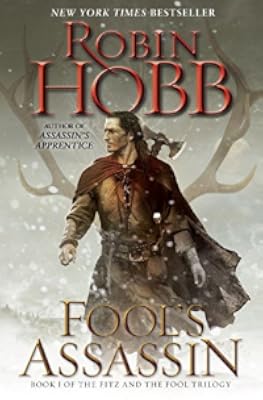
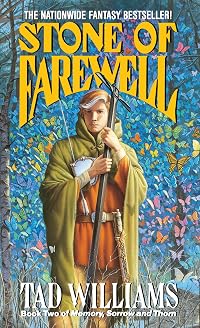
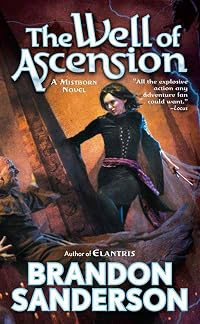
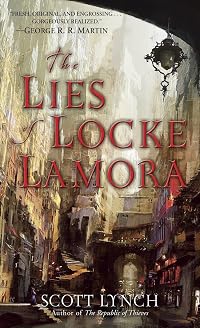
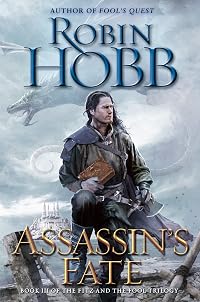
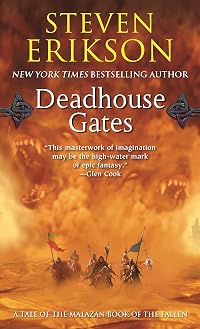
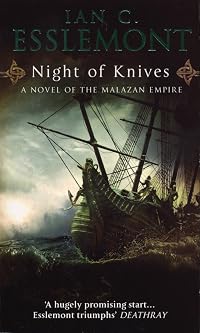
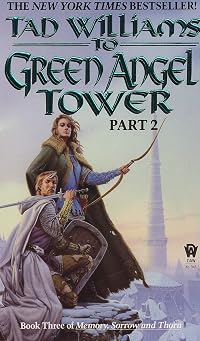
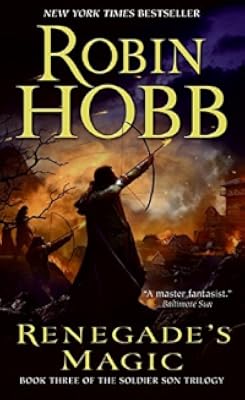
Member Recommendations
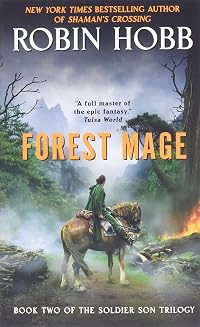
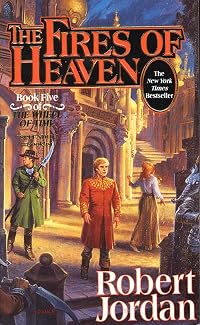
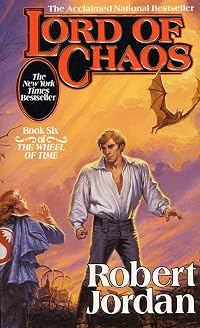
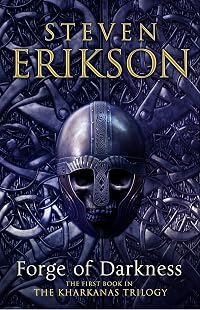
penga_librarian Both books explore the use of magic that requires effort on the part of the practitioner, and have young main characters who find themselves with unexpected abilities.
humouress People who are able to bond with a wild animal. A dynasty trying to unite diverse lands.
Member Reviews
The first section of this last book in the Farseer Trilogy starts with Fitz in a bad state after near-dying at the end of the last book, more wolf than human. It takes enormous, patient effort by Burrich to nurse him back to humanity and near normality, though even then he has PTSD from the tortures he received at Regal's hands, and is crippled by fear at the worst times. His main motivation, related to this, is revenge, to kill Regal. But Regal's Skill Coterie, headed by Will, is ever more powerful, and clearly far more skilled than Fitz is, and he only escapes with his life because of an intervention from afar by his uncle, Verity, who also gives the skilled command to come to him. This sets up an epic journey through the increasingly show more dangerous lands, populated by forged ones, Regal's soldiers (searching particularly keenly for Fitz), unscrupulous smugglers, and others, into the mountains, to try to find Verity. Verity has been searching for the Elderlings, mythical creatures that may or may not be dragons, in order to try to save his kingdom from the raiders, and also the now Regal's forces. What are these Elderlings? Can Fitz find his uncle before he perishes, and before Fitz himself is found and killed by Regal's men. And why is Fitz called by the Fool, the White Prophet, as the catalyst, as if the fate of the six dutchies is small fry compared to the larger purpose behind Fitz's life?
One thing to note with this book is that it's huge, double the length of the previous two. The pacing doesn't ramp up as clearly as the previous two books either, but the themes are perhaps more mature, more subtle, and Fitz's development more interesting and clear. This book is more adult in many ways, both in its cynicism and emotional darkness, and in its twists. This is all perfectly reflected in Fitz's age and the hardships and traumas he endures. In many ways, therefore, this book is the most accomplished of the trilogy, even if it isn't quite as nailbiting. show less
One thing to note with this book is that it's huge, double the length of the previous two. The pacing doesn't ramp up as clearly as the previous two books either, but the themes are perhaps more mature, more subtle, and Fitz's development more interesting and clear. This book is more adult in many ways, both in its cynicism and emotional darkness, and in its twists. This is all perfectly reflected in Fitz's age and the hardships and traumas he endures. In many ways, therefore, this book is the most accomplished of the trilogy, even if it isn't quite as nailbiting. show less
(Third of 16: Realm of the Elderlings series / Third of 3: Farseer Trilogy. Fantasy)
Re-read
We pick up the story of this final instalment in the (first) trilogy as Fitz is beginning to recover from his illness.
This time, Fitz travels into the Mountains again and goes beyond Jhaampe on a quest to find Verity (who has been lost on his quest to find the Elderlings), racing both Regal with his corrupted coterie and the Red Ship ravagers. The Fool insists that Fitz is the catalyst on whom world shattering events turn, either for good in this cycle or for evil for the final time and the Red Ships are just the beginning of an insidious evil that will sweep the entire world. Fitz picks up some new companions; the irascible old woman, Kettle, show more who has secrets of her own and the minstrel Starling, who wants to write a song that she will be remembered for and has noticed that things happen around Fitz.
We learn a bit more of Skill on this journey and come to understand how deficient Fitz's knowledge about it is. We also learn a bit more about Wit and the Old Blood and the reason that Burrich is so opposed to Fitz using it. And, through Kettle as much as the Fool, we find out a little bit more about the Fool and his prophecies.
There are hidden gems of humour, quite apart from the Fool's banter, that you might only glimpse on a second read-through, because the first time you're so focused on wanting to find out what is happening.
I love the way Nighteyes, the big wolf, falls over when his ears are scratched; it puts me in mind of our (much less fierce) golden retriever and lends a touch of lightness to the proceedings. I appreciate the way Hobb brings out thehumaness depth of a variety of different, and different types of, relationships - Fitz and his wolf, Verity and Kettricken, Chade or Burrich and Fitz - in the course of the story. Fitz has been oblivious in the past, but now recognises his love, at least, for them. He's beginning to mature at last.
I like Hobb's world building and the way she goes into detail about the economic history and geography of the land that Fitz travels through; this time of the inland duchies and its relationship with the Mountain Kingdom or in the past books, about the coastal duchies and the Red Ship raids. It gives the whole trilogy a depth and reality.
Hobb puts Fitz through a lot, especially considering that at this point he is only in his mid to late teens. And he still has a lot of growing up to do:
This book covers the next one and a half years following Royal Assassin - though the last few months wrap up the story and are told briefly. Assassin's Quest grabs you and pulls you in as fast as the first two. Hobb skilfully builds the mystery and the magic and the tension as we slowly (frustratingly slowly - in a good way) discover pieces of the jigsaw along with Fitz.
Intense. Chews you up and spits you out, satisfied, at the end. Worth the journey.
5 stars show less
Re-read
We pick up the story of this final instalment in the (first) trilogy as Fitz is beginning to recover from his illness.
This time, Fitz travels into the Mountains again and goes beyond Jhaampe on a quest to find Verity (who has been lost on his quest to find the Elderlings), racing both Regal with his corrupted coterie and the Red Ship ravagers. The Fool insists that Fitz is the catalyst on whom world shattering events turn, either for good in this cycle or for evil for the final time and the Red Ships are just the beginning of an insidious evil that will sweep the entire world. Fitz picks up some new companions; the irascible old woman, Kettle, show more who has secrets of her own and the minstrel Starling, who wants to write a song that she will be remembered for and has noticed that things happen around Fitz.
We learn a bit more of Skill on this journey and come to understand how deficient Fitz's knowledge about it is. We also learn a bit more about Wit and the Old Blood and the reason that Burrich is so opposed to Fitz using it. And, through Kettle as much as the Fool, we find out a little bit more about the Fool and his prophecies.
There are hidden gems of humour, quite apart from the Fool's banter, that you might only glimpse on a second read-through, because the first time you're so focused on wanting to find out what is happening.
'To my Wit-sense, these trees had a ghostly life that was almost animal, as if they had acquired some awareness simply by virtue of their age. But it was an awareness of the greater world of light and moisture, soil and air. They regarded our passage not at all, and by afternoon I felt no more significant than an ant. I had never thought to be disdained by a tree.'
I love the way Nighteyes, the big wolf, falls over when his ears are scratched; it puts me in mind of our (much less fierce) golden retriever and lends a touch of lightness to the proceedings. I appreciate the way Hobb brings out the
I like Hobb's world building and the way she goes into detail about the economic history and geography of the land that Fitz travels through; this time of the inland duchies and its relationship with the Mountain Kingdom or in the past books, about the coastal duchies and the Red Ship raids. It gives the whole trilogy a depth and reality.
Hobb puts Fitz through a lot, especially considering that at this point he is only in his mid to late teens. And he still has a lot of growing up to do:
I accepted their ridicule by sulking manfully. They ignored that, too.
This book covers the next one and a half years following Royal Assassin - though the last few months wrap up the story and are told briefly. Assassin's Quest grabs you and pulls you in as fast as the first two. Hobb skilfully builds the mystery and the magic and the tension as we slowly (frustratingly slowly - in a good way) discover pieces of the jigsaw along with Fitz.
Intense. Chews you up and spits you out, satisfied, at the end. Worth the journey.
5 stars show less
I feel empty
I have never before cried so hard upon finishing a book as I did just now. Full body hiccupping toddler tears. I need a moment, please excuse me-
….
Okay not really better but I feel like I need to put my feelings into words to truly capture how I feel about this book while the memory is still fresh.
As always, Robin Hobb’s prose is beautiful. Her dialogue is some of the strongest I’ve read and the character interaction is beautifully done. Her books breathe life and emotion with an unmatched vividness of atmosphere and character. As has been said time and again, it truly is her masterful characterization that makes Hobb so great, some (note: this is not comprehensive in the least) of my favorites of her characters show more being Fitz (shocking!), Nighteyes, The Fool, and Burrich.
Her novels feel so lived in. I have never been so wrapped up in a story that even though nothing has really happened in a hundred pages, I’m still somehow completely engaged. Yet, here we are!
This book falls short in a couple of areas, but the culmination of all Hobb does right over the course of only three books is enough to completely overshadow any weak points.
Some books you just have chemistry with. For me, that is Robin Hobb’s Farseer books. I suspect I will feel this way even more as I work my way through the other RotE series’.
This book (and series) has made me burst out in laughter, bawl (as mentioned above), whimper, chuckle— you get it. This has been the most real-feeling fantasy series I have ever read. It doesn’t feel like a book series per se, not in the way some books do, but rather like a like an epic masterpiece of storytelling. It doesn’t follow convention or play into plots the author wanted to include and did so at the cost of all else. This was a living, breathing tale. Not perfect, especially if one goes into this expecting a different experience or wanting what they’ve found in other novels. However, this series is timeless and exploratory and introspective in ways I didn’t know I needed and now don’t know how I can go without.
As the cliche goes, this series is not for everyone. However, it is definitely for me.
P.S. I’m very glad there’s still four other series in this world left, but absolutely terrified of the insurmountable book slump and unreasonable depression I suspect I may fall into after finishing the last one.
P.P.S. Fuck it, this gets a five star because I have never been this affected after finishing a book. Sure, Fitz could have summed up his travel more. Was it still amazing? Yes. See: All scenes including the Fool, Nighteyes, or daddy Burrich. show less
I have never before cried so hard upon finishing a book as I did just now. Full body hiccupping toddler tears. I need a moment, please excuse me-
….
Okay not really better but I feel like I need to put my feelings into words to truly capture how I feel about this book while the memory is still fresh.
As always, Robin Hobb’s prose is beautiful. Her dialogue is some of the strongest I’ve read and the character interaction is beautifully done. Her books breathe life and emotion with an unmatched vividness of atmosphere and character. As has been said time and again, it truly is her masterful characterization that makes Hobb so great, some (note: this is not comprehensive in the least) of my favorites of her characters show more being Fitz (shocking!), Nighteyes, The Fool, and Burrich.
Her novels feel so lived in. I have never been so wrapped up in a story that even though nothing has really happened in a hundred pages, I’m still somehow completely engaged. Yet, here we are!
This book falls short in a couple of areas, but the culmination of all Hobb does right over the course of only three books is enough to completely overshadow any weak points.
Some books you just have chemistry with. For me, that is Robin Hobb’s Farseer books. I suspect I will feel this way even more as I work my way through the other RotE series’.
This book (and series) has made me burst out in laughter, bawl (as mentioned above), whimper, chuckle— you get it. This has been the most real-feeling fantasy series I have ever read. It doesn’t feel like a book series per se, not in the way some books do, but rather like a like an epic masterpiece of storytelling. It doesn’t follow convention or play into plots the author wanted to include and did so at the cost of all else. This was a living, breathing tale. Not perfect, especially if one goes into this expecting a different experience or wanting what they’ve found in other novels. However, this series is timeless and exploratory and introspective in ways I didn’t know I needed and now don’t know how I can go without.
As the cliche goes, this series is not for everyone. However, it is definitely for me.
P.S. I’m very glad there’s still four other series in this world left, but absolutely terrified of the insurmountable book slump and unreasonable depression I suspect I may fall into after finishing the last one.
P.P.S. Fuck it, this gets a five star because I have never been this affected after finishing a book. Sure, Fitz could have summed up his travel more. Was it still amazing? Yes. See: All scenes including the Fool, Nighteyes, or daddy Burrich. show less
Ultimately I'm glad I read this trilogy. Hobb's characters are well realized and completely fleshed out. Nighteyes is one of the all-time great pet companions in fantasy, and I was intrigued by the Fool, Burrich, Verity and Kettle, among others. You get a very clear sense of what this world is and it felt unique and devoid of the usual cliches that can litter fantasy trilogies/series, particularly from the mid 90s.
Unfortunately, Assassin's Quest was so dull at times I wanted to drop it. It's far, far too long - the middle section where the group go into the mountains to find Verity takes an eternity. The version I read was 757 pages, if all the plot points happened in 300 or 400 pages, I'm convinced I would have really liked it.
The show more ending is great fun and incredibly satisfying but it just takes SO long to get there. I'm on the fence about Fitz as a main character. The writing is very strong, but I couldn't get over how difficult I found this one to finish and soured me on the trilogy as a whole. A shame.
I hear the next few trilogies are better but I think I'll hop off the Realm of the Elderlings for now. I may re-visit, but honestly I'm just relieved to be finished. show less
Unfortunately, Assassin's Quest was so dull at times I wanted to drop it. It's far, far too long - the middle section where the group go into the mountains to find Verity takes an eternity. The version I read was 757 pages, if all the plot points happened in 300 or 400 pages, I'm convinced I would have really liked it.
The show more ending is great fun and incredibly satisfying but it just takes SO long to get there. I'm on the fence about Fitz as a main character. The writing is very strong, but I couldn't get over how difficult I found this one to finish and soured me on the trilogy as a whole. A shame.
I hear the next few trilogies are better but I think I'll hop off the Realm of the Elderlings for now. I may re-visit, but honestly I'm just relieved to be finished. show less
Hobb's characters are compelling and well constructed and usually don't resort to cliches or plot instruments. In this book we pick up with Fitz after his "death" in Regal's dungeon and spend the first part of the book in his mind as he transitions from a man with the brain and habits of a wolf back to a full human. This part is delightful.
I also enjoyed some of the new characters who were introduced, like Kettle and Starling, but felt more could be made of Fitz's early interaction with other witted characters (sorry, can't remember the bear man's name). There is this fascinating look at a hidden subculture that sees wit-bonding as a gift rather than a curse, and I would have liked to spend more time with them and learn about their show more lives.
The middle part drags a bit until we get to about the 80% mark. Quest narratives will always have the element of just how hard it truly is to get from place to place. But it becomes repetitive. There is a sense of gradually piecing together a mystery about Verity's whereabouts and what kind of magic he is trying to engage with, but emphasis on the "gradually" part. I know it's not in Hobb's nature to info-dump a bunch of stuff on us, and I respect that, but the pacing suffered in this section.
That said, I loved spending time with Fitz and especially Nighteyes in this conclusion of the Farseer trilogy. The first two books are stronger than the conclusion, though. show less
I also enjoyed some of the new characters who were introduced, like Kettle and Starling, but felt more could be made of Fitz's early interaction with other witted characters (sorry, can't remember the bear man's name). There is this fascinating look at a hidden subculture that sees wit-bonding as a gift rather than a curse, and I would have liked to spend more time with them and learn about their show more lives.
The middle part drags a bit until we get to about the 80% mark. Quest narratives will always have the element of just how hard it truly is to get from place to place. But it becomes repetitive. There is a sense of gradually piecing together a mystery about Verity's whereabouts and what kind of magic he is trying to engage with, but emphasis on the "gradually" part. I know it's not in Hobb's nature to info-dump a bunch of stuff on us, and I respect that, but the pacing suffered in this section.
That said, I loved spending time with Fitz and especially Nighteyes in this conclusion of the Farseer trilogy. The first two books are stronger than the conclusion, though. show less
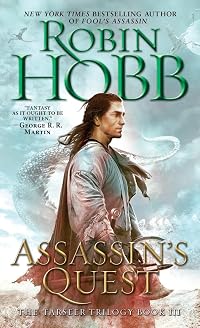
I do think this was a far more satisfying conclusion than an all-around happy ending would have been. Fantasy done well reflects history, and nothing in history has ever been a full package, tied up with pretty ribbons and bows. There are always more questions to explore in real life. This book took excellent steps in that direction. The amount of plot, geography, and history this book covers compared to the previous two books was also a nice change of pace (finally), and probably contributed to that overall feeling. I felt it was 200-300 pages too long, but that can be forgiven by the incredible character work Hobb accomplishes. Almost as stunning as the John Howe cover art.
Far more affecting for me as a reader though: this book was a show more major factor in a recent bout of depression for me. That's not to demean the work, only to explain why I enjoyed it less than someone else. It was a gorgeous story full of un-contrived human experience, and I was certainly entertained by its creativity. The end is also a triumphal victory seen at large. But it was an incredible downer seen at a personal scale. That speaks success for a fantasy story, as it gives more nuance to war than most fantasy typically does. It comes at a high cost though. The main character constantly sees only the negative, and I never blamed them for it. Hobb is a good enough writer that I never felt Fitz was whining. His life just plain scrapes the bottom of the barrel. The entire series as a result has a cloud of melancholy that refuses to be dispelled. That cloud occasionally erupts into tempests of panic-inducing fear and sadness. That happens more and more often as the serious progresses. And it's not the kind of fear that can be dismissed as "it's just a monster in the closet" or "there are still other books in the series." It's real fear, the kind you feel for your life and a tortured future, when your neighbor menaces you or your children are sick or things outside of your control trap you. The intensity of those moments is not to be underestimated. Hobb knows how to make a reader feel it. I can't see how I could have avoided being affected without having a heart of stone. Do not read this story if you expect to be merely entertained.
I will seriously pause and assess the state of my life and emotions before embarking on another Hobb series. But I do hope I can continue the story at some future point. show less
Far more affecting for me as a reader though: this book was a show more major factor in a recent bout of depression for me. That's not to demean the work, only to explain why I enjoyed it less than someone else. It was a gorgeous story full of un-contrived human experience, and I was certainly entertained by its creativity. The end is also a triumphal victory seen at large. But it was an incredible downer seen at a personal scale. That speaks success for a fantasy story, as it gives more nuance to war than most fantasy typically does. It comes at a high cost though. The main character constantly sees only the negative, and I never blamed them for it. Hobb is a good enough writer that I never felt Fitz was whining. His life just plain scrapes the bottom of the barrel. The entire series as a result has a cloud of melancholy that refuses to be dispelled. That cloud occasionally erupts into tempests of panic-inducing fear and sadness. That happens more and more often as the serious progresses. And it's not the kind of fear that can be dismissed as "it's just a monster in the closet" or "there are still other books in the series." It's real fear, the kind you feel for your life and a tortured future, when your neighbor menaces you or your children are sick or things outside of your control trap you. The intensity of those moments is not to be underestimated. Hobb knows how to make a reader feel it. I can't see how I could have avoided being affected without having a heart of stone. Do not read this story if you expect to be merely entertained.
I will seriously pause and assess the state of my life and emotions before embarking on another Hobb series. But I do hope I can continue the story at some future point. show less
Enjoyed this volume more than book 2 of the trilogy. Although Fitz wanders around a fair bit, initially trying to murder Regal to avenge Shrewd and the wrongs done to Verity and co, and it does get a mite tedious that he keeps being captured and beaten etc, he does manage to get even with the minor sadists involved in beating him so badly, though more by luck than judgement. He meets some interesting characters such as Kettle, though he continues to be several steps behind the reader in seeing what is in front of his nose: the truth about Kettle, what happened to the minstrel Starling and the other women when they are all captured, for example. And there's the whole sequence when he is being questioned about Molly's whereabouts and I show more was mentally shouting "Don't tell him, he's been taken over!" I do get annoyed when characters are made stupid just to make the plot work.
Finally we discover what sacrifice Verity has made and must make to bring relief to the embattled Six Duchies. I did think that certain aspects of the book - the journey from the Mountain kingdom to find Verity, the nature of the Erlings and how they are eventually revived being a couple of examples - are very dragged out, whereas the big climax of three books and a very long story is rushed through with just a narration of Fitz's remote witness. It would have been far more satisfying if he could have taken more of a role. I know this volume in particular paints him as the Catalyst, but a real catalyst has an effect on things around it without being changed itself whereas Fitz has obviously been greatly changed throughout the trilogy, so it would not have been breaking some rule of magic to make him more active at the end. Also this book is not at all satisfying from the POV of wanting Regal to pay for his crimes, and given what else Fitz does in relation to Regal, it seems stupid that he does not at least arrange for a posthumous exoneration for himself, in case it later comes out that he is still alive. show less
Finally we discover what sacrifice Verity has made and must make to bring relief to the embattled Six Duchies. I did think that certain aspects of the book - the journey from the Mountain kingdom to find Verity, the nature of the Erlings and how they are eventually revived being a couple of examples - are very dragged out, whereas the big climax of three books and a very long story is rushed through with just a narration of Fitz's remote witness. It would have been far more satisfying if he could have taken more of a role. I know this volume in particular paints him as the Catalyst, but a real catalyst has an effect on things around it without being changed itself whereas Fitz has obviously been greatly changed throughout the trilogy, so it would not have been breaking some rule of magic to make him more active at the end. Also this book is not at all satisfying from the POV of wanting Regal to pay for his crimes, and given what else Fitz does in relation to Regal, it seems stupid that he does not at least arrange for a posthumous exoneration for himself, in case it later comes out that he is still alive. show less
Members
- Recently Added By
Lists

NPRs your picks: top 100 Sci-Fi/Fantasy books
297 works; 80 members

Favorite Long Books
330 works; 42 members

Books tagged favorites
390 works; 30 members

Books Read in 2014
2,343 works; 89 members

Epic Fantasy of the 90s
111 works; 4 members

Off on a Quest
14 works; 5 members

Books Read in 2016
4,666 works; 197 members

Books Read in 2018
4,360 works; 110 members

Books Read in 2020
4,379 works; 124 members

Books Read in 2006
421 works; 8 members

Read in 2006
140 works; 1 member

READ 2026
71 works; 1 member

FAB 2026
4 works; 1 member
Talk Discussions
Past Discussions
Group read: Assassin's Quest by Robin Hobb - Farseer trilogy in 75 Books Challenge for 2018 (January 2019)
Author Information

Robin Hobb was born in California but grew up in Alaska. It was there that she learned to love the forest and the wilderness. She has lived most of her life in the Pacific Northwest and currently resides in Tacoma, Washington. She is the author of five critically acclaimed fantasy series: The Rain Wilds Chronicles (Dragon Keeper, Dragon Haven, show more City of Dragons, Blood of Dragons), The Soldier Son Trilogy, The Tawny Man Trilogy, The Liveship Traders Trilogy, and The Farseer Trilogy. Under the name Megan Lindholm she is the author of The Wizard of the Pigeons, Windsingers, and Cloven Hooves. The Inheritance, a collection of stories, was published under both names. Her short fiction has won the Asimov's Readers' Award and she has been a finalist for both the Nebula and Hugo awards. (Publisher Provided) Margaret Astrid Lindholm Ogden was born in Berkeley, California on March 5, 1952. She writes under the pseudonyms Megan Lindholm and Robin Hobb. She writes fantasy and science fiction under the name Robin Hobb including the Farseer Trilogy, the Liveship Traders Trilogy, the Tawny Man Trilogy, the Soldier Son Trilogy, the Rain Wilds Chronicles, and the Fitz and the Fool Trilogy. Her title, Assassin's Fate, made The New York Times Best Seller List in 2017. (Bowker Author Biography) show less
Some Editions
Series


Work Relationships
Is contained in
Contains
Common Knowledge
- Canonical title
- Assassin's Quest
- Original title
- Assassin's Quest
- Alternate titles*
- La Citadelle des Ombres, Tome 2 (Le Poison de la vengeance, La Voie magique, La Reine solitaire) (Le Poison de la vengeance, La Voie magique, La Reine solitaire)
- Original publication date
- 1997
- People/Characters
- FitzChivalry Farseer (Fitz, Catalyst, Changer, Tom the Shepperd, Cob); The Fool (White Prophet, Beloved); Burrich (Heart of the Pack); Nighteyes; Starling Birdsong; Kettle / Kestral (show all 24); Verity Farseer; Regal Farseer; Will; Burl; Chade Fallstar; Kettricken; Verde; Nik; Molly Nosegay; Lacey; Lady Patience Farseer; Nettle; Carrod; Black Rolf; Bolt; Lord Bright; Holly; Hilda
- Important places
- Six Duchies; Buck Duchy; Blue Lake; Vin River; Cold River; Farrow Duchy (show all 12); Jhaampe, Mountain Kingdom; Mountain Kingdom; Skill Road; Moonseye, Farrow Duchy; Tradeford; The Quarry
- Dedication
- For the very real Kat Ogden Who threatened at an early age, to grow up and be a tap dancing, fencing, jodoka, movie star, archaeologist, and president of the United States. And is getting frigheningly close to the end of her ... (show all)list. Never mistake the movie for the book.
- First words
- I awake every morning with ink on my hands.
- Quotations*
- "En dan is er nog het talent van het Vermogen, dat grenst aan het ongelooflijke en dat in staat is contact te leggen met de Ouderlingen, die rechtstreeks onder de goden staan" - FitzChevalric
- Last words
- (Click to show. Warning: May contain spoilers.)We dream of carving our dragon.
- Blurbers
- Martin, George R.R.; Brust, Steven; Rawn, Melanie
- Original language
- English
- Disambiguation notice
- The French versions of the Farseer trilogies splits the original books in various ways. Please be careful while combining and check the listing on Wikipedia.
*Some information comes from Common Knowledge in other languages. Click "Edit" for more information.
Classifications
Statistics
- Members
- 9,545
- Popularity
- 1,084
- Reviews
- 156
- Rating
- (4.09)
- Languages
- 17 — Bulgarian, Chinese, Czech, Dutch, English, Finnish, French, German, Greek, Hungarian, Italian, Polish, Romanian, Russian, Spanish, Swedish, Portuguese (Brazil)
- Media
- Paper, Audiobook, Ebook
- ISBNs
- 71
- ASINs
- 32