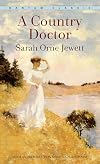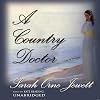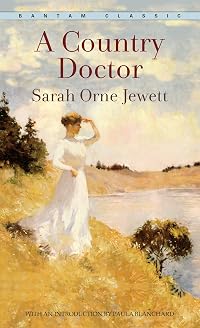
A Country Doctor
by Sarah Orne Jewett
On This Page
Description
Though not as well known as the writers she influenced, Sarah Orne Jewett remains one of the most important American novelists of the late nineteenth century. A Country Doctor, Jewett's first novel, is a luminous portrayal of rural Maine and a look at the author's own world. In it, Nan's struggle to choose between marriage and a career as a doctor, between the confining life of a small town and a self-directed one as a professional, mirrors Jewett's own conflicts as well as eloquently giving show more voice to the leading women's issues of her time. Jewett's perfect details about wildflowers and seaside wharfs, farm women knitting by the fireside and sailors going upriver to meet the moonlight convey a realism that has seldom been surpassed. show lessTags
Recommendations















Member Reviews
Somewhere, I read that Willa Cather had claimed that Sarah Orne Jewett had been influential in her own development as a writer. Given that old Willa had developed rather nicely—I've read ten Cather books now, and there's not a pig in the bunch—I considered taking a flier on Sarah. Then, I vaguely remembered her name from 11th grade English, and given that Miss Garner, my 11th-grade English teacher, was the first great love of my life, the decision to read Jewett became pretty much a no-brainer. If it's good enough for Cather and Miss Garner, it ought to be more than good enough for the likes of me. And, indeed, it was that. I found this to be a really engaging book.
A young woman shows up on her mother's doorstep, after having been show more absent for some years, carrying a young child. The young woman expires, but not before requesting the local doctor, Dr. Leslie, become the official guardian of her daughter, Anna Prince. The grandmother brings the girl up for the first few years of her life, with regular check-ins by Dr. Leslie. Anna grows up fairly wild and undisciplined for a few years on her grandmother's farm, developing, thereby, a deep love for the wilds of Maine. After her grandmother dies, she goes to live with Dr. Leslie and takes interest in his work. Eventually she accompanies him on some of his visits, shows interest in and aptitude for doctoring, and determines that she would like to become a country physician herself.
So she studies to be a physician and so forth. And naturally, given that this was published in 1884, most people disapprove. Woman, after all, were created by God to be home makers and to please their husbands. Period. It says so in the Bible. Double Period! (Damn! How come no one told my spouse she had been ordained by God to please me? Ah, the difference a century makes.) So we have this conflict, and wonder how it might resolve. Well, we don't wonder if we've read the book. But, I'm not going to tell you about all the difficulties and self doubts and resolutions and re-resolutions, along with all the trips around the luminous country and visits to simple country folk and meeting a rich, lost aunt after a couple of decades of speculation about her and temptations to embrace old-fashioned "domestic felicity", and so forth. It's worth reading to find out.
This book carries lots of interesting descriptions of the people of Maine at the time and their diversions and interests. A lot of that, of course, involves snooping on the neighbors and engaging in idle gossip. But it is portrayed very realistically and sympathetically by Jewett (I hear echoes of some of my more elderly New Hampshire in-laws and also my Kansas kin). She also takes time to describe the settings of her scenes, the flowers, trees, birds and so forth. Sometimes, excessive descriptive passages can get tedious and boring, such as, for example in Mrs. Radcliffe's The Mysteries of Udolpho (this, based on my recollection from when I read it on the London Underground back in the dark ages). I didn't find the description of settings and people to be tedious in the least in this book. I'm guessing that means that Sarah Orne Jewett was a much better writer than Mrs. Radcliffe, despite the latter's having influenced the incomparable Jane Austen.
There's also lots of interesting philosophical discussion about the human condition and the place of women in the world and so forth. As I read this book, I realized that it should be popular with feminists (well everyone, it's a good book, and besides, we should all be feminists by now), and wondered how in the hell feminist studies could skip this book (or Anne Brontë's works—much more feminist than her more famous sisters) and instead include Kate Chopin's piece of dreck, The Awakening. Or maybe they don't anymore; but the point remains, Chopin's book is crap and should long ago have been tossed into the dust bin. It should make proper feminists cringe. This book, not at all. show less
A young woman shows up on her mother's doorstep, after having been show more absent for some years, carrying a young child. The young woman expires, but not before requesting the local doctor, Dr. Leslie, become the official guardian of her daughter, Anna Prince. The grandmother brings the girl up for the first few years of her life, with regular check-ins by Dr. Leslie. Anna grows up fairly wild and undisciplined for a few years on her grandmother's farm, developing, thereby, a deep love for the wilds of Maine. After her grandmother dies, she goes to live with Dr. Leslie and takes interest in his work. Eventually she accompanies him on some of his visits, shows interest in and aptitude for doctoring, and determines that she would like to become a country physician herself.
So she studies to be a physician and so forth. And naturally, given that this was published in 1884, most people disapprove. Woman, after all, were created by God to be home makers and to please their husbands. Period. It says so in the Bible. Double Period! (Damn! How come no one told my spouse she had been ordained by God to please me? Ah, the difference a century makes.) So we have this conflict, and wonder how it might resolve. Well, we don't wonder if we've read the book. But, I'm not going to tell you about all the difficulties and self doubts and resolutions and re-resolutions, along with all the trips around the luminous country and visits to simple country folk and meeting a rich, lost aunt after a couple of decades of speculation about her and temptations to embrace old-fashioned "domestic felicity", and so forth. It's worth reading to find out.
This book carries lots of interesting descriptions of the people of Maine at the time and their diversions and interests. A lot of that, of course, involves snooping on the neighbors and engaging in idle gossip. But it is portrayed very realistically and sympathetically by Jewett (I hear echoes of some of my more elderly New Hampshire in-laws and also my Kansas kin). She also takes time to describe the settings of her scenes, the flowers, trees, birds and so forth. Sometimes, excessive descriptive passages can get tedious and boring, such as, for example in Mrs. Radcliffe's The Mysteries of Udolpho (this, based on my recollection from when I read it on the London Underground back in the dark ages). I didn't find the description of settings and people to be tedious in the least in this book. I'm guessing that means that Sarah Orne Jewett was a much better writer than Mrs. Radcliffe, despite the latter's having influenced the incomparable Jane Austen.
There's also lots of interesting philosophical discussion about the human condition and the place of women in the world and so forth. As I read this book, I realized that it should be popular with feminists (well everyone, it's a good book, and besides, we should all be feminists by now), and wondered how in the hell feminist studies could skip this book (or Anne Brontë's works—much more feminist than her more famous sisters) and instead include Kate Chopin's piece of dreck, The Awakening. Or maybe they don't anymore; but the point remains, Chopin's book is crap and should long ago have been tossed into the dust bin. It should make proper feminists cringe. This book, not at all. show less
Nan Price was orphaned in infancy, then raised by her grandmother, until her upbringing is finished by Dr. John Leslie. A case can certainly be made that the eponymous doctor is our Dr. Leslie, rather than the heroine. But I won't make that case now.
Definitely a product of its time, "A Country Doctor" recounts the massive 19th Century roadblocks standing the the way of a young woman ambitious to be a doctor, and how she overcomes them. Jewett unfolds her story with abstract expositions that deal with specific emotional and interpersonal interactions. It reminds me (on one level) of Henry James, except that Ms. Jewett's way is plainer and clearer, and just as deep. The author portrays Nan's choice as a test of not only perserverance, but show more also of conscience, in a way that simply would not apply today. That is one of the reasons, obviously, to read this book.
The other reasons are that the author's descriptions are full, her characters are deep and well-shaded, and she delivers a life-affirming outcome. I don't know that I would necessarily term this book a classic, but it's certainly worth your while, not only for the historic interest, but also the simple appreciation we take in a well-told, satisfying story. show less
Definitely a product of its time, "A Country Doctor" recounts the massive 19th Century roadblocks standing the the way of a young woman ambitious to be a doctor, and how she overcomes them. Jewett unfolds her story with abstract expositions that deal with specific emotional and interpersonal interactions. It reminds me (on one level) of Henry James, except that Ms. Jewett's way is plainer and clearer, and just as deep. The author portrays Nan's choice as a test of not only perserverance, but show more also of conscience, in a way that simply would not apply today. That is one of the reasons, obviously, to read this book.
The other reasons are that the author's descriptions are full, her characters are deep and well-shaded, and she delivers a life-affirming outcome. I don't know that I would necessarily term this book a classic, but it's certainly worth your while, not only for the historic interest, but also the simple appreciation we take in a well-told, satisfying story. show less
Nan Price is adopted by a doctor as a young orphan (there's a lot of them around in nineteenth-century women's literature) and grows up to become a doctor herself. Despite the title, which might make you think this book is about a country doctor, this actually happens in the last chapter. So is it about her going to medical school? Not really, as that all transpires "off camera" so to speak. Mostly it's about her adoptive father the doctor, who is admittedly fairly cool, but tends to talk a lot about the dangers of medical science. I do not think I have ever read a book where so many pages went by yet so little happened-- but inexplicably I was almost never bored! The pages just rolled by, and I read them. On the other hand, I never got show more excited either. There's some interesting, if muddled, discourse about inheritance here: Nan has to have negative, unmotherly traits because of her mother, but she also has to be a doctor because of her environment... and yet her being a doctor is also a calling from God. Nature, nurture, or divine influence? Who knows. show less
Beautiful descriptions of country locales in all the seasons interweave with a gradually
evolving feminist plot.
Still wonder why Nan could not combine her chosen Country Doctor career with an eventual marriage
as did her guardian and wise teacher, Dr. Leslie. Grandmother Thatcher and Marilla are also memorable.
evolving feminist plot.
Still wonder why Nan could not combine her chosen Country Doctor career with an eventual marriage
as did her guardian and wise teacher, Dr. Leslie. Grandmother Thatcher and Marilla are also memorable.
Somehow I had never read a book by Sarah Orne Jewett, so I was glad to be introduced to her through a book group as this book is a remarkable feminist novel for being written in 1884.
Anna Prince is brought to her grandmother's house in Maine by her dying mother, and then is taken to live with the town doctor when her grandmother dies. She is a charming little girl, but serious and bookish and becomes interested in medicine at an early age.
Her interest in medicine increases as she grows older. Although the ladies in the town do not approve of her pursuing such an unladylike profession, she remains adamant in her choice of a vocation and goes off to medical school after high school.
Halfway through her studies, she receives an invitation show more from her her father's sister, Nancy, to visit in the seaside town of Dunport. Her aunt, who has been sending the doctor checks for her support her whole life has never shown any interest in her niece, but now seems to want to connect with her only living relative. Aunt Nancy is stern and austere, but is quickly charmed by Nan's generous spirit and begins to hope that Nan will marry her protege, George Gerry and settle down in Dunport.
Nan, however, has other ideas. and how she stands up for what she wants would make any feminist today very proud. show less
Anna Prince is brought to her grandmother's house in Maine by her dying mother, and then is taken to live with the town doctor when her grandmother dies. She is a charming little girl, but serious and bookish and becomes interested in medicine at an early age.
Her interest in medicine increases as she grows older. Although the ladies in the town do not approve of her pursuing such an unladylike profession, she remains adamant in her choice of a vocation and goes off to medical school after high school.
Halfway through her studies, she receives an invitation show more from her her father's sister, Nancy, to visit in the seaside town of Dunport. Her aunt, who has been sending the doctor checks for her support her whole life has never shown any interest in her niece, but now seems to want to connect with her only living relative. Aunt Nancy is stern and austere, but is quickly charmed by Nan's generous spirit and begins to hope that Nan will marry her protege, George Gerry and settle down in Dunport.
Nan, however, has other ideas. and how she stands up for what she wants would make any feminist today very proud. show less
Through the dialogue and incidental plot progression, even through the characterization of major and minor characters, it is easy to see Jewett's great influence on the Canadian writer Lucy Maud Montgomery. As we read the opening chapters of Anne of Green Gables, we see so much of Jewett's small northern world coming through in the guise of Prince Edward Island. Dr. Leslie's maid (interestingly enough named Marilla) is concerned one day over the doctor driving in to town, although the "leisurely way" has "assured her of safety." We see this charmingly busy-body attitude with Montgomery's Rachel Lynde. When shy, taciturn Matthew Cuthbert is all dressed up, driving his buggy, Mrs. Rachel Lynde will not have a moment's peace until she has show more wrung the truth from her neighbor, the good man's sister, Marilla Cuthbert. "Oh, my afternoon is spoiled!" she exclaims.
Through both Dr. Leslie and Marilla Cuthbert we eventually see the hopes and dreams they harbor for Nan and Anne, respectively. These are cherished aspirations which go far beyond their tiny societies. Both Jewett and Montgomery were keenly aware of the roads they were paving for future female writers and thinkers. Both authors loved their heroines and sent them out in to the world to succeed. Marilla had no qualms about Anne studying to be a teacher, for "it is an uncertain world." She was of the opinion that a girl should be able to earn a living. Dr. Leslie, likewise stated, "It's a cold, cold world....only one thing will help [Nan] through safely, and that is her usefulness. She shall never be either a thief or a beggar of the world's favor if I can have my wish."
Praise are due both to Jewett and Montgomery. Neither heroine has weakened and paled with time. Neither writer has become less significant to women's studies. show less
Through both Dr. Leslie and Marilla Cuthbert we eventually see the hopes and dreams they harbor for Nan and Anne, respectively. These are cherished aspirations which go far beyond their tiny societies. Both Jewett and Montgomery were keenly aware of the roads they were paving for future female writers and thinkers. Both authors loved their heroines and sent them out in to the world to succeed. Marilla had no qualms about Anne studying to be a teacher, for "it is an uncertain world." She was of the opinion that a girl should be able to earn a living. Dr. Leslie, likewise stated, "It's a cold, cold world....only one thing will help [Nan] through safely, and that is her usefulness. She shall never be either a thief or a beggar of the world's favor if I can have my wish."
Praise are due both to Jewett and Montgomery. Neither heroine has weakened and paled with time. Neither writer has become less significant to women's studies. show less
This book is a character study of a country doctor, modeled after the author's father. It is also a story characterized by a vrey deterministic view of the world, about a girl with some "bad genes" who is raised by the Doctor plus her maternal relatives and goes into Doctoring. The horrifying part is that she decides she is unfit to be a wife and mother because of those "bad genes."
Members
- Recently Added By
Lists

Favourite 19th century fiction
257 works; 62 members

Must-Read Maine
146 works; 91 members

Best medical fiction
26 works; 17 members

Newark Public Library's 1904 List of a Thousand of the Best Novels
95 works; 5 members

Books Read in 2017
4,249 works; 129 members

Fiction (Mostly) in Selective Bibliography of American Literature 1775-1900
431 works; 3 members
Author Information

74+ Works 3,840 Members
Theodora Sarah Orne Jewett was born in South Berwick, Maine on September 3, 1849. Unable to attend school because of arthritis, she learned about coastal life in New England as she accompanied her father, a doctor, on his rounds. He encouraged both her reading and her writing. When she began submitting fiction in 1867, using the pseudonyms A. D. show more Eliot, Alice Eliot, and Sarah C. Sweet, her chosen topic was often the life and people of her native, rural Maine. Her first published story appeared in the Atlantic Monthly in 1869 and her first short story collection, Deephaven, was published in 1877. Her first novel, A Country Doctor was published in 1884. Her other works include A Marsh Island (1885), A White Heron and Other Stories (1886), A Native of Winby (1893), Tales of New England (1894) and The Country of the Pointed Firs (1896). She stopped writing in 1902, after a fall left her with severe head injuries. She died of a cerebral hemorrhage on June 24, 1909. (Bowker Author Biography) show less
Awards and Honors
Series
Belongs to Publisher Series
Work Relationships
Common Knowledge
- Canonical title
- A Country Doctor
- Original publication date
- 1884
- People/Characters
- Nan Prince; Dr. John Leslie
- First words
- It had been one of the warm and almost sultry days which sometimes come in November; a maligned month, which is really an epitome of the other eleven, or a sort of index to the whole year's changes of storm and sunshine.
- Last words
- (Click to show. Warning: May contain spoilers.)"O God," she said, "I thank thee for my future."
- Original language
- English
Classifications
Statistics
- Members
- 253
- Popularity
- 127,557
- Reviews
- 8
- Rating
- (3.61)
- Languages
- English
- Media
- Paper, Audiobook, Ebook
- ISBNs
- 30
- ASINs
- 6