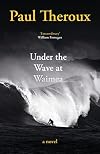
Under the Wave at Waimea
by Paul Theroux
On This Page
Description
"From legendary writer Paul Theroux comes an atmospheric novel following a big-wave surfer as he confronts aging, privilege, mortality, and whose lives we choose to remember"--Tags
Recommendations







Member Reviews
UNDER THE WAVE AT WAIMEA by Paul Theroux is brilliantly written.
The story expands outward in many ripples, exactly like the waves at the North Shore beaches on Oahu.
The book is very atmospheric. I can close my eyes and feel the breezes; smell the flowers and drink in the lush vegetation and views.
The book is a story of privilege, of aging, of mortality, of ebbing power and admiration.
The book is a detective story, a mystery. Not only does Joe Sharkey seek the identity of the stranger he accidentally kills; he also seeks his own identity and acceptance of himself.
This is a ‘coming-of-age’ story, but the person ‘coming-of-age’ is in his 60s. (I say better late than never.)
There are several main characters here - Joe Sharkey, of show more course; his companion/partner Olive; the ever-present water; the surf; riding the waves; the culture (at least on the North Shore) of surfing; the island of Oahu - good and bad, glossy and decadent.
UNDER THE WAVE AT WAIMEA is an ode to Hawaii and the art of surfing.
The bits with Hunter Thompson were intriguing.
I especially liked the the references to Vietnam. (That bit of history is slowly fading from our memories and I regret that.)
I took many ‘notes’ but two stand out. (for me)
“Anyone who did not surf had no idea how even the most basic maneuver took such strength and balance; how for long periods in a pounding shore break he was still driven by anxiety; how so many of his good friends had died - drowned in a hold-down, got hit by their board and knocked unconscious, got caught by their snagged leash. But it all looked so simple from shore, people invented improbable feats and heroics. They did not understand that simply to ride a big wave was a miracle of poise and strength. (p.17)
“Surfing was the pulse and passion of his life, not like a sport that involved catching a ball or swinging a bat, and not a recreation either. It was a way of living your life that only other surfers understood - even the posers and punks who’d somewhat spoiled it; and good waves took precedence over everything on land.” (p.41)
An excellent book, UNDER THE WAVE AT WAIMEA by Paul Theroux. ***** show less
The story expands outward in many ripples, exactly like the waves at the North Shore beaches on Oahu.
The book is very atmospheric. I can close my eyes and feel the breezes; smell the flowers and drink in the lush vegetation and views.
The book is a story of privilege, of aging, of mortality, of ebbing power and admiration.
The book is a detective story, a mystery. Not only does Joe Sharkey seek the identity of the stranger he accidentally kills; he also seeks his own identity and acceptance of himself.
This is a ‘coming-of-age’ story, but the person ‘coming-of-age’ is in his 60s. (I say better late than never.)
There are several main characters here - Joe Sharkey, of show more course; his companion/partner Olive; the ever-present water; the surf; riding the waves; the culture (at least on the North Shore) of surfing; the island of Oahu - good and bad, glossy and decadent.
UNDER THE WAVE AT WAIMEA is an ode to Hawaii and the art of surfing.
The bits with Hunter Thompson were intriguing.
I especially liked the the references to Vietnam. (That bit of history is slowly fading from our memories and I regret that.)
I took many ‘notes’ but two stand out. (for me)
“Anyone who did not surf had no idea how even the most basic maneuver took such strength and balance; how for long periods in a pounding shore break he was still driven by anxiety; how so many of his good friends had died - drowned in a hold-down, got hit by their board and knocked unconscious, got caught by their snagged leash. But it all looked so simple from shore, people invented improbable feats and heroics. They did not understand that simply to ride a big wave was a miracle of poise and strength. (p.17)
“Surfing was the pulse and passion of his life, not like a sport that involved catching a ball or swinging a bat, and not a recreation either. It was a way of living your life that only other surfers understood - even the posers and punks who’d somewhat spoiled it; and good waves took precedence over everything on land.” (p.41)
An excellent book, UNDER THE WAVE AT WAIMEA by Paul Theroux. ***** show less
A rewarding novel from someone whose fiction I have always found engaging. The subject is an ageing pro-surfer who has passed his prime. He's been a legend in his time but that is now passed when we encounter him. The tipping point for Joe Sharkey is the night he collides with a man on a bike, as he drives home drunk in the rain with his resourceful woman friend and partner, Olive, a nurse from England, killing a stranger.
Our hero declines, and the novel, after examining Joe's upbringing and life up until this crisis, centres on the dead man's identity and Olive's dedication to restoring her lover's mojo and his lifelong love of the surf, especifically the spectacular breaks on Oahu's north shore.
Paul Theroux is always readable, the show more characters are well defined so there is no confusion as to who we are focussing upon. The writer is confident in his Hawaiian milieu - language, natural world, and he knows well the social tensions specific to the islands. (There's an added bonus for me, namely the frequent introduction of Hawaiian language and the opportunity to note its similarities to a sister Polynesian tongue, New Zealand Maori).
The introduction of Hunter S. Thompson as a player in the novel was a surprise and I'm not sure if this helps propel the plot or narrative much. However, it does not spoil an agreeable book. show less
Our hero declines, and the novel, after examining Joe's upbringing and life up until this crisis, centres on the dead man's identity and Olive's dedication to restoring her lover's mojo and his lifelong love of the surf, especifically the spectacular breaks on Oahu's north shore.
Paul Theroux is always readable, the show more characters are well defined so there is no confusion as to who we are focussing upon. The writer is confident in his Hawaiian milieu - language, natural world, and he knows well the social tensions specific to the islands. (There's an added bonus for me, namely the frequent introduction of Hawaiian language and the opportunity to note its similarities to a sister Polynesian tongue, New Zealand Maori).
The introduction of Hunter S. Thompson as a player in the novel was a surprise and I'm not sure if this helps propel the plot or narrative much. However, it does not spoil an agreeable book. show less
Based only on his travel books, I wasn't sure what to expect from a Theroux novel. Would his misanthropy dominate, or his human curiosity? A pleasant surprise: this works very well. It is certainly still Theroux talking, as you can see from his descriptions, and from the main character. He bends reality into a morality tale that, while not quite believable, is as or more compelling than another Theroux train trip.
> That was the oddity of fame, not that everyone seemed to know you but that you were always confiding to strangers, speaking in general, everyone a potential ally or well-wisher, as though on a lifelong campaign, the guest of honor at every table, the brightest light at every party, always the talker among rapt admiring show more faces—it seemed that way. You were everyone’s friend, holding conversations with the multitudes, and so you had no real friends, but that didn’t matter, because the intensity of one intimate friend, or a loving wife, was an obstacle to talking to the world. The world was your friend.
> He had wooed her with his stories once, and now she was near to being repelled, except that she was so sorry for him in his plodding in circles. show less
> That was the oddity of fame, not that everyone seemed to know you but that you were always confiding to strangers, speaking in general, everyone a potential ally or well-wisher, as though on a lifelong campaign, the guest of honor at every table, the brightest light at every party, always the talker among rapt admiring show more faces—it seemed that way. You were everyone’s friend, holding conversations with the multitudes, and so you had no real friends, but that didn’t matter, because the intensity of one intimate friend, or a loving wife, was an obstacle to talking to the world. The world was your friend.
> He had wooed her with his stories once, and now she was near to being repelled, except that she was so sorry for him in his plodding in circles. show less
What a great read. What started as the tail of a narcissist ended in one of redemption. Saw the paddle coming out early on but still PT is an excellent writer and he told a good story. His descriptions of surfing and Hawaii put me there making me think of going. A bit rushed at the end and Olive was a bit too much of a saint and the full circle at the end was way too much coincidence but I held the book tight and smiled when I was done, staying up late to finish it. Will read more Theroux novels.
Under the Wave at Waimea by Paul Theroux is a highly recommended novel, especially for the right reader, of aging, mortality, but, most importantly, big-wave surfing.
Joe Sharkey is a legendary big-wave surfer who is now in his sixties and past his prime. Although there are some new, young surfers who realize who he is and recall his many incredible feats on the surfing circuit around the world, increasingly more of them don't recognize Sharkey. Sharkey still checks out the wave forecast and tries to surf everyday. He seemingly has an ideal life now. He is comfortable. He is living with a much younger woman, Olive, a nurse from England. But when Sharkey accidentally hits and kills a homeless man on a bicycle when driving home from a bar, show more he suddenly begins to question his mortality and begins repeating the many stories of his life to Olive. She begins the process and encourages him to uncover the identity of the victim which will hopefully give him closure.
The narrative also jumps back in time, to Sharkey's childhood, his family, and his start in surfing, as well as the bullying he experienced. Then it covers his surfing life. Basically, this is an in depth character study of a man who becomes a competitive surfer and follows his life, as he remembers it, in his search for the ultimate wave. This is about Joe Sharkey, and it is a ponderous novel. There is a whole lot of surfing in Under the Wave at Waimea, which is to be expected, and also a plethora of Hawaiian vocabulary, which can be frustrating without the context to always understand what is being said. There are also passages of brilliant character insight along with vivid descriptions.
The search for the identity and information about the man he killed, Max, does expand the focus of the novel and gives Sharkey a focus beyond his surfing stories. It is this search that sets his own mortality before him and provides a new dimension to his character. In the end, however, this is a well written character study of one man that suffers a bit from it's length and could use a bit of editing. In the parts that are successful, it is amazing, but there are whole sections that could use some editing. It also requires a higher degree of interest and appreciation of surfing than I expected. Finally, Olive could have used more character development as she was an intriguing woman.
Disclosure: My review copy was courtesy of HMH Books in exchange for my honest opinion.
http://www.shetreadssoftly.com/2021/03/under-wave-at-waimea.html
https://www.goodreads.com/review/show/3911879969 show less
Joe Sharkey is a legendary big-wave surfer who is now in his sixties and past his prime. Although there are some new, young surfers who realize who he is and recall his many incredible feats on the surfing circuit around the world, increasingly more of them don't recognize Sharkey. Sharkey still checks out the wave forecast and tries to surf everyday. He seemingly has an ideal life now. He is comfortable. He is living with a much younger woman, Olive, a nurse from England. But when Sharkey accidentally hits and kills a homeless man on a bicycle when driving home from a bar, show more he suddenly begins to question his mortality and begins repeating the many stories of his life to Olive. She begins the process and encourages him to uncover the identity of the victim which will hopefully give him closure.
The narrative also jumps back in time, to Sharkey's childhood, his family, and his start in surfing, as well as the bullying he experienced. Then it covers his surfing life. Basically, this is an in depth character study of a man who becomes a competitive surfer and follows his life, as he remembers it, in his search for the ultimate wave. This is about Joe Sharkey, and it is a ponderous novel. There is a whole lot of surfing in Under the Wave at Waimea, which is to be expected, and also a plethora of Hawaiian vocabulary, which can be frustrating without the context to always understand what is being said. There are also passages of brilliant character insight along with vivid descriptions.
The search for the identity and information about the man he killed, Max, does expand the focus of the novel and gives Sharkey a focus beyond his surfing stories. It is this search that sets his own mortality before him and provides a new dimension to his character. In the end, however, this is a well written character study of one man that suffers a bit from it's length and could use a bit of editing. In the parts that are successful, it is amazing, but there are whole sections that could use some editing. It also requires a higher degree of interest and appreciation of surfing than I expected. Finally, Olive could have used more character development as she was an intriguing woman.
Disclosure: My review copy was courtesy of HMH Books in exchange for my honest opinion.
http://www.shetreadssoftly.com/2021/03/under-wave-at-waimea.html
https://www.goodreads.com/review/show/3911879969 show less
Travel writer and novelist Paul Theroux has for years now split his time between Cape Cod and Hawaii. It's not a surprise then that his latest novel is set in Hawaii. Under the Wave at Waimea is the story of an aging big wave surfer named Joe Sharkey. The older folks know him by reputation but he's bothered that the young generation of surfers don't. Aside from that he's happy and fills his days with surfing and living the good life in Hawaii. He's been able to live off of surfing sponsorships and money inherited from his mother and has never had to work - surfing is his life.
Then the 62 year old surfer hits and kills a homeless biker while driving home from the bar. He slowly sinks into a spiral of depression, leaving his partner, a show more nurse, to try to help him put his life back together.
The book is broken into thirds. In the first third we follow Joe's life after he's met his new-ish girlfriend / partner Olive, through the accident and into the depths of his downward fall. In the second (and longest) third we flash back and follow Joe from childhood up to meeting Olive. Finally in the last third Olive guides Joe out of his fog and to a satisfying ending to the story.
At first I found the book a bit uneven, and the main character not all that likable. There are a lot of subplots, especially in the second third, and at times you wonder where the book is headed. But in the final third Theroux pulls the threads together in some unexpected ways, yielding an ending that has a big emotional impact.
While I liked this book it did drag in places. There is a whole subplot about the author Hunter S. Thompson, supposed to be a friend of Sharkey's, that really didn't have a lot to do with advancing the storyline and, like Thompson himself, was a bit over the top. There is a whole bunch of surfing detail in the book which is respectful and beautifully written, but I've heard mixed reviews on this - some have pointed out that Theroux is not a surfer himself and got some of the technical details wrong, which could put you off the book if you are a surfer.
If you have spent time in Hawaii among Hawaiians, or even if you are just interested in learning more about Hawaii, I think you'll appreciate the Hawaiian-ness of the book. And I did like the way everything came together in the end. I think if you stick with it through the draggy parts you'll be glad you read this book. Overall I give Under the Wave at Waimea Three Stars ⭐⭐⭐. show less
Then the 62 year old surfer hits and kills a homeless biker while driving home from the bar. He slowly sinks into a spiral of depression, leaving his partner, a show more nurse, to try to help him put his life back together.
The book is broken into thirds. In the first third we follow Joe's life after he's met his new-ish girlfriend / partner Olive, through the accident and into the depths of his downward fall. In the second (and longest) third we flash back and follow Joe from childhood up to meeting Olive. Finally in the last third Olive guides Joe out of his fog and to a satisfying ending to the story.
At first I found the book a bit uneven, and the main character not all that likable. There are a lot of subplots, especially in the second third, and at times you wonder where the book is headed. But in the final third Theroux pulls the threads together in some unexpected ways, yielding an ending that has a big emotional impact.
While I liked this book it did drag in places. There is a whole subplot about the author Hunter S. Thompson, supposed to be a friend of Sharkey's, that really didn't have a lot to do with advancing the storyline and, like Thompson himself, was a bit over the top. There is a whole bunch of surfing detail in the book which is respectful and beautifully written, but I've heard mixed reviews on this - some have pointed out that Theroux is not a surfer himself and got some of the technical details wrong, which could put you off the book if you are a surfer.
If you have spent time in Hawaii among Hawaiians, or even if you are just interested in learning more about Hawaii, I think you'll appreciate the Hawaiian-ness of the book. And I did like the way everything came together in the end. I think if you stick with it through the draggy parts you'll be glad you read this book. Overall I give Under the Wave at Waimea Three Stars ⭐⭐⭐. show less
Joe Sharkey, 60+, is a former surfing champion who still hits the water every day. He lives in a house near Waimea, on the north shore of O'ahu, has no money problems, is fit and happy with his life. He tells people the secret to happiness is knowing that he has enough. He also doesn't mind when people still want his autograph, his photo, his deep thoughts. It is starting to bother him a little that many of the young surfers have never heard of him or just consider him a has-been.
Joe has a relaxed life, enjoying barbecues with his girlfriend Olive, who is many years younger, catching waves while Olive works as a nurse at a nearby hospital. He is starting to drink maybe a little more than before.
One evening he is out with Olive, driving show more while not sober, when a bicyclist suddenly shows up on the wrong side of the road and Joe hits him. A policeman arrives soon after, while Olive has already rushed to the man and determined that he is dead. Joe seems shook up but in many ways not all there.
Joe starts to think there is some sort of omen here. He counts up experiences he has had lately that were not good memories and tries to fit them into a pattern. Olive, on the other hand, keeps trying to get him to see that the "drunk homeless guy" was a person. A person with a life.
It's an uphill battle, with Sharkey holding forth on waves he had surfed, places he'd been, and his friendship with Hunter Thompson, the writer. He starts to dwell more and do less. His garden is neglected, the waves are not ridden, the passion seems to have gone from his life, but he doesn't seem aware of the changes.
Olive has a plan to get him out from under this weight, and he acquiesces to her plan. He is not enthusiastic but he can't bring up the energy to object. The two slowly start to find out more about the "homeless drunk" whose name is unknown. Through the travels and conversations we see how this aging surfer, who never wanted anything else in his life, finds more than he expected. show less
Joe has a relaxed life, enjoying barbecues with his girlfriend Olive, who is many years younger, catching waves while Olive works as a nurse at a nearby hospital. He is starting to drink maybe a little more than before.
One evening he is out with Olive, driving show more while not sober, when a bicyclist suddenly shows up on the wrong side of the road and Joe hits him. A policeman arrives soon after, while Olive has already rushed to the man and determined that he is dead. Joe seems shook up but in many ways not all there.
Joe starts to think there is some sort of omen here. He counts up experiences he has had lately that were not good memories and tries to fit them into a pattern. Olive, on the other hand, keeps trying to get him to see that the "drunk homeless guy" was a person. A person with a life.
It's an uphill battle, with Sharkey holding forth on waves he had surfed, places he'd been, and his friendship with Hunter Thompson, the writer. He starts to dwell more and do less. His garden is neglected, the waves are not ridden, the passion seems to have gone from his life, but he doesn't seem aware of the changes.
Olive has a plan to get him out from under this weight, and he acquiesces to her plan. He is not enthusiastic but he can't bring up the energy to object. The two slowly start to find out more about the "homeless drunk" whose name is unknown. Through the travels and conversations we see how this aging surfer, who never wanted anything else in his life, finds more than he expected. show less
Members
- Recently Added By
Author Information

112+ Works 32,265 Members
Paul Edward Theroux was born on April 10, 1941 in Medford, Massachusetts and is an acclaimed travel writer. After attending the University of Massachusetts Amherst he joined the Peace Corps and taught in Malawi from 1963 to 1965. He also taught in Uganda at Makerere University and in Singapore at the University of Singapore. Although Theroux has show more also written travel books in general and about various modes of transport, his name is synonymous with the literature of train travel. Theroux's 1975 best-seller, The Great Railway Bazaar, takes the reader through Asia, while his second book about train travel, The Old Patagonian Express (1979), describes his trip from Boston to the tip of South America. His third contribution to the railway travel genre, Riding the Iron Rooster: By Train Through China, won the Thomas Cook Prize for best literary travel book in 1989. His literary output also includes novels, books for children, short stories, articles, and poetry. His novels include Picture Palace (1978), which won the Whitbread Award and The Mosquito Coast (1981), which won the James Tait Black Memorial Prize. Theroux is a fellow of both the British Royal Society of Literature and the Royal Geographic Society. His title Lower River made The New York Times Best Seller List for 2012. Currently his 2015 book, Deep South , is a bestseller. (Bowker Author Biography) Paul Theroux is the distinguished author of numerous award-winning books, including "The Mosquito Coast," "Kowloon Tong," & "Half Moon Street." (Publisher Provided) show less
Classifications
Statistics
- Members
- 116
- Popularity
- 275,140
- Reviews
- 8
- Rating
- (3.52)
- Languages
- English, Portuguese
- Media
- Paper, Audiobook, Ebook
- ISBNs
- 15
- ASINs
- 2