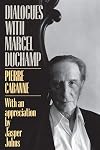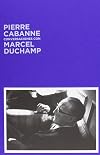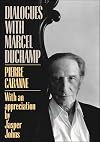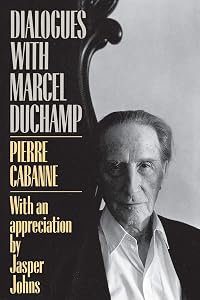
Dialogues with Marcel Duchamp
by Pierre Cabanne, Marcel Duchamp
On This Page
Description
With an introduction by Robert Motherwell and an appreciation by Jasper Johns "Marcel Duchamp, one of this century's pioneer artists, moved his work through the retinal boundaries which had been established with Impressionism into a field where language, thought and vision act upon one another. There it changed form through a complex interplay of new mental and physical materials, heralding many of the technical, mental and visual details to be found in more recent art. . . "In the 1920s show more Duchamp gave up, quit painting. He allowed, perhaps encouraged, the attendant mythology. One thought of his decision, his willing this stopping. Yet on one occasion, he said it was not like that. He spoke of breaking a leg. 'You don't mean to do it,' he said. "The Large Glass. A greenhouse for his intuition. Erotic machinery, the Bride, held in a see-through cage-'a Hilarious Picture.' Its cross references of sight and thought, the changing focus of the eyes and mind, give fresh sense to the time and space we occupy, negate any concern with art as transportation. No end is in view in this fragment of a new perspective. 'In the end you lose interest, so I didn't feel the necessity to finish it.' "He declared that he wanted to kill art ('for myself') but his persistent attempts to destroy frames of reference altered our thinking, established new units of thought, 'a new thought for that object.' "The art community feels Duchamp's presence and his absence. He has changed the condition of being here."--Jasper Johns, from Marcel Duchamp: An Appreciation show lessTags
Recommendations












Member Reviews
With an introduction by Robert Motherwell, a foreword by Salvador Dali, and an appreciation by Jasper Johns
"Marcel Duchamp, one of this century's pioneer artists, moved his work through the retinal boundaries which had been established with Impressionism into a field where language, thought and vision act upon one another. There it changed form through a complex interplay of new mental and physical materials, heralding many of the technical, mental and visual details to be found in more recent art. . .
"In the 1920s Duchamp gave up, quit painting. He allowed, perhaps encouraged, the attendant mythology. One thought of his decision, his willing this stopping. Yet on one occasion, he said it was not like that. He spoke of breaking a leg. show more 'You don't mean to do it,' he said.
"The Large Glass. A greenhouse for his intuition. Erotic machinery, the Bride, held in a see-through cage-'a Hilarious Picture.' Its cross references of sight and thought, the changing focus of the eyes and mind, give fresh sense to the time and space we occupy, negate any concern with art as transportation. No end is in view in this fragment of a new perspective. 'In the end you lose interest, so I didn't feel the necessity to finish it.'
"He declared that he wanted to kill art ('for myself') but his persistent attempts to destroy frames of reference altered our thinking, established new units of thought, 'a new thought for that object.'
"The art community feels Duchamp's presence and his absence. He has changed the condition of being here."--Jasper Johns, from Marcel Duchamp: An Appreciation show less
"Marcel Duchamp, one of this century's pioneer artists, moved his work through the retinal boundaries which had been established with Impressionism into a field where language, thought and vision act upon one another. There it changed form through a complex interplay of new mental and physical materials, heralding many of the technical, mental and visual details to be found in more recent art. . .
"In the 1920s Duchamp gave up, quit painting. He allowed, perhaps encouraged, the attendant mythology. One thought of his decision, his willing this stopping. Yet on one occasion, he said it was not like that. He spoke of breaking a leg. show more 'You don't mean to do it,' he said.
"The Large Glass. A greenhouse for his intuition. Erotic machinery, the Bride, held in a see-through cage-'a Hilarious Picture.' Its cross references of sight and thought, the changing focus of the eyes and mind, give fresh sense to the time and space we occupy, negate any concern with art as transportation. No end is in view in this fragment of a new perspective. 'In the end you lose interest, so I didn't feel the necessity to finish it.'
"He declared that he wanted to kill art ('for myself') but his persistent attempts to destroy frames of reference altered our thinking, established new units of thought, 'a new thought for that object.'
"The art community feels Duchamp's presence and his absence. He has changed the condition of being here."--Jasper Johns, from Marcel Duchamp: An Appreciation show less
Ratings
Members
- Recently Added By
Lists


Author Information
118+ Works 930 Members

104+ Works 991 Members
Some Editions
Series
Belongs to Publisher Series
Common Knowledge
- Canonical title
- Dialogues with Marcel Duchamp
- Original title
- Entretiens avec Marcel Duchamp
- Original publication date
- 1967
- People/Characters
- Marcel Duchamp
- Original language
- French
Classifications
Statistics
- Members
- 293
- Popularity
- 110,391
- Reviews
- 1
- Rating
- (3.64)
- Languages
- 5 — Dutch, English, French, Spanish, Swedish
- Media
- Paper, Ebook
- ISBNs
- 13
- ASINs
- 6