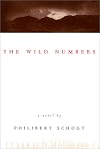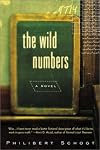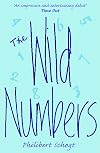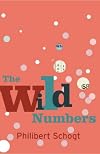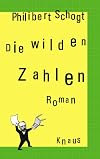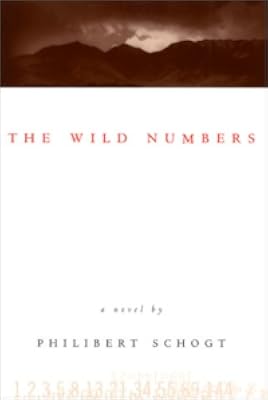
The Wild Numbers
by Philibert Schogt
On This Page
Description
As a mathematician -- not an outstanding one, but a competent, unextraordinary pencil-pusher -- Professor Isaac Swift is constantly having drummed into him that it's the prodigies of his profession, the burning suns of his little universe, that advance human knowledge. Now Isaac thinks he's found the solution to 'Beauregard's Wild Number problem', the puzzle that has stumped savants the world over for centuries. And Dimitri, his mentor at the university, a great mathematician himself, thinks show more Isaac has cracked it. If so, Isaac will have elevated himself to the ranks of the immortals. But an accusation of plagiarism from the tweed-clad mature student Leonard Vale creates a storm of violence and anguish that threatens to disrupt both the university and Isaac's sanity. THE WILD NUMBERS is a gripping story about self-doubt, ambition and delusion. show lessTags
Recommendations











Member Reviews
[[Philibert Schogt]] is a Dutch author, who was born in the Netherlands but spent his youth from the age of four to seventeen in Canada, where he grew up. As Schogt is a relatively young and not very well-known author in Holland, it is unusual that all of his novels have already appeared in English translations, especially in Canada and the United States, which makes me wonder whether he translates or authors dual language versions, Dutch and English.
[De wilde getallen] ([The Wild Numbers]) is his first novel. The title refers to a fictional unsolved mathematical problem, in the novel ascribed to the fictional 18th century French mathematician Anatole Millechamps de Beauregard, probably a reference to the Canadian mathematician Gilbert show more de Beauregard Robinson.
It is the main character, a lecturer at a university, Isaac Swift's ambition to solve this problem. His colleague and supervisor have also already, but unsuccessfully tried to solve the same problem. At the beginning of the novel, it seems Swift has succeeded to solve the problem, and his paper is approved by the faculty and sent to a leading academic journal. Trouble starts when a "student", an elderly retired math teacher who is clearly out of his mind and enrolled in Swift's class, accuses him of plagiarism. The suspense of the novel is based on the question whether or not Swift has used Mr Vale's notes, and whether or not Mr Vale, in a stroke of madness, has been able to solve this problem, a wild story, which leads to a surprising conclusion.
The story is quite exciting, even a bit ludicrous, and very recognizable. Fortunately, the reader does not need to be a mathematician or even have a liking for mathematics, to follow the story. [[Schogt]]'s main character, Isaac Swift, does not relate very well to other people, an inhibition apparently caused by fanatic determination, something which can be seen in other characters in other novels by [[Philibert Schogt]]. There is very little character development, and some characters are stereotypical, such as the lone figure of Mr Vale. Another similarity with later novels is a sense of anti-climax: the story develops to a certain peak and then implodes like a bubble. show less
[De wilde getallen] ([The Wild Numbers]) is his first novel. The title refers to a fictional unsolved mathematical problem, in the novel ascribed to the fictional 18th century French mathematician Anatole Millechamps de Beauregard, probably a reference to the Canadian mathematician Gilbert show more de Beauregard Robinson.
It is the main character, a lecturer at a university, Isaac Swift's ambition to solve this problem. His colleague and supervisor have also already, but unsuccessfully tried to solve the same problem. At the beginning of the novel, it seems Swift has succeeded to solve the problem, and his paper is approved by the faculty and sent to a leading academic journal. Trouble starts when a "student", an elderly retired math teacher who is clearly out of his mind and enrolled in Swift's class, accuses him of plagiarism. The suspense of the novel is based on the question whether or not Swift has used Mr Vale's notes, and whether or not Mr Vale, in a stroke of madness, has been able to solve this problem, a wild story, which leads to a surprising conclusion.
The story is quite exciting, even a bit ludicrous, and very recognizable. Fortunately, the reader does not need to be a mathematician or even have a liking for mathematics, to follow the story. [[Schogt]]'s main character, Isaac Swift, does not relate very well to other people, an inhibition apparently caused by fanatic determination, something which can be seen in other characters in other novels by [[Philibert Schogt]]. There is very little character development, and some characters are stereotypical, such as the lone figure of Mr Vale. Another similarity with later novels is a sense of anti-climax: the story develops to a certain peak and then implodes like a bubble. show less
A fine campus novel capturing the mood of doing mathematical research perfectly. A fast and enjoyable read.
Once a mathematical whiz kid, thirtysomething Isaac Swift wakes up every morning with only arithmetic to keep him company. After watching his colleagues scale the heights of academic glory, Isaac is still teaching Algebra 101, adding up the years and coming up with zero.
Oct 8, 2021Spanish
Ratings
Members
- Recently Added By
Lists

Stories featuring characters who are mathematicians
42 works; 5 members

stories at work
43 works; 7 members

Fiction for Readers Who Love Science and Math
57 works; 15 members
Author Information
7 Works 158 Members
Philibert Schogt holds degrees in philosophy & mathematics. "The Wild Numbers" is his first novel. He lives in Amsterdam. (Bowker Author Biography)
Common Knowledge
- Canonical title
- The Wild Numbers
- Original title
- De wilde getallen
- Original publication date
- 1998
- People/Characters
- Professor Isaac Swift
- First words*
- Fünf plus drei gleich acht.
- Last words*
- (Click to show. Warning: May contain spoilers.)Fünfunddreissig plus eins gleich sechsunddreissig.
- Original language*
- Niederländisch
*Some information comes from Common Knowledge in other languages. Click "Edit" for more information.
Classifications
- Genres
- Fiction and Literature, General Fiction
- DDC/MDS
- 839.3 — Literature & rhetoric German & related literatures Other Germanic literatures Netherlandish literatures
- LCC
- PT5881.29 .C4964 .W5513 — Language and Literature German, Dutch and Scandinavian literatures Dutch literature Individual authors or works 1961-2000
- BISAC
Statistics
- Members
- 99
- Popularity
- 326,095
- Reviews
- 4
- Rating
- (3.37)
- Languages
- 6 — Dutch, English, German, Greek, Italian, Korean
- Media
- Paper
- ISBNs
- 10
- ASINs
- 1