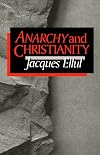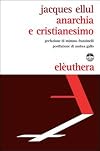
Anarchy and Christianity
by Jacques Ellul
On This Page
Description
Jacque Ellul blends politics, theology, history, and exposition in this analysis of the relationship between political anarchy and biblical faith. While he clarifies the views of each and how they can be related, his aim is not to proselytize either anarchists into Christianity or Christians into anarchy. On the one hand, suggests Ellul, anarchists need to understand that much of their criticism of Christianity applies only to the form of religion that developed, not to biblical faith. show more Christians, on the other hand, need to look at the biblical texts and not reject anarchy as a political option, for it seems closest to biblical thinking. After charting the background of his own interest in the subject, Ellul defines what he means by anarchy: the nonviolent repudiation of authority. He goes on to look at the Bible as the source of anarchy (in the sense of nondomination, not disorder), working through Old Testament history, Jesus' ministry, and finally the early church's view of power as reflected in the New Testament writings. show lessTags
Recommendations



















Member Reviews
I thought this book really failed to convince me, which is a shame because I'm respectively open to and practicing the two subjects of the book. Foremost, I think I disliked his attempt to reconcile anarchy and Christianity from almost legalist interpretations of Biblical passages. It's the same technique definitively-archist Christians use to justify capitalism, authority and the like. What five or ten or thirty passages *imply* seems irrelevant to me if it doesn't match the overall philosophy of religion. That's where I felt let down by Ellul... good arguments for the interpretation of passages, but too little talk of how it fits into the core principles of Christian thought.
Ellul is always challenging and insightful. In this book he tries to demonstrate the commonalities between Christian belief and philosophical anarchy. I think he succeeds in demonstrating some of the Bible's ambivalence toward human institutions, rulers and government. I don't buy his whole argument and would say that while he nuances some of the biblical witness he can also be reductionist.
There are some great things here in terms of how Christians relate to power and government. There is also some thoughtfulness about the rejection of violence as a Christian option.
There are some great things here in terms of how Christians relate to power and government. There is also some thoughtfulness about the rejection of violence as a Christian option.
An alarmingly prescient book detailing Ellul's struggle to reconcile his anarchist leanings specifically in pre-war France and his Christian convictions. His critique of pure anarchism is particulary helpful when seen through the Christian lens that demands more than simple political disobedience.
this is my second time reading this book. i feel like i need to sit with it for a little while before i write a longer review. there is much in this book to like and some that i disagree with. i am still processing and will come back to this soon.
Examines the teachings of Jesus as they relate to government. Emphasizes the teachings that fit into the anarchist ideology.
Une définition claire de ce que sont les anarchies, et le lien qui peut exister avec un christianisme biblique.
Très intéressant pour ceux qui acceptent de sortir des idées reçues.
Très intéressant pour ceux qui acceptent de sortir des idées reçues.
Feb 25, 2008French
Members
- Recently Added By
Author Information

122+ Works 5,964 Members
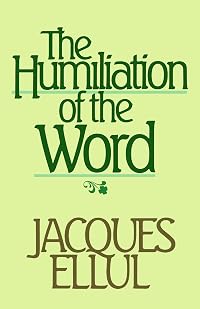
Jacques Ellul, historian, theologian, and sociologist, is one of the foremost and widely known contemporary critics of modern technological society. Born in Bordeaux, France, Ellul received a doctorate in the history of law and social science in 1936 from the University of Bordeaux. In 1947 he was appointed professor of social history at the show more University of Bordeaux, remaining there until his retirement in 1980. Although influenced strongly by his early reading of the Bible Marx, Ellul has been unable to synthesize Marxist doctrine with Christianity. These readings and experiences have influenced his later philosophy and writing. Ellul has taught and written extensively in his areas of specialization - Roman law, the history and sociology of institutions, Marxism, propaganda, and technique in society. He also served in the French Resistance during World War II, worked as a lay pastor, and has been active with various theological organizations, including the World Council of Churches. In addition, Ellul has been active in the environmental movement and has worked to prevent juvenile delinquency and violence. Since 1969, he has been editor of Foi et Vie (Faith and Life). Although retired as a teacher, Ellul has continued writing. One of his writing projects is an autobiography to be published after his death. Ellul has provided a sociopolitical as well as a theological analysis of contemporary society in more than 40 books and 800 articles. The Technological Society (1954) established Ellul as a social critic. The book has had a major impact on the collective consciousness of a society just beginning to recognize the central role and force of technology. Here Ellul develops the notion of "technique," a concept much broader than technology: "Technique is the totality of methods rationally arrived at." In Ellul's view, technology in this sense tends to become all-encompassing. His subsequent books, especially The Political Illusion (1965) and Propaganda (1962), further develop and refine elements of this central theme. This "trilogy" of books reflects Ellul's desire to alert readers to the dangers of technological determinism and thereby help them transcend it. Because of a dialectical approach separating his sociopolitical and theological studies, Ellul has often been criticized as overly pessimistic in his sociologically based writings. His theological works, however, provide a more positive perspective and counterpoint to his sociological work. Most notable are The Politics of God and the Politics of Man (1966), The Meaning of the City (1970), and especially The Ethics of Freedom (1973). The main body of Ellul's sociopolitical critique of technical society is reflected by The Technological Society, The Political Illusion, Propaganda, and The Technological System. Among his other works are Autopsy of Revolution (1969), which questions what kind of revolution is realistically possible, The Humiliation of the Word (1981), which expands upon the concept of "human techniques", and The Technological Bluff (1990), which discusses the state of contemporary society, especially in regard to such technologies as computers and genetic engineering and the progressive "discourse" that surrounds their societal incorporation. (Bowker Author Biography) show less
Some Editions
Awards and Honors
Series
Belongs to Publisher Series
Classifications
- Genres
- Nonfiction, Religion & Spirituality, General Nonfiction, Philosophy, Politics and Government
- DDC/MDS
- 261.7 — Religion Christian organization, social work & worship Social theology and interreligious relations and attitudes Christianity and political affairs
- LCC
- BS672 .E4413 — Philosophy, Psychology and Religion The Bible The Bible Works about the Bible Bible and social sciences
- BISAC
Statistics
- Members
- 297
- Popularity
- 108,596
- Reviews
- 7
- Rating
- (3.94)
- Languages
- 6 — English, French, Italian, Polish, Portuguese, Spanish
- Media
- Paper
- ISBNs
- 10
- ASINs
- 3