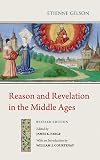
Reason and Revelation in the Middle Ages
by Étienne Gilson
On This Page
Description
Etienne Gilson Reason and Revelation in the Middle Ages, first delivered as the Richard Lectures in 1937, was published in 1938 and became an immediate success. Not only does it contribute to a major question of debate in Christian, Jewish, and Islamic philosophy and religion in the medieval period but it also insists on the validity of truth obtainable through reason as well as revelation, on rational argument alongside religious faith. This message is as important in the twenty-first show more century as it was in the fourth century of the young Augustine, the thirteenth of St Thomas Aquinas, and the twentieth of the mature Gilson.-- show lessTags
Recommendations













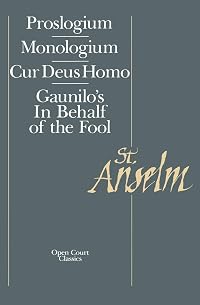
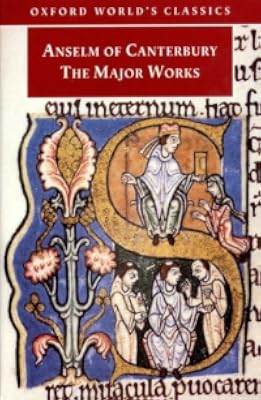

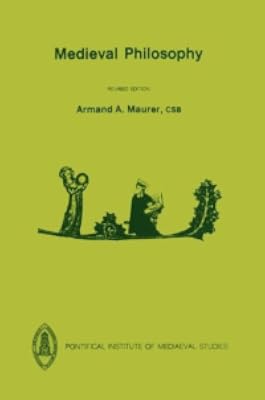
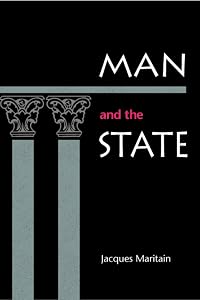
Member Reviews
A solid, quick read about different ways to conceive the relationship between philosophy and theology, with, as the title cunningly suggests, the middle ages as a focus. The most interesting idea here was that there is a kind of tradition of Christian thinkers using the cutting edge extra-theological thought of their time to do theology, starting with Augustine and his Platonism, and moving on to, e.g., Anselm and his logic. It's no coincidence that these gentlemen tend to be the most interesting of Christian thinkers (just as non-Christian thinkers who use Christian resources tend to be the most interesting of non-Christians thinkers). It's a shame that Gilson didn't accept what his categories demand, i.e., that Aquinas was, with his show more Aristotle, one of these men, and not sui generis. That doesn't do much harm to Gilson's main point, which is that Aquinas found the best solution to the problem of reason and revelation in his time, and that if you care about the problem, you should care about him. show less
I did not choose wisely. The book is divided into three chapter (lectures) and after the first I went MEGO and I rushed through the rest of the book because I wanted to break a monthly reading quota. The book isn’t dull, it’s interesting and informative, and the central premise is one worth considering- there are two paths to wisdom: Reason and revelation. I just sat in the back of the room and daydreamed and now it’s exam day.
Reason is wisdom obtained through logic and revelation the Divine word. St. Augustine provided for both when he said that in order to understand, you must first believe then the rest will be revealed to you if you seek it. (The fear of G-d is the beginning of wisdom.) The two are not intrinsically show more exclusive, but a schism has been long-standing and sometime during the early Renaissance the discussion was abandoned and secularism gained moved to the fore.
I’ll go back to this one day, maybe pair it with Snow’s ‘The Two Cultures.’
Do not do as I, dear reader, and plow through to meet a quota. As Yoda said, Do or do not, there is no try. Not just pretty words. show less
Reason is wisdom obtained through logic and revelation the Divine word. St. Augustine provided for both when he said that in order to understand, you must first believe then the rest will be revealed to you if you seek it. (The fear of G-d is the beginning of wisdom.) The two are not intrinsically show more exclusive, but a schism has been long-standing and sometime during the early Renaissance the discussion was abandoned and secularism gained moved to the fore.
I’ll go back to this one day, maybe pair it with Snow’s ‘The Two Cultures.’
Do not do as I, dear reader, and plow through to meet a quota. As Yoda said, Do or do not, there is no try. Not just pretty words. show less
Ratings
Members
- Recently Added By
Lists

Church Times 100 Best Christian Books
106 works; 26 members

Books Read in 2024
4,623 works; 126 members
Author Information

149+ Works 4,979 Members
Born in Paris, Etienne Gilson was educated at the University of Paris. He became professor of medieval philosophy at the Sorbonne in 1921, and in 1932 was appointed to the chair in medieval philosophy at the College de France. In 1929 he cooperated with the members of the Congregation of Priests of St. Basil, in Toronto, Canada, to found the show more Pontifical Institute of Medieval Studies in association with St. Michael's College at the University of Toronto. Gilson served as professor and director of studies at the institute. Like his fellow countryman Jacques Maritain, Etienne Gilson was a neo-Thomist for whom Christian revelation is an indispensable auxiliary to reason, and on faith he accepted Christian doctrine as advocated by the Roman Catholic church. At the same time, like St. Thomas Aquinas, he accorded reason a wide compass of operation, maintaining that it could demonstrate the existence of God and the necessity of revelation, with which he considered it compatible. Why anything exists is a question that science cannot answer and may even deem senseless. Gilson found the answer to be that "each and every particular existing thing depends for its existence on a pure Act of existence." God is the supreme Act of existing. An authority on the Christian philosophy of the Middle Ages, Gilson lectured widely on theology, art, the history of ideas, and the medieval world. (Bowker Author Biography) show less
Series
Belongs to Publisher Series
The Scribner Library (SL37)
Common Knowledge
- Canonical title
- Reason and Revelation in the Middle Ages
Classifications
Statistics
- Members
- 356
- Popularity
- 88,736
- Reviews
- 5
- Rating
- (4.21)
- Languages
- English
- Media
- Paper, Ebook
- ISBNs
- 5
- ASINs
- 16