On This Page
Description
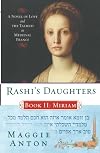
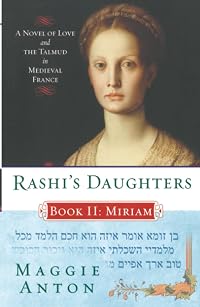
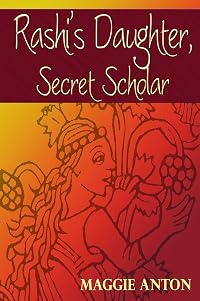
Emboldened by her knowledge and mourning the death of her betrothed, Miriam is determined to become not only the community's midwife, but also its mohel--performing circumcisions. As devoted as she is to her chosen path, she cannot foresee the ways in which she will be tested.Tags
Recommendations










Member Reviews
Part of a series, though I hadn't read the first book and followed it well enough. This book focused on Miriam, the 2nd of Rabbi Rashi's daughters, who loses her first love to an accident and then faces the difficult question of if and who she will marry. As a woman educated in the Torah she is unusual in Medieval France. Lots of customs about Judaism, the time period, midwifery and such are shared which is combined well with a human story. I found myself reflecting on the story when I wasn't reading it, thinking about the unusual challenges Miriam faced in her day and age and wondering how I would have measured up to what she had to go through.
I enjoy these novels, which provide an interesting glimpse of Jewish life more than a thousand years ago. This is an engaging story of Miriam, a midwife who becomes a mohelet, controversial in its time (in addition to her Torah study, which was primarily allowed only to men). Her marriage to Judah, who is a "good" husband but who harbors deep secrets, is compelling.
In many cases throughout this book, it seemed too restrained. It could go further dramatically, and there were some missed opportunities. The ending felt dissatisfying, but that's mainly because I am reading it with modern eyes. The ending is realistic and appropriate for the times...I just wished it could have been different.
In many cases throughout this book, it seemed too restrained. It could go further dramatically, and there were some missed opportunities. The ending felt dissatisfying, but that's mainly because I am reading it with modern eyes. The ending is realistic and appropriate for the times...I just wished it could have been different.
I enjoy these novels, which provide an interesting glimpse of Jewish life more than a thousand years ago. This is an engaging story of Miriam, a midwife who becomes a mohelet, controversial in its time (in addition to her Torah study, which was primarily allowed only to men). Her marriage to Judah, who is a "good" husband but who harbors deep secrets, is compelling.
In many cases throughout this book, it seemed too restrained. It could go further dramatically, and there were some missed opportunities. The ending felt dissatisfying, but that's mainly because I am reading it with modern eyes. The ending is realistic and appropriate for the times...I just wished it could have been different.
In many cases throughout this book, it seemed too restrained. It could go further dramatically, and there were some missed opportunities. The ending felt dissatisfying, but that's mainly because I am reading it with modern eyes. The ending is realistic and appropriate for the times...I just wished it could have been different.
Rashi, living in Troyes, France, in the latter half of the 11th century, was one of Judaism’s greatest scholars. Troyes at the time had a vibrant Jewish community, full of scholars, but also traders, vintners, and estate owners. Anton’s books (the first focused on the elder daughter, Joheved) immerse us in this rich culture, with a focus on Rashi’s three very learned daughters. There was debate at the time about whether girls should be taught Torah, and Rashi was not following the norm in teaching his daughters. Miriam, the central character of this volume, has trained to become a midwife, like her aunt. She also has the opportunity to train as a mohel, the person (almost always a man) who performs circumcisions, because no male show more in the community steps forward when one is needed. The text is liberally studded with writings from the Talmud, as characters learn and debate various teachings.
The text is also laden with knowledge and beliefs of the time, both general and religious. Miriam’s immersion into the medical world, both as midwife and mohel-in-training, allows the author opportunities to include the current understanding of medical matters, such as the characteristics of foods that should, or shouldn’t, be eaten given certain illnesses or medical conditions. Miriam’s husband is a Talmud scholar, and a theme throughout this volume is the relationships that form between study partners. These books (best read in order) provide a fascinating glimpse into another world. show less
The text is also laden with knowledge and beliefs of the time, both general and religious. Miriam’s immersion into the medical world, both as midwife and mohel-in-training, allows the author opportunities to include the current understanding of medical matters, such as the characteristics of foods that should, or shouldn’t, be eaten given certain illnesses or medical conditions. Miriam’s husband is a Talmud scholar, and a theme throughout this volume is the relationships that form between study partners. These books (best read in order) provide a fascinating glimpse into another world. show less
The second book in the series, this story focuses on Miriam, Rashi's middle child. When Miriam's fiancée dies in a tragic accident, she is thrust into depression and despair. Not even her training as a midwife can bring her out of her funk. Only time and distance seems to help. After marrying Judah, the two struggle with a variety of issues. Judah struggles with homosexual urges, while Miriam decides to learn the art of circumcision, causing great debate within her community.
Overall, I thought this book was well written. It wasn't as engaging as the first book, which I found a bit surprising. I wish the book focused more on her being a midwife and mohl, which would have caught my interest a bit more. I think I just wanted a little more show more from the story, everything seemed a bit too easy for Miriam. show less
Overall, I thought this book was well written. It wasn't as engaging as the first book, which I found a bit surprising. I wish the book focused more on her being a midwife and mohl, which would have caught my interest a bit more. I think I just wanted a little more show more from the story, everything seemed a bit too easy for Miriam. show less
This second book in a series about Rashi’s daughters continues to give readers insight into the world of Jewish women in a medieval Jewish community in France.
The novels, based on history expanded by the author’s literary creativity, portray a specific daughter and her individuality along with the remainder of Rashi’s extended family. In Book II the focus is on Rashi’s middle daughter, Miriam, a midwife, healer, and female mohel (mohelet).
This story was less plausible and less engaging for me than Book I: Joheved. The intertwining of Talmud, Baraita, and Gemorrah with the portrayal of sexual desires seemed contrived. While Anton weaves a realistic picture of human emotions and family dynamics, the picture is so close to show more today’s language that it can’t be true for 11th century France. Nevertheless I recommend this book for the many dimensions it offers: the fascinating life of Rashi and Jewish academics; strong women and their desires for love, learning, self actualization; and daily life in feudal France in the Middle Ages. Let me know if you find this riveting and informative and a thumb’s up choice. "Book III - Rachel" is due in 2009.
Cyrille Cobe - February, 2009 show less
The novels, based on history expanded by the author’s literary creativity, portray a specific daughter and her individuality along with the remainder of Rashi’s extended family. In Book II the focus is on Rashi’s middle daughter, Miriam, a midwife, healer, and female mohel (mohelet).
This story was less plausible and less engaging for me than Book I: Joheved. The intertwining of Talmud, Baraita, and Gemorrah with the portrayal of sexual desires seemed contrived. While Anton weaves a realistic picture of human emotions and family dynamics, the picture is so close to show more today’s language that it can’t be true for 11th century France. Nevertheless I recommend this book for the many dimensions it offers: the fascinating life of Rashi and Jewish academics; strong women and their desires for love, learning, self actualization; and daily life in feudal France in the Middle Ages. Let me know if you find this riveting and informative and a thumb’s up choice. "Book III - Rachel" is due in 2009.
Cyrille Cobe - February, 2009 show less
This series continues to be a well written and great to read group. I have learned so much about life in general and Jewish life in particular in the 11th Century with the reading of the Rashi's Daughters series.
Members
- Recently Added By
Lists

Jewish Books
367 works; 24 members
Author Information

15+ Works 1,504 Members
Series

Common Knowledge
- Canonical title
- Miriam
- Alternate titles
- Rashi's Daughters: Miriam
- People/Characters
- Miriam; Salomon ben Isaac; Joheved; Talmud
- Important places
- Troyes, Aube, Grand-Est, France; France
- Dedication
- LJCRS Book Fair Selection 5768
Classifications
Statistics
- Members
- 326
- Popularity
- 98,006
- Reviews
- 13
- Rating
- (3.97)
- Languages
- English, Portuguese
- Media
- Paper, Ebook
- ISBNs
- 4
- ASINs
- 1