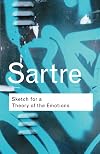
The Emotions: Outline of a Theory
by Jean-Paul Sartre
On This Page
Description
Sartre contemplates the human emotional experience by analyzing phenomenological psychology and existentialism In The Emotions: Outline of a Theory, French philosopher Jean-Paul Sartre attempts to understand the role emotions play in the human psyche. Sartre analyzes fear, lust, anguish, and melancholy while asserting that human beings begin to develop emotional capabilities from a very early age, which helps them identify and understand the emotions' names and qualities later in show more life.Helping to complete the circle of Sartre's many theories on existentialism, this vital piece of literature is a must-have for the philosopher-in-training's collection. show lessTags
Recommendations














Member Reviews
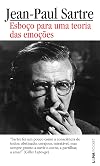
Trata-se de uma primeira abordagem fenomenológica, influenciada pelo pensamento de Heidegger, Husserl, que busca compreender o fenômeno humano dos sentimentos como experiências da subjetividade desvinculadas de teorias. Tal era, por exemplo, a crítica de Sartre à utilização da idéia de inconsciente pela psicologia empírica. 'Esboço para uma teoria das emoções' apresenta as linhas de pensamento que o autor desenvolveria e aprofundaria posteriormente, sobretudo em sua obra filosófica, 'O ser e o nada'.
May 13, 2021Portuguese (Portugal)
> Sartre (Jean-Paul). — Esquisse d’une phénoménologie des émotions (2e édition). — Paris, Hermann, 1948, 52 p. in-8°.
Bachelard (Gaston). — La Terre et les rêveries de la volonté, 406 p. in-12; — La Terre et les rêveries du repos, 337 p. in-12. — Paris, José Corti, 1948.
Carrouges (Michel). — La Mystique du surhomme. — Paris, Gallimard, 1948, 432 p. in-8°.
Pesch (Edgar). — La Psychologie affective. — Paris, Bordas, 1947, 476 p. in-8°.
Se reporter au compte rendu de M. DUFRENNE
In: L'Année sociologique (1940/1948-), Troisième série, T. 1 (1940-1948), pp. 227-237… ; (en ligne),
URL : https://drive.google.com/file/d/1UiqUtKHh1MDea67DNMGTFbFwlS-XXJrb/view?usp=shari...
Bachelard (Gaston). — La Terre et les rêveries de la volonté, 406 p. in-12; — La Terre et les rêveries du repos, 337 p. in-12. — Paris, José Corti, 1948.
Carrouges (Michel). — La Mystique du surhomme. — Paris, Gallimard, 1948, 432 p. in-8°.
Pesch (Edgar). — La Psychologie affective. — Paris, Bordas, 1947, 476 p. in-8°.
Se reporter au compte rendu de M. DUFRENNE
In: L'Année sociologique (1940/1948-), Troisième série, T. 1 (1940-1948), pp. 227-237… ; (en ligne),
URL : https://drive.google.com/file/d/1UiqUtKHh1MDea67DNMGTFbFwlS-XXJrb/view?usp=shari...
Oct 5, 2020French
Ratings
Members
- Recently Added By
Lists

Books Referenced by Izetbegovic's Islam Between East and West
233 works; 2 members

Little philosophical challang
4 works; 1 member
Author Information

715+ Works 57,487 Members
Sartre is the dominant figure in post-war French intellectual life. A graduate of the prestigious Ecole Normale Superieure with an agregation in philosophy, Sartre has been a major figure on the literary and philosophical scenes since the late 1930s. Widely known as an atheistic proponent of existentialism, he emphasized the priority of existence show more over preconceived essences and the importance of human freedom. In his first and best novel, Nausea (1938), Sartre contrasted the fluidity of human consciousness with the apparent solidity of external reality and satirized the hypocrisies and pretensions of bourgeois idealism. Sartre's theater is also highly ideological, emphasizing the importance of personal freedom and the commitment of the individual to social and political goals. His first play, The Flies (1943), was produced during the German occupation, despite its underlying message of defiance. One of his most popular plays is the one-act No Exit (1944), in which the traditional theological concept of hell is redefined in existentialist terms. In Red Gloves (Les Mains Sales) (1948), Sartre examines the pragmatic implications of the individual involved in political action through the mechanism of the Communist party and a changing historical situation. His highly readable autobiography, The Words (1964), tells of his childhood in an idealistic bourgeois Protestant family and of his subsequent rejection of his upbringing. Sartre has also made significant contributions to literary criticism in his 10-volume Situations (1947--72) and in works on Baudelaire, Genet, and Flaubert. In 1964 he was awarded the Nobel Prize in Literature and refused it, saying that he always declined official honors. (Bowker Author Biography) show less
Some Editions
Series
Belongs to Publisher Series
Work Relationships
Common Knowledge
- Canonical title*
- Magie en emotie
*Some information comes from Common Knowledge in other languages. Click "Edit" for more information.
Classifications
Statistics
- Members
- 489
- Popularity
- 61,924
- Reviews
- 3
- Rating
- (3.50)
- Languages
- 9 — Catalan, Danish, Dutch, English, French, Italian, Portuguese, Spanish, Swedish
- Media
- Paper, Ebook
- ISBNs
- 29
- ASINs
- 14